IBM Paid for the Platform. Microsoft Kept the Keys.
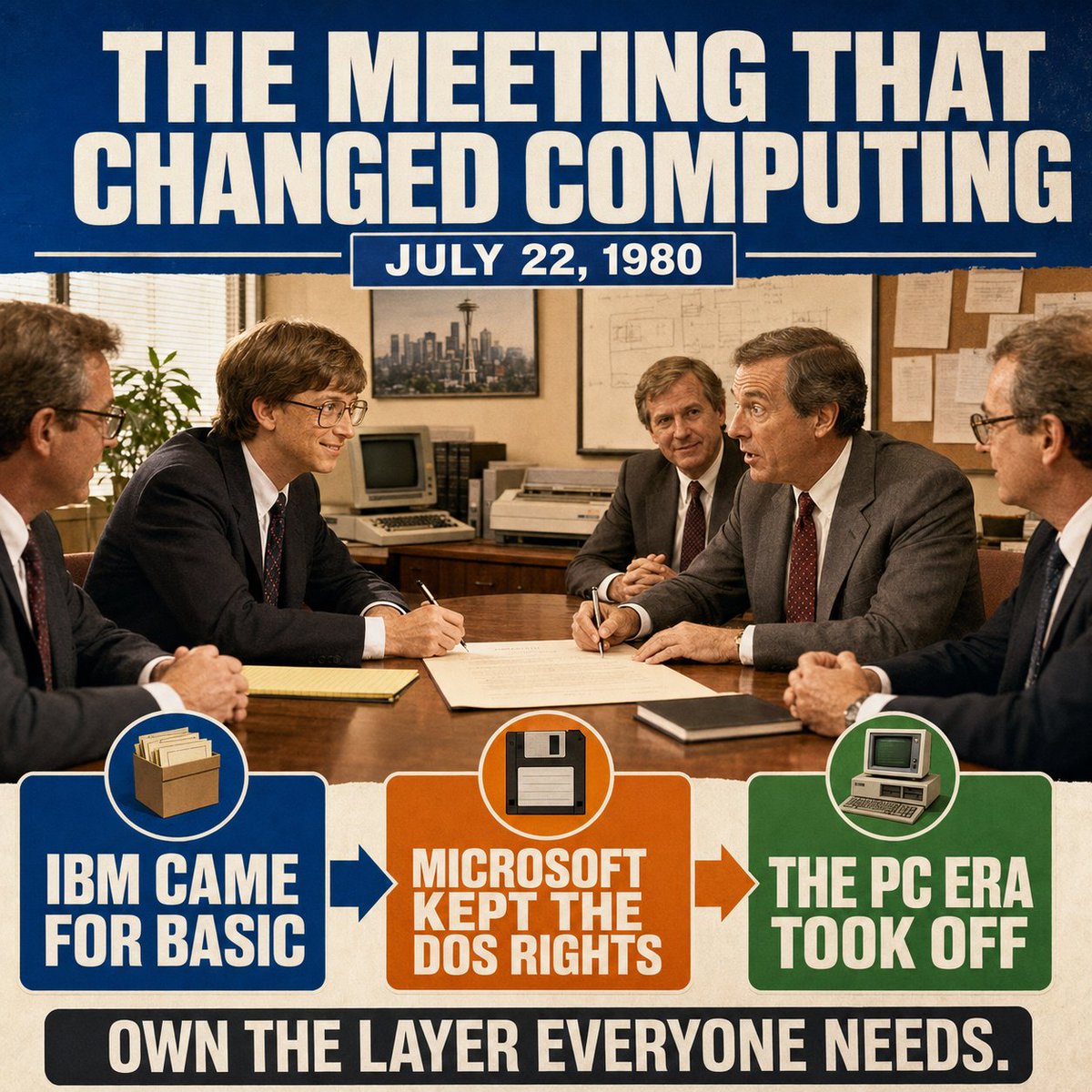
July 22, 1980. Bill Gates gets a call from Jack Sams at IBM asking to meet the next day. Gates already has Atari CEO Ray Kassar on the calendar. He bumps him, and then does something rare for him: he puts on a suit.
Sams flew to Seattle to find out whether Microsoft was a real company or a bedroom operation run by West Coast hippies. When he arrived, he mistook the 24 year old Gates for an office assistant. By the end of the meeting Microsoft had signed IBM's nondisclosure agreement on the spot. No lawyers, no stalling. Sams later said that willingness to just sign convinced IBM these were people they could do business with.
IBM came for BASIC. Microsoft didn't even have an operating system to sell. When IBM circled back weeks later asking for one, Gates pointed them to Gary Kildall at Digital Research, the reigning OS vendor of the era. That referral went sideways, and Microsoft ended up buying 86-DOS from Seattle Computer Products for roughly $75,000, then licensing it to IBM as PC-DOS.
The contract decided everything. IBM paid a flat fee and let Microsoft keep the rights to license DOS to other manufacturers. IBM's lawyers were worried about antitrust exposure, and a 30 person software shop in Seattle hardly registered as a threat. When Compaq and the clone makers showed up, that one clause turned Microsoft into the toll booth for the entire PC industry.
IBM built the machine, set the standard, and created the market. The value flowed to the two vendors it hired out of a Boca Raton conference room: Microsoft and Intel. Both became trillion dollar franchises on a platform IBM paid to create.
Forty six years later, enterprises are making the same platform bets with AI, and the question from 1980 still applies: who ends up owning the layer everyone else has to pay for? Nobody in that meeting was careless. They all made reasonable calls with the information in front of them, and the value still pooled where nobody predicted.
Worth asking which clause in your AI vendor contract is the one that looks harmless today.
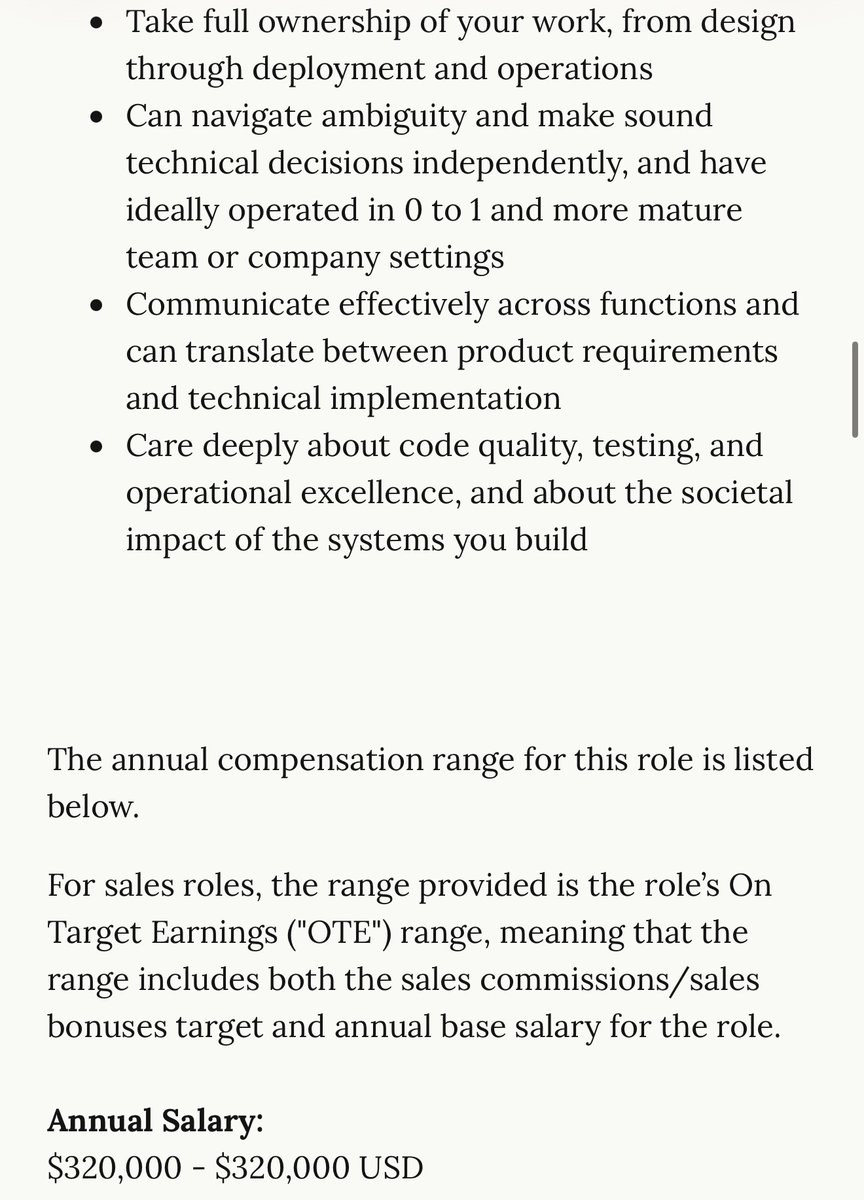
Anthropic has 454 open roles. The company is hiring software engineers at $320K-$405K. Their CEO, Dario, said three months ago that coding is "going away first, then all of software engineering."
The paradox resolves instantly.
Dario's engineers told him they don't write code anymore. They let Claude write it. They edit. They review. They architect. They didn't lose their jobs. They got faster. Anthropic grew from a small research lab to 1,500 employees in four years, adding engineers the entire time.
This has played out five times in computing history. Compilers replaced assembly. Frameworks replaced boilerplate. Cloud replaced server management. Every prediction was the same: most programmers won't be needed. Every result was the same: the number of engineers grew.
The global software engineer pool went from roughly 5 million in 2010 to 28.7 million today. BLS projects 17% growth in US software developer roles through 2033, adding 304,000 positions. The pool is projected to hit 45 million by 2030.
When building software gets cheaper, more problems become worth solving with software. A startup that needed 10 engineers now needs 3. But 50 companies that couldn't afford to build at all now can. The denominator shrinks. The numerator explodes.
Meta's engineering headcount is up 19% from January 2022. Google's is up 16%. Apple, 13%. These companies adopted AI coding tools years ago. They're using Copilot and Claude Code daily. They're hiring more engineers than before those tools existed.
Every generation of "coding is dead" content creates two cohorts: engineers who freeze up, and engineers who build 10x more with the new tools. The second group has won every single time.
I'm Boris and I created Claude Code. Lots of people have asked how I use Claude Code, so I wanted to show off my setup a bit.
My setup might be surprisingly vanilla! Claude Code works great out of the box, so I personally don't customize it much. There is no one correct way to use Claude Code: we intentionally build it in a way that you can use it, customize it, and hack it however you like. Each person on the Claude Code team uses it very differently.
So, here goes.
this is an interesting read on how the AT protocol is helping to build a open social web where user data isn't locked into to a specific platform https://t.co/4lE5pIuAJc
Interesting perspective focusing on how some devs know only how to use tools or processes but may not have a deep enough understanding of their composition and how to debug them when issues arise. https://t.co/6R6acfEJvH
This is an ineresting take by the inventor of the web but to bad the article doesn't go into much depth, probably need to listen to his presentation to find out more 🤔 https://t.co/drVzVUrkqJ
It's been a great three years at IBM with lots of growth, opportunities to explore, and a diverse community of kind smart folks I've had a pleasure to interact with. Looking forward to reaching my next milestone and where I'll be n…https://t.co/UBGIrJjfzi https://t.co/oAZ5KH0gu6
We write code to be maintainable and understandable for humans, whereas compilers, interpreters, and other tools help us to optimize the code to run with better performance. Unless the code is being maintained by a machine then maybe semantics might not be so important. 🤡
"It's not about syntax; it's about semantics." - Richard Feldman makes some good points about focusing on the code being readable vs getting the syntax of a language right... https://t.co/bAhyUF9hfU