🇹🇼 Today, the Legislative Yuan officially approved the first tranche of Taiwan’s Special Defense Procurement Budget, marking an important step forward in strengthening Taiwan’s defense capabilities.
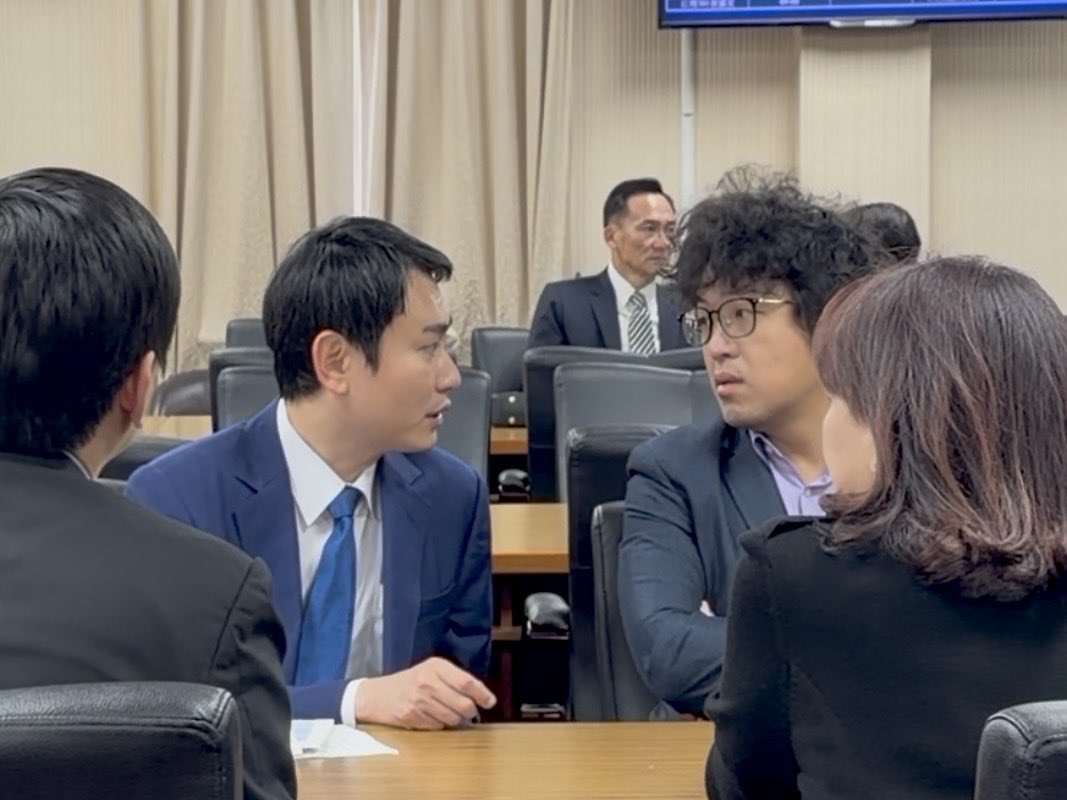
As Chair of the Foreign Affairs and National Defense Committee, I have worked throughout this process to move the discussion forward and bring all parties back to a path of constructive and rational dialogue. From scheduling hearings and negotiations to committee review, every step has been challenging. But I have always believed that national defense is one of the few issues that should rise above partisan politics.
I am pleased that we ultimately reached bipartisan consensus on the foreign military procurement portion of the package, allowing the special budget to move forward. This represents a significant step in strengthening Taiwan’s deterrence and defense readiness.
At the same time, I must be candid, the outcome is not without shortcomings.
Several originally proposed direct commercial procurement and domestic production programs including unmanned systems, counter-drone capabilities, ammunition stockpiling, sustainment, and maintenance—were ultimately excluded. This creates not only capability gaps in Taiwan’s defense posture, but also missed opportunities to strengthen Taiwan’s indigenous defense industry and unmanned systems supply chain.
That is why today’s approval is not the finish line, it is the beginning of the next phase.
I remain hopeful that future initiatives, whether led by the Ministry of National Defense or jointly advanced by the Ministry of Economic Affairs and the Ministry of National Defense through dedicated unmanned systems legislation, can continue to receive bipartisan support and help close these critical gaps.
National defense is the responsibility of the governing party, and it can also be an achievement for the opposition. More importantly, it is a safeguard for all 23 million people of Taiwan. When Taiwan possesses sufficient strength and resilience, we will be better positioned to engage with the world, from a position of confidence and security.
I will continue working to advance the legislation, policies, and budgets necessary to strengthen Taiwan’s defense capabilities, expand our indigenous defense industrial base, and accelerate the development of unmanned systems.
Taiwan’s security depends not only on what we buy abroad, but also on what we can build, sustain, and innovate at home.
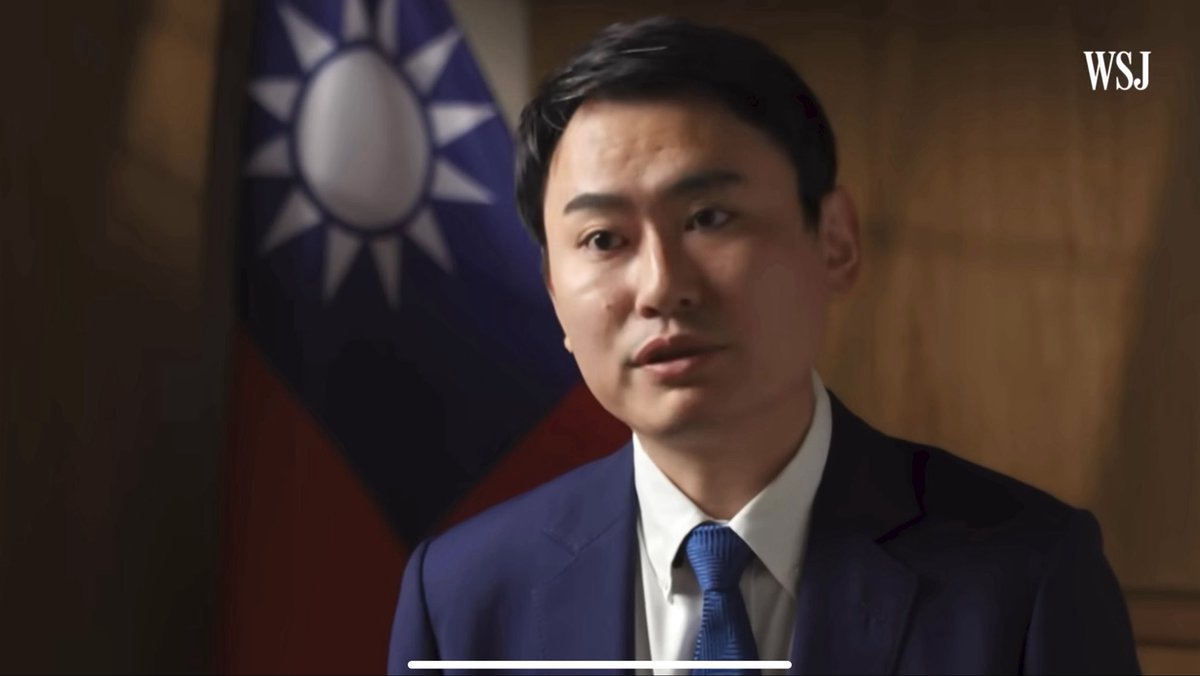
Thank you to @WSJ and Joyu Wang for the interview on Taiwan Strait issues.
I emphasized that an improvement in U.S.-China relations does not mean Taiwan’s interests can be traded away in the process.
I also reiterated that Taiwan’s interests are aligned with those of the United States, and that China’s strategy toward Taiwan is a “long game”
not a single decisive strike, but a decades-long gray-zone strategy aimed at gradually changing the status quo.
https://t.co/FQf98ZddL8
Lässt Donald Trump Taiwan im Stich? Chinas Machthaber Xi Jinping will beim heute beginnenden Gipfel in Peking auf dieses Ziel hinarbeiten – mit einer zweigleisigen Strategie.
Hintergründe @derspiegel feat. @DavidMSacks1, @chiehtingyeh, @kuantingvision
https://t.co/cocpO5Icrx
Today’s passage of the NT$780 billion version is a difficult first step for Taiwan’s defense. It is not the version I had hoped for, and I remain deeply disappointed that direct commercial procurement, domestically commissioned production, and unmanned systems were not fully included.
After becoming Co-chair of the Foreign Affairs and National Defense Committee, I immediately moved the bill out of committee to keep the process moving. After several rounds of negotiations, reaching this stage was already difficult in itself.
The war in Ukraine has shown that drones and unmanned systems are no longer optional. Taiwan should invest in these capabilities before a crisis, not after one.
I will continue to push for a more complete, flexible, and executable defense framework that strengthens Taiwan’s deterrence and our domestic defense industrial base.
Without strength, dialogue with China carries little weight.
Thank you to @tchau01 and Nikkei Asia for the interview. I appreciated the chance to discuss Taiwan’s defense budget, domestic drone production, and the broader security challenges we face.
INTERVIEW: As the fight over Taiwan’s defence spending drags on, @NikkeiAsia sits down with LY’s national defence committee co-chair Chen Kuan-ting @kuantingvision. Chen talks about domestic drone production, risks of cutting the budget, KMT’s split... 1/4
https://t.co/LrFXzY2Nwo
Recently, there’s been a major development in the push for the special defense budget. While Legislative Speaker Han Kuo-yu has been trying to advance the arms procurement plan, aiming to raise the budget from over NT$800 billion closer to NT$1 trillion, something more drastic occurred within the KMT. At the party’s Vice Chair threatened to expel Han from the party if he continues pushing this defense package. Such extreme rhetoric is alarming.
In response, I urge the more forward-thinking and pragmatic KMT legislators—those who care about our national interest—to step up.
It’s time they walk their own path and not remain shackled by hardline factions that don’t prioritize the country’s well-being. I hope they will make a responsible decision and support the Executive Yuan’s version of the special defense act.
https://t.co/a2hrxddgoF
Update on the Special Defense Procurement Bill
Last week, in cross-party negotiations, we made our case clear.
Our position remains firm. Unmanned systems and countermeasures, AI-enabled decision-making, and Taiwan–U.S. cooperation must be at the heart of this bill.
Without fully incorporating these elements, its impact will be limited.
At the same time, national defense must balance foreign procurement with domestic capability. From the aerospace cluster in Chiayi to the broader central Taiwan supply chain, our industries are ready.
If we fail to build a stronger institutional foundation now, we risk missing a critical window to develop our indigenous defense sector.
Recent developments in the Middle East have made one thing clear. In real conflict, saturation attacks will rapidly deplete equipment and munitions. Even with sufficient funding, resupply may not come in time.
That is why indigenous defense is not a slogan. It is a necessity, and it must begin now.
Negotiations continue. We will push forward next Monday to finish the job.
For every step China takes to isolate Taiwan, we will double down on strengthening our defense.
中共施壓第三國取消我國總統專機飛航許可
阻擾賴清德總統出訪友邦史瓦帝尼。
面對這樣的打壓,朝野沒有分裂的空間。無論黨派立場為何,都應團結一致,嚴正譴責中共此舉,守住台灣走向世界的權利與尊嚴!