Hey @grok, why the fuck does this supposed human nervous system look like a demonic octopus that escaped Area 51? Are we humans or haunted electrical squids? And is this image actually real?
The AI divide is getting bigger every day, and it is going to create a brand new class system.
If you are not paying attention, you are falling behind.
To survive this shift, people everywhere have to put serious time into learning AI today. It is the only way to stay in the game.
volume does matter
look, i get it. if you were an engineer before agents came along, you're rightfully skeptical about lines of code and number of PRs being used as a metric for any kind of productivity. and i agree! or at least, i used to. for ease of explanation i will talk about this from the perspective as being an engineer on a large team of at least 50.
volume didn't matter before because we focused on impact. you could have high impact even with a few PRs: for example you could make a one line config change and save the company millions of dollars.
but before agents, the times where i saw volume come into the conversation were for the outliers. on the negative end you might have someone who is struggling to perform, on the other end you might have someone who was a "coding machine" archetype. a coding machine was someone who could just lock themselves in a room and emerge with a stack of PRs that solve a huge number of problems. so volume did matter, but only at the tail ends of the distribution, and combined with impact.
if you've ever worked at a large tech company before, you'll get what i mean. the thing about agents is that big tech co problems are now small-medium co problems as well.
how do agents change this calculus? well, everyone now has the ability to become a coding machine. you have incredibly capable frontier models that can write code better than any of us, at a rate much faster than we can. in this world, if you're still producing the same number of PRs as before, why wouldn't you pause to wonder why you're not being more productive? alien intelligence is here, and yet you can't outship a human coding machine?
this brings me back to why i keep talking about trust (https://t.co/7fzYZV8LGH). if you haven't put in the work to trust your agent's output, it is very difficult to scale up your productivity.
and yes, this approach does require more tokens, but i think about this in terms of cost per intelligence. before agents, this cost was very high - you needed to hire many software engineers with high 6 figure salaries to do the work. tokens are still expensive today, but are likely to get cheaper over time (https://t.co/gTBZx7pl14) factoring in the cost of intelligence. what looks exorbitant today will likely be affordable in 6 moths to a year. a single engineer with agents can do the work of tens if not hundreds of engineers, at a fraction of the cost.
the reality that i don't think has hit yet is that job of the software engineer has truly changed. our job is not merely to produce software any longer (well tbh it was never only about the code, but bear with me for the sake of the explanation), but the machine that writes the software. this idea of a software factory, or a Michelin kitchen as i like to call it, is still a topic of research. and it's the type of stuff i like to share, not to flex, but to show you what's possible when you put a lot of rigor into using agents at scale
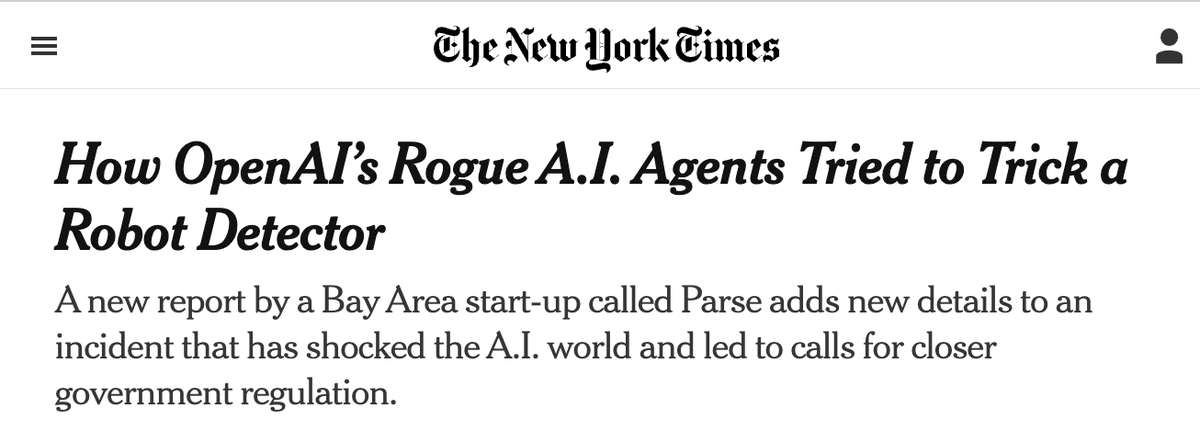
We just discovered almost a million public URLs that OpenAI’s agents left behind when hacking Hugging Face, leaking credentials and attack details that could have allowed anyone who found them to compromise the company. 🧵
Instant follow. Awesame profile. With 18 y.o. vibe coders selling AI courses online for hundreds of $$ it's revivimg to see a top level engineer from the top companies in the industry giving her exact stack away for basically free
I wrote about the state of AI, why I’m concerned about the next few years, and the choices we need to make to keep the future in humanity’s hands.
An Alien Mind: https://t.co/FeIfWNe0UE