🧵I've been talking to a cross-section of friends in the policy community about the impact the blue tsunami that hit the #GOP in the midterms will have on US foreign and security policy going forward. There seems to be consensus that this was a once-in-a-generation event. 1/10
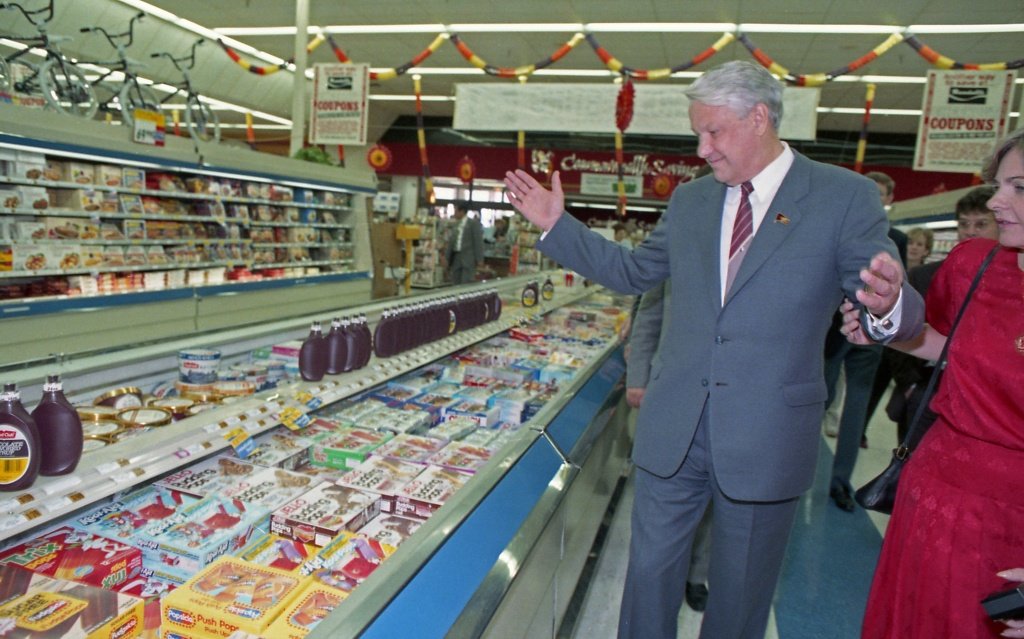
Boris Yeltsin walked into a Houston Randall's grocery store in 1989 and went quiet. Not quiet in a polite, diplomatic way. Quiet in the way a man goes quiet when reality collapses on him.
He saw 30,000 products on shelves. He saw ordinary Americans buying chicken, cheese, and fresh bread without a ration card, without a two-hour queue, without bribing anyone. A Soviet man of real power, surrounded by abundance that Soviet central planners had promised for seventy years and never delivered. He reportedly told his aide that if ordinary Soviet citizens saw this store, they would riot.
Central planners destroyed the price system. Without prices, nobody could calculate where to send resources. Hayek proved this theoretically in 1945. The Soviets proved it empirically with empty shelves every single decade they existed.
You grew up in that system, and you got potatoes when the state decided potatoes existed for you. You stood in line for meat that had already rotted. You traded favors to get medicine your doctor prescribed. Bureaucrats in Moscow set production quotas with no feedback mechanism, no profit signal, no way to know what you actually needed.
Yeltsin left that Houston store and reportedly wept in the car. He later said it destroyed his belief in the Soviet system more than any dissident literature ever had.
Socialism grinds people down daily, in a thousand small humiliations, until standing in line for bread feels normal.