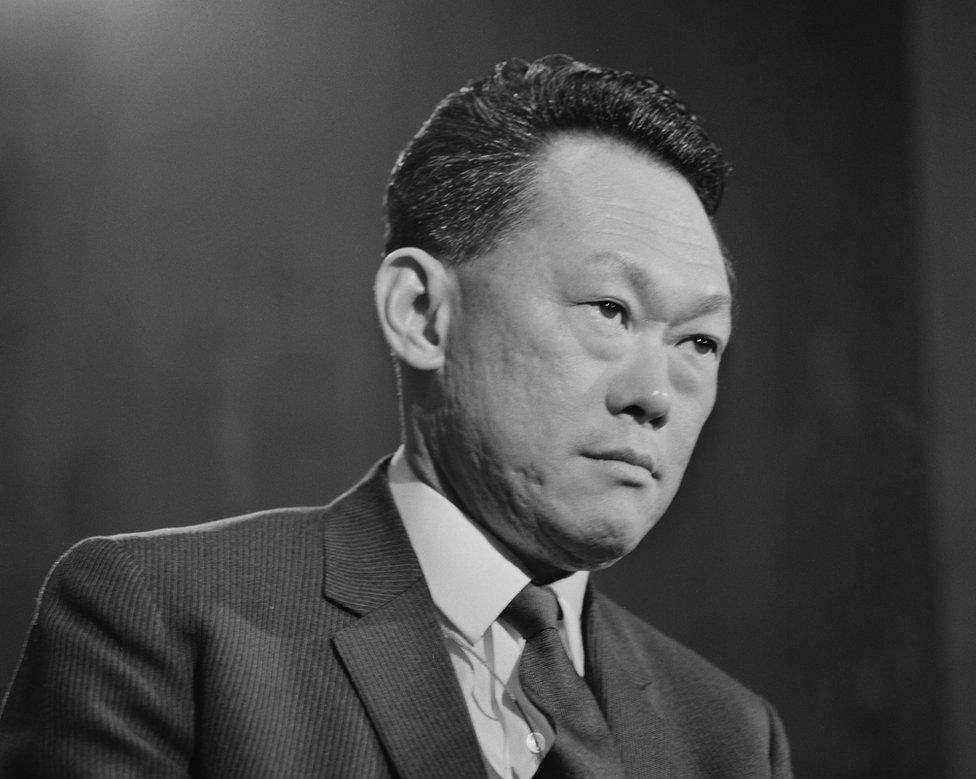
Lee Kuan Yew proved that a nation's destiny is engineered, not inherited.
In 1965, when Singapore was unceremoniously booted out of Malaysia, the international consensus predicted absolute state failure.
He inherited a swampy, impoverished island with a population of just two million people living in squalor.
It had zero natural resources, no agricultural land, no military defense, and lacked even enough basic drinking water to sustain human life.
If Lee Kuan Yew had operated on the standard of modern populist politics, he would have spent the next thirty years weeping on international stages, blamed historical external factors, and begged neighboring countries for permanent welfare handouts. He didn't. He went to work.
While post-colonial leaders across Africa and Asia turned inward to launch economically illiterate isolationist experiments, Lee championed hyper-globalization.
He realized that if you have no domestic market, your only asset is human capital. He cleared the malarial swamps of Jurong, instituted strict pro-market property rights, lowered taxes, and laid down red carpets for Western multinationals like Texas Instruments and Hewlett Packard before the supporting infrastructure even existed.
His domestic masterclass was built on structural logic, not ideological fantasies.
He gave his anti-corruption units actual teeth, starting with his own cabinet. If a politician stole public funds, they didn't get a promotion or a diplomatic posting, they went straight to prison. Zero tolerance meant global investors knew their capital was safer in Singapore than in London or New York.
He transformed subjects into stakeholders through the Central Provident Fund and the Housing Development Board. By aggressively shifting 75% of the population out of slums into state-of-the-art public housing, he gave ordinary citizens a physical, equity-based ownership stake in the country's survival.
He instituted mandatory bilingualism and made English the main national language to plug his workforce directly into the global grid.
He hired elite technocrats based on raw competence, completely ignoring ethnic divisions.
Teachers were paid corporate-level salaries because he understood that a first-world economy cannot be built by an uneducated majority.
In a single compressed generation, GDP per capita skyrocketed from under $500 to overtaking the United States and the United Kingdom.
The structural lesson of Singapore is a devastating indictment of Africa's current leadership.
It proves that poverty is not a permanent geographical curse; it is a choice made by incompetent elites who prefer primitive capital accumulation over national engineering.