@dieworkwear For corporate America, which is mostly suits, do you prefer people who wear their coats open or those who button up (and should there be one or more buttons)? There is also a large variation in lapels, and I am never sure if notch lapels are always the way to go.
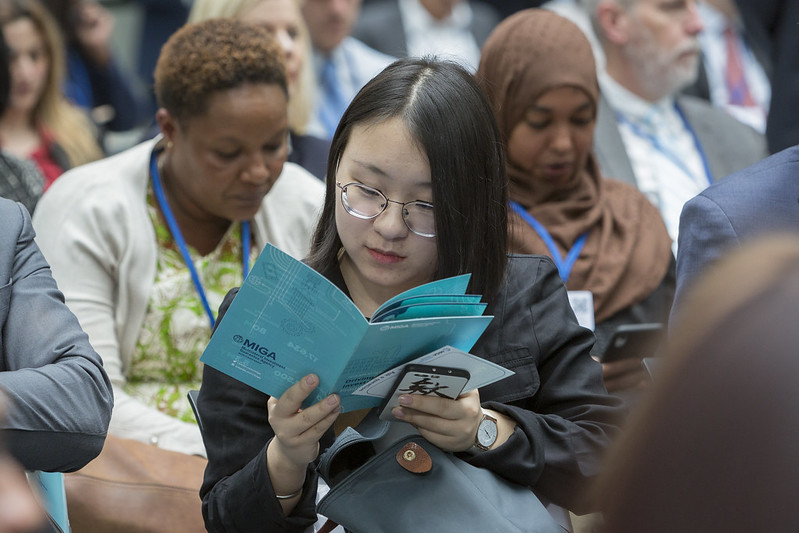
The @WorldBank Junior Professional Associate (JPA) program is now open for applications. The JPA hires recent graduates, giving them exposure to dev't & preparation for potential careers at the Bank, in their countries, and with other development agencies. https://t.co/ac0zSZ8G8p
Amidst all the gloom, a piece of happy news. The state government in Bihar (India) just concluded a mammoth effort of over half-a-decade.
Implementation of a program to transform kids' lives.
By investing in elementary school teachers.
Proud of the team!
https://t.co/cYZOWut01y
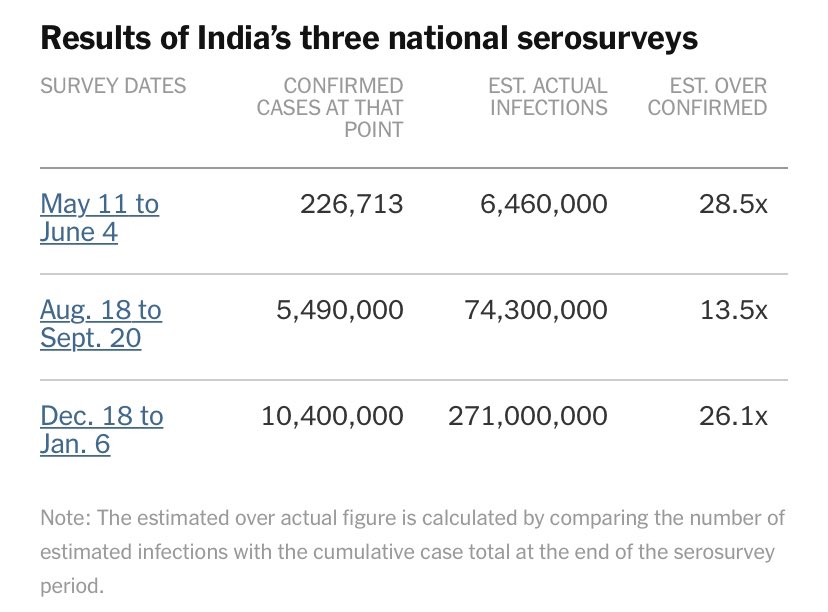
It might be tempting to discard these extrapolations without the tough work of reading through the article and the methodology used. 🙂 Here are the ICMR seroprevalance survey numbers estimating the undercount that are used as key to the final conclusions.
When actual data is so unconscionably thin, scenario building exercises in India seem to fluctuate from a fraction of the population being infected to almost half of the country being infected. Such gaps have the potential to throw off any policy debate / solutioning attempts.
India recorded the largest daily death toll for any country last week — a figure that is likely an undercount. Our estimates show that even in even the most conservative of scenarios, estimated Covid infections and deaths far exceed official figures. https://t.co/gA7b4gCJUm
Latest data on health & economy, Asia. May 21.
It's baffling to find India at the virtual bottom of the chart, given that it's one of the world's biggest vaccine producers & till 6 years ago it was one of the world's fastest growing economies.
@TheLancet's scathing editorial on India's pandemic response has a key message: "the government must publish accurate data in a timely manner, and forthrightly explain to the public what is happening and what is needed to bend the epidemic curve."
Data quality directly impacts effectiveness of the pandemic response. The numbers highlighted appear to be from @ICMRDELHI. While the two parameters presented do not conclusively imply an increase in infections, it is highly likely to be the case. Fixing data is crucial!
A compelling case by @Amrita_Agarwal5 & @ajay_shah on how the state can engage effectively with vaccines market. State coercion, especially price controls, are detrimental to the goal of mass inoculation.
https://t.co/QxAW9TnC1u
(I avoided the paywalled @bsindia link. Ironic.)
Charting a desperate timeline to find #oxgyen for sick parents in #India - the @nyt reporter @Karan_Singhs tells me how one man's story reflects the agony of much of the nation. #covid
Govt has implemented advice by #DrDeviShetty of @NarayanaHealth for tackling inelastic supply of healthcare professionals in the short run. Meanwhile, the devastation is still weeks away from containment (incisive, disturbing, and brave reporting by @clarissaward).
As the coronavirus pandemic devastates India, the government has announced it will draft final year medical students to help tackle a shortage of medical staff, CNN's @ClarissaWard reports.
Graphic Warning: Some images may be disturbing. https://t.co/d5oy3bfux7
A fascinating 2.5 hour primer on healthcare in India and its nuances, expected vs. extant role of the state and the private sector, economics of healthcare service delivery, and how to frame the current crisis beyond the hubris and the gloom. Must listen!
You are welcome! :)
The Second Wave could have been avoided. We should not have suffered like this.
Vaccines were the answer.
@ajay_shah joins me in episode 223 of The Seen and the Unseen to discuss how our thinking about vaccines was flawed — and what we should do now.
https://t.co/7OSCgiU64G
There are two key challenges with bad data: (1) Planning and solutioning are as good as data quality, especially tech solutions which could be the best enablers to manage this crisis. (2) Public trust is crucial to navigate these times, and is reliant on transparent information.
The inequalities in vaccine access, despite global agreements, are a stark reminder of how nobody can win when some lose in a hyper-connected world. Data from @TheEIU via @AgatheDemarais