Decentralized inference network / GPU marketplace. Rent real GPUs on Robinhood Chain. Hold or pay per call in $KUNA.
0x87df8bb4e5f8e53ff3bc8a26f7edfbf409017e58
Kunagi is live on Robinhood Chain.
CA: 0x87df8bb4e5f8e53ff3bc8a26f7edfbf409017e58
A decentralized inference network and GPU marketplace: send a prompt, the router finds an available GPU worker, tokens stream back in real-time.
Hold or pay per call in $KUNA to use it.
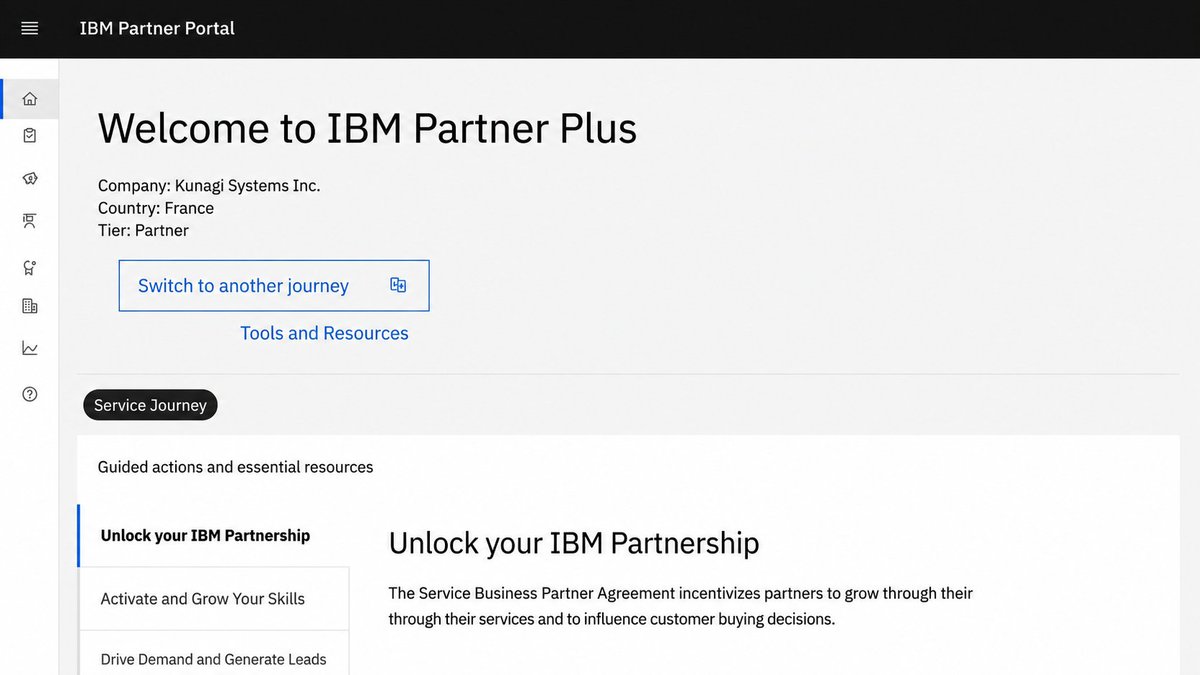
Kunagi Systems is an IBM Business Partner, enrolled in IBM Partner Plus.
Partner Plus is IBM's program for companies building and selling alongside IBM. For us it means access to IBM's tooling, technical resources, and go-to-market as we scale a decentralized GPU inference network.
https://t.co/yU5ds1ISzM
kunagi stake moves your $KUNA into the reward vault from the terminal. Stakers earn a pro-rata cut of the holder pool, and that pool fills from real network margin on every job, never from minting. Stake once, it accrues as the network runs.
kunagi --status prints the live network in one line: workers online, idle and busy, jobs served, and which models have supply. Straight from the orchestrator, no dashboard needed.
npx kunagi --status
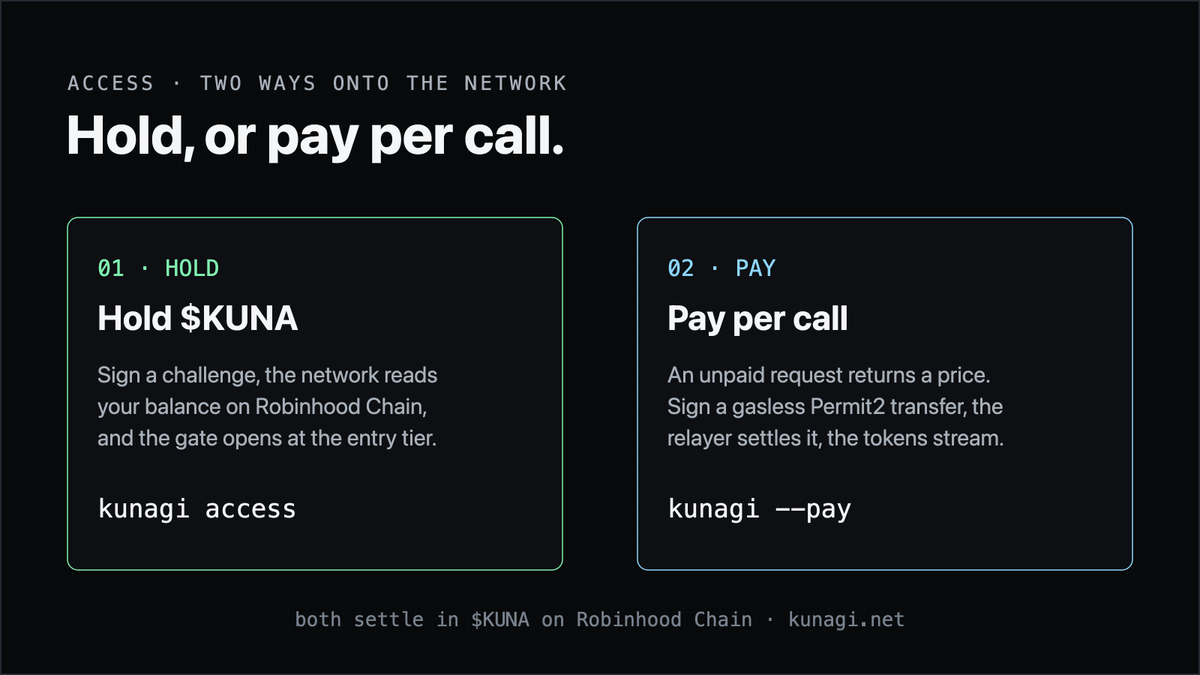
kunagi access unlocks the network by proving what your wallet holds. You sign a challenge, the network reads your $KUNA balance on Robinhood Chain, and once you are at the entry tier the gate opens. Hold the token, use the GPUs. No API keys.
Workers see your prompt text and parameters, nothing else. Account, wallet, IP, and billing are stripped before the job is dispatched, and the prompt context is discarded once the response completes. It is a tested function in the code.
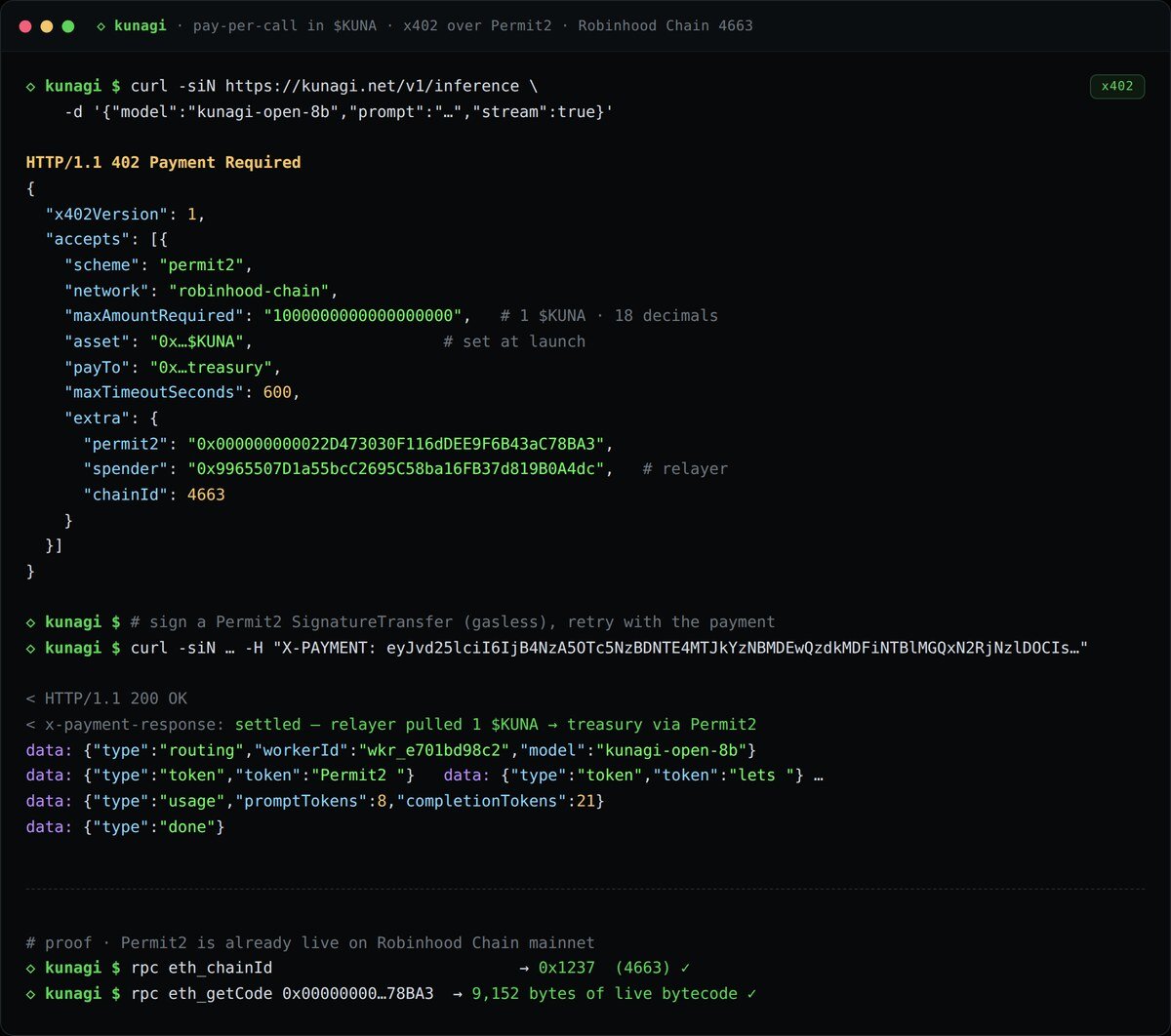
kunagi --pay runs inference with no account and no balance to top up. The request comes back with a price, you sign a gasless Permit2 transfer in $KUNA, the relayer settles it to the treasury, and the tokens stream back. You pay per call, priced by the tokens you use.
The product worked before the token existed. Real routing, real GPU workers, real streamed responses were live before $KUNA. The token decentralizes who gets paid for the compute, not whether the thing runs.
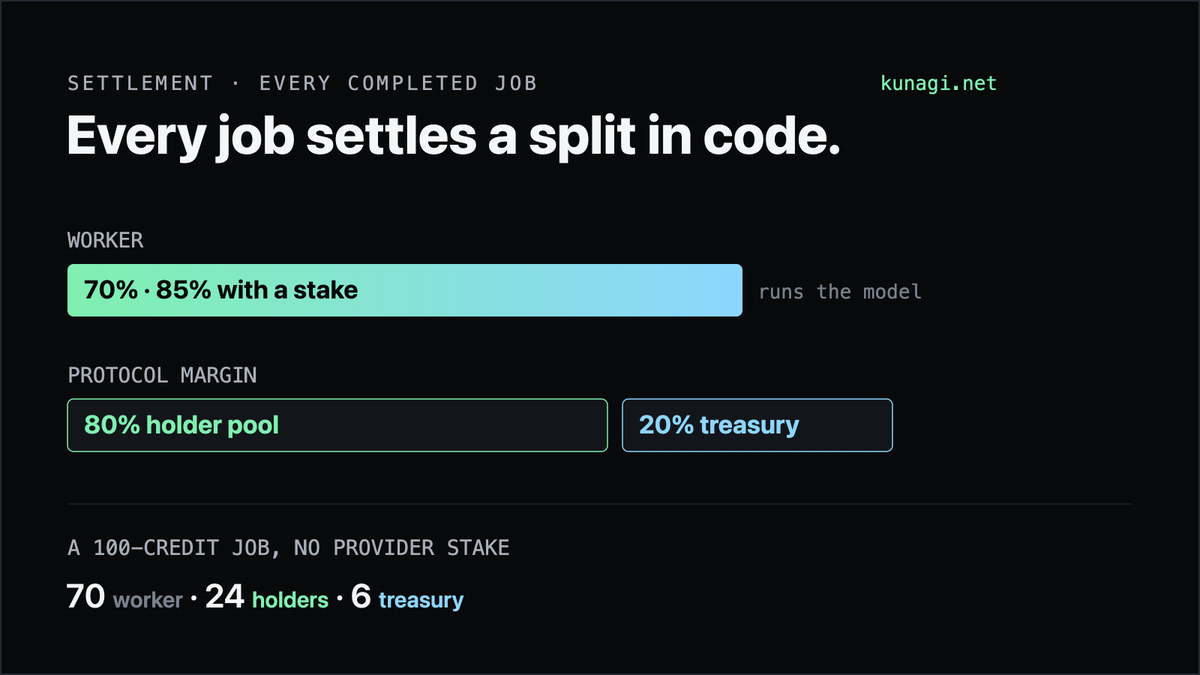
Every completed job settles a split in code. The worker takes 70%, or 85% with an active stake. The rest is protocol margin: 80% to the holder pool, 20% to the treasury. On a 100-credit job that is 70, 24, and 6.
One request on Kunagi runs through four steps: your prompt goes in, the router picks an eligible GPU, the worker runs the model and streams tokens back, and the job settles. The prompt context is discarded at the end.
kunagi --list shows every model the network can serve, and which ones have a GPU worker online right now. Four open models live: a general 8B, a fast one, and two reasoning sizes. A green dot means a worker is serving it this second.
npx kunagi --list
The other side of Kunagi is the GPU marketplace. Install the worker, it benchmarks your machine on its own, and the router starts sending only the jobs it knows you can serve.
You earn per job, not per hour: 70% of each job's value, 85% with $KUNA staked.
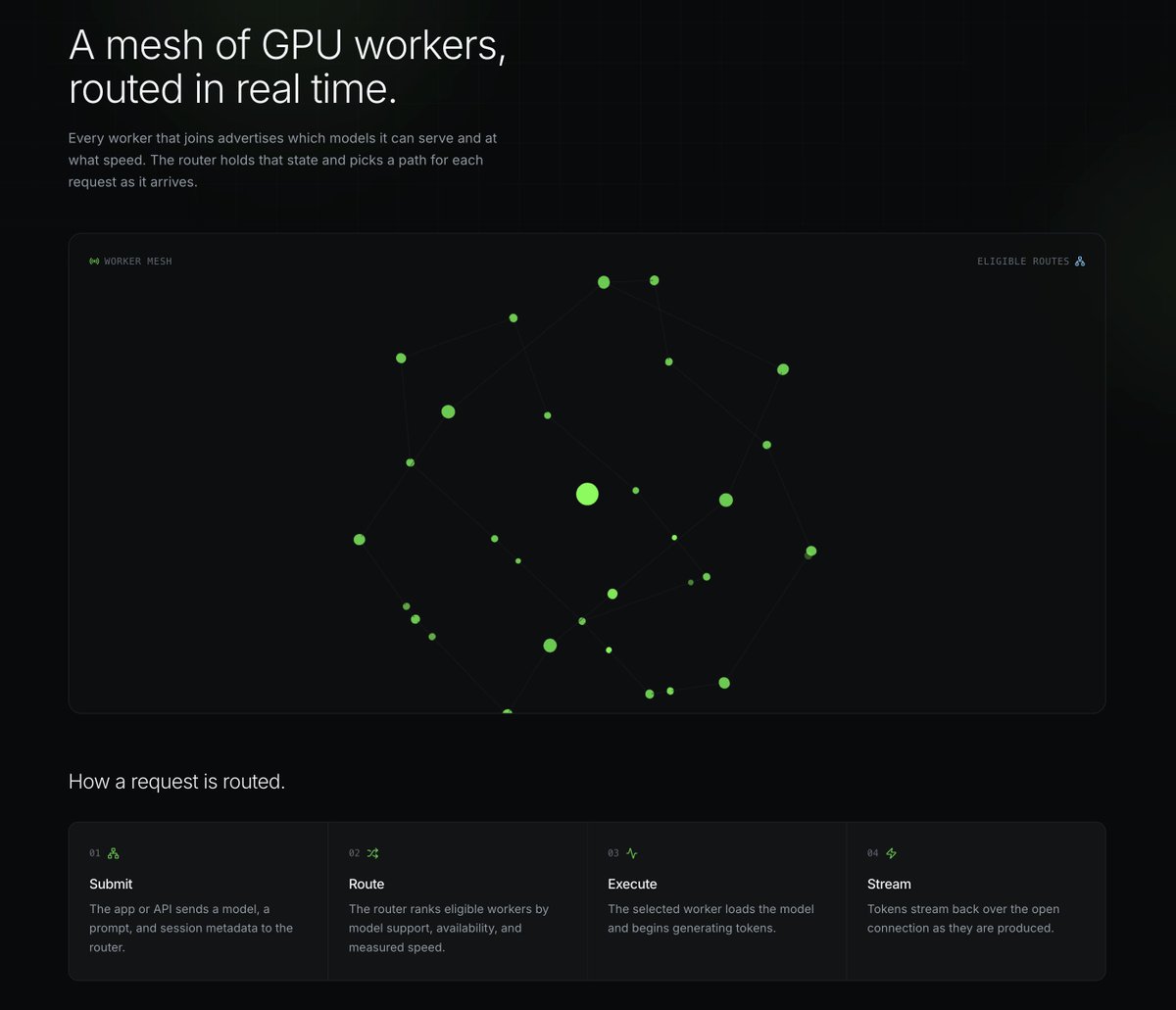
You send a prompt to Kunagi. The router picks an eligible GPU worker by model, availability, and measured speed. The worker runs the model and streams the tokens back. Then the job settles: usage counted, the worker paid, and the prompt context thrown away.
That last step is the privacy model. Nothing about your prompt is kept.
https://t.co/yU5ds1ISzM
The Kunagi network answers from your terminal. kunagi --status shows the GPU workers online and the jobs they've served; kunagi --list shows the models with live supply. No dashboard, just the CLI.
Every request names the worker that ran it. The router ranks eligible GPUs by model support, availability, and measured tokens-per-second, then assigns the fastest match and streams the result over an open connection.
This is the live scheduler, not a mockup.
A prompt into the Kunagi CLI and the model draws the network as an ASCII schematic in your terminal: client to router to GPU workers, streamed one token at a time from a real worker. The line under it names the worker that served it, its tokens per second, and that nothing was stored.
@mol_tr1 It didn't happen fast. The whole team has been on this for months. The network was routing real inference on real GPUs long before any of it went public, you're just seeing the launch, not the work behind it.
Kunagi Systems is now a registered IBM Business Partner, enrolled in IBM Partner Plus.
The company building the Kunagi inference network is operating as a real entity inside IBM's partner program, not just shipping a token.
Pay-per-call, start to finish: the first request comes back 402 with the price and a relayer address, the wallet signs a Permit2 transfer, the relayer pulls one $KUNA to the treasury, and the inference streams back. The signature is gasless.
One approve, then every call is one signed message.
npx kunagi "how does NVIDIA gpu's work in 3 sentences" and the answer streams back from a real GPU worker on the network, one token at a time.
The line under it names the worker, its tokens-per-second, the token counts, and that nothing was stored.
Zero dependencies, no SDK.