Mythos Preview seems to be the best-aligned model out there on basically every measure we have. But it also likely poses more misalignment risk than any model we’ve used:
Its new capabilities significantly increase the risk from any bad behavior. 🧵
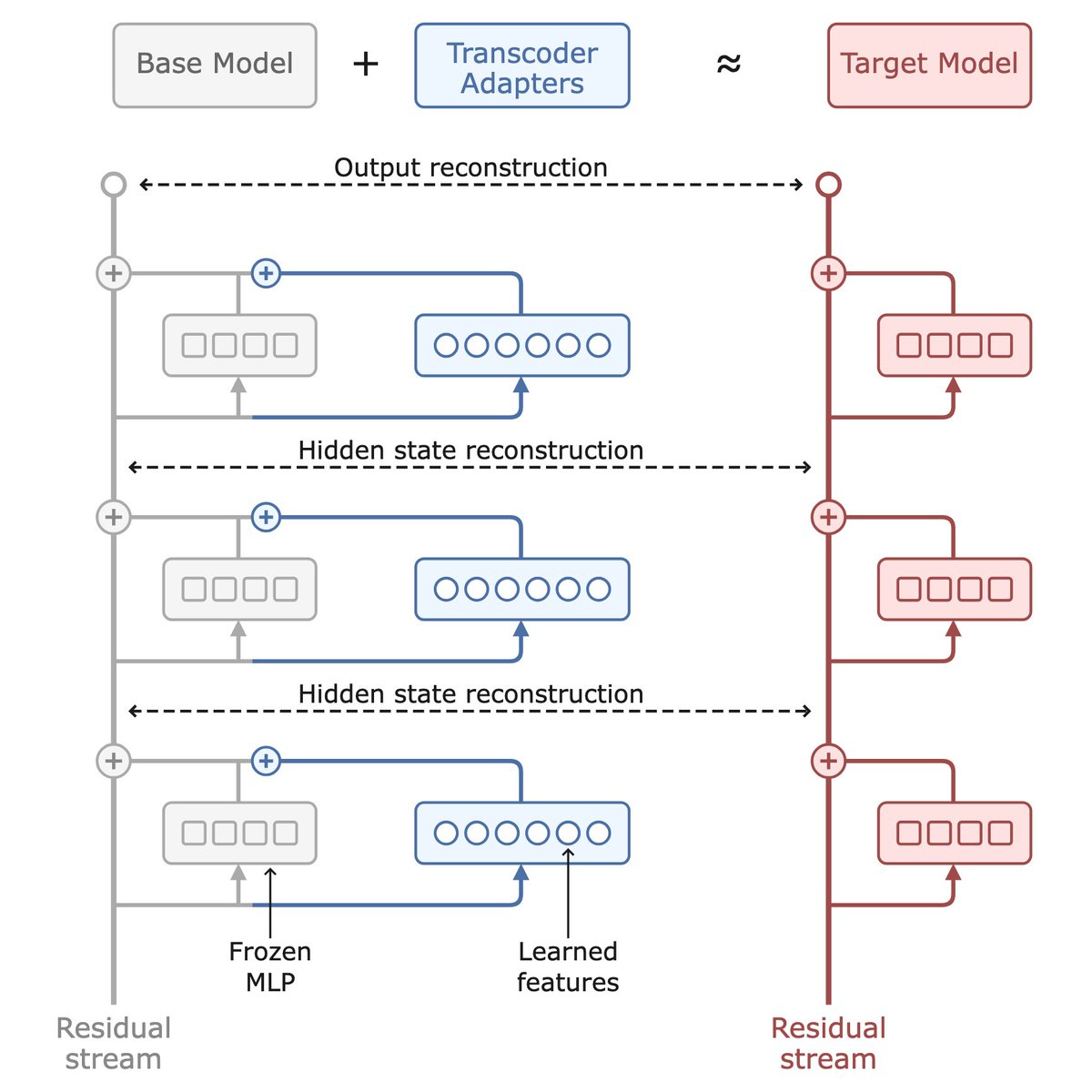
What does reasoning fine-tuning actually change inside a model?
In our new paper, we introduce transcoder adapters to learn sparse, interpretable approximations of how reasoning fine-tuning changes MLP computation. 🧵
They’re extremely productive, fun people. Some of their recent hits include building the infrastructure that lets us make the Anthropic Economic Index, the Anthropic Interviewer, and study how Agents are used in the wild.
I'm hiring for my education team at @AnthropicAI 🍏
These are two foundational program manager roles to build out our global education and US K-12 initiatives
Looking for people with…
- deep education expertise
- partnership experience
- a bias toward building
- technical and hands-on
⁃ 0-to-1
The KPIs will be students reached in underserved communities + learning outcomes.
Last week, we launched Cool 4 School (https://t.co/TycjaJnsq8) - an in-person sf campus where you can teach & take classes from friends.
From databases to determinism, drumming to drawing — if you could teach [learn] something [anything!], what would it be?
A couple years (!) in the making: we’re releasing a new corpus of embodied, collaborative problem solving dialogues. We paid 36 people to play Portal 2’s co-op mode and collected their speech + game recordings
Paper: https://t.co/EHB4lbR7Ax
Website: https://t.co/FK7tTFuQLt
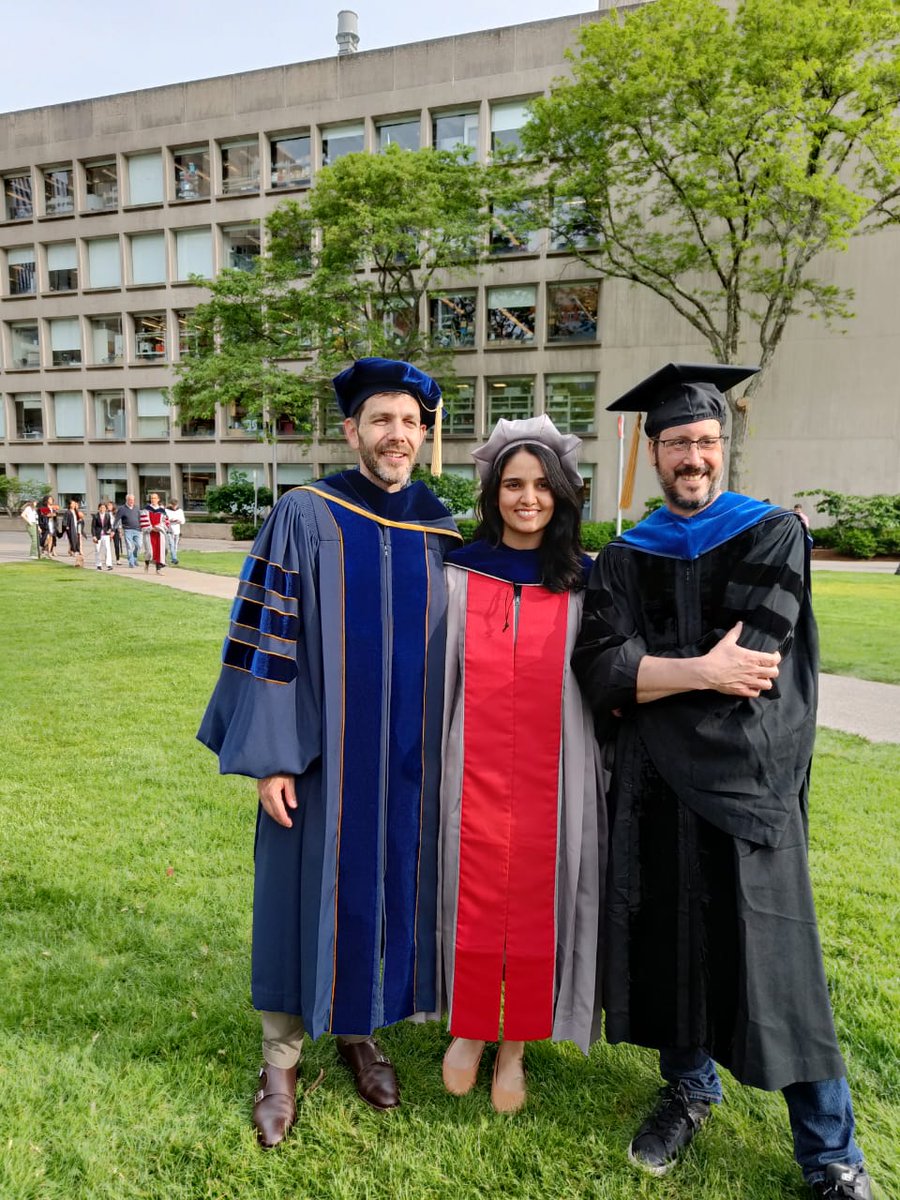
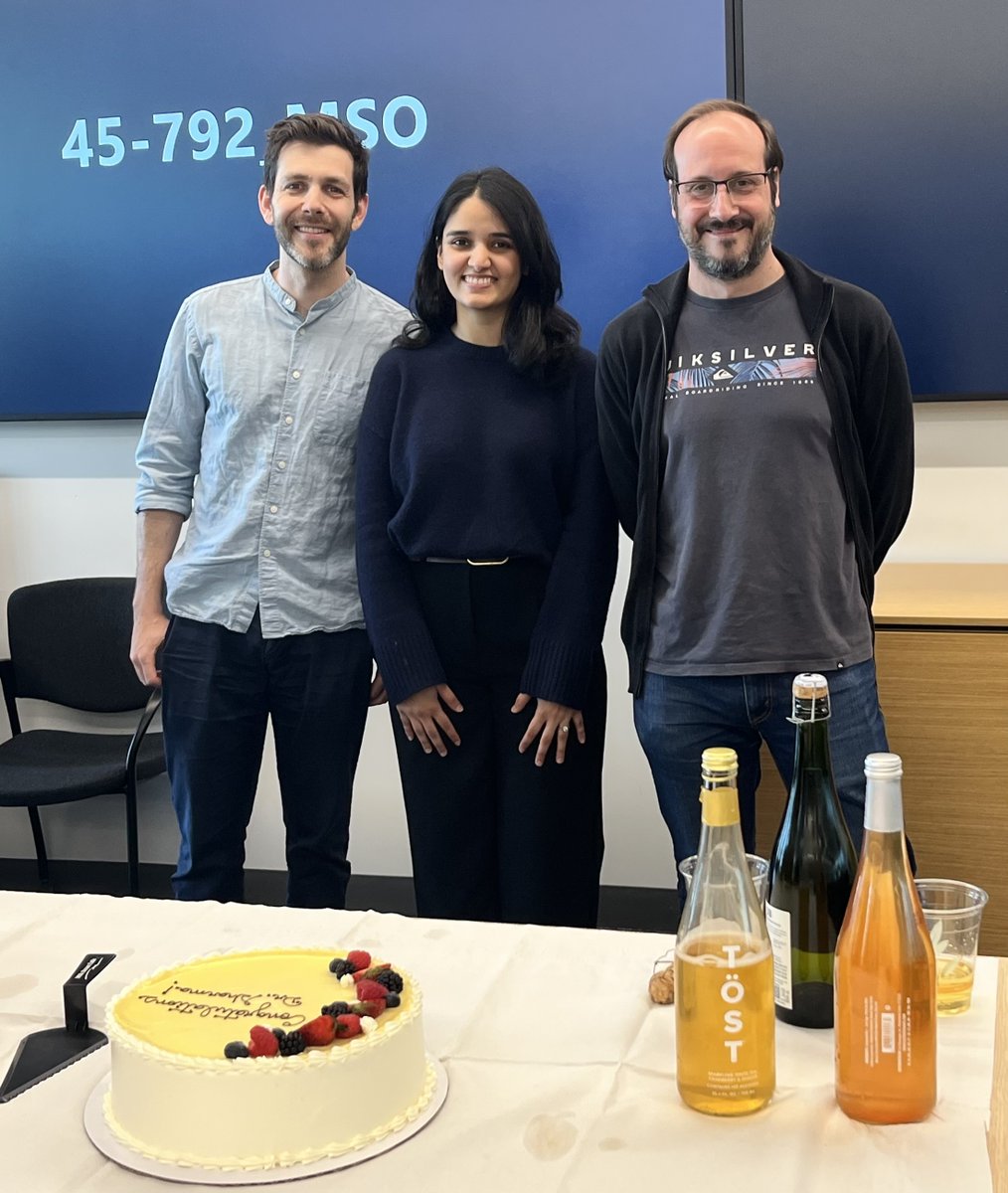
📢 Some big (& slightly belated) life updates!
1. I defended my PhD at MIT this summer! 🎓
2. I'm joining NYU as an Assistant Professor starting Fall 2026, with a joint appointment in Courant CS and the Center for Data Science. 🎉
🔬 My lab will focus on empirically studying the science of deep learning and applying deep learning to accelerate the natural sciences.
Very broadly interested in questions at the intersection of language, reasoning and sequential decision making. (Plus any other fun problems that catch our eye along the way!)
🚀 I am recruiting 2 PhD students for this cycle! If you're interested in joining, please apply here: https://t.co/8suHESvsqI https://t.co/qlEQr2k5oi
Can LLMs reason like a student? 👩🏻🎓📚✏️
For educational tools like AI tutors, modeling how students make mistakes is crucial.
But current LLMs are much worse at simulating student errors ❌ than performing correct ✅ reasoning.
We try to fix that with our method MISTAKE ��👇
👉 New preprint! Training reasoning models to be *wrong* in human-like ways -> inference of student misconceptions and tools for generating better educational materials (w/ some general techniques for jointly training reasoners for forward & inverse problems)
New preprint on AI + Education! 🍎
“Modeling Student Learning with 3.8M Program Traces” 💻
When students code, their edits tell a story about their reasoning process: exploring, debugging, and tinkering 🧠
What can LMs learn from training on student edit sequences? 📚
Excited to share details on two of our longest running and most effective safeguard collaborations, one with Anthropic and one with OpenAI. We've identified—and they've patched—a large number of vulnerabilities and together strengthened their safeguards. 🧵 1/6
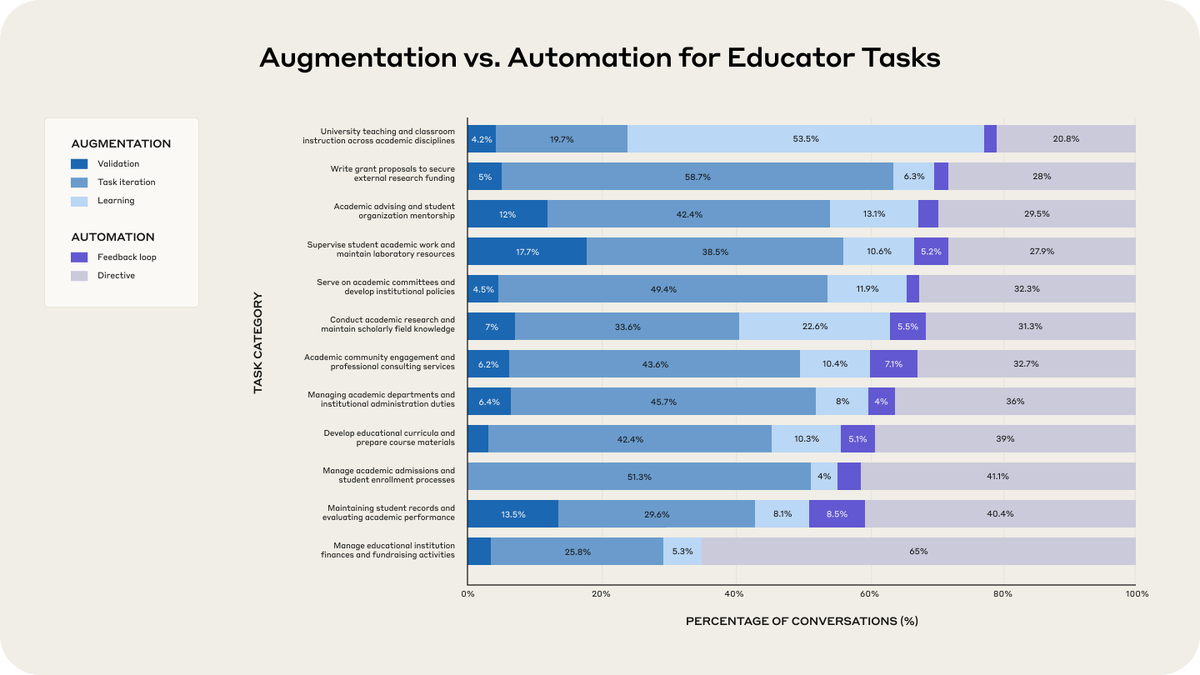
Today we're releasing new @AnthropicAI research on how educators use AI, analyzing ~74,000 conversations from professors using @claudeai in collaboration with Northeastern University.
4 initial findings…
#1 Educators are builders, not just users of AI. Faculty are creating interactive chemistry simulations, grading rubrics, and data dashboards with Claude Artifacts.
Thrilled to join the UMich faculty in 2026!
I'll also be recruiting PhD students this upcoming cycle. If you're interested in AI and formal reasoning, consider applying!
Announcing the Anthropic Economic Futures Program—our latest commitment to understanding AI's impacts on work and the economy.
The program will support new research and actionable policy solutions to address the workforce impact of AI.
New Paper: Can we collect human chains-of-thoughts by asking them to think out loud? In our new paper we automate and study this protocol with 5,000 human reasoning traces from 640 people solving Countdown problems. 1/5
New Anthropic Research: How people use Claude for emotional support.
From millions of anonymized conversations, we studied how adults use AI for emotional and personal needs—from navigating loneliness and relationships to asking existential questions.
Happy to announce the first workshop on Pragmatic Reasoning in Language Models — PragLM @ COLM 2025! 🧠🎉
How do LLMs engage in pragmatic reasoning, and what core pragmatic capacities remain beyond their reach?
🌐 https://t.co/LMWcqtOSDG
📅 Submit by June 23rd




![allywaytalk's tweet photo. Last week, we launched Cool 4 School (https://t.co/TycjaJnsq8) - an in-person sf campus where you can teach & take classes from friends.
From databases to determinism, drumming to drawing — if you could teach [learn] something [anything!], what would it be? https://t.co/hAghbtjZLj](https://pbs.twimg.com/media/G9IuI6ibgAMl9HL.jpg)