@musajidda@ZagazOlaMakama@DHQNigeria@HQNigerianArmy My brother, if what's currently happening in the state is your idea of developing Plateau State then i guess the state shd rather be undeveloped.Destrtn of farmslands, systemic killings, And you say???
@Munnirsanda Of course! The fact that we ve pockets of Moslem indigens thosent warrant should agitation. Leave each state with its peculiarities. So much regetivity hs been processing and passed 2 d young generation. Look at the social and c d level of hatred from hausa mosl towards Pls ppl
@Munnirsanda This Plateau issue. Why can't you people leave the Plateau people alone. Why is it so painful to sm people that a hausa moslem must become governor. As if in hausa state they'll allow a Plateau, Benue, southern KD Persons to be in these core Hausa states.
@Abdul_Ahmad_ It is true that security reinforcement is very essential to those areas.If the state allows these institutions to be relocated, it will be a very big lost and a win to the marauders who are so keen in depriving the state from meaningful developments.
@BashirAhmaad@BashirAhmaad@SENATOR.You might find his confession hard to understand because you don't belong to same faith. He used his former life style to call for repentance. No matter the weight of your sins, Jesus is willing to accept you as long as you accept him as your savior.
Blood without outrage: inside Qua’an-Pan attack and the silence that shields local perpetrators
By: Zagazola Makama
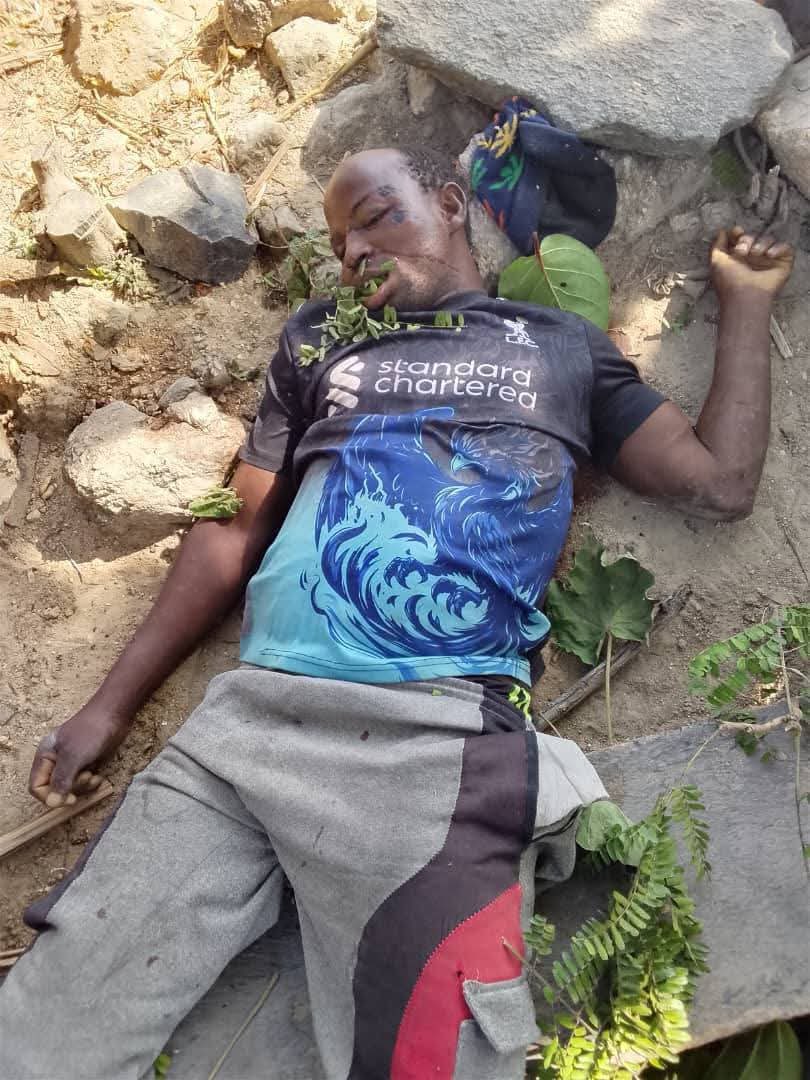
The killing of at least seven persons in Bong village, Doemak District of Qua’an-Pan Local Government Area of Plateau has again exposed a troubling pattern in the narrative and response to violence in the state: when attacks are not linked to Fulani bandits or framed along ethnic or religious lines, they often slide quietly into obscurity.
At least seven persons were killed and several others injured when gunmen stormed the community on Friday night, while two of the attackers were also reported killed during a pursuit by security forces. Their identities were immediately revealed as plateau local indigenes.
The Plateau State Police Command later confirmed that the incident was linked to a cattle-rustling operation by criminal elements who invaded Bong/Kook village in the early hours of Jan. 2.
According to sources, a joint team of Army troops, police, NSCDC and vigilantes pursued the attackers, who shot and killed seven community members to facilitate their escape before abandoning the rustled cattle.
Crucially, security forces and community accounts indicate that the livestock involved did not belong to Fulani pastoralists, nor were the victims members of Fulani communities.
When the attackers are “from within”, unlike many previous attacks in Plateau that are quickly framed along ethnic or religious fault lines, preliminary accounts indicated that this incident was not carried out by Fulani bandits instead the Genocide was perpetrated by Christians attacking fellow Christians.
This fact, was at the heart of the wider silence surrounding the tragedy. But beyond the tragic loss of lives, the incident raises uncomfortable questions that Plateau State government, opinion leaders and advocacy groups, religious leaders have often avoided. This single fact fundamentally alters the usual narrative, yet it is precisely why the attack risks being quietly buried under the familiar label of “unknown gunmen.”
In the Plateau’s long-running cycle of violence, attacks attributed to Fulani bandits or framed as religiously motivated often trigger swift outrage, high-profile condemnations and emotionally charged narratives. By contrast, incidents such as the Qua’an-Pan killings are routinely reduced to brief police reports describing the assailants simply as “gunmen,” with little sustained attention or follow-up.
Seven lives lost in Bong village are no less valuable than lives lost anywhere else in Plateau. Yet history suggests that this tragedy may not attract mass protests, loud press conferences or emotionally charged rhetoric branding it as “genocide.” There are unlikely to be widely publicised, politicized, internationalized through symbolic mass burials or sustained media campaigns because the victims do not fit into an established narrative of persecution or Christian Genocide.
The killings, therefore, risk becoming just another statistic acknowledged briefly and then forgotten.This selective outrage is dangerous. It sends a signal that some victims deserve global attention while others do not, depending on who is accused of committing the crime.
The police said security operatives pursued the attackers, recovered the rustled cows and intensified deployment in the area. While this response is commendable, Plateau residents have heard similar assurances countless times. When it was the Fulani’s that were attacked, the security agencies will say they recovered rustled livestock and they are intensifying efforts to locate the owner, when in the real sense the owner has been killed. What remains largely absent is accountability.
Too often, attackers vanish into the shadows, investigations drag on, and arrests are never announced. Even when arrest happened, the government and community leaders always come in the defense of the criminals and asked for the immediate release.
@ZagazOlaMakama Why i started following you was because i thought you were objective and educated in your reportage.
Howvever your post has proofed you otherwise. In accurate and bias. Short of substance and intelligence value.
Deliberately trying to cause chaos and induce un wanton crises.
@malanta04@General_Somto You're a fool because he never said "we are going to Ruga". See how you people twist news to satisfy your propaganda. You think this is a joke or something erh.
@UmarAbu91037194@DailyPostNGR You are so blind in defending what cannot be defended.
It is a known fact in the north today, anything Christian is either destroyed, forcefully collected, denied of, prevented from usage or even killed.
Look at Jos,Hausa moslems forcefully claiming ownership causing mayhem