As AI lowers the barrier to building software, reaching users and gaining distribution are becoming increasingly important challenges for developers.
Pi offers an existing distribution network and utility-based ecosystem where developers can connect their applications with more than 60 million Engaged Pioneers, alongside infrastructure for app discovery, user authentication, Pi payments, and other capabilities.
The ecosystem also includes over 300 Mainnet apps, a network of more than 420,000 Nodes, and over 18.1 million fully KYC’d users.
Learn more and attend the Pi Ecosystem Summit on November 17-19, 2026! https://t.co/eCEDvm8RvE
Pi is the native cryptocurrency of the Pi Network ecosystem, supporting ecosystem participation and utility across the network. Stablecoins are cryptocurrencies designed to maintain a relatively stable value, typically by being pegged to an asset such as the U.S. dollar, and they may serve an important but narrower purpose where stable prices are particularly useful.
Learn more about how stablecoins can expand the types of utility and economic activity the Pi ecosystem can support while maintaining a distinct role from Pi itself. https://t.co/MuubtRW4uh
Stablecoins can play an important role in expanding certain utility across the Pi ecosystem, particularly in use cases where predictable price stability is important.
The introduction of stablecoins requires a deliberate, unique approach, and must be aligned with Pi Network’s ecosystem and principles.
- Simply adding a stablecoin does not guarantee that it will naturally complement Pi.
- How the two function alongside each other depends on how stablecoins are integrated into the Pi ecosystem.
This makes the design and initial introduction especially important. Stablecoin functionality should be directed toward circumstances where price stability is needed while preserving the utility of the Pi cryptocurrency across the broader ecosystem.
Learn more https://t.co/MuubtRW4uh
Pi Network is exploring how stablecoins can support additional utility across the Pi ecosystem while maintaining a distinct, complementary role to Pi.
Read the new blog in the Pi mining app to learn about:
- Pi’s approach to stablecoins
- How stablecoins may help expand participation within the ecosystem
- Why their implementation requires careful design
And how the OUSD partnership can fit into Pi’s broader stablecoin strategy.
Pi Network is partnering with @openstandard, the company powering Open USD (OUSD), a partner-governed stablecoin designed as open infrastructure!
Open Standard brings together more than 200+ partners across payments, finance, technology, and crypto, including Visa, Google, and Stripe.
OUSD is designed with an incentive model focused on supporting ecosystem growth, and Pi will explore rewards programs for Pioneers and broader utility across the Pi ecosystem.
Look forward to more details about this partnership.
🌱 PiOS started a quiet revolution in 2023. 🥧
From open-source code sharing to Pi App Studio, SoloHost and community Nodes, the ecosystem keeps evolving.
What if Pi’s biggest strength is its community of builders? 👀🚀
#PiNetwork#Pi
Supporting developers is essential to expanding utility at the application level.
Developers create products, services, and experiences that give Pioneers more ways to participate in the Pi ecosystem. Improving the underlying development environment helps turn Pi’s technical capabilities and ecosystem resources into applications that Pioneers can use.
Learn more about Pi's newly released developer capabilities and developer documentation. https://t.co/EVzcu9EtmX
Pi has introduced new capabilities for developers building on Pi! This includes local storage support, access to app-specific staking data, and file and video sharing.
Pi’s new developer documentation is also now released, providing a single destination for technical resources and a clearer path from getting started to building and launching an app on Pi.
Improving developer tools is important for Pi’s broader focus on utility because they directly affect the types of apps and services that developers can create for the community and beyond.
Learn more in the Pi app!
SoloHost gives Pioneers more ways to use their computers for local AI and easier access to other self-hosted applications, further extending the utility of Pi Desktop and Nodes beyond blockchain infrastructure.
OpenClaw and the Atlassian MCP Server show how SoloHost can support different types of self-hosted software for different user needs, from local AI agents to more specialized developer utilities.
Through SoloHost, people can benefit from AI while keeping more of their data and computation on their own devices and reducing reliance on third-party remote infrastructure.
Learn more
https://t.co/qyzzhDC1SB
Help bring more AI-created apps to the Pi ecosystem and enter a raffle to win Pi Network merch!
Pioneers are invited to introduce Pi App Studio to vibe coders and AI-builder communities around the world.
Why?
Because as AI makes building apps easier, competition for human attention and user acquisition becomes more intense.
Pi App Studio helps creators connect AI-built apps to:
60M+ engaged Pioneers
Built-in payments
Identity infrastructure
Pi Ad Network
And more!
Find a relevant builder community, share how Pi can help creators reach real users, then submit your post through the Pi App to enter the raffle.
By helping more creators discover Pi, Pioneers can help expand the range of apps, tools, and services available in the Pi ecosystem. A stronger app ecosystem gives Pioneers more ways to use Pi, support useful products, and participate in real utility.
Go to the Pi mining app to learn more.
CiDi Games, a Pi Network Ventures portfolio company, launched their beta app in the Pi Browser!
This brought Pioneers 10 instant-access games along with skill-based tournaments, platform progression through CiDiScore, the Pi ELF companion experience, Elf Continent, and developer infrastructure for Pi-integrated games.
In less than one week after the beta launch, CiDi Games independently attracted over 81,000 Pioneers across 160+ regions and 1.2 million game sessions organically, demonstrating how the Pi Platform can help utility-focused apps reach real users, drive engagement, and monetization, which in turn expands utility across the Pi ecosystem.
Go to the Pi app today to learn more!
Pi Network Expands Into US Market
Pi Network (@PiCoreTeam) says OKX (@okx) has made pi-network:native available to millions of users in the United States for the first time.
The move adds another major access point to the Pi ecosystem as the project pushes broader adoption.
Pi Network said the expansion strengthens ecosystem participation, utility, and real world user growth globally.
For the first time, OKX has made Pi available to millions of people in the US through its platform, adding another access point to the Pi ecosystem for US users.
Pi continues to expand its global network of Pioneers and partners, and strengthen ecosystem participation, utility, and real user adoption across the world.
More users. More usage. Stronger network
Vibe coders and creators can now tap into Pi Network’s massive user base of over 60 million Engaged Pioneers by easily bringing their external AI-created apps to Pi’s real distribution network and utility ecosystem through Pi App Studio!
Creators, who may be technical developers or non-technical product people, can build apps using platforms such as Codex, Claude Code, Replit, Cursor, Lovable or other AI-assisted coding tools, and then use Pi App Studio to convert those apps into Pi Apps.
That changes the equation for creators.
AI can already help people generate apps quickly; the harder part is distribution and turning those apps into products people actually use.
Pi helps close that gap.
Instead of rebuilding infrastructure from scratch, creators can connect their apps to an existing ecosystem with users, payment capabilities, identity verification, decentralized human infrastructure and platform-level tools already in place.
This feature makes Idea → App → Users that much faster.
Because your ideas are too good not to be seen.
Try the Pi App Studio Now! If you’re a vibe coder or know someone building apps with AI who needs distribution, head to Pi App Studio today to convert AI-created apps into Pi Apps and access the Pi ecosystem’s users, infrastructure, and monetization opportunities.
Dear PCM Community,
We’re excited to share the latest progress with you:
We have successfully deployed the cross-chain related contracts on both OP Testnet and BSC Testnet, and all tests have been completed.
BSC Testnet Contract Address: 0xB9E3F58Db4323eF39162B78A2894c50d62397e91
OP Testnet Contract Address: 0x229a5Ac0B774bA22C2EeF47A5f8e8f2d51Af26f7
The cross-chain feature for PCM Wallet is now under full development. Our goal is to make the cross-chain process simple, easy, and secure for every user.
After internal discussions, we have decided to temporarily pause the Meeta social app. We know many of you love Meeta, but with limited resources, we want to focus fully on PCM cross-chain and BSC marketplace development first, so we can make PCM truly practical and valuable.
Once the BSC ecosystem matures and the marketplace is stable, we will relaunch Meeta with an improved experience.
Thank you for your continued support. During this period, we will stay fully focused on advancing PCM.
Cross-chain tasks and detailed guides will be announced soon — stay tuned!
#PCMGlobal #BSC
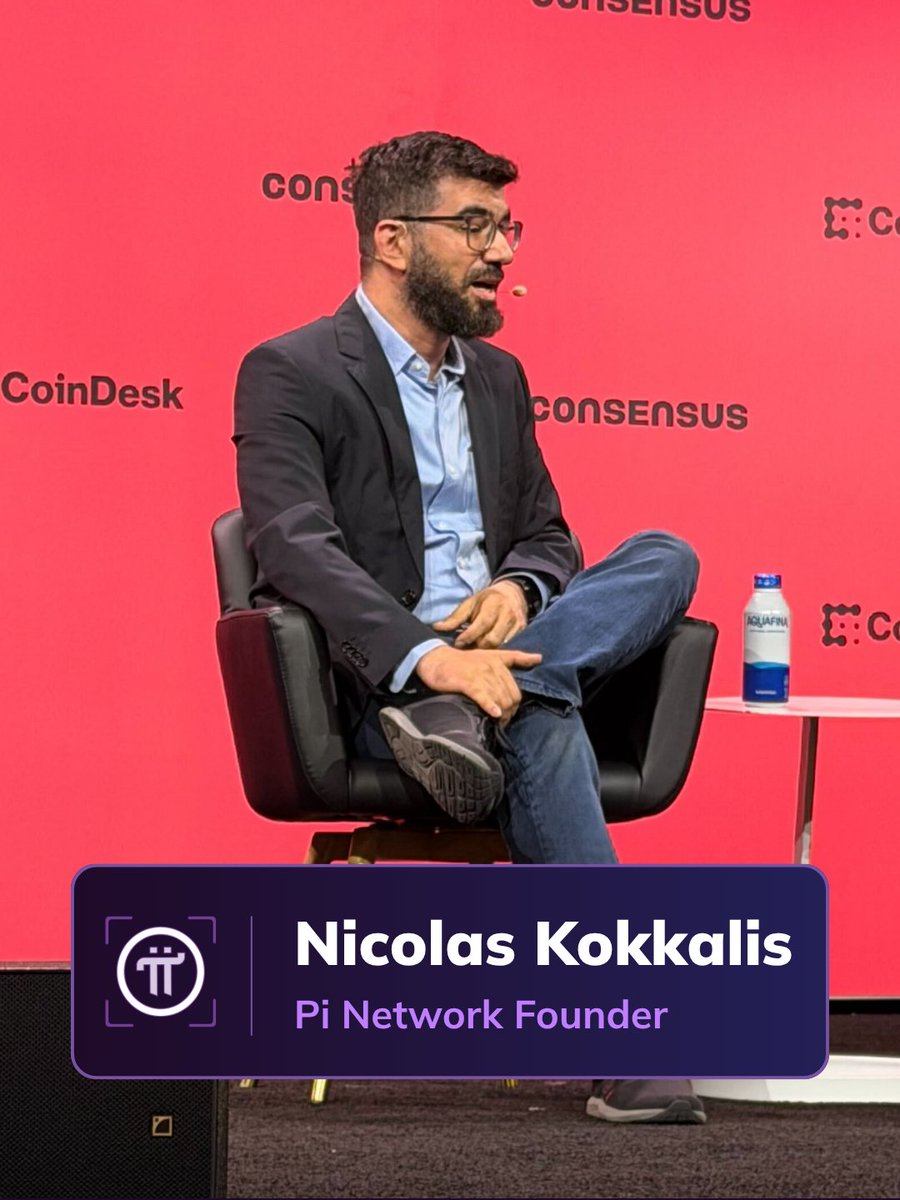
Pi Founder Nicolas Kokkalis spoke today at Consensus 2026 Miami on the panel, “How to Prove You’re Human in an AI World (Without Doxing Yourself).”
The discussion focused on one of the most urgent challenges in the AI era: how to maintain trust and verify real human identity as AI systems become capable of generating convincing bots, profiles, and interactions at scale.
Stay tuned for the full video!
📌The official full video (16:44) from @PiCoreTeam - #PiNetwork.
Pi Founder Chengdiao Fan spoke today at Consensus 2026 Miami in her session, “Aligning Web3, AI, and Blockchain for Utility.”
Dr. Fan shared how Pi’s blockchain infrastructure, identity verification, and a globally engaged network can support utility-driven products and businesses in the AI era.
Her talk built on a central challenge in the broader crypto industry: the frequent misalignment between token design and real innovation. While tokens in the industry have often been used primarily as capital-raising tools or quick exits, Dr. Fan discussed Pi’s approach to treat tokens as tools that can support growth, engagement, and long-term utility.
Pi’s approach to ecosystem tokens and launch mechanisms focuses on tokens for user acquisition and integrating token design into the product innovation process. By using tokens to help products acquire real users who can engage, provide feedback, and use those tokens within actual product experiences, this approach connects token design more directly to utility and product development.
More broadly, Dr. Fan’s talk invited discussion on how blockchain can help shape AI-era business models, financial literacy, ownership, and socioeconomic participation. As AI lowers the barrier to building, the focus shifts toward something harder to replicate: real users, real participation, and trusted human input at scale.
Stay tuned for the full session video!
🤔What are your thoughts on the future of the Pi Blockchain and Pi cryptocurrency?
@CoinDesk@consensus2026@Chengdiao@nkokkalis
#Consensus2026 #PiNetwork #ConsensusMiami #ChengdiaoFan #Web3 #Blockchain #AI #Crypto #Pi #PiDay #Web3AI #BlockchainUtility #CryptoMiami #DeFi #coindesk