New book alert 📚📚🥳: One Hundred Years of Argonauts "uses ethnographic studies from around the world to contextualize Malinowski's work politically and intellectually, examining its gestation and influence from multiple perspectives."
Just published! 📕
One Hundred Years of Argonauts: Malinowski, Ethnography and Economic Anthropology Edited by Chris Hann and Deborah James
https://t.co/64eLVJMcZW
The University of Canberra's Centre for Environmental Governance (CEG) together with the Australian Centre for International Agricultural Research (ACIAR) Social Systems program are offering four scholarships for Oceania-based researchers and practitioners. Deadline is May 15th.
For this week's @NewYorker, I wrote about how psychiatric diagnoses create social identities and offer frameworks for self-understanding, establishing personal stakes in flawed systems like the DSM: https://t.co/Pj4Xz45XU2
There has been a lot of excellent, recent work on beliefs and misinformation, and this was an opportunity to spotlight some of it—not just by @danwilliamsphil, @SachaAltay, & Neil Van Leeuwen but also by @tanyaluhrmann, @hugoreasoning, @steverathje2, & @SinanAlper, to name a few.
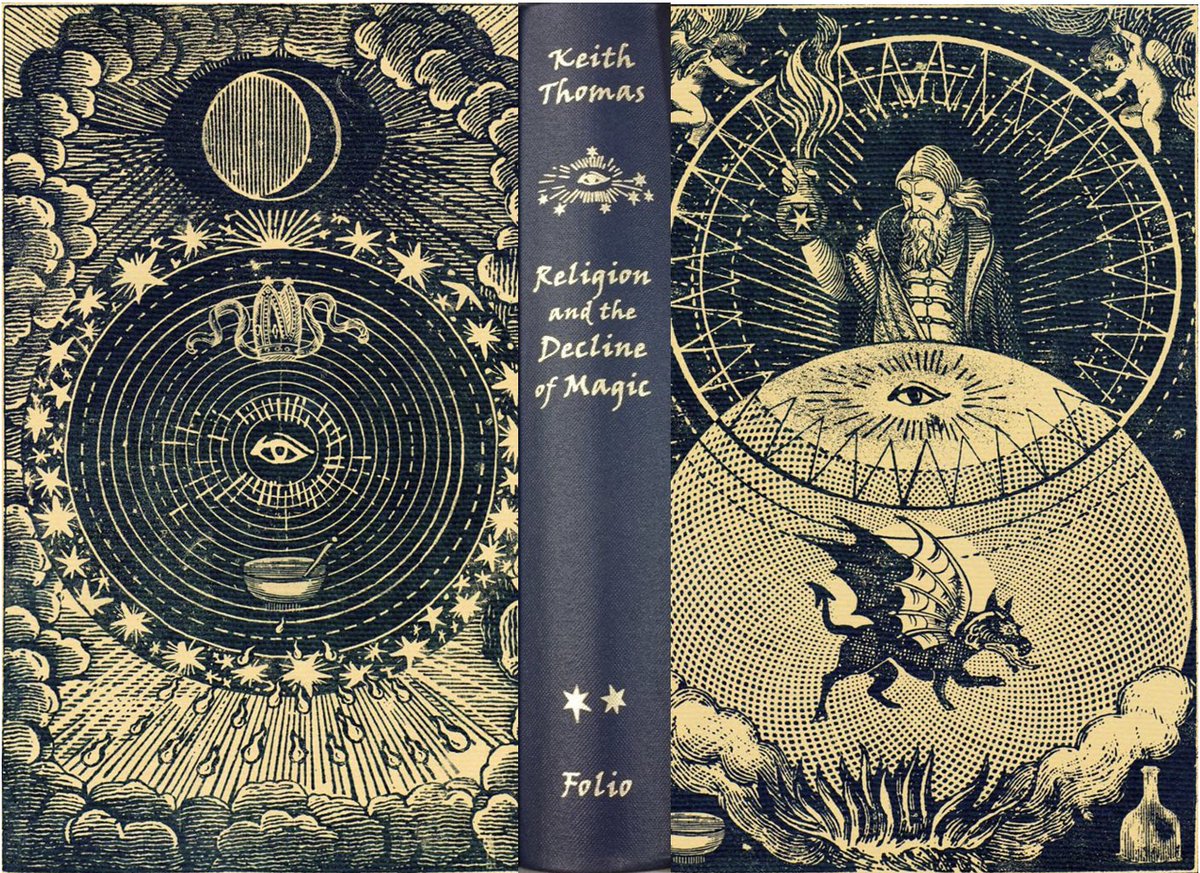
How has Keith Thomas's classic Religion and the Decline of Magic fared in the 50 years since its first publication? Below is my and @DrJanMachielsen 's take on Thomas's take on magic, astrology, prophecy, & witchcraft and their "decline" ✨
"While most medical experts consider depression as a universal, neurobiological disease... anthropologists instead ask why the illness known in psychiatry as ‘depression’ appears to have been extremely rare in much of the world until very recently". 👇
https://t.co/p3cLhAFW9W
We all live on the same planet. But we all experience the world completely differently.
Take part in #ThePerceptionCensus: games, illusions and brain teasers that offer a relaxing and playful way to explore the incredible potential of your mind.
https://t.co/ZligyIeruH
⭐️ New paper out in Phenomenology and the Cognitive Sciences, with Doug Hardman and Ivan Deschenaux
“Why the extended mind is nothing special but is central”
#extendedmind
https://t.co/eYQlwnaJQn
The latest issue of “Open Anthropology” from editors Cathy L. Costin and Michael C. Ennis-McMillan (@mennisNY) presents anthropological studies of the physiological and psychological effects of plant-based psychoactive substances.
https://t.co/E0qqNqGhaP
the weirdest thing about evolutionary psychology is how it imagines a semiosis that is both durable (from the Pleistocene to your brain) and variable (infinite range in signifiers of "high status male"). Wrote my undergrad philosophy of science thesis on this
Gift exchange plays an important role in building and maintaining relationships in Melanesia, and shapes notions of self. Read more from our latest special issue on Dependence in Oceania here: https://t.co/SpQwr7Iwx6
Believe it and/or not: Opening up to ontological pluralities in Northern Thailand - Felicity Aulino @stinkicity , 2022 @Anthro_Theory https://t.co/RCUgxbhGXz
Nobody cared about Marthe Brossier until the devil spoke through her.
I wrote about exorcism, demoniacs, power, faith and certainty for the new issue of the @LRB: https://t.co/Z3xaitVnal
📖Hearing the voice of God, feeling the presence of the dead, being possessed by a demonic spirit—such events are among the most remarkable human sensory experiences. They change lives & in turn shape history. Why do some people report experiencing such events while others don’t?