My salute to the Indian pilot Captain Smit Machchhar for his extraordinary bravery.
Despite being stabbed and seriously injured, he fought back, resisted, opened the cockpit door, and enabled passengers and crew to overpower the attacker — preventing a catastrophic mid-air disaster.
He saved the lives of 174 people, including Israeli citizens and other nationals.
I wish Captain Machchhar a speedy and full recovery.
He is a true hero.
Such an amazing work. These are heroes.
Yesterday a small calf of 3–4-days was swept away by the Teesta River near Gajoldoba and found several kilometres downstream. While mother was looking after it. See how it was saved by fisherman and united with the help of forest staff.
Still get goosebumps every time I watch this.
Witnessing this moment live at the stadium was something else... the crowd went absolutely wild that day😳🔥 https://t.co/9ZybE2zYnc
When Naatu Naatu song won the Oscar in 2023, many dismissed it as gibberish, with a whole lot of “cinephiles” expressing outrage.
The song actually references rural life in Telugu land that often gets lost in translation. I mean the Hindi version was Naacho, Naacho( Dance, Dance) that makes no sense really.
This post looks at those references.
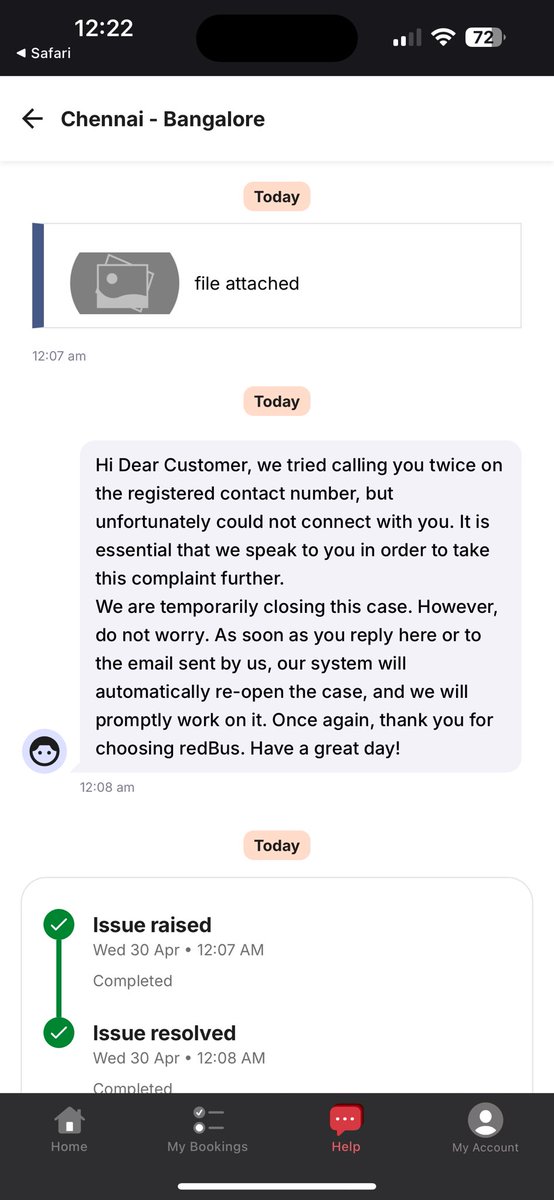
@redBus_in This is nothing but cheating the customers, I never got any call from redBus and there is absolutely nothing wrong withy network, you just closed the case saying I was not reachable @redBus_in
This was bus ticket for 60year old woman scheduled at 11:15 pm, bus operator made her wait for 30 min till 11:45pm and left without picking her. @redBus_in
"Lanka nundi Ganga daaka", "Telugu Sagam – Desam Sagam", "Ellalu Leni Telugu", and "From the Ghats to the Eastern Sea", I often share these with my followers, but what do they truly mean? What significance do they hold for the average Telugu person, whether in the Telugu States or beyond?
Since the linguistic reorganization of Indian states in 1956, there’s been a tendency to confine Telugu identity strictly to Andhra Pradesh and Telangana. Telugus outside these states are often labeled “migrants” or “settlers.” But is that really the case?
Growing up in the Bangalore-Kolar-Chikkaballapura-Hosur region, I heard Telugu spoken everywhere—by teachers, neighbors, classmates. Whether or not it was their mother tongue, everyone seemed to speak Telugu to some degree. And yet, I wasn’t in Andhra or Telangana; I was in southeastern Karnataka, the ancient Morasu Nadu, where Telugu, Kannada, and Tamil have coexisted for millennia.
This rich linguistic diversity shaped my childhood, sometimes even causing an identity crisis. But is this just a story of Morasu Nadu? Far from it. This pattern repeats across regions like Kongunadu, Thondanadu, Rayanadu, Vidarbha, Odra, Kalinga, Vanga, from the Ganges to Lanka. Anywhere you go between these two, you find Telugus, Telugu art forms, and Telugu heritage. Our culture isn’t limited to today’s state borders; it’s a legacy stretching across lands and centuries.
If Telugu has always been woven so deeply into the fabric of these places, why is it seen as “out of place”? There are just as many Telugus, as much literature, history, and heritage beyond Telugu State lines as within. Understanding this legacy is important not just for me but for all Telugu people. It reminds us of our shared, borderless heritage.
This journey through our history, from Lanka to the Ganga, from the Ghats to the Eastern Sea, is being beautifully documented by Sa Vem Rameshgaru. I urge you to watch this complete video, subscribe to his YouTube channel, follow his Twitter and Instagram, and consider donating to his organization. This is the least we can do for our mother tongue, our identity, our uniki—our very being.