Video: In times like this, the church must be seen and felt as the body of Christ. Let’s therefore be a refuge and strength to one another.
Today, as we come to church, let’s stand with our brothers and sisters who have lost homes and livelihoods in the recent floods. The PCG is mobilising relief through PRSD. You can support via: Ecobank: 1441000421892 || MOMO: 024 856 3942
God comfort and bless us all!
When we tragically lost eight Ghanaians in the helicopter crash, including two ministers, there were strong assurances that the fight against galamsey would be intensified. Yet beyond the initial statements, what has really changed?
If anything, the biggest change has been the decline in media coverage. When was the last time the government provided a comprehensive public update on the fight against illegal mining? One could easily assume the problem has disappeared, when in reality it has simply faded from the headlines. The next major environmental disaster will bring it back into public discussion.
The devastating floods in Accra will follow the same pattern. There will be public outrage, emergency meetings, directives, and promises of decisive action. Some short-term measures will be implemented. Then, as public attention shifts elsewhere, the urgency will fade until the next tragedy forces the issue back onto the national agenda.
This cycle of governing by crisis is one of our biggest governance challenges. We react to disasters instead of consistently managing the underlying risks. We announce interventions but rarely sustain the institutional focus, accountability, and follow-through needed to solve problems permanently.
Whether it is galamsey, flooding, power sector challenges, or road safety, the pattern is remarkably similar. The issue dominates the news after a tragedy, momentum builds briefly, then gradually dissipates before meaningful, lasting reforms are embedded.
Until we break that cycle and build institutions that focus on sustained implementation rather than episodic responses, many of the challenges Ghana has faced for decades will continue to resurface.
@OfficialMiles_G@qwofi_manuel1@highesteri_ Are you able comprehend simple grammar?.
Cos both tweets are making the same point here. Just that the later is suggesting other measures to prevent future occurrence. Is this hard to understand... we really need to start taking comprehension serious as a country
@HopeGablah@kofiagyenK@tv3_ghana Do you have any information that suggests that the financial statement was in any way not free from material misstatement due to error or fraud and also not prepared in accordance with the IFRS Accounting Standards as adopted by ICAG and the Bank of Ghana Act? You can share.
We talk about the fruit of the Spirit but we rarely sit with the last one — self control. Galatians 5:23. It's listed last but it might be the one everything else depends on.
Joy without self control becomes impulsiveness. Peace without self control becomes passivity. Love without self control becomes codependency.
The Spirit produces self control not as a religious rule but as the very thing that makes every other fruit sustainable. Ask for more of it. It's one of the most underprayed gifts available to you. 💙✨
I had to check this multiple times to be sure. Ghana's 5.4% inflation rate in December 2025 is the lowest rate since July 2002. That's incredible. Congratulations to the government for such a significant achievement on an indicator that greatly impacts people's personal economies!
On a more lighter note on "Cedi - Dollar exchange rate" issues, I have this thing I have been doing for a decade.
Wait for it....I track festive season buffet prices in 4 & 5 star hotels every year. 😁
I argue that the price trend provides an "Upper Middle Class Inflation" indicator.
That is to say, there is general inflation, and there is inflation for upper middle class people in Ghana.
Why choose "Upper Middle Class" people though?
Because the true Upper Class folks don't eat from buffets at hotels on Christmas and New Year day. No. They get private chefs to cater at private hotels in chalets at Akosombo and Ada. 😎
Also, the technical decisions in the economy are made by Upper Class people not Upper Class (too busy) or Middle Class (not close to the seat).
Upper Middle Class people include the top lawyers, top consultants, top auditors, top investment bankers, top commercial bankers, top research analysts, senior civil servants, bosses at regulatory bodies, etc. You get the picture.
Anyway, this year's numbers follow the same trend. It doesn't matter what general inflation says, the Upper Middle Class Inflation (UMCI) consistently goes up by roughly the same amount.
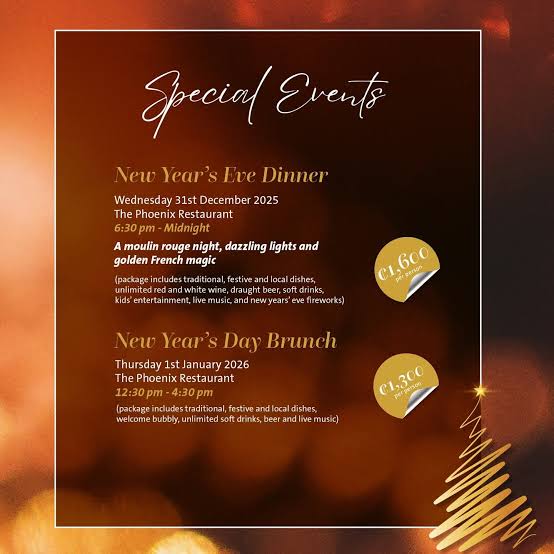
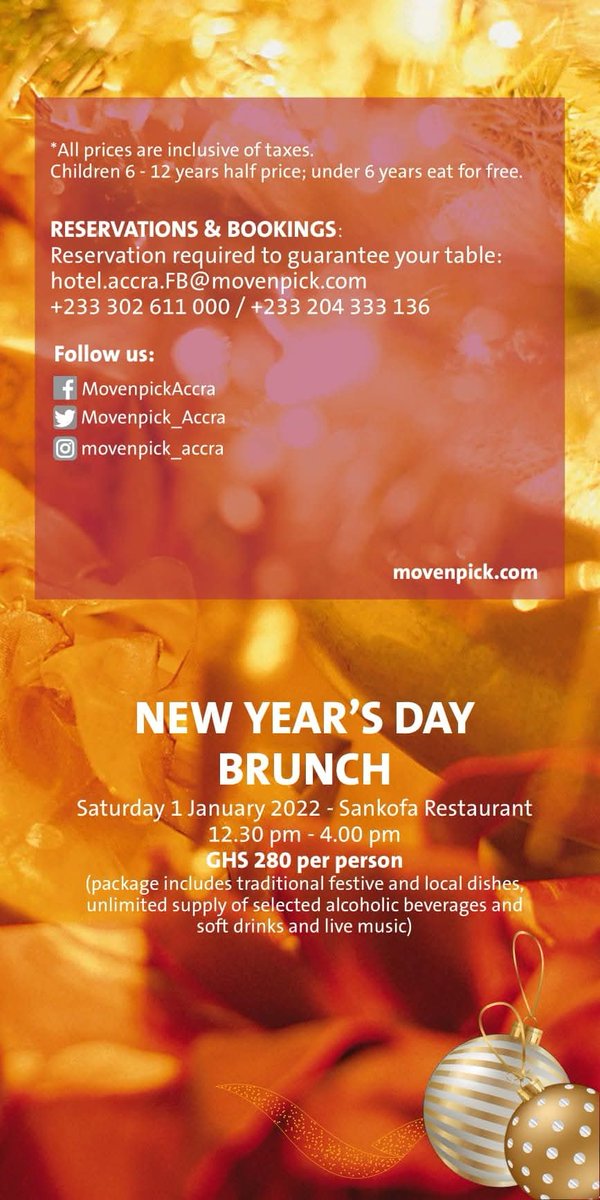
I have attached a few price cards for buffet at a popular hotel in Accra's Central Business District to give you a little flavour.
New Year Brunch:
2023 - 280
2024 - 750
2025 - 1200
2026 - 1600
That's a 79% annual UMCI-index inflation rate across the 4 years. The 2025 UMCI rate is 33%! A drop from the mean but still crazily high.
My preliminary assessment is that prices in various product and service categories that affect the Upper Middle Class (UMC) behave in this fashion: massive delta between general inflation and UMC inflation.
The question I have been grappling with is whether this has an effect on the investment decisions within the economy.
These are serious matters. Thank you for not laughing.
On a more lighter note re "Ghana Cedi - US Dollar exchange rate" issues, I have this thing I have been doing for a decade.
Erm....I track festive season buffet prices in Accra's 4 & 5 star hotels every year. 😁
I argue that the price trend provides an "Upper Middle Class Inflation" quasi-proxy indicator.
That is to say, there is general inflation, and then there is inflation for upper middle class people in Ghana.
Why choose "Upper Middle Class" people though?
Because the true Upper Class folks don't eat from buffets at hotels on Christmas and New Year day. No. They get private chefs to cater at private parties in chalets at Akosombo and Ada. 😎
Also, the technical decisions in the economy are made by Upper Middle Class people not Upper Class (too busy) or Middle Class (not close to the seat) folks.
Upper Middle Class people include the top lawyers, top consultants, top auditors, top investment bankers, top commercial bankers, top research analysts, senior civil servants, bosses at regulatory bodies, etc. You get the picture.
Anyway, this year's numbers follow the same general trend. It doesn't matter what general inflation says, the Upper Middle Class Inflation (UMCI) proxy consistently goes up by roughly the same amount.
I have attached a few price cards for the festive buffet at a popular hotel in Accra's Central Business District to give you a little flavour.
New Year Brunch:
2023 - 280
2024 - 750
2025 - 1200
2026 - 1600
That's a 79% annual UMCI-proxy inflation rate across the 4 years. The 2025 UMCI rate is 33%! A drop from the mean but still crazily high.
My preliminary assessment is that prices in various product and service categories that affect the Upper Middle Class (UMC) behave in this fashion: massive delta between general inflation and UMC inflation.
The question I have been grappling with is whether this has an effect on investment decision-making psychology in the economy.
These are serious matters. Thank you for not laughing. 😎
Happy New Year!
Reset, Renew, Recharge, Rise with God ✨ Join us as we pursue God’s purpose, peace, and presence to build on the foundation already laid in 2026 and beyond!
KPMG Ghana is conducting a study to understand how Ghanaian banking customers perceive the security of their financial transactions. All responses are anonymous and will be used for research and educational purposes only.
Please fill the survey here: https://t.co/XoFbkfodB5
Ghana’s 2026 Budget marks a reset for growth, jobs, and transformation. With a single-digit inflation and a healthier debt profile, the foundation is set. The challenge now is turning stability into productivity and opportunity.
Click to read more: https://t.co/ugDmsa3dv4
Mark your calendars for the @KPMG_GH/@UNDPGhana Post Budget Forum 2026 scheduled for 17 November 2025.
To join the forum virtually on Monday, kindly click here: https://t.co/reIOIKBH5b