NATIONAL SERVICE PLACEMENT OPPORTUNITY
Are you a final-year student or recent graduate looking for an exciting place to undertake your National Service?
Vacancies in Ghana is looking for passionate and talented National Service Personnel to join our creative and HR support team. This is an excellent opportunity to gain hands-on experience in a fast-paced HR and media environment.
Location: Haatso-Ecomog, Accra
Available Roles:
HR Assistant
Operations Assistant
Content Creation
Photography
Video Editor
Videography
Social Media Executive
Backend Developer
Front-end Developer
Mobile App Developer
UI/UX Developer
Full Stack Developer
Graphic Designer
https://t.co/i9PbXHOZC4
🚨 Enzo Maresca: “Manchester City is a club I know very well and to have the chance to manage this team is a brilliant opportunity for me”.
“City is an incredibly well-run football club. Everything they do is innovative, planned and purposeful”.
1. Whatever happens tomorrow, Ghana shall have a new president come January 7th, 2025. A new parliament too, and a significant turnover at the top of the civil service.
2. There is one thing that must change for the direction of the country to also change for the better. Government/public projects must be based on clear, well thought through and broadly debated, policies. The policies should themselves derive from sectoral strategies that were developed using the best data. Above all, the policy, media, and professional elites ("civil society") should be part of monitoring, evaluation, and accountability.
3. Sounds uncontroversial but Ghana's current situation is very far from this. Much of the current fiscal disaster resulted from many uncosted projects and spending patterns linked to no real strategy leading to very low return on public investment. I will illustrate in a moment.
4. The elite are the weakest link. In a serious society, the elites spend years refining ideas that they believe can drive national progress. They then shop for political forces to align with their national vision. In Ghana, it is the other way round. The elite choose a political party, faction, or leader, and then spend time contorting themselves to align their views with the direction of that party. Thus, they don't agitate within the party to force alignment with any vision or national strategy. And they sure don't oppose their parties when they go off rails. Think about it, how do you do that when you haven't even developed your own position on national issues?
5. The best term for these elites is KOLIKO elites. "Koliko" is a kind of traditional puppetry in parts of Ghana where the figures are tossed about in no clear direction.
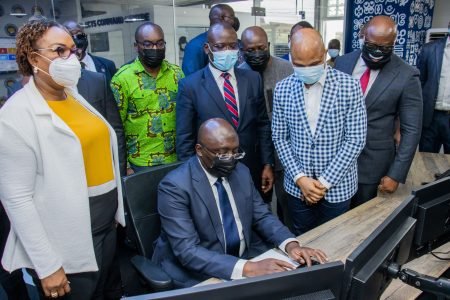
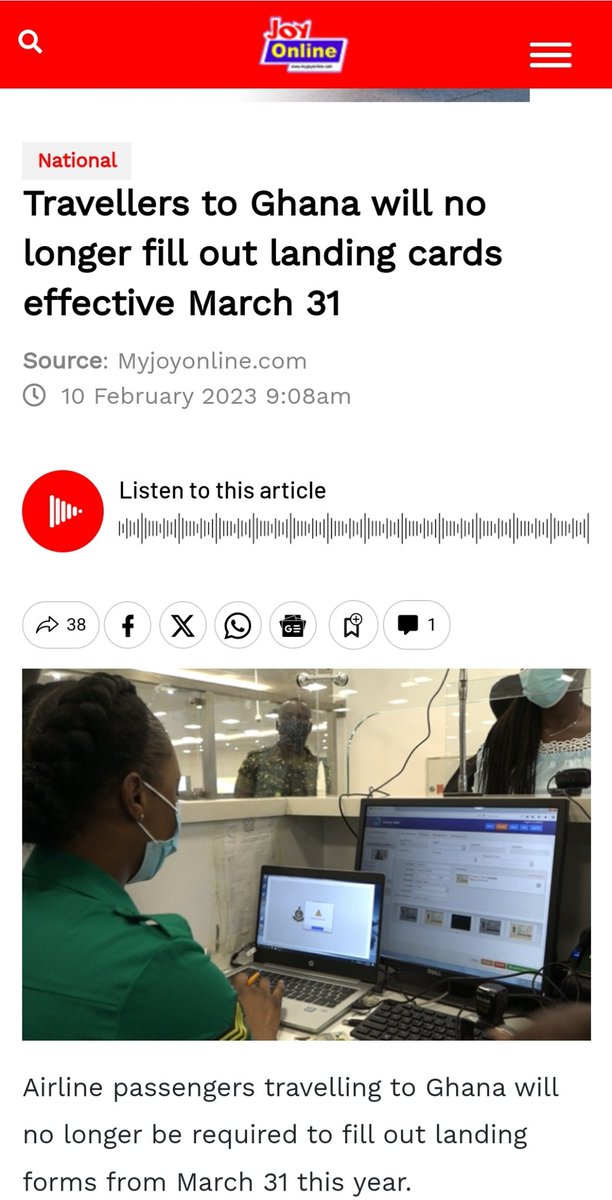
6. Now for the illustration: in February 2023, Ghana's Veep abruptly announced that filling of all immigration landing cards had been abolished. No policy. No strategy paper. No reason why something long considered relevant to border security had been stopped. Elsewhere, countries only stop demanding advanced passenger information when they create a mechanism for airlines to such data on their behalf.
7. Yet, many Ghanaian elites embraced this on the grounds of convenience and even hailed the Veep for his bold and visionary gesture. Not a single one of them had seen any thoughtful justification for the change. For 21 months now a huge gap in border screening has been allowed to persist. Whilst airlines send advanced passenger lists, important profiling information is still not directly integrated into border screening software. Whilst the earlier paper-based model was inefficient, at least it served its legal purpose as a disclosure mechanism.
8. The real reason for the "policy", however, had nothing to do with convenience. A favoured contractor had been lined up to "digitalise" this simple process as part of a huge contract. Unfortunately, wrangling among political bigshots and financial challenges delayed the rollout.
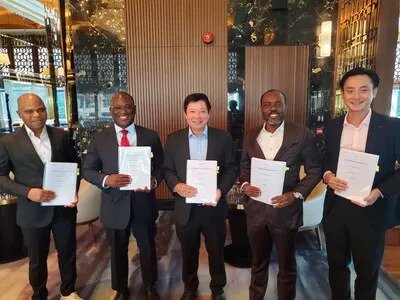
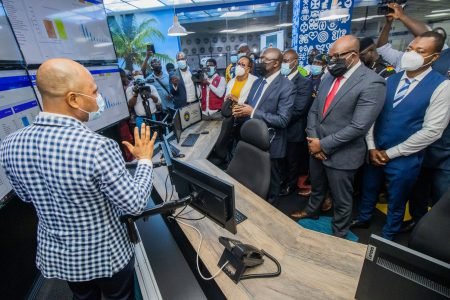
9. Until last month when nearly $30 million was assigned to another, also favoured, company first introduced to the Veep's office by the Deputy Minister of Transport, a strong ally of the Veep. In an earlier role regulating the downstream sector, he had engaged the same company to introduce tracking solutions. This company is mostly a middleman operation, bringing tech from Turkey, Singapore & elsewhere to Ghana.
10. That is how something that, elsewhere, airlines do for free, and countries only have to implement basic data capture and storage costing about $300,000 to harness will, in Ghana, cost nearly $30 million. Why? Because of koliko elites!
I’ll #VoteWiselyVoteJohnMahama because of this video herrrr Mahama wasn’t a saint but God’s sent. Watch it . I’m emotional 😭😭😭❤️https://t.co/uFCxfkOWfo
🚨ICYMI🇬🇭🗳️🗣️: NDC flagbearer and presidential candidate @JDMahama sat down with the BBC for a candid interview about the 24-hour economy & other manifesto promises.
However, attempts to arrange a similar interview with the NPP’s presidential candidate were reportedly declined.
🦅🇬🇭
In the John Mahama era, the National Intelligence Bureau (formerly BNI) investigated corruption at the National Service Secretariat. It was one of the few occasions when a state institution, other than the media, initiated an investigation that uncovered massive corruption and resulted in serious consequences against the perpetrators.
That investigation resulted in the retrieval of monies and the dismissal of dozens of officials. The NSS Director appointed by President Mahama was put before the court. (I remember Mr. Abu Jinapor, a deputy Chief of Staff in Akufo-Addo's first term and current Lands and Natural Resources Minister, was one of the lawyers who defended Mr. Alhassan Imoro. The case was still ongoing when President Mahama lost the 2016 election and left office.)
Insider sources at the time told me that the National Security Coordinator and former BNI director, Mr. Edward Yaw Donkor, initiated the investigation into the NSS scandal. The sources further revealed that when the National Intelligence Bureau was being pressured by the political class to halt the massive investigation, they leaked it to the Daily Graphic. That was how the NSS scandal became public and got the politicians to back off.
Again, delegations of prominent opinion leaders, including traditional rulers, pressured President Mahama to drop the case against Mr. Alhassan Imoro. President Mahama stood his ground and allowed the law to take its course.
Some of us were not satisfied with Mahama's handling of corruption, but comparing how cases like this were handled with what we have witnessed in the Akufo-Addo era, Ghana has sunk deeply. The Mahama presidency prosecuted and jailed Philip Assibit and a former NDC MP, Abuga Pele. The Mahama government retrieved millions of GYEEDA's stolen cash and tamed the likes of rLG and many others.
Those actions were not enough, and we clamoured for more. Akufo-Addo even called Mahama's action on GYEEDA, which I investigated, a "sham."
So why are we back to another scandal at the NSS? Did the Akufo-Addo administration continue the prosecution of the NSS director and the other persons charged? How did that case end?
(The media should revisit that case and let us know what happened). If a strong signal had been sent in the previous cases, would the mess continue and necessitate the use of the courts to injunct publication of the scandal?
Former First Lady Lordina Mahama, through the Lordina Foundation, has inaugurated a state-of-the-art hospital in Hohoe, thereby enhancing access to quality healthcare in the northern part of the Volta region.