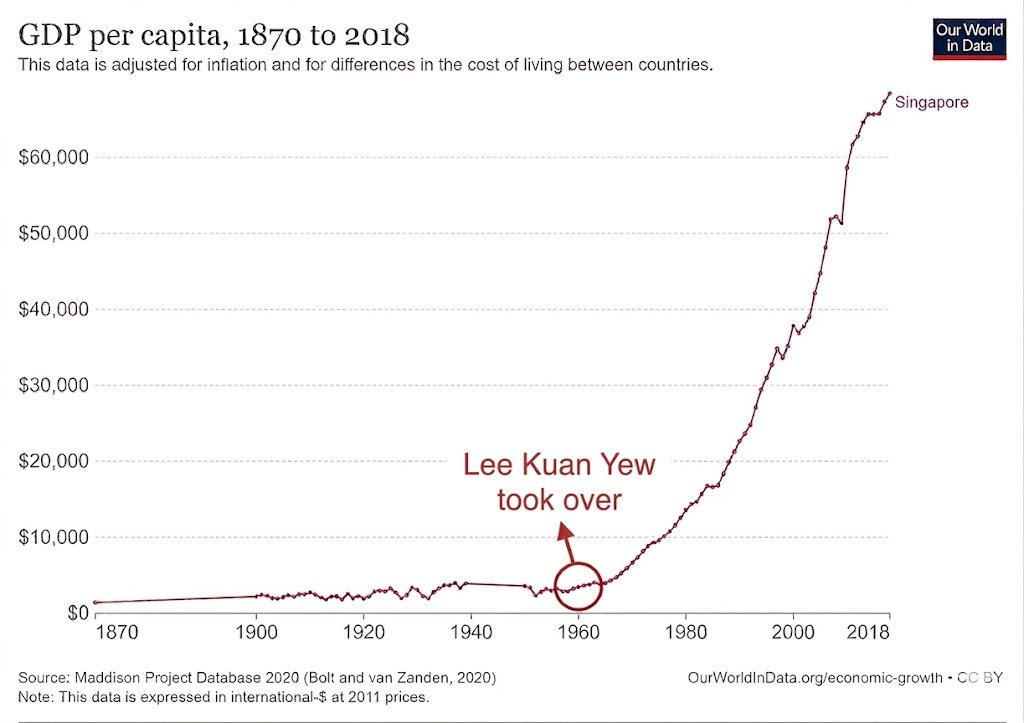
@JimmyTheSkink@eamonnbutler Eamonn clearly has better sense than me to not engage but it has to be said, you are replying to a thread that shows real positive benefits to peoples lives as a direct result of Thatchers policies and all you can do is swear and claim cronyism… are you not embarrassed?
Yesterday I spoke to someone who runs a HR department in the London office of a global brand. They have 400 people on the waiting list wanting to transfer out of the UK - by far the highest it’s ever been.
Why? Tax.
These people are £100K+ earners and the marginal tax rate is up to 60% on many of them. They want to take their skills and talents elsewhere.
Twenty years ago London was the destination not the departure gate.
Punitive taxation on high earners and wealthy people is doing more harm than good.
Today we're launching Intercept: a $500M philanthropic initiative to make respiratory infections, like the common cold and flu, a thing of the past.
We treat respiratory infections as a minor nuisance, but that’s really not the case. Most of us will spend 5% of our lives (!) sick from these viruses, they kill 1M people a year, cost $600B annually in productivity, and periodically threaten civilization through pandemics.
So, if they’re such a big problem, why haven’t we dealt with them yet? Last year we convened ~40 leading scientists, pharma R&D leaders, biotech investors, and regulatory experts to better understand that.
We heard two main reasons:
(1) First, it’s just technically very challenging: respiratory viruses represent hundreds of distinct, mutating strains across several families. Fortunately, recent breakthroughs make this newly possible.
(2) Second is a lack of funding: broad-spectrum solutions have historically been underfunded, in part because they’re not a great fit for most philanthropic or commercial funding (and while COVID generated a burst of activity around preventing and understanding respiratory infections through an influx of new funding, that hasn't been sustained).
We think that with enough focus and funding, this might be solvable. Intercept is a $500 million philanthropic initiative that will take advantage of new tools to catalyze the development and deployment of two types of products: broad-spectrum preventatives and air cleaning technologies.
This problem is undoubtedly difficult. But it’s more tractable now than it’s ever been. We think we should give it our best shot.
We’re enormously grateful to our anchor funders: @stripe, @AnthropicAI, @TheFluLab, @FoundationOAI and individuals from Jane Street.
And, I’m very excited to be building this with @incredutility and the rest of the team.
Je vais partir du principe que tu es de bonne foi, parce que ton raisonnement est intuitif et que 90% des gens le partagent. Mais il repose sur trois erreurs factuelles, et ça vaut le coup de les regarder calmement.
Erreur 1 : la fortune d'Elon n'est pas un tas d'argent. C'est de la propriété d'usines, de fusées et de satellites. "Prendre la moitié de sa tune", concrètement, ça veut dire forcer la vente de la moitié de SpaceX et Tesla. L'argent ne sort pas d'un coffre, il sort des entreprises elles-mêmes, qui passent sous contrôle de fonds étrangers ou d'États. Tu ne redistribues pas du cash, tu démantèles un outil de production. C'est la différence entre récolter des pommes et découper le pommier.
Erreur 2 : "ça résout énormément de problèmes dans le monde". Cette expérience a déjà été tentée, en vrai. En 2021, le directeur du Programme Alimentaire Mondial de l'ONU a affirmé que 6 milliards de Musk pouvaient "résoudre la faim dans le monde". Réponse d'Elon : décrivez-moi exactement comment, comptabilité publique à l'appui, et je vends mes actions Tesla immédiatement. Le PAM a publié son plan. Verdict : ce n'était pas "résoudre la faim", c'était nourrir 42 millions de personnes pendant un an. Un an. Puis il faut re-payer, pour toujours. Le PAM avait d'ailleurs levé 8,4 milliards l'année précédente, et la faim était toujours là. Les ONG traitent les symptômes en boucle, jamais les causes, parce que leur financement dépend de l'existence du problème.
Erreur 3, la plus importante : tu cherches ce qui sort vraiment les gens de la pauvreté. Bonne nouvelle, on a la réponse, et elle est massive. En 1990, 36% de l'humanité vivait dans l'extrême pauvreté. Aujourd'hui, moins de 9%. Plus d'un milliard de personnes sorties de la misère en 30 ans. Par quoi ? Pas par la charité ni par l'aide internationale (plus de 1 000 milliards versés à l'Afrique en 60 ans pour un résultat à peu près nul). Par l'ouverture des marchés, l'industrialisation, le commerce. La Chine seule a sorti 800 millions de personnes de la pauvreté en abandonnant le collectivisme, pas en taxant ses entrepreneurs.
Donc fais le calcul complet. Option A : tu confisques 500 milliards, tu finances quelques années de programmes, l'argent est consommé, et tu as détruit la machine qui produisait les fusées, les voitures électriques et l'internet des zones rurales. Option B : tu laisses le meilleur allocateur de capital de sa génération réinvestir 100% de sa fortune dans des industries qui baissent les coûts pour tout le monde et emploient des centaines de milliers de personnes. L'option A soulage ta morale pendant 18 mois. L'option B sort des populations entières de la pauvreté pour toujours.
La pauvreté ne se redistribue pas. Elle se résout par la création. C'est contre-intuitif, c'est frustrant, mais c'est ce que disent 200 ans de données.
History's first trillionaire is a guy who catches rockets out of the sky with chopsticks and beams internet to every dead zone on the planet.
Same guy ships cars that drive themselves, humanoid robots for the factory floor, brain chips that let paralyzed people move a cursor with pure thought, and an AI running on a supercomputer his team stood up in months instead of years.
And the people crashing out about his net worth are doing it on the app he owns. The same app governments spent years trying to censor.
You cannot legislate a rocket into orbit.
🚨 BREAKING: Multiple NHS services have been told to not detain psychotic African and Caribbean people to lower their "over representation."
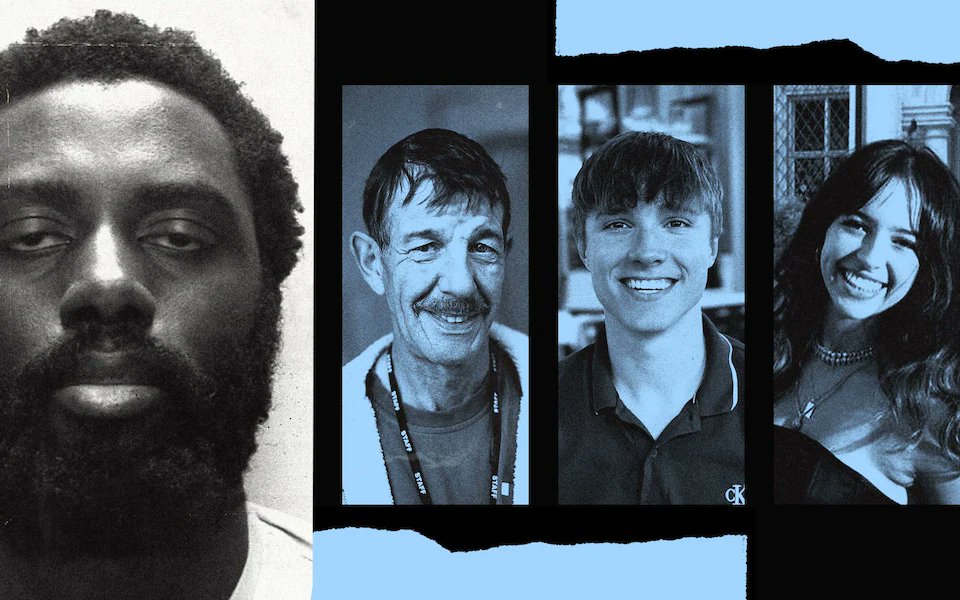
Valdo Calocane was one of these psychotic Africans who staff refused to detain because of his race. He went on to murder Barnaby Webber, Grace O'Malley-Kumar and Ian Coates in Nottingham.
Ideological conditioning and two-tiered policing are glaring symptoms of civilizational decline. They must be rejected across the West.
The United States sends our condolences to the family of Henry Nowak and the people of the United Kingdom at this troubling time.
@AaronBastani So, to get this right, you believe only those who pay money to the system (the party in charge realistically) should take part? Vote, own property, help build the community? Only if you pay? Mafia or government?
@jvb_xyz Ridiculous comment re cope, he literally says he does both but one is more efficient at achieving its goals, agree or disagree with that statement?
@micsolana@DrewPavlou Flip it on its head… if Bezos was given a billion dollars to fix NYC public schools tomorrow, could he do it? I think so. Question is, how? What would be the most efficient plan, surely he’d come up with it?
There were massive international protests over George Floyd and those police involved were severely punished with long prison sentences, yet the police responsible here did not even lose their jobs!
An incredibly unjust double-standard!
Hard to think of a more midwit position than being anti-supermarket.
Tesco is an unmitigated force for good. It supplies tens of millions of people with luxuries their grandparents couldn't imagine, employs 1 in 200 people, and runs on paper thin margins through sheer competence
@MattMJones00@WatchReform@raelbrav Rent is tax as salary, profits taxed similar rate to salary if taken as dividend (but unclear what you mean here), stocks are unrealised wealth so they have no substantial access to the gains here? (Much like they are protected from paying on the losses, which is correct)
@villi@r0b0t_sp1der As below, so what? If he has several years of little to no tax yet one year pays the highest amount ever paid by an individual, shouldn’t you be happy? Genuinely confused by the idea that you seem to be happy if he paid a smaller overall amount so long as he paid annually