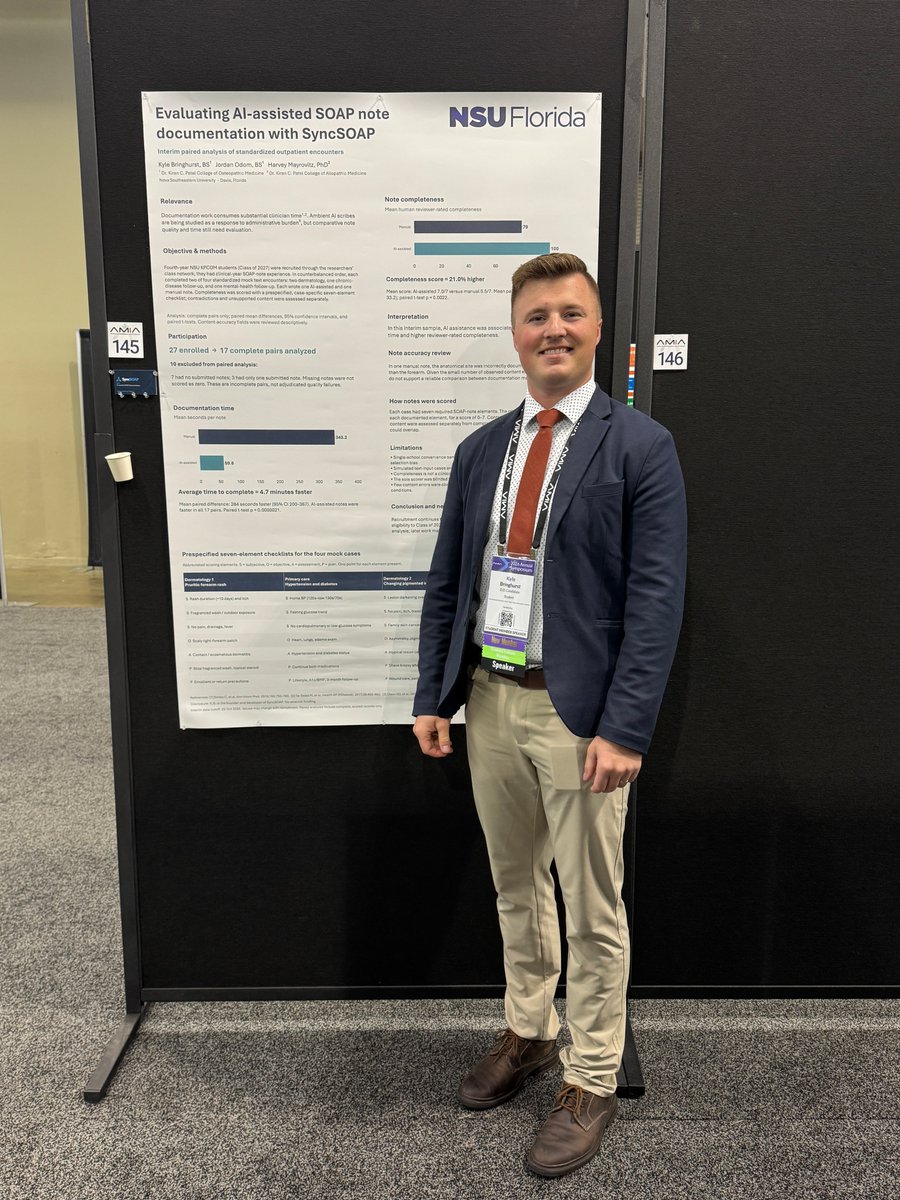
Great experience presenting at AMIA 2026 in Dallas. Responsible clinical AI requires continuous evaluation and clear evidence boundaries. Grateful to collaborators Jordan Odom, Dr. Harvey Mayrovitz & NSU Florida as we continue research!
#AMIA2026@BringhurstDOLLC@SyncSOAP
Presented our SyncSOAP study at AMIA 2026! In 17 simulated pairs, AI-assisted SOAP notes averaged 59.6s vs 343.2s manual (~4.7 min savings) with 7.0/7 completeness vs 5.5/7. Data covers speed in simulations, not clinical accuracy.
#AMIA2026#SyncSOAP@BringhurstDOLLC@SyncSOAP
SyncSOAP recently underperformed in dermatology testing.
Uncomfortable? Yes. Useful? Very.
It forced me to rethink how we combine clinical context, vision analysis, prompting, and model logic.
Failure is data. Back to building.
When scaling clinical operations, stability is just as critical as functionality. We often see platforms rush to release complex features while neglecting the underlying infrastructure
Lesson learned: don't wait until audit time to gather evidence. We automated evidence collection with AWS-native scaffolding. Standardizing safeguard verifications from day one simplifies the path to audit readiness and saves hours of manual work.
When preparing SyncSOAP for controlled evaluation, we didn't just write code. We drafted IRB-supporting documentation, created scoring rubrics, and tested our /study/start routes live. Building clinical trust requires rigorous, structured validation structures.
AI note generation is only 10% of the battle in healthcare. The real work is in model governance. We built a structured model policy registry and SOAP validation logic to ensure consistent, audited behaviors across our clinical workflow pipeline.
Generating one note is interesting.
Building a workflow that processes multiple encounters and presents them for final physician review is where clinical AI becomes useful.
The goal: get to a note you’re comfortable signing.
Building SyncSOAP has been a reminder that the hardest part of clinical AI isn’t generating output.
It’s earning enough trust that someone would consider using it in a real workflow.
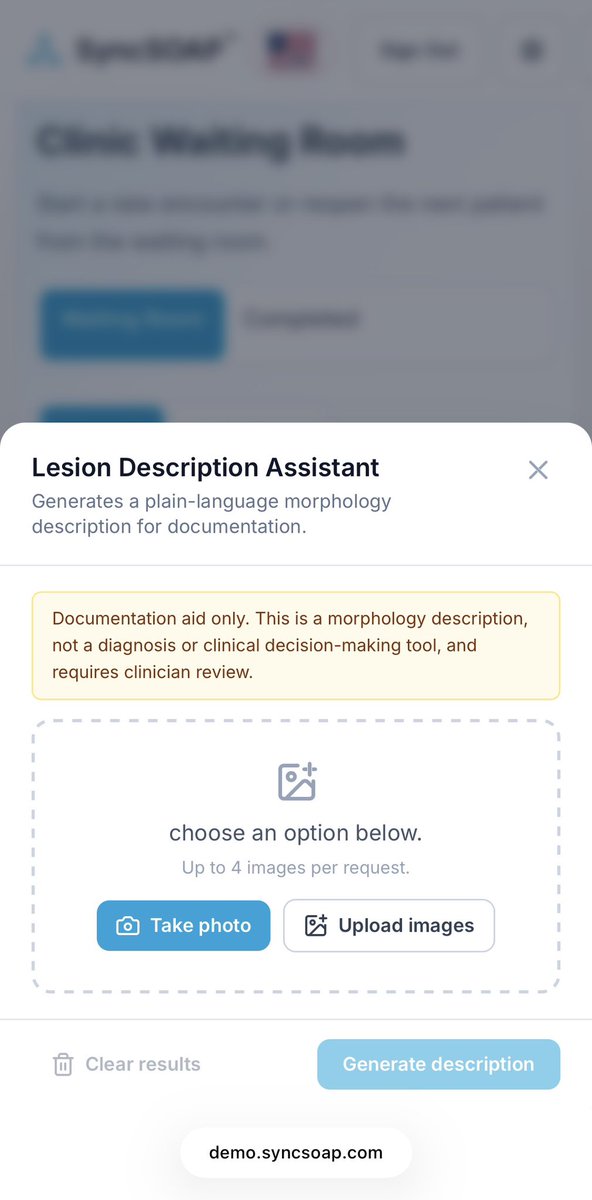
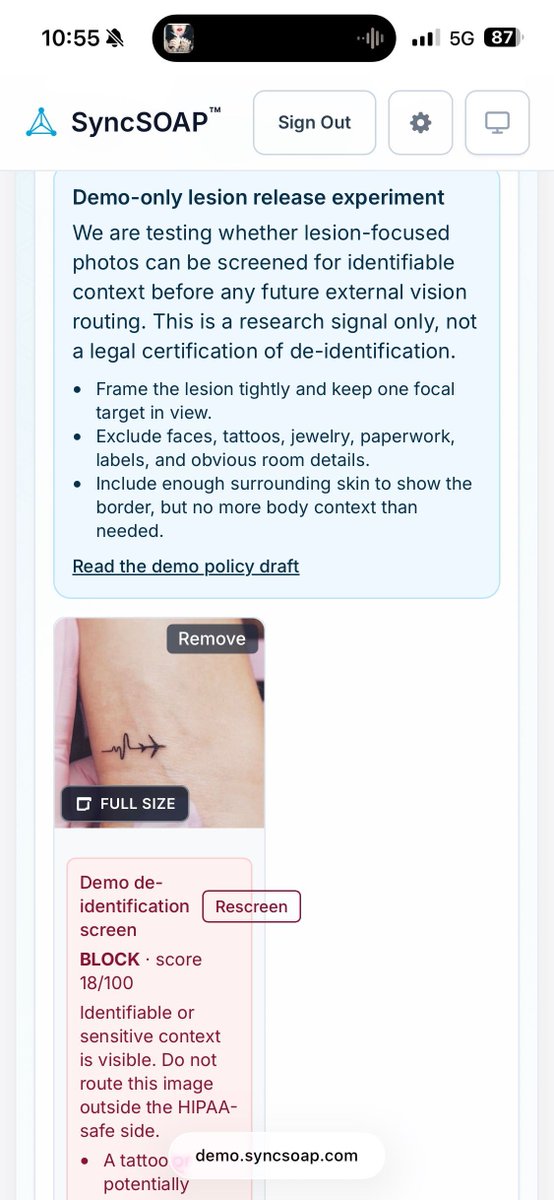
We’re experimenting with a privacy-first image pipeline that attempts to detect identifying features before routing de-identified images for downstream analysis.
The goal is simple:
Expand capability without relaxing privacy safeguards.
Generating one note is interesting.
Building a workflow that can handle multiple encounters and present them for final physician review is where things start becoming operational.
That’s the direction we’re taking with SyncSOAP.