In September of 1814, America was once again in trouble.
The young republic was only thirty-eight years old. The War of 1812 had gone badly. British troops had marched into Washington, burned the Capitol, set the White House ablaze, and now turned their sights toward Baltimore. If Fort McHenry fell, the harbor would be open, the city would likely follow, and another devastating blow would be dealt to the fragile nation.
Amid this uncertainty, a young American lawyer named Francis Scott Key sailed under a flag of truce to the British fleet. He had come to negotiate the release of a friend, a physician the British had captured.
He succeeded.
The British agreed to free the doctor.
But there was a catch.
Because Key and his companions had seen too much of the British fleet and learned too much about its plans, they were not allowed to return to shore. Instead, they were detained aboard a ship in the harbor and forced to watch the coming battle from behind enemy lines.
On the morning of September 13, the bombardment began.
For the next twenty-five hours, British warships unleashed somewhere between 1,500 and 1,800 bombs and rockets upon Fort McHenry. These were the “bombs bursting in air” and the “rockets’ red glare” of the song—not poetic embellishments, but terrible realities.
Key stood on the deck through the endless day and the long, terrifying night. Every explosion lit the darkness for a fleeting instant before the smoke swallowed everything again. Somewhere beyond that wall of fire stood the fort. Somewhere beyond it flew an American flag if it still flew at all.
He could not see.
He could only listen.
As long as the guns continued firing, there was reason to hope. The British would not waste ammunition on a fort that had already surrendered.
Then, just before dawn…
The guns fell silent.
For the first time all night, there was only stillness.
It was the most frightening sound of all.
Had the fort finally fallen? Had the defenders surrendered? Had the flag been torn down in the darkness while no one could see?
There was nothing to do but wait.
As the first light of September 14 slowly pushed back the smoke, Francis Scott Key strained his eyes toward the distant fort.
Then he saw it. Not a British flag.
The American flag. Still there. Still flying.
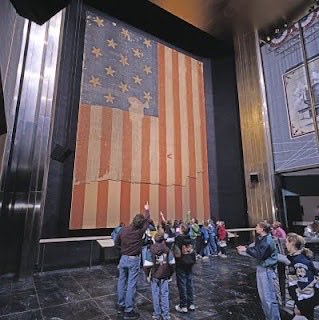
That flag was no ordinary banner. Months earlier, the fort’s commander had commissioned a Baltimore flagmaker, Mary Pickersgill, to sew a flag so enormous “that the British would have no difficulty seeing it from a distance.” It measured roughly thirty by forty-two feet, carried fifteen stars and fifteen stripes, and was so large it had to be assembled on the floor of a brewery because no ordinary room could contain it.
That was the Star-Spangled Banner.
The very flag Key saw through the morning mist.
The very flag that still survives today in the Smithsonian.
Overcome by what he had witnessed, Key reached into his pocket, pulled out an envelope, and began writing. The words came from a heart that had spent an entire night fearing his country might disappear with the dawn.
He first titled the poem Defence of Fort M’Henry.
Within days it was printed and circulating throughout the country. Before long, people began singing it to a melody they already knew—an old British tune called “To Anacreon in Heaven,” originally written for a London social club. There is something beautifully ironic in that: America’s most beloved patriotic song borrowed the melody of the very nation it had just survived. It also explains why the anthem is so notoriously difficult to sing. It was never written for ordinary voices gathered in stadiums or school assemblies.
The song spread quickly and became one of America’s favorite patriotic hymns, but it would wait more than a century before receiving official recognition. Not until 1931 did Congress declare “The Star-Spangled Banner” the national anthem of the United States.
How about we focus on the people killing them instead of the people not rescuing them? Fixing the problem always lasts longer than soothing the symptom
I.
Don’t.
Care.
I cannot care, nor pretend to, about billions of people all over this world. Good luck to them but that’s not my fucking problem.
There are many other countries in this world. Pick a different one. Like the several you walk through to get here.
Dear @elonmusk, had a long conversation with Grok earlier, about who this was was and after many rounds and input from @Copilot , Grok finally agreed that this was @sammyhagar and not @bobdylan. Grok wanted to let you know it’s sorry if you see this.
@Amer1can_Barbie@honeymoon250 Don’t discount that the first iPhone was released at about that same time. I really think it was a combination of the two
Appreciate the wait Stephen...
There isn’t one cause. America’s division is the result of several forces hitting at the same time, each pouring gasoline on the others. Here are the big ones:
1. Social media rewired the country
Platforms didn’t just connect people — they radicalized them.
Algorithms reward outrage, conflict, and extremism because that content keeps people glued to the screen.
So the loudest, angriest voices get the most visibility, while moderate voices disappear completely.
Result:
People now live in different information worlds. Not different opinions — different realities.
2. Political parties realized division is profitable
Both parties figured out that fear and anger raise more money, get more clicks, and turn out more voters than unity ever will.
So political messaging shifted from:
“Here’s what we stand for,”
to
“Your neighbor wants to destroy the country — donate now.”
When politics becomes a war instead of a debate, your fellow citizen starts looking like the enemy.
3. Collapse of trust in every major institution
Government, media, public health, corporations, banks, higher education — trust in all of them cratered over the last 20 years.
Why?
Scandals, corruption, hypocrisy, manipulation, and blatant incompetence — across the board.
When no one trusts the referee, the game becomes a brawl.
4. The media abandoned neutrality for tribal loyalty
Outlets don’t even pretend to be neutral anymore.
They’re audience-targeting businesses.
So news isn’t designed to inform you — it’s designed to affirm your worldview and keep you locked in.
This creates two Americas:
•One that believes one storyline
•One that believes the total opposite
And each thinks the other is insane.
5. Economic stress made people angrier and more reactive
Stagnant wages, insane housing prices, medical debt, cost-of-living spikes, corporate consolidation, and the destruction of the middle class created a pressure cooker.
People under financial strain are more irritable, less patient, and more prone to blaming “the other side.”
6. Cultural shifts happened faster than people could process
Everything — gender norms, family structures, technology, entertainment, values — changed at warp speed.
Some people embraced it.
Some people panicked.
Some people felt erased.
Some felt liberated.
Rapid cultural change always produces backlash. Always.
7. Foreign adversaries exploited every crack
Russia, China, Iran, and others pumped disinformation into American social platforms to widen racial, political, religious, and economic divides.
They don’t need to defeat the U.S. militarily if the U.S. tears itself apart internally.
8. People stopped talking to each other in real life
COVID isolation, remote work, online communities, political bubbles — all of it reduced face-to-face humanizing interaction.
It’s easy to hate a caricature online.
It’s harder when someone is sitting across from you.
9. Loss of a unifying narrative
From WWII to the Cold War to the space race, America used to have shared goals and shared enemies.
Now?
No common project. No shared mission.
Just a lot of grievance and competing identities.
When a nation stops having a “we,” everything becomes “us vs. them.”
Bottom line
America’s division isn’t random and it’s not accidental.
It’s the predictable result of:
technology + political incentives + financial pressure + collapsing institutions + cultural upheaval + foreign interference.
You fix the division by addressing those root causes — not by attacking each other.
@elonmusk@xai so is there a spouse or family subscription plan on the horizon? I’d love to be able to do this for my whole family but $240/m for the whole is a bit out of the budget. I mean, at this point you should start your own mobile company and include Grok.
@AshFarms I’m not sure where in the country you are, so I’ll say this…on the Sundays you decide to stay home, please watch https://t.co/1BvwiJUzMP in Tulsa OK. The current series is Unoffended with last week’s sermon being about anger
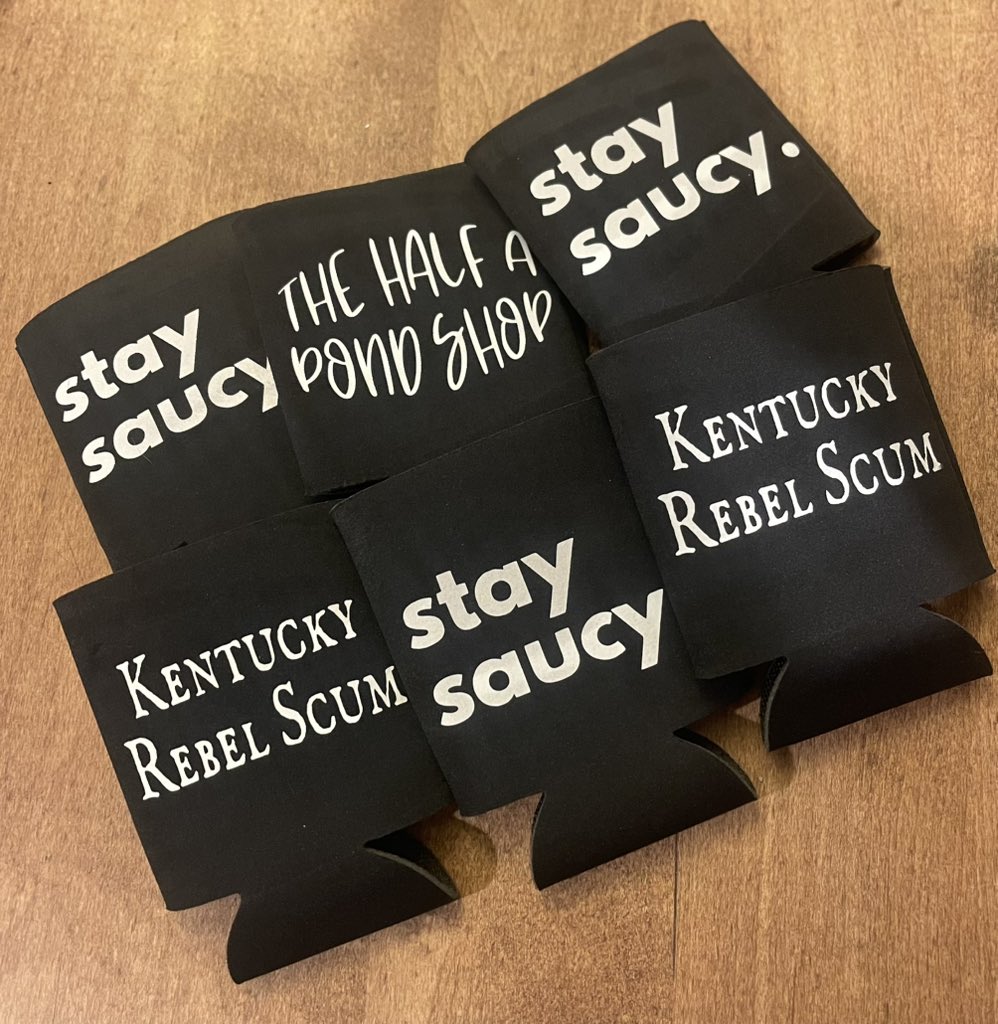
We haven’t done a Kentucky Rebel Scum Giveaway in a while. Let’s fix that.
Like our page AND like & share this post for a chance to win a bottle of KRS of your choice and a Half A Pond Shop KRS Koozie!
We will pick a winner tomorrow night!