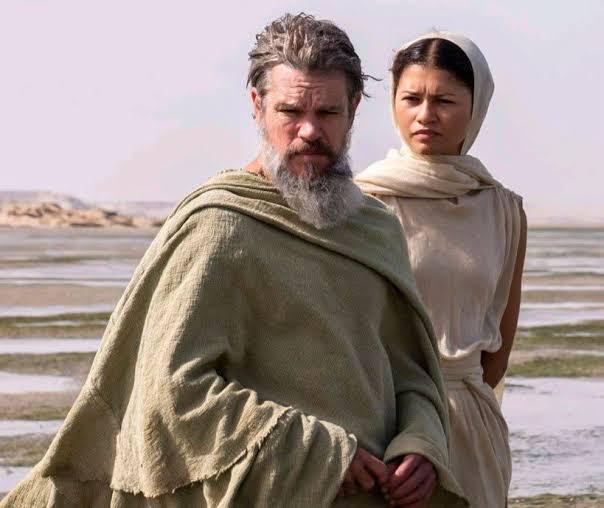
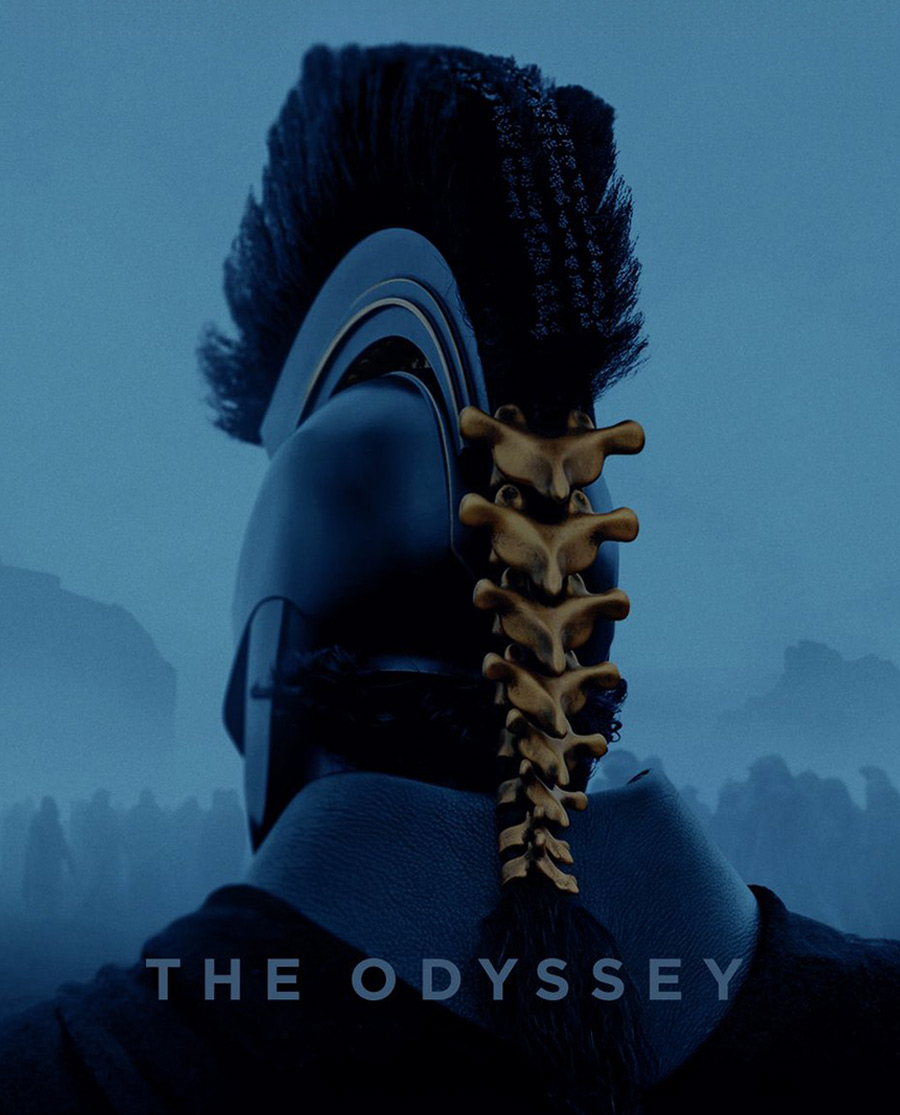
@DiscussingFilm When this movie comes out, I'm going to head down to hardware store. I'll buy a large bucket of paint and a brush. Find a wall and paint it from top to bottom. Then I'll sit there and watch every little bit dry.
Because I'd rather watch paint dry than this trash. Shame on them.
I think I finally understand what is wrong with Nolan: his universe is adverse to myth. It is made entirely of causality, and causality alone.
He may be the most gifted filmmaker working in big-budget Hollywood today. But he is going to crash on myth the way sailors crashed on the rocks below the Sirens.
When I criticized the teaser, I was told: wait for the trailer. When I criticized the trailer, I was told: wait for the film. Then I read the two-hour interview Nolan gave to Time Magazine, and something clicked.
The tell is in a detail Nolan offers with obvious pride. He found a solution to what he saw as a narrative problem: why would the Trojans believe the horse was empty and drag it inside their city? His answer is to make the horse half-submerged, sinking into the sea, so the Trojans would rescue it rather than accept it as a gift.
It is a solution to a problem that never was one because it is a myth. The Trojans bring the horse inside because it is a gift and it has wheels. The poet tells you something plainly impossible with the same tone he uses to describe the sunrise, and in doing so he is signaling that the level of reality goes beyond mere causality and exists on other levels.
He is the kind of guy who would explain that Santa can fit through the chimney because he designed it wide enough from the start, using proper construction methods and reliable materials. And then explain how the reindeer are fed to sustain that much effort in a single night, and how Santa elaborated a clever logistics route to deliver all the gifts on time.
Watch him justify the armor despite its fantastical look, or explain the absence of orchestra because there was no orchestra in Ancient Greece. There were no IMAX cameras either, Christopher. A simple authorial act would have sufficed: because I like it better that way. That honesty might have opened a door out of causality.
This narrative prison is precisely why people eventually seek out avant-garde and experimental cinema, why they feel something release when causality finally breaks. Because causality is already the weight of our ordinary lives.
As long as Nolan stayed away from myth, his causal world of mirrors and clever tricks and puzzles worked beautifully, sometimes brilliantly. But this is something else. This is the gut of myth. This is the Dionysian spirit of mud and blood and the salt of the sea. This is the beautiful lie that makes you erupt with sacred joy.
Now is a good time to discuss why some Westerners hate us Greeks.
> They claim we have no connection to ancient Greece (it is proven by genetic science that we are the same people)
> They claim that homosexuality was an institution and common, even though it is not documented in any primary source. It existed but it was uncommon and NOT an institution. Academic activism seeks to revise history. The goal is to normalize homosexuality by claiming "it was always everywhere even in the perfect Ancient Greece" and to undermine "heteronormative" readings of Western classics; high-status, ultra-masculine warriors are always perfect for subversion.
> There is no Greek representation in films about Greek history, mythology, and culture.
> They portray us as Northern Europeans.
> They don’t respect us and constantly mock us to the point of degrading our very existence.
> Hollywood has shown us no respect, and the academic community has created a fake image of our history in order to repel young people who were drawn to Greek values of patriotism and virtue.
> They promoted an unfounded mythology and a narrative of homosexuality.
The East never did this, it always respected us.
The time has come for the West to show us the respect we deserve, just as we show it to them.
That’s enough.
Christopher Nolan’s film "The Odyssey" is the ultimate act of disrespect toward every Greek.
However, there is a specific reason why this is happening with Homer in particular. An article is coming where I will explain why the West is once again fighting Greek (and Roman) values through the academic and cinematic communities. Why they want to turn you away from Greco-Roman civilization.
Coming soon in my upcoming article.
When someone asked Agesilaus how far the borders of Sparta extend, he brandished his spear and said, "As far as this reaches."
When another asked why Sparta was unwalled, he pointed to the armed citizens and said, "These are the walls of the Lacedaemonians."
There was one time, when Aristotle apologized to Alexander.
Aristotle teached Alexander something called most likely "Acroatic logos". These esoteric teachings were, according to Plutarch, certain profound secret knowledge that was not taught to others.
When Alexander was in Asia and learned that Aristotle had published books containing some of his teachings, he wrote a letter to him about philosophy with great boldness, in which he stated verbatim:
"Alexander greets Aristotle and wishes him well. You did not act rightly in publishing the esoteric teachings. For how will we differ from others if the teachings by which we were educated become common to all? I would prefer to distinguish myself through knowledge of the best things rather than through power. Farewell."
Aristotle apologized regarding those teachings, stating that some were published while others, particularly those taught to Alexander, were not. We see the significance of Aristotle’s teachings, the esoteric knowledge, and the power they held.
More than anyone else, Aristotle inspired in Alexander an inclination toward medicine. For he not only loved its theory but also assisted his sick friends and prescribed treatments and diets, as can be seen in his letters.
By nature, Alexander loved literature and reading. The Iliad, which he received from Aristotle, who had annotated it (i.e., commented on the symbolism and secrets hidden by Homer), was called "the Iliad from the narthex."(The narthex was a reed-like, cylindrical plant. According to tradition, Prometheus hid the fire he stole from the gods within it. Thus, the Greeks used to make small cylindrical containers shaped like a narthex to store valuable items. In Persia, Alexander found such a container made of tin and placed Aristotle’s Iliad inside, which became known as "the Iliad from the narthex.")
As mentioned, because he loved reading and had no other books in Upper Asia, he ordered Harpalus to send him some. Harpalus sent him the books of Philistus, several tragedies by Euripides, Sophocles, and Aeschylus, and the dithyrambs of Telestus and Philoxenus.
Alexander admired and loved Aristotle, as he himself said, no less than his father, for he owed his life to Philip, but to Aristotle, he owed a good (morally) life.
Alexander wanted Diogenes to congratulate him after he was elected King of all Greeks. He found him lying in the sun. He asked him if he wanted anything.
"Yes, stand a little out of my sun"
Alexander replied: If I were not Alexander, I wish I were Diogenes
📍Corinth, Greece 🇬🇷
TURKEY IS A TERRORIST STATE
Turkey committed genocides against the indigenous Greeks of Cyprus, Pontus and Asia Minor.
They expelled as from our ancestral land.
Turkey has no history, only criminal records.
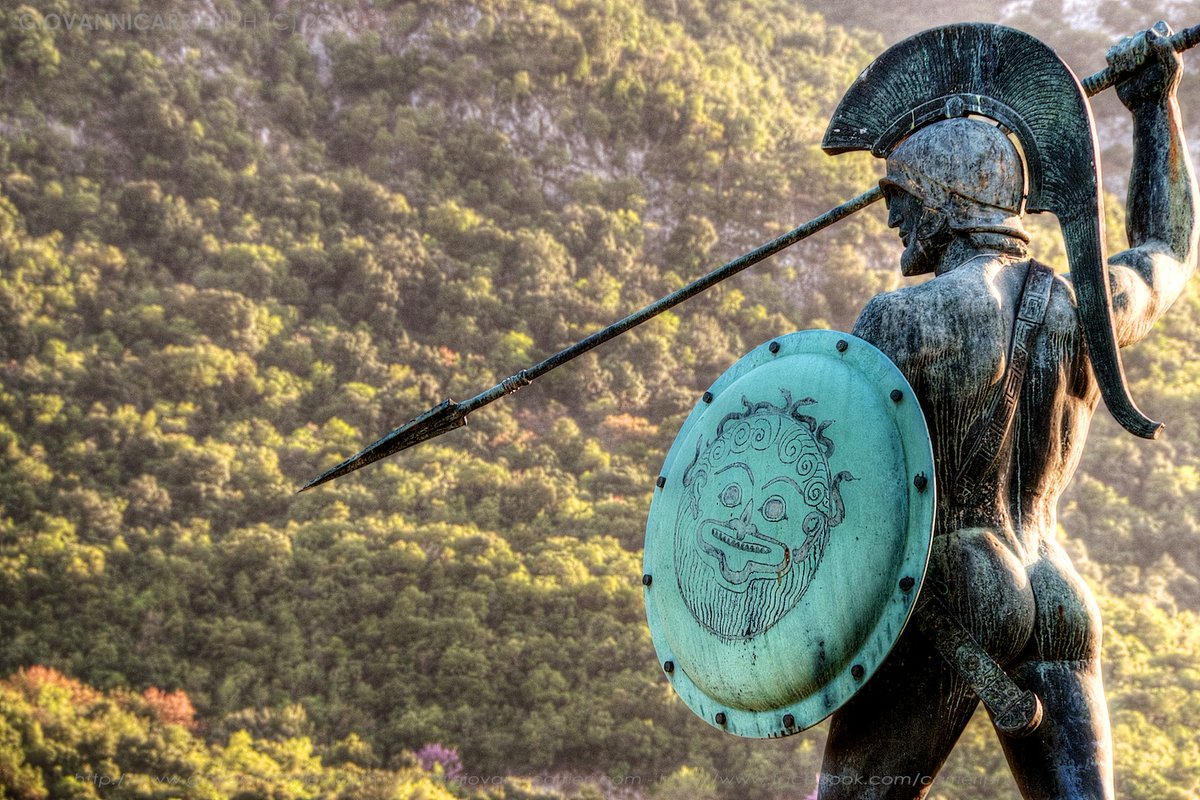
He died for Greece. He died so you can be free. He died to stop the barbarian invaders coming to Europe.
Honor him, respect him and do your duty.
Love your country, protect your family, hate the traitors.