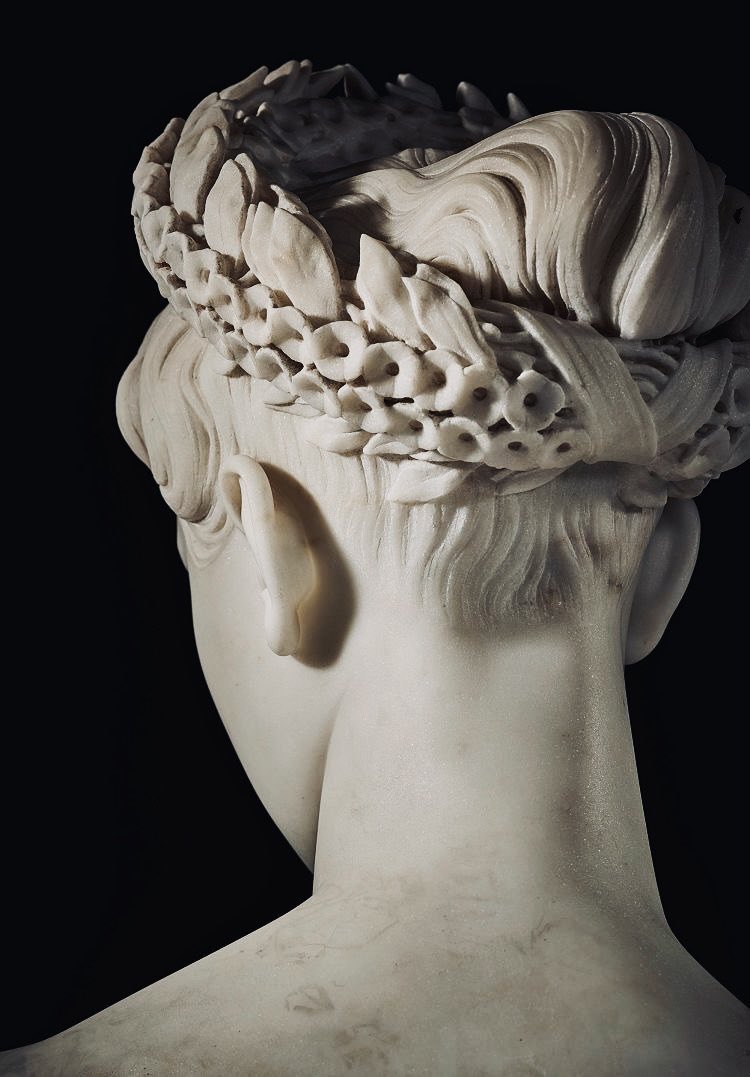
⚔️ Gaul Killing Himself and His Wife. (Ludovisi Gaul/The Galatian Suicide).
A 2nd-century CE Roman copy of a 3rd-century BCE Greek bronze original. It depicts a Gallic chieftain or warrior killing himself and his wife to avoid being taken as prisoners.
Palazzo Altemps in Rome, Italy.
📷 Photo by Mina Bulic.
#Gaul #Sculpture #LudovisiGaul #History #Art
The double chromatic harp is a fascinating and technically ingenious development from the late 19th Century, born out of the need for a harp capable of playing the increasingly complex, chromatic music of the Romantic and Impressionist eras. The traditional single-row diatonic harp could only play notes within a specific key (like C major) unless manually tuned with levers, which was impractical for fast key changes. The double chromatic harp sought to solve this by creating two full, parallel sets of strings that cross near their midpoint. One row is tuned to the naturals (the white notes on a piano, e.g., C, D, E), while the other is tuned to the accidentals (the black notes, e.g., C#, D$\flat$).
This revolutionary crossed-string design gave the musician immediate and complete access to every note in the chromatic scale, allowing for instant modulation and the performance of highly sophisticated harmonies and chord clusters. To play an accidental, the musician had to skillfully reach their fingers into the space between the crossing strings to pluck the desired note. While the design provided full chromatic freedom without the mechanical complexity of foot pedals, it introduced a significant challenge: the difficult technique required to navigate the close, dense, and crisscrossing strings. This made learning and performing on the double chromatic harp considerably more demanding than on simpler harps.
Despite its technical brilliance, the double chromatic harp ultimately failed to become the orchestral standard. Its complex playing technique and lack of standardization across manufacturers proved to be major hurdles. It was largely superseded by highly efficient double-action pedal harp, a design perfected by the Erard family which allowed a single row of strings to be raised or lowered by half or whole steps using seven foot pedals. Therefore, the double chromatic harp remains a historically important and beautiful example of a transitional instrument, showcasing the diverse attempts by instrument makers in the late 19th century to adapt classical designs to the burgeoning demands of modern music.
#archaeohistories
Salvador Dalí's Surrealist Cutlery Set, or Ménagère, designed in 1957, represents a fascinating extension of his artistic vision into the realm of functional, everyday objects. True to his philosophy that "art should fill all aspects of life," Dalí transformed the mundane act of dining into a theatrical, almost hallucinatory experience. Far from the conventional silver settings of the era, the set is an exquisite and unsettling collection, typically comprising six unique pieces often executed in silver-gilt and adorned with precious or semi-precious stones.
The individual pieces in the set are masterpieces of biomorphic and dreamlike forms, directly referencing the motifs that permeate Dalí's most famous paintings. Key items include the "Elephant fork with three teeth" set with ruby eyes, the handle of which resembles the long-legged elephants seen in his canvases; the "Fish fork with four teeth" which features a detailed, scaled fish body with sapphire eyes; and the haunting "Snail knife with tears," featuring four rock crystal pendants that look like weeping drops. By transposing these unsettling forms onto tableware, Dalí subverted their intended function, forcing the user to confront the deep, strange currents of the subconscious during a civilized act like eating.
In essence, the 1957 cutlery set is a quintessential example of Surrealist object art. It embodies the movement's core principle of unexpected juxtaposition and challenging rational perception. Like his "Lobster Telephone" or "Mae West Lips Sofa," this Ménagère transforms a commonplace object into an artifact that is both beautiful and absurd, blurring the line between fine art and functional design. This venture into luxury functional design allowed Dalí to bring his unique brand of creative paranoia out of the museum and onto the dinner table of the wealthy, creating a legacy that extends far beyond the canvas.
#archaeohistories
The Cloisters are a prominent feature of the main University of Glasgow building, which was constructed between 1870 and 1891 on Gilmorehill, following the university's move from its original site in Glasgow's High Street. The architect responsible for this monumental complex was Sir George Gilbert Scott (c. 1811–1878), one of the most prolific and influential British architects of the Victorian era and a leading figure in the Gothic Revival movement.
The Cloisters are a stunning example of Scott's mastery of the Gothic Revival style. This movement was a conscious effort to revive the medieval Gothic forms, characterized by:
Pointed Arches: The signature feature, as you noted, of the Gothic style, designed to distribute weight more effectively and allow for greater height and lightness.
Vaulted Ceilings: Often utilizing rib vaulting to create dramatic, soaring ceilings that draw the eye upward.Intricate Stonework: Features like tracery, carved bosses, and detailed columns that create a rich visual texture.
Scott's design for Glasgow was not a strict copy, but a grand, Victorian interpretation of the style, blending the spiritual drama of medieval cathedrals with the functional needs of a modern university. The Cloisters, in particular, provide a majestic, covered walkway that connects different parts of the main building and offers a sense of historical gravitas to the campus.
Historically, cloisters served as covered quadrangles in monastic and collegiate settings, offering a sheltered space for contemplation, study, and movement between buildings. At the University of Glasgow, the Cloisters serve a similar function, creating a distinctive and atmospheric passage. They intentionally invoke a sense of academic tradition and permanence, connecting the Victorian university to the venerable history of learning in the British Isles. They remain a central part of the university's identity, used for ceremonies, gatherings, and as an iconic backdrop for graduation photos.
#archaeohistories
Homework from the 13th century.
In 1956, archaeologists in Russia found birch bark drawings by a 7-year-old boy named Onfim who lived 800 years ago. Instead of finishing his alphabet homework, he drew himself as a heroic knight spearing his enemies. He even labeled the figure "Onfim".
This stunning Viking brooch, created in Denmark around 1000 years ago, showcases impeccable craftsmanship and intricate design. Made from gold, it features elaborate granular and wire filigree decorations, demonstrating the skill of a highly talented artisan. The level of detail and flawless execution of this piece are not only remarkable for its time but remain awe-inspiring even today.
Currently housed in the esteemed collection of the National Museum of Denmark in Copenhagen.
#drthehistories
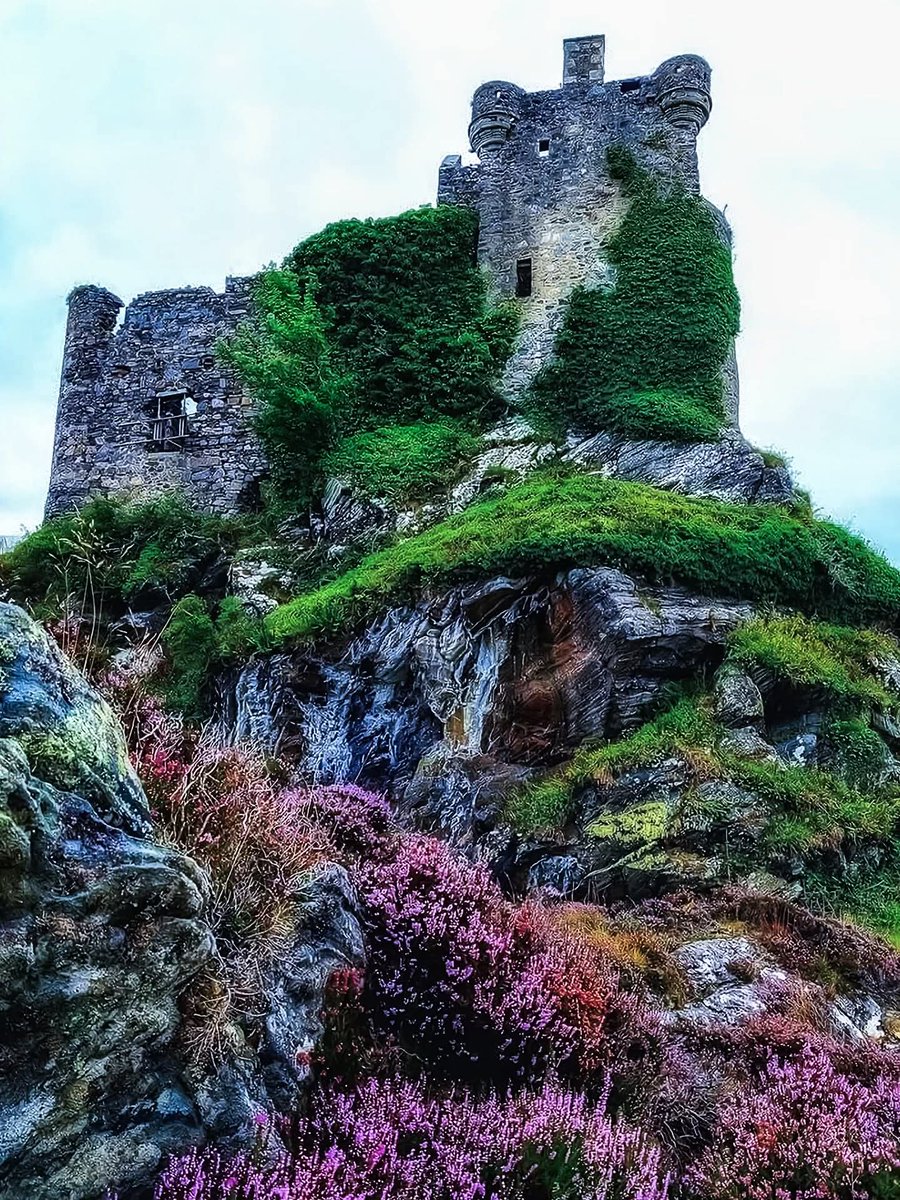
Castle Tioram, a ruined castle located on a tidal island in Loch Moidart, Scotland 🏴
The castle is situated on the rocky island of Eilean Tioram, which is accessible on foot at low tide. It was the ancestral seat of the Clanranald, a branch of the Clan Donald, for centuries.
The original structure dates back to 13th Century AD. The castle was deliberately burned down in 1715 AD, during the Jacobite rising to prevent it from falling into the hands of royal troops.
#drthehistories
Halil Cibran “Asi Ruhlar”da insan ruhuna ve kalbine ket vuran her türlü geleneğe ve yasaya karşı çıkar: Verde’l Hânî ve Gelin Yatağı kadınlar için bir hapishaneye dönüşen evlilik kurumunu ve namus mefhumunu sorgularken, İmansız Halil yozlaşmış iktidara çanak tutan kiliseyi eleştirir.
Sağlığında yayımlanan son yapıtı “Yeryüzü Tanrıları”nı Cibran bir mektubunda şöyle açıklar: “Yeryüzü Tanrıları insandaki üç temel doğal gücü simgeliyor: güç arzusu, dünyayı yönetme arzusu ve aşk.”
El-Muhacir gazetesinde yayımlanan “Müzik”teyse Cibran, tutkuyla sevdiği bu sanata dair duygu ve düşüncelerini konusuna yaraşan ezgisel, lirik bir dille aktarır.
Halil Cibran’ın yazdığı, Kenan Sarıalioğlu’nun Fransızcadan çevirdiği “Asi Ruhlar – Müzik – Yeryüzü Tanrıları”, Türkiye İş Bankası Kültür Yayınları’nda.
https://t.co/9gEIfqe0Qn
Bir zamanlar hükümetin gizli deneyleri için çalıştıktan sonra, 17 yıl boyunca bir akıl hastanesine kapatılan Walter Bishop'a ulaşan Dunham, yıllar önce üstü örtülen bir dizi doğaüstü ve paranormal deneyin de yeniden canlanmasına aracı olacaktır.
🎬Fringe
@elonmusk Ohh grow a little and stop whining elon. Since when mass media unbiased? X is unbiased? Nope. So, stop the rethorical slogans which are proper to put on tshirt not on x and work, u should be busy by now. This job is for grownups. Why are u spending ur time on x? Work hours right?