A lawyer in Patiala House told me something last month that I have not been able to stop thinking about.
He said "I have appeared very frequently before 12 judges in the last few years. I know exactly how each of them thinks. That ability to read a judge and predict their actions took me 15 years to build. My junior will never have that luxury because judges transfer every 3 years now."
The institutional knowledge of how a specific judge thinks, what arguments work in front of them, what irritates them, how they handle bail, how they approach interim relief, all of that used to live inside a lawyer's head. Built over decades of appearing in the same court.
That knowledge was the moat. The reason a senior could charge Rs 5,00,000 for a bail hearing and a junior could not. Not because the senior knew more law. Because the senior knew the judge.
Now two things are happening at the same time.
First, judge transfers are faster than ever. A judge who used to sit in one court for 5 years now moves in 2 to 3. By the time a lawyer builds a profile of the judge in their head, the judge is gone. The institutional knowledge resets.
Second, every order that judge passes is now on eCourts. Public. Free. Searchable.
The knowledge that used to take 15 years to build by appearing before a judge 200 times is now available to anyone who can read 200 orders (not perfectly, there is more than is done and said in the court room that does not show up in orders). The problem was always that no human could read 200 orders in a useful timeframe.
AI can read 200 orders in 4 minutes.
A 2-year call lawyer with Claude Code and a folder full of a judge's orders can now build the same profile that a 15-year senior has in his head.
Not a vague sense of "this judge is strict." A detailed analysis of how this judge reasons about specific issues.
You can add their publicly available data to your analysis to understand how the think, act and reason.
This does not replace the senior's courtroom presence. It does not replace oral advocacy. It does not replace the relationships built over years.
But it eliminates the information asymmetry.
The junior who walks into court knowing that this judge grants bail in 70% of DV cases where the victim has filed for divorce, that he always asks about community roots, that he rejected bail twice when the accused had a prior pending case, that junior is not guessing anymore. They are making the same informed decisions the senior makes. They just got there differently.
Now here is where this becomes a business.
There are roughly 700 district courts in India. Each has 10 to 50 judges. Each judge passes thousands of orders. This data refreshes constantly as judges transfer in and out.
Nobody is building judge intelligence profiles systematically. The analytics tools that exist in the US (Lex Machina, Trellis) do not exist for Indian courts. Not because the data is not there. Because nobody has built it.
The person who builds a judge intelligence service for Indian district courts will not need to sell to large law firms. They will sell to every litigation lawyer who walks into a courtroom they have never appeared in before.
That is 14 lakh lawyers. Not 200 firms.
At LawSikho we now teach lawyers to build these profiles for their own cases using Claude Code. Not as a product. As a personal tool. Put the judge's orders in a folder. Let Claude Code read them. Ask it questions. Correct its understanding. Then draft your arguments for that specific judge.
The skill takes weeks to learn. The advantage it gives lasts a career.
The senior in Patiala House was right. His junior will never have the luxury of 15 years in front of the same judge.
But that junior might not need 15 years anymore.
In Adesoye college, Seun told the whole boys dorm that I had sex with him and so I went through four years of boys being really hyper sexual towards me and I didn’t realize why till the year I graduated. It’s part of why I hated my time at Adesoye.
I was a virgin that was constantly treated like a “slut”. I wasn’t even interested in sex or boys.
Indian law firms run on MS Word, WhatsApp, and memory. AI hasn't touched them. Yet.
India has 1.5 million registered advocates.
Most of them run their practice out of a single room, a shared chamber, or a small 3-person office.
Ask any lawyer in Tis Hazari, City Civil Court Mumbai, or a district court in Patna if they use AI in their practice.
Most will say yes. They mean they asked ChatGPT to summarize a judgment
once. Or wrote some mails with gemini.
That is not automation. That is not a workflow. That changes nothing about how
the practice actually runs.
Real AI deployment, the kind where a client intake form auto-populates a case file, where hearing dates trigger automatic reminders, where a standard contract gets drafted in 3 minutes not 3 hours, that is essentially at zero in Indian law firms below 20 people.
Not 7%. Not 2%. Essentially zero.
Why this is the biggest untapped market in Indian legal right now:
India's large law firms are moving fast. Trilegal, AZB, Cyril Amarchand. AI for contract review, due diligence, legal research. They have technology budgets.
They have AI teams.
Their smaller counterparts? Still on Word templates from 2014. Still maintaining case diaries in physical notebooks. Still calling clients manually to remind them of hearing dates.
The gap between large firm and small firm on AI is not a technology problem.
It is a deployment problem.
The tools exist. Contract drafting with Claude. Case management with AI-integrated tools. Client communication via WhatsApp automation. Document review with GPT-4. Most under Rs 5,000 a month.
What doesn't exist is a person who walks into the law firm, understands the workflows, and builds it.
That person is the Legal AI Workflow Architect.
What this person actually does:
Real example.
A litigation lawyer in Saket District Court handles 150 active matters. Each matter needs:
- Hearing date tracked and reminded to client
- Case documents organized and retrievable
- Client billing updated after each appearance
- Drafts prepared for next hearing
- Court fee calculations done
Currently: one overworked clerk. Dates missed. Clients calling constantly. Bills sent late or not at all.
A Legal AI Workflow Architect builds this in 4 weeks:
- WhatsApp bot that sends hearing reminders automatically
- Document folder structure auto-created on new matter intake
- Billing tracker updated after each court date
- Standard draft templates pre-filled from case details
- Court fee calculator integrated into the intake form
Cost to the lawyer: Rs 15-20,000 one-time. Rs 2,000 per month to maintain.
Value to the lawyer: 2 hours saved per day. One less clerk needed. Zero missed dates. Clients who feel looked after.
This is not complicated. It is not being done because nobody is walking in to do it.
The junior lawyer crisis and the small firm gap are the same story.
Entry-level hiring at top law firms: collapsing. AI is doing the contract review, the legal research, the painful due diligence, the first draft. The work that used to go to a fresh LLB graduate.
712 lawyers have already been sanctioned globally for AI hallucinations in court filings. The ones who used AI carelessly. Not the ones who deployed it properly.
Large firms are cutting junior headcount. The work isn't disappearing. It is being done differently.
But 1.4 million small practitioners have no automation at all. They are drowning in admin. They are losing clients to better-organized competitors. They are billing less than they should because they cannot track their own time.
The same disruption that shrinks the large firm associate pool creates the legal AI deployment market. These are not separate events. They are the same event, viewed from different angles.
The skill set is learnable. In months, not years.
You do not need to be a technologist. You need to understand legal workflows and know how to connect tools.
Legal process mapping: if you have worked in any law firm, you already know this
- One automation platform like n8n or Make: 3-4 weeks
- Prompt engineering for legal drafting: 2 weeks
- API basics, connecting tools: 3-4 weeks
Three months of focused learning. Then you walk into one solo practitioner or small firm with a painful manual process and you fix it.
India has 1.5 million lawyers. The ones who learn to deploy AI into legal workflows will not just survive what is coming. They will own the future.
If you are struggling to get a good job or internship in law, just learn how to do it. Your legal career will be unstoppable.
I hope all the tech bros are listening even the ones in the back.
The thing with lawyers was that drafting a document was never the job. Doing research was never the job.
Each was a task.
A task isn’t a job. The purpose of the lawyer’s job is to solve legal problems for the client and provide the comfort and accountability around and as part of these solutions. That’s what people need from lawyers.
The fact that lawyers can now do the drafting, analysis, or researching faster or better with AI just made lawyers more needed and more valuable. If legal AI is used in the right way, imagine the scale that will be given to lawyers to solve more and more complex legal problems for clients. Their purpose and the need for their services will compound.
Society needs more lawyers to help people and businesses with their legal problems. The solution isn’t for clients to solve them on their own with AI slop because they will suffer harm, loss, and make the wrong decisions based on inaccurate, inexperienced, and wrong information, documents, analysis, and advice.
I’ve said this before. Tech bros love to predict the end of jobs that they don’t understand because it fits their agenda not the reality based on real, deep understanding of the job or clients’ needs. That’s just stupid and irresponsible. But that’s life.
With legal AI being used correctly, effectively, and responsibly by lawyers, we will see more lawyers being able to solve more and more complex legal problems for people and businesses at scale.
Lawyer are just being given new superhuman powers. Lawyers and legal services are just getting started.
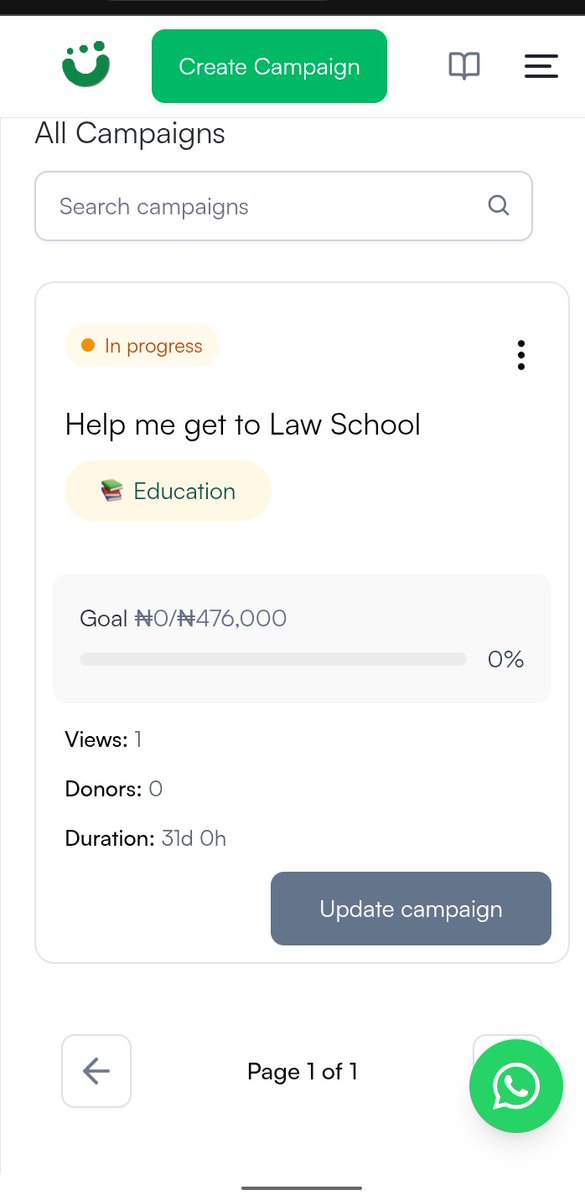
I'm still seeking help for the completion of my law tuition fee of 476k. I’ve raised 213k and there's 263k remaining.
I’ve less than 7 days to complete my fees or I’ll lose my admission. Everyone's support counts.
8132257099
PalmPay
Ruth Obialo
Help me retweet for more reach.
This is the link,please consider donating to help pay my law school fees I'm willing to provide additional information if needed, thank you https://t.co/IFp5c48YjQ
A Little dream
A decade of pupilage
A sole sojourn afterwards
A staggering journey
Some small wins to keep faith
Some losses to learn from
A focus on growth
A commitment to excellence
An investment in our people
A dedication to structure building
A Grateful Heart…
Not there yet but today, we celebrate our journey, everyone that has crossed path with us, the feedback that has made us stronger, the clients that have believed in us and the team that has remained committed to our vision.
Welcome to @strichlandLP
Renovation work by @dhkdesigns_
#WomenInLitigation🔥
#Law😍
@MartDrew@Mheerah_ In the evening, take the train and enter badagry bus from Mile 2. Enter a full bus so your commute time will be shorter.
Since they're still fixing our road, alight at iyanera and take a bike to Agbara. From agbara, sort yaself.
Ire o
@MartDrew@Mheerah_ I did agbara to Anthony village before agbara to ikoyi so I had some experience.
Find a bus driver that goes to VI or Eleko in the morning (find 2 people because they will not go everyday). Try to sleep on the bus. Try to eat too.
@Osi_Suave The direct bus to lekki from the train station may not arrive, and there's usually more people than the train. When you look at these, it makes more sense for him to take the safe option.