It has been a long journey. I’m thrilled to announce that I have accepted a tenure-track Assistant Professor position at @cornellgov! So many people from Nebraska, Truman, Forensics, Wisconsin, Georgetown, and LSE have helped me reach this point, and I’m extraordinarily grateful.
What will determine the future politics of AI?
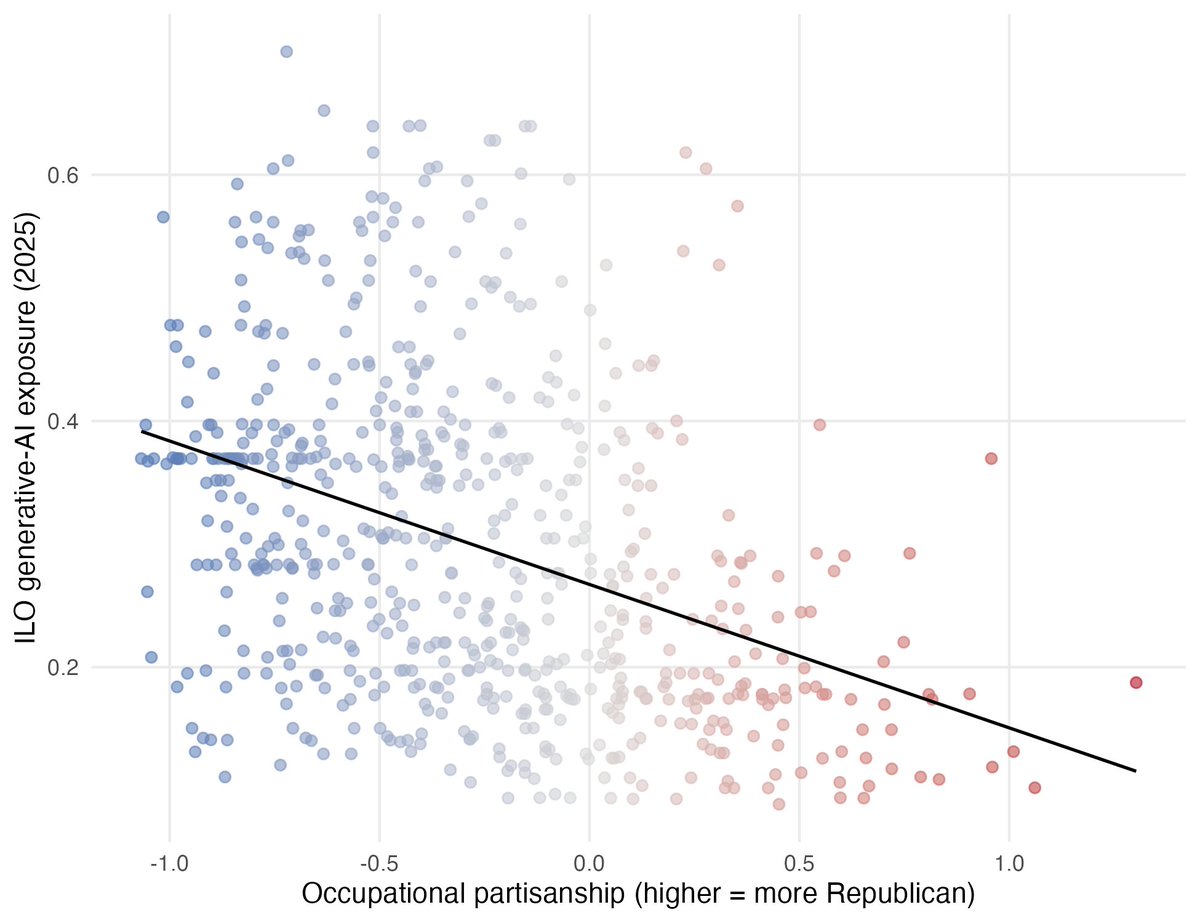
In this new paper, I address this Q by examining the partisan valence of the job tasks most exposed to AI.
The headline finding: the jobs most exposed to AI are sharply skewed towards “Democrat occupations”.
https://t.co/7MyUjGo7zN
Tomorrow's post will be my hottest and nerdiest take yet:
Abstract concepts like "inequality," "diversity," and even "immigration" aren't tangible things that have identifiable true effects in the real world. Policies do.
Subscribe to get it in your inbox.
"There'll be a lot of people watching parades and fireworks on folding chairs today. HFC folded like one of those CVS chairs, and this is not a knock on CVS, which is a great store, great institution, but they folded like a cheap lawn chair." - @JakeSherman on The Daily Punch
"Minor Party Major Change: Democratic Environmental Re-Prioritization in Response to Green Party Competition" by @CassidyReller (@UFPoliSci)
https://t.co/LUtiasSolB
Breaking News: The Trump administration has frozen more than $1 billion in funding for Cornell University and $790 million for Northwestern, two officials said. https://t.co/jKSzNug9Gg
Question for the customs lawyers/brokers out there: Now that there are dozens of different, country-specific tariff rates for the same product (as opposed to one MFN rate), how are you/your clients properly documenting the country of origin... in just a week?
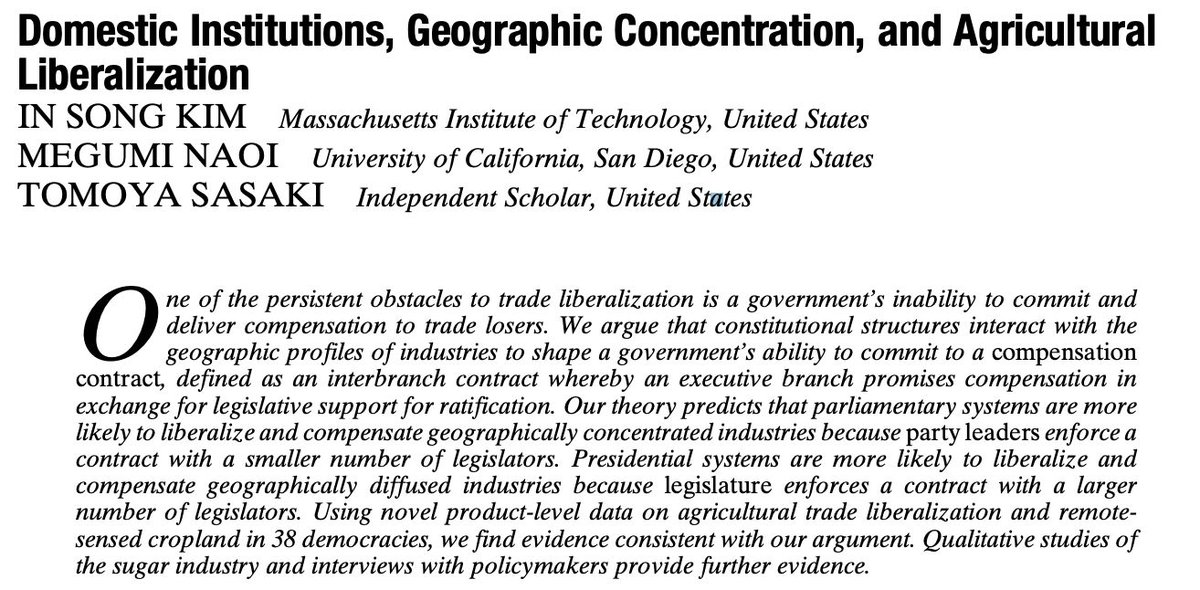
Just published on APSR First View: "Domestic Institutions, Geographic Concentration, and Agricultural Liberalization" by In Song Kim, Megumi Naoi, and Tomoya Sasaki. https://t.co/3CeP9kzn3y
This is exactly right: no democracy has immigration that’s both relatively popular but not selective or selective but not popular.
To put numbers to it: across the OECD, the correlation between how much easier it is to migrate as a skilled worker and public perceptions is 0.9!