I am a person who works well under pressure. In fact I work so well under pressure that at times, I will procrastinate in order to create this pressure.
@PR4change Why can't people like you stay silent about her and give those who cared about her even 1 day to mourn before listing the reasons you didn't like her? Why is it on the day of her death so important to share your view?
There is a particular breed of politician who wants to send Britain back to the Dark Ages.
Ed Miliband, with his bans on tumble dryers and underfloor heating.
The Green Party councillors banning leaf-blowers in favour of rakes.
The Malthusian de-growthers like Thomas Piketty who argue that we should impose growth caps on developed countries because of climate change.
What they all have in common is a supreme indifference to the hardship their policies impose on the public.
Ed Miliband has been on a joyless spree of consumer intrusion since coming to power. His spray of Net Zero policies leaves virtually no part of ordinary life untouched.
The cost of electricity, food, housing, tumble dryers, boilers, fertiliser, towel rails and underfloor heating will all rise because of his unshakeable belief that he should decide what is best for you to buy.
These are all features of modernity that make lives better for billions around the world, but does that matter to Miliband? Not a jot.
He believes that Britons should be uniquely punished, forced to wear a hairshirt while our industry is destroyed and our beleaguered consumers piled with even higher costs.
Why? So he can jet around to climate conferences talking about his ‘climate leadership’ and arguing for others to do the same.
It’s not clear who he is going to convince first. President Xi? President Trump? Putin?
No world leader will be persuaded by his spit-flecked proselytising. “I made my country poor! We no longer have any industry and the cost of living is out of control! You should do the same!”
We must be honest that forcing hardship onto British consumers is not saving anyone. It is only acting as a deterrent to the rest of the world who hold Britain up as an example of exactly what not to do.
Under Kemi Badenoch’s and my leadership, we have renounced the mistakes of those who came before us. We would repeal the Climate Change Act and its dogmatic net zero targets in full.
That’s not to reject all clean tech as “stupid”, as some on the right do. There are many consumers who enjoy their heat pumps, home batteries and electric cars. But consumer choice should be king.
Businesses should compete to innovate until they produce what consumers actually want. The public will adopt new technologies when they decide they make their lives better.
And the salt in the wound for the climate zealots? Countries that have seen clean tech through the eyes of consumers, not those of climate bureaucrats, have generally had much higher rates of adoption.
It cannot be right that a few privileged bureaucrats can keep pushing higher costs on a worn-out public.
We have to embrace uncertainty. We have to recognise government’s role is to enable, not to dictate. Consumer choice must prevail.
This is England, where even the kindest, most human acts are subject to control by authoritarian pen pushers.
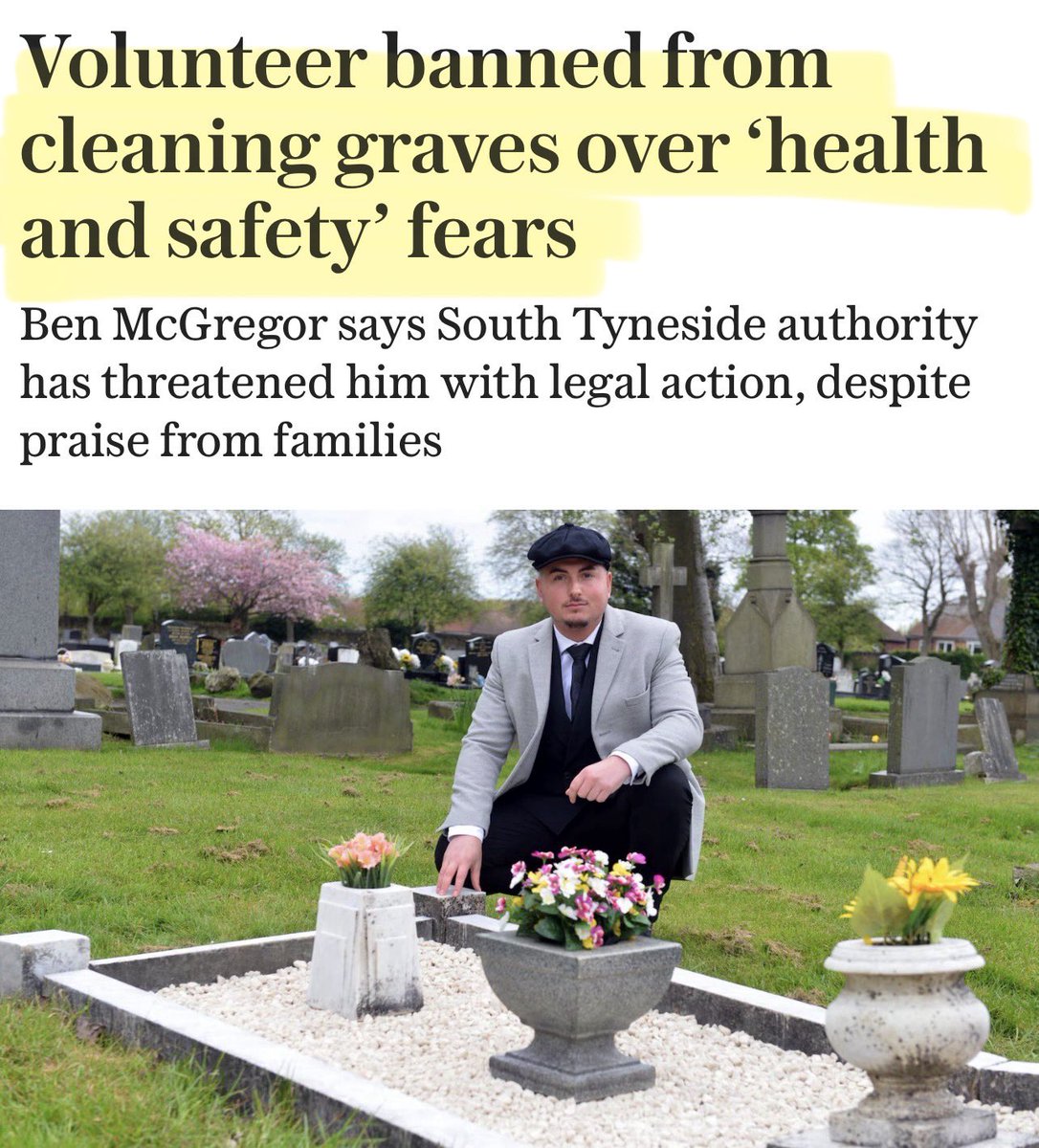
Using “health and safety” to stop a young 25 year old man from cleaning gravestones with soap and water.
This is how you crush a society. You do it by smothering small acts of decency, like driving people home from the pub and cleaning gravestones. You do it by putting rules in the way of people pulling together, until eventually they just stop trying.
Reject this 🔥
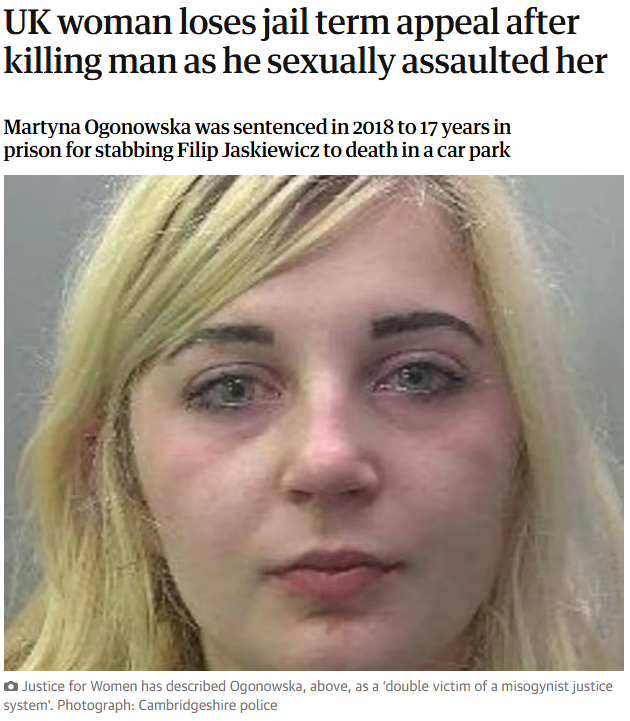
A migrant man sexually assaulted a woman in the UK
She killed him in self defence
She was just 18 years old
She is now serving a 17 year prison sentence
This is one of the worst examples of how utterly corrupted the criminal justice system is
The Judge even admitted she was being sexually assaulted when she defended herself
Martyna should be free and living her life, but instead she is rotting away in a UK prison, just because she didn't want to be raped
Where is the outrage?
Where are the campaigners?
Where is Jess Phillips?
No where.
Why? Because the man who attacked her was a migrant.
So they will not say a word
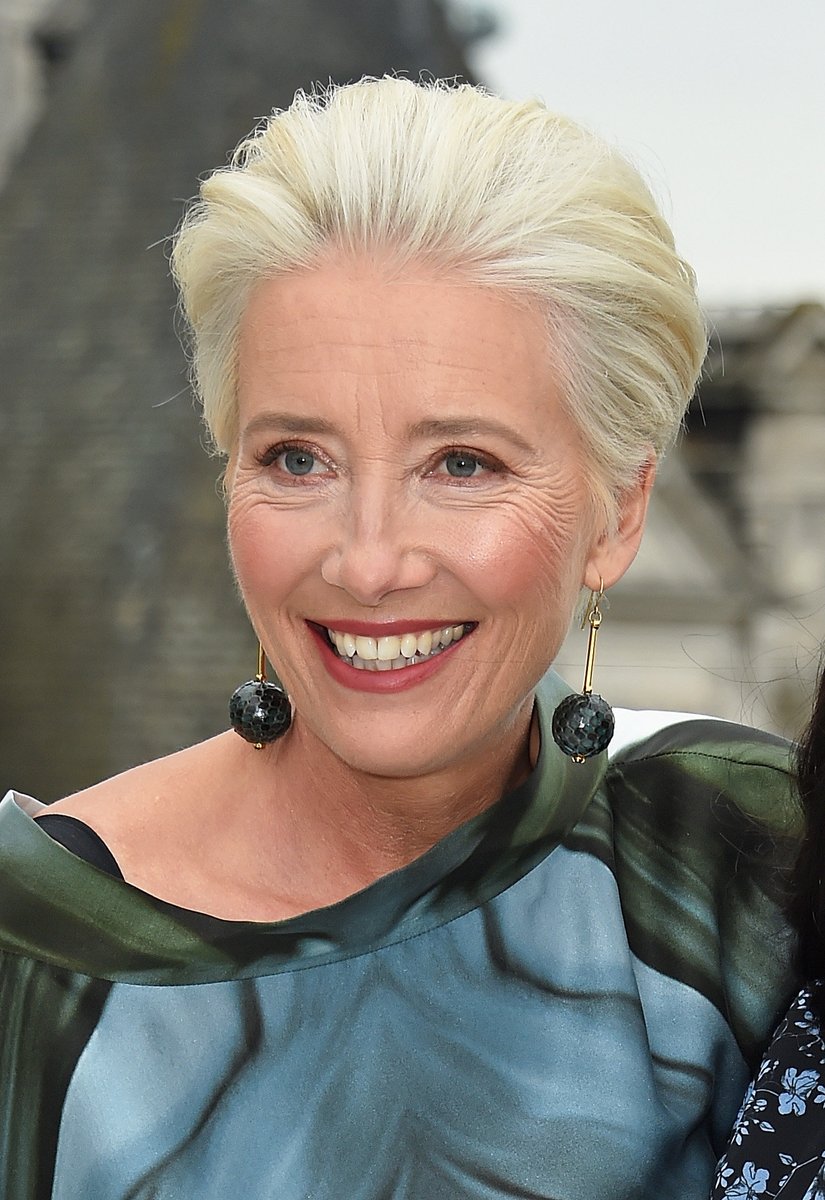
There's a sickness in Britain's public life: we have replaced judgment with performance. We have handed moral authority to the stage and let actors decide who belongs in this country. Olivia Colman, Emma Thompson, Stephen Fry, Judi Dench, Brian Cox – a roll call of national treasures who lined up to read script lines and wept on cue for a man they barely understood. They weren't defending justice. They were auditioning for sainthood.
Alaa Abd el-Fattah called Britons "dogs and monkeys." He said he "fucking hates white people." He wrote that killing Zionists, "especially civilians," is heroic. He praised Bin Laden. He dreamed of our streets on fire. These weren't stray remarks. This was a worldview. A creed of racial contempt and revolutionary bloodlust. And Britain's cultural class didn't bother to look. They didn't want to look. Because the point was never him. The point was them – proving their virtue to each other like teenagers comparing scars.
Keir Starmer called Abd el-Fattah's return a "top priority." He said he was "delighted" when the man landed in Britain. Delighted – as if a racial arsonist was a trophy of moral progress. As if British Jews didn't exist. As if the names Westminster, London Bridge, Manchester and Birmingham had been whitewashed from the national memory. Starmer isn't conflicted. He is consistent. His politics is powered by applause from the international set, not the safety of his own citizens.
Celebrity pity replaced national judgment. Emotional theatre replaced due diligence. The Home Office didn't vet – or didn't want to. The civil service looked away. Westminster saw a cause, not a threat. In modern Britain the question is never "Is this man safe?" It's "Will supporting him make me look virtuous to the right crowd?" Conscience has been turned into a prop. The country has been turned into an audience, expected to clap on cue.
Name them. Olivia Colman, whose trembling voice lent saintly gravitas to a man who spat on her country. Emma Thompson, forever the moral matron of the luvvie class, too busy basking in applause to read the record. Stephen Fry, who will condemn intolerance at home but clasp the hand of a man who wanted Zionists dead. Mike Leigh. Mark Ruffalo. Emily Watson. Rebecca Hall. Joseph Fiennes. Harriet Walter. Sir Bill Nighy, beard grown for gravitas, telling the Prime Minister to "make the call" – and the Prime Minister did. They summoned a man who would happily see the country that knighted them burn.
This wasn't a mistake. It was a ritual. The ruling class performed virtue, the celebrities performed conscience, and Britain paid the bill. They needed him to fit a story: the "political prisoner," the "prisoner of conscience," the symbol of everything they think makes Britain look enlightened. They didn't check who he was because the truth would have broken the spell. Violence abroad is romantic in their eyes. Violence at home is a misunderstanding. Hatred is fine, as long as it is directed at the right targets.
The ECHR forced the door open. Successive governments refused to close it. Its architects still pretend it's the noble post-war shield it once was, even as foreign judges veto laws passed by the people who live with the fallout. A serious country would have walked the moment protecting its own became "unlawful." A serious country would say: glorify terror and you lose your passport; call for blood and you're gone. But Britain isn't serious. Britain is obedient – to treaties, to NGOs, to foreign approval, to the moral vanity of its own elite.
What we are watching is national self-harm dressed as progress. A country apologising for existing. A cultural class so besotted with its own virtue it can't tell a dissident from a fanatic. They think they are rescuing a hero. They are opening the gates. They think they are proving virtue. They are advertising weakness.
"The point was never him. The point was them – proving their virtue to each other like teenagers comparing scars"
"Can you not at least put a sane woman among us?"
The words came from a terrified patient inside the Women's Lunatic Asylum on Blackwell's Island. She was begging the doctors, the nurses, anyone who would listen.
She was talking about the new patient. The one who seemed too calm. Too aware. Too sane.
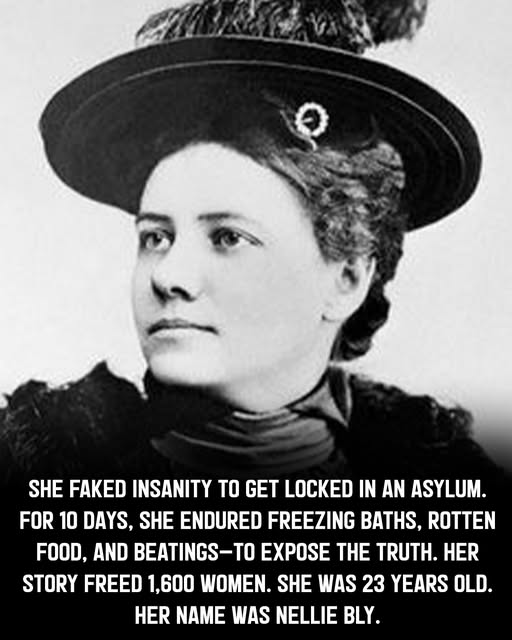
That patient was Nellie Bly. And she was exactly where she wanted to be.
In 1887, New York City's asylums were shrouded in mystery. Rumors swirled about horrific conditions, abuse, and women disappearing behind locked doors, never to be seen again.
But they were just rumors. No proof. No witnesses willing to speak. No way to know the truth.
Nellie Bly, a 23-year-old journalist for the New York World, decided to find out for herself.
Her editor, Joseph Pulitzer, supported her plan: get yourself committed to the asylum, document everything, and expose the truth.
It was dangerous. It was unprecedented. If something went wrong, Nellie could be trapped there indefinitely—declared insane with no way out.
She did it anyway.
Nellie checked into a women's boarding house and began acting erratically. She stayed up all night, spoke incoherently, stared at nothing, and claimed not to know who she was.
The landlady called the police. A judge declared her insane. And on September 25, 1887, Nellie Bly was committed to the Women's Lunatic Asylum on Blackwell's Island.
The moment she arrived, Nellie dropped the act. She behaved completely normally. She spoke clearly. She answered questions rationally.
It didn't matter.
Once you were inside, you were insane. No amount of sanity would set you free.
What Nellie discovered inside was worse than anyone imagined.
The asylum held over 1,600 women. Many of them weren't mentally ill at all.
They were poor. They were immigrants who didn't speak English. They were women whose husbands wanted to be rid of them. They were girls who'd been raped and were considered "damaged." They were inconvenient, unwanted, and discarded.
And once inside, they were tortured.
The "treatment" was barbaric. Patients were forced to sit in freezing cold baths for hours—punishment disguised as therapy. The food was rotten, inedible. Rats roamed freely. The halls were filthy.
Nurses beat patients with sticks. They tied women to chairs and left them for days. They mocked them, starved them, and ignored their pleas for help.
Nellie watched women scream for help and be silenced with violence. She saw patients beg for warm clothing and be denied. She witnessed daily cruelty designed not to heal, but to break.
And she wrote it all down. In her mind. Memorizing every detail.
For ten days, Nellie endured the same treatment as everyone else. She froze in the baths. She choked down spoiled food. She slept on a hard bench in a freezing room with no blankets.
She didn't complain. She didn't fight back. She documented.
On October 4, 1887, after ten days inside, an attorney hired by her newspaper secured her release.
She walked out of Blackwell's Island and immediately began writing.
On October 9, 1887, the New York World published "Ten Days in a Mad-House"—Nellie Bly's firsthand account of life inside the asylum.
The article was explosive.
Nellie described everything in vivid, horrifying detail. The cold baths. The rotten food. The rats. The beatings. The women who didn't belong there.
She wrote about a woman who spoke only German and was declared insane because doctors couldn't understand her. She wrote about girls as young as sixteen locked away for being "difficult." She wrote about women who begged to be released and were told they'd never leave.
The public was horrified. Outraged. Demanding answers.
A grand jury was convened to investigate. They toured Blackwell's Island. They interviewed patients and staff.
They confirmed everything Nellie had written.
The city of New York immediately allocated an additional $1 million to the Department of Public Charities and Corrections to reform asylum conditions. Staff were retrained. Oversight increased. Patients gained new rights and protections.
Some of the women Nellie had met were released. Others received proper care for the first time.
"Ten Days in a Mad-House" became a sensation. It was published as a book. It was read across the country. It sparked a national conversation about mental health, women's rights, and institutional abuse.
Nellie Bly became famous overnight.
But she didn't stop.
In 1889, at 25 years old, Nellie set out to break the fictional record set in Jules Verne's Around the World in Eighty Days. She traveled around the globe in 72 days, 6 hours, and 11 minutes—by steamship, train, and sheer determination.
She became an international celebrity.
But it was "Ten Days in a Mad-House" that cemented her legacy as the mother of investigative journalism.
Nellie Bly proved that journalism wasn't just about reporting what happened. It was about uncovering what was hidden. It was about giving voice to the voiceless. It was about risking everything to tell the truth.
Before Nellie, undercover journalism didn't exist. She invented it.
After Nellie, investigative reporters followed her lead—going undercover in factories, prisons, sweatshops, and more to expose injustice.
Nellie Bly died in 1922 at the age of 57. By then, she had revolutionized journalism, traveled the world, and advocated for women's rights and workers' protections.
But her asylum exposé remains her most enduring achievement.
Because of Nellie, over 1,600 women were seen. Their suffering was acknowledged. The system that imprisoned them was forced to change.
Because of Nellie, mental health reform began in America.
Because of Nellie, journalists learned that sometimes the most important stories require more than a notebook—they require courage.
Nellie Bly didn't just write about injustice. She lived it. She endured it. And then she made damn sure the world knew.
She was 23 years old.
She faked insanity to get locked in an asylum.
For 10 days, she endured freezing baths, rotten food, and beatings.
She did it to expose the truth about 1,600 women who'd been abandoned by society.
Her story changed mental health care in America.
Her courage invented investigative journalism.
Her name was Nellie Bly.
And she proved that one person, willing to risk everything, can change the world.
@TRobinsonNewEra Heartbreaking images of the Christian genocide in Nigenia. In each coffin are children, fathers, brothers, and friends. But they don't interest any European. There are no Greta Flotillas for them. There are no media!
@JaneDunning35@suespeaksup@daveatherton@TRobinsonNewEra There could be multiple reasons for the door being unlocked, perhaps it's a front porch door & the inner door was locked, or maybe someone came home after her (hence the car on the driveway) & unlocked it. But no the only possible conclusion is the young girls lying!
On Woman’s Hour just now - women and girls not even pulled out of the earthquake rubble in Afghanistan because men won’t touch them and male doctors won’t treat them. ‘Barbaric’ doesn’t even come close.
@thorpey2605@NiallHarbison That's different, you haven't just rescued your dog. Surely after what he's been through he should be gentler with him, this is all new to him.