The connection test built for gamers. Free, no signup, in your browser. Speed test says fine, you still lag? We catch the spikes and hand you the receipt.
your internet has a rank now.
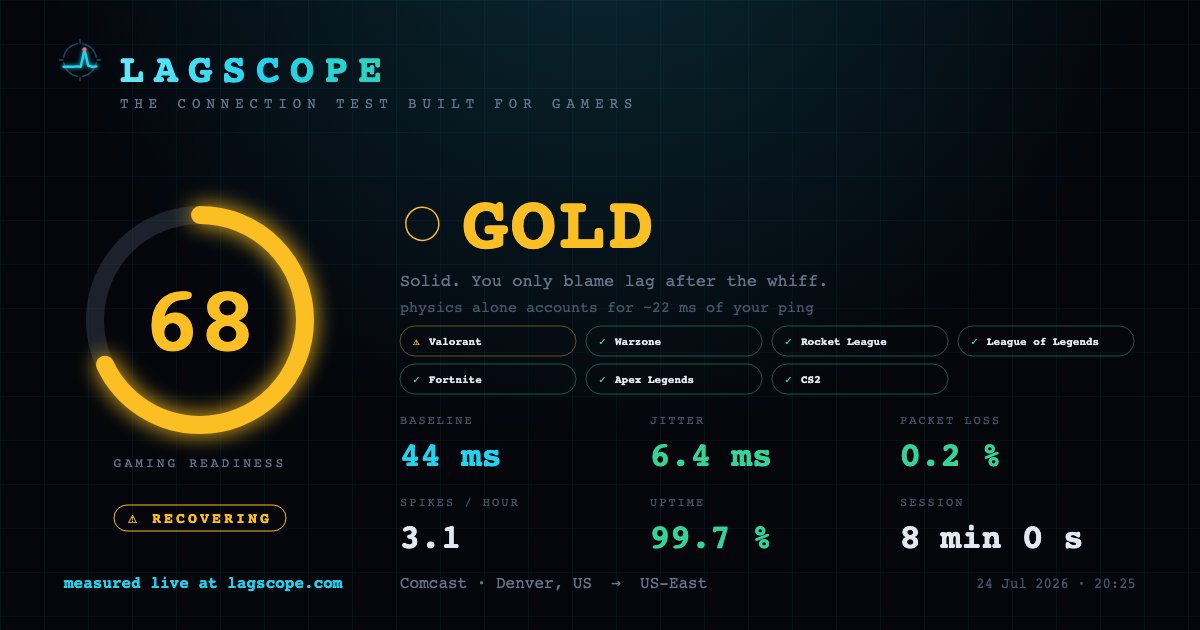
DIAMOND — kill cam finally honest.
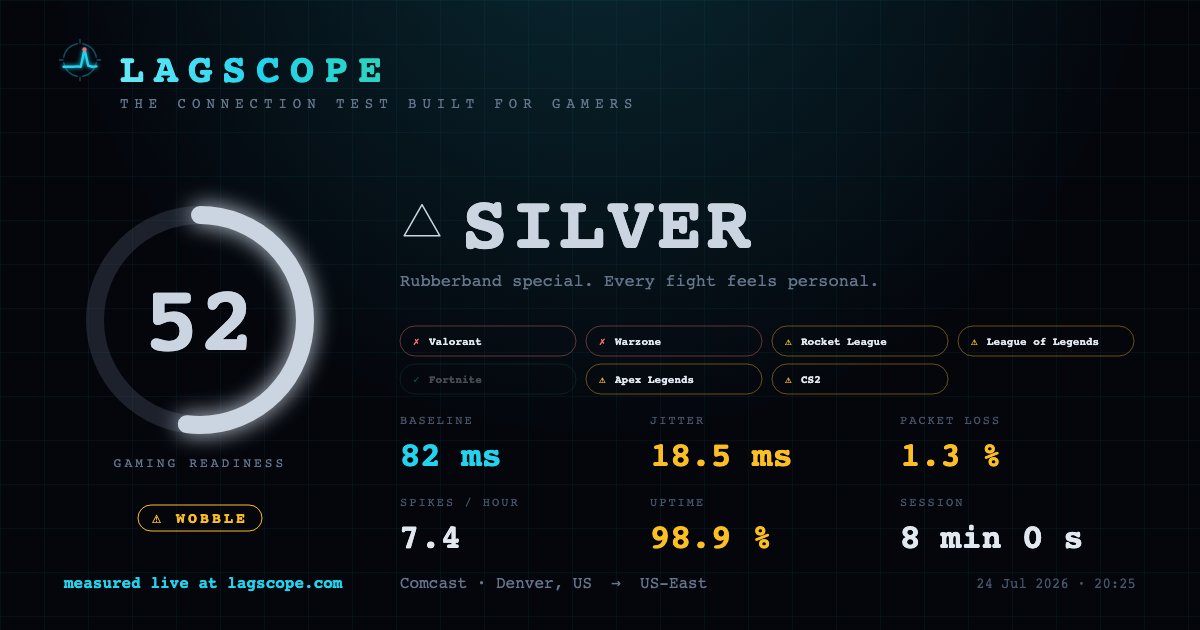
SILVER — rubberband special. every fight feels personal.
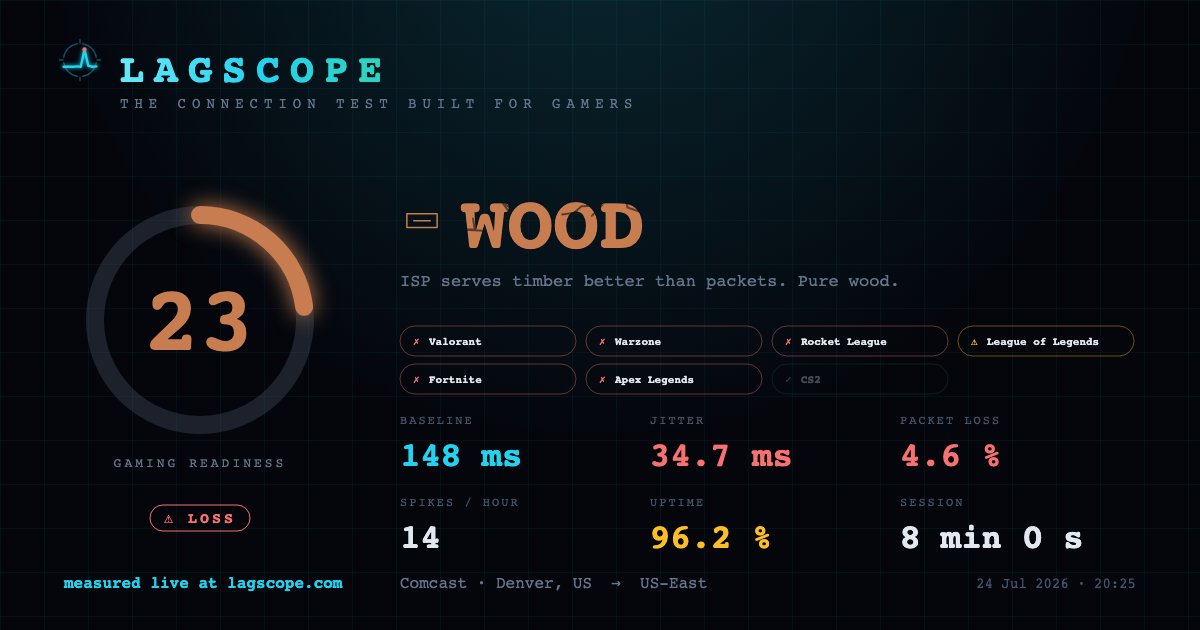
WOOD — ISP serves timber better than packets.
30 seconds. no signup. what's your tier → https://t.co/DOXhkrdSBl
Rubberbanding is not one thing. Packet loss, a lag spike, WiFi retries: they all feel the same in game and look completely different on a probe graph. You cannot argue with support about a feeling. You can argue with a graph.
ISP support: "have you tried restarting the router?"
You, this time: a timestamped record of every spike in the test, on a link they can open.
The record changes the conversation.
We probe 30 times a second. Why: a 400 ms spike is a death in game and a rounding error in a five second average. If you want to catch the spike, you have to look about as often as a game does.
Bufferbloat, in plain words: when the line is busy, your router makes packets wait in a queue. Your shots stand in that queue behind someone's 4K stream. Download speed looks perfect the whole time. That is the trap.
Your ping is not a number. It is a range. A flat 60 plays better than a 30 that spikes to 180 every few seconds. The range is called jitter, and the one big number on a speed test never shows it.
When you open LagScope, five nodes race for you: US, EU, Brazil, Japan, India. Closest wins, and your probe runs against a server that answers in UDP like a game does. Distance is part of the story, so we measure it instead of ignoring it.
Speed test says fine. You still lag. Both can be true: averages hide the spikes that kill you.
LagScope probes like a game: UDP, 30 times a second, in your browser. Free, no signup, verdict in a minute, receipt included.
What tier is your internet? https://t.co/DOXhkrdSBl