Having an active “champion” is an important part of delivering a change or improvement initiative. Or is it? Do local change champions create a vulnerability when it comes to sustaining the project longer term?
Newly published research by Hannah Stark & Jane Page defines champions as people in a change situation who “actively promote, protect & troubleshoot [the change] through their influence, advocacy, & practical problem-solving." The researchers found the factors that make champions effective at initial implementation stage may also create systemic vulnerabilities that threaten sustainability of the change.
Champions build momentum through their specialised knowledge, personal commitment & ability to translate evidence into practice. But the research found three mechanisms through which these same strengths generate fragility:
- Knowledge concentration: Expertise accumulates in individuals rather than being embedded in organisational systems.
- Dependency creation: Organisations become reliant on champions for quality assurance, problem-solving & continuity. These dependencies only surface when champions leave; at which point, multiple capability gaps emerge at once.2
- System capacity prevention: When champions hold things together through personal effort, organisations don't feel urgency to build systematic infrastructure. Their effectiveness conceals structural gaps underneath.
These form a self-reinforcing cycle. The more effective the champion, the less pressure to develop collective capacity that would survive their departure (see the graphic).
What does this mean for us as leaders of change?
1) What are we actually building? When we appoint a champion, we need to ask whether we’re strengthening organisational capacity or creating a workaround for absence of capability. The two may look identical in the short term.
2) Role design matters. The researchers propose reframing champions; not as permanent drivers of improvement, but as transitional resources whose purpose is to build collective capability & become unnecessary. Selection criteria should extend beyond individual competence to include capacity for knowledge transfer & succession planning.
3) We must get smarter about how we measure sustainability. Just because a programme is still running doesn't mean it's on solid ground. An organisation can look perfectly healthy while everything depends on one or two key people. The real test is whether the programme would hold up if those people left tomorrow; whether knowledge is spread across the team, whether documented processes exist so a new person could pick things up & whether standards can be maintained through people changes.
Our instinct to find brilliant champions for change & improvement isn’t wrong. But it’s incomplete. This research shows that building the system around the work - not just the person in the work - is what makes change last.
Link to the article (open access): https://t.co/u0UAwu9aqp.
MOTM was Callum. On at the start of the second half he made an immediate impression with his direct running causing the opposition no end of trouble! He capped a great second half performance by getting himself on the scoresheet too.. Well Done Callum 🏆🍾⚽️🥳
A second league defeat of the season for the boys at the hands of Camelon this morning. A spirited comeback from 2-0 down saw us lead 2-3 with minutes to go. Rather than see the game out we lost concentration and Camelon won the the game with a late pen. Lessons to be learned! ⚽️
Why "communication" & "persuasion" are insufficient levers for change across an organisation or system: part 2.
A summary of comments in response to my last post, across multiple social channels. I pulled out six themes:
1) Why persuasion fails: Greg Satell, author of the original article, clarifies that persuasion methods DO work — Robert Cialdini's research shows that. The problem is that once people return to their social networks, they may get convinced right back. He points to Brown & Reingen's 1987 paper on social ties & word-of-mouth referral as foundational evidence.
2) Visibility & peer influence: Arokia Antonysamy notes that if people in informal networks don't trust change, it won't scale regardless of formal mandate. Nicole Kavanagh adds that visibility strengthens informal networks & gives people courage to act differently. Phil Whatling observes that healthcare teams regularly copy what's working next door — local conditions matter more than large programmes. He suggests that identifying & managing local conditions for safe information flow could be one of the lowest-cost, highest-impact levers for change we have.
3) Conditions for change: Anthony Lawton points out that leaders can only maximise the benefits of social architecture (the relational networks that carry change) when the structural environment supports it. People are asked to adopt new behaviours while the systems around them actively punish exactly that: meeting structures that consume capacity, decision processes that fragment ownership, reporting demands that pull people away from the relationships where change actually travels. Noel Hatch confirms that peer-to-peer spread works when rooted locally — trust builds through shared experience, not messaging — but raises the key question of how to stop that energy staying localised & start reshaping the wider system.
4) Momentum & organisational risks: John-Paul Crofton-Biwer notes NHS change efforts often focus on those who won't change, using authority to cajole. Building momentum behind those already succeeding flips the model — but organisational antibodies can slow or reverse progress when early successes are neglected. Victoria Hewitt adds that replacing "should" with "could" produces open, often joyful responses rather than closed resistance.
5) Show impact from connection: Maike Kueper notes peer influence stays underrated partly because it resists easy measurement. Jo Ann Endo shares a powerful example: a researcher whose palliative care findings spread through networks & had extended patients' lives had no idea how much her work was valued by practitioners.
6) Build the architecture proactively: Melissa Panagides-Busch argues social architecture must be built before crisis hits, not during it. The organisations that navigate hard moments well are usually the ones that invested in those invisible threads long before they needed them.
To conclude, a quote from Reza Hosseini Ghomi that sums up the spirit of many of the comments: “social architecture may be the real operating system of transformation”.
Next up we are on our travels as we take on @MilngavieReal09. A win for Kilsyth over Falkirk this evening gives us the opportunity to clinch the league title on Saturday if we can come home with the three points. #letsdothis#nokilbynoparty 🏆⚽️🙏🔶️🔷️
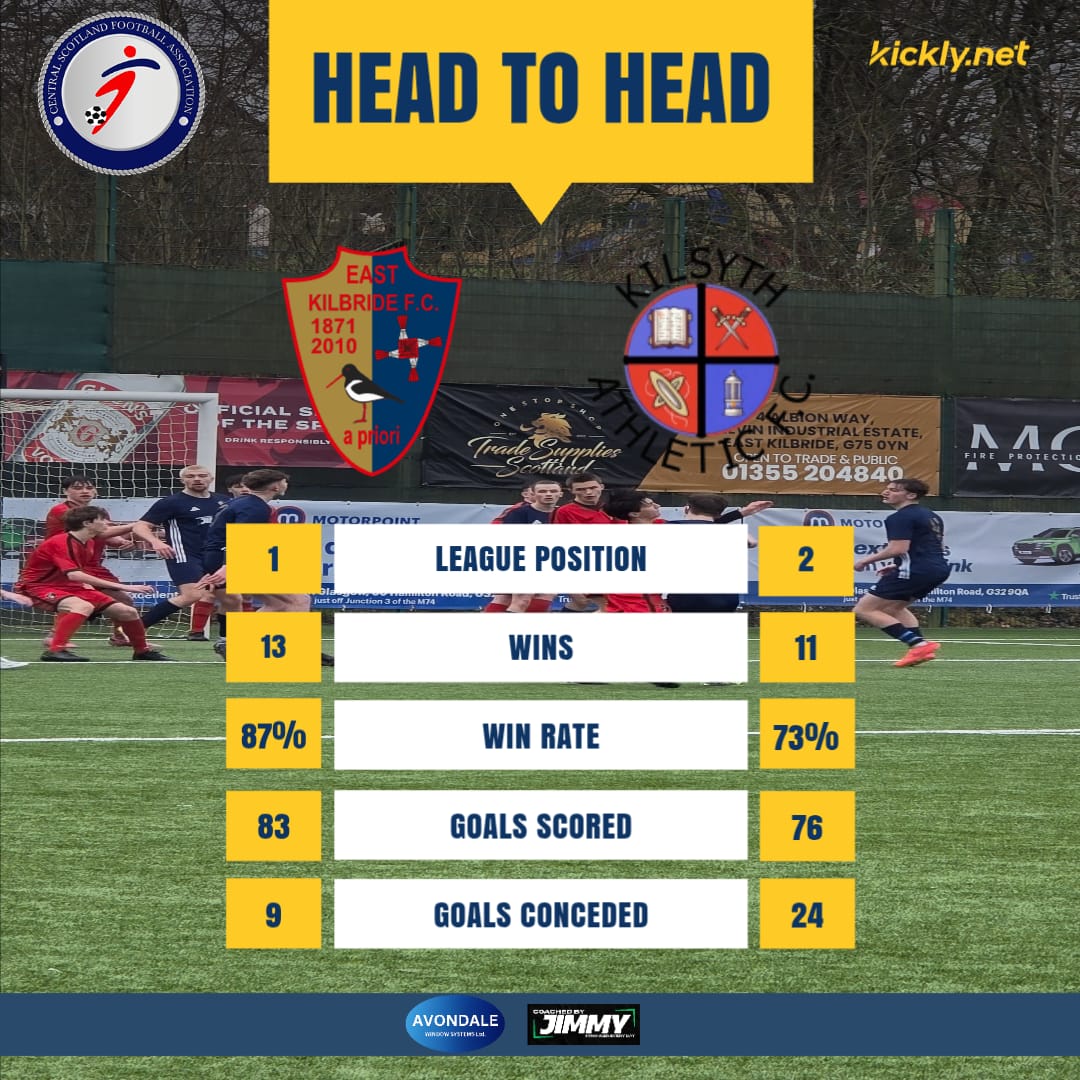
Here is how both teams match up before the game st the weekend.. A 5-2 victory over Falkirk last week saw us smash the 100 goal barrier in the league. A great achievement! Hopefully there is more to come as we look to secure the title with 3 points on Saturday! 🔶️🔷️⚽️
Referee's MOTM was Mr Dependable, Andy Hall. Andy has had a number of big performances this year & yesterday was no different. Constantly demanding the ball and looking to drive the team forward, covering every blade of astro in the process. A real team player. Well done Andy! 🏆
Ref's MOTM award goes to Max. Played a big part of a solid defensive unit (for the best part of 85 minutes 😂) His ability to break up play and start attacks by driving the team forward massively contributes to the teams success.. Well done Bert! 🤔 🏆🥳⚽️🔷️🔶️
Wow... Although not at our best and sharing 4 goals in the last 10mins we managed to get the win over the line and take a vital 3 points against our nearest rivals! The boys have found a rich vein of form at the right time of the season... All the best to Kilsyth 🤝 #believe 🏆⚽️
Four points separate the teams in the top of the table clash at K-Park this coming Saturday. Here are some of the other stats this season. Strangely enough for two of the leagues top scoring teams, the first encounter finished in a 1-1 draw!
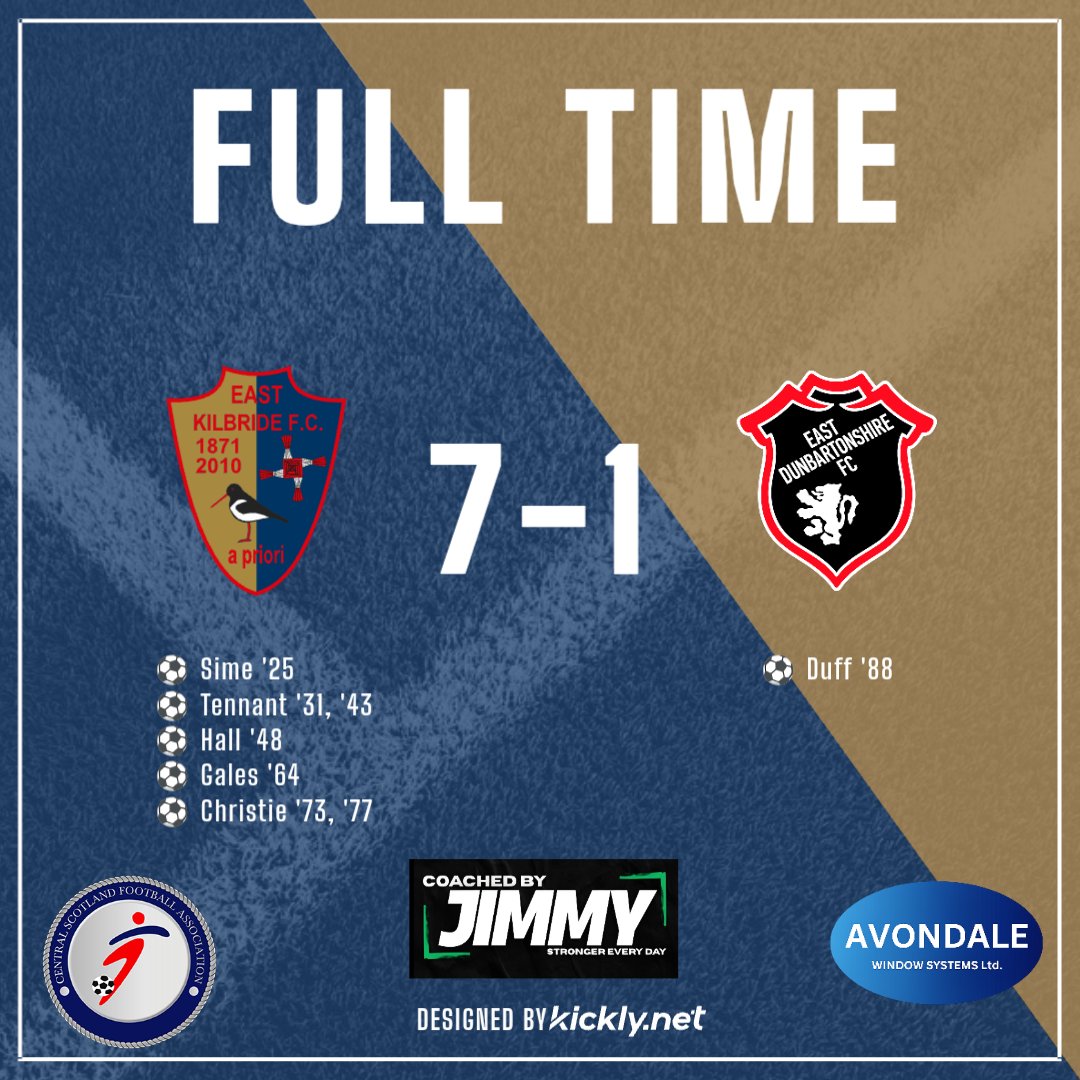
A tremendous performance & result this morning in the sunshine at K-Park. Took a while for us to get into our stride but once we did we were clinical. A win in the first game of the split puts a marker down. We can't let the standards drop! #wEKeepgoing 🔶️🔷️⚽️
Today's MOTM - voted by the ref was Matthew Henderson who led the front line by example. A great battle with the opposing centre half today which was physical, but fair, with Matthew regularly coming out on top. The only thing missing was a goal! Well done Matthew! 👏🏆⚽️🔶️





![HelenBevan's tweet photo. Having an active “champion” is an important part of delivering a change or improvement initiative. Or is it? Do local change champions create a vulnerability when it comes to sustaining the project longer term?
Newly published research by Hannah Stark & Jane Page defines champions as people in a change situation who “actively promote, protect & troubleshoot [the change] through their influence, advocacy, & practical problem-solving." The researchers found the factors that make champions effective at initial implementation stage may also create systemic vulnerabilities that threaten sustainability of the change.
Champions build momentum through their specialised knowledge, personal commitment & ability to translate evidence into practice. But the research found three mechanisms through which these same strengths generate fragility:
- Knowledge concentration: Expertise accumulates in individuals rather than being embedded in organisational systems.
- Dependency creation: Organisations become reliant on champions for quality assurance, problem-solving & continuity. These dependencies only surface when champions leave; at which point, multiple capability gaps emerge at once.2
- System capacity prevention: When champions hold things together through personal effort, organisations don't feel urgency to build systematic infrastructure. Their effectiveness conceals structural gaps underneath.
These form a self-reinforcing cycle. The more effective the champion, the less pressure to develop collective capacity that would survive their departure (see the graphic).
What does this mean for us as leaders of change?
1) What are we actually building? When we appoint a champion, we need to ask whether we’re strengthening organisational capacity or creating a workaround for absence of capability. The two may look identical in the short term.
2) Role design matters. The researchers propose reframing champions; not as permanent drivers of improvement, but as transitional resources whose purpose is to build collective capability & become unnecessary. Selection criteria should extend beyond individual competence to include capacity for knowledge transfer & succession planning.
3) We must get smarter about how we measure sustainability. Just because a programme is still running doesn't mean it's on solid ground. An organisation can look perfectly healthy while everything depends on one or two key people. The real test is whether the programme would hold up if those people left tomorrow; whether knowledge is spread across the team, whether documented processes exist so a new person could pick things up & whether standards can be maintained through people changes.
Our instinct to find brilliant champions for change & improvement isn’t wrong. But it’s incomplete. This research shows that building the system around the work - not just the person in the work - is what makes change last.
Link to the article (open access): https://t.co/u0UAwu9aqp.](https://pbs.twimg.com/media/HJgEeDiWsAE2Kj7.png)