This is one of the most important studies in sleep science.
Van Dongen et al. ran the experiment that changed how we understand chronic sleep restriction. They had subjects sleep 4h, 6h, or 8h nightly for 14 days, testing cognitive performance every 2 hours.
The 6h group’s reaction time deficits by day 14 matched subjects who had been awake for 24 hours straight. The 4h group? They performed like someone awake 48 hours.
But here’s what makes this study terrifying.
The Stanford Sleepiness Scale ratings in Panel B plateau after day 3-4. Subjects stopped feeling more tired even as their cognitive performance continued deteriorating through day 14. Your subjective experience of fatigue is a lagging indicator that eventually just… stops updating.
This explains why chronic undersleeping feels sustainable. You’ve adapted to feeling tired. Your prefrontal cortex hasn’t adapted to being impaired.
The PVT (Psychomotor Vigilance Task) in Panel A measures lapses in attention. These are the moments where you’re staring at a screen and your brain simply checks out for 500ms. Every additional day of 6h sleep adds more lapses. The curve never flattens.
Panel C and D show working memory and processing speed. Same pattern: continuous degradation with no subjective awareness.
The practical implications:
If you’re sleeping 6h and think you’re functioning fine, you’ve lost the internal calibration to know you’re not. The subjects in this study would have told you they felt “okay” while performing like they’d pulled an all-nighter.
For anyone doing cognitively demanding work, this means you cannot trust how you feel. You need to track objective markers: error rates, decision latency, problem-solving throughput.
Sleep need is biological, not negotiable. Most adults require 7-9 hours, and the research shows no population-level adaptation to chronic restriction. “I only need 6 hours” is almost always “I’ve forgotten what baseline cognition feels like.“
📢📢📢 The new 2023-2024 list is out! Please share widely! If you are looking for a faculty position or postdoc in ecology & evolutionary biology check out this great community run resource: https://t.co/kTkoSvB72a
Now out! New work led by @bmsacchi and Zoë Humphries, with colleagues from @eebtoronto@cageftoronto and @BFUavcr - TE invasion and gene loss happen on Y chromosomes with pre-existing recombination suppression, along with very high rates of rearrangement https://t.co/t89qEE7ppU
There have been many conversations about leadership and challenges of tokenism and glass cliffs. Thought I'd share my thoughts here. Anyone else struggling with these issues?
Shifting to the outside: Why racialized leaders choose to walk away https://t.co/qQm78nD2ZL
@masonfidino What gives me pause with this is language barrier- if they don’t know English fluently they may rely on AI translation (esp. if they don’t have the funds for professional translation services). If authors are unknown, how do we distinguish this?
I too am recruiting graduate students, postdocs, and a lab technician for my group at UChicago, starting fall 2024! We will be doing exciting work to uncover the limits of plant adaptation in changing environments.
Recruiting PhD and Ms students for Fall 2014 for my new lab at @UFBiology. My lab is interested in exploring the microbial linkages between Ecosystems and Animals/Humans. Current funded projects in Kenya and Florida. Open source, DIY, automations. Plz share and reach out. 🙏
Thanks to #CRC Jennifer Adams @UCalgary and @CanBlackSci for this article on the realities of being #BlackInCanada. People slip into thinking 'not here' too easily. Seeking a path to learn more? Reading this and following the links will be a good start.
https://t.co/7ezWC85rTL
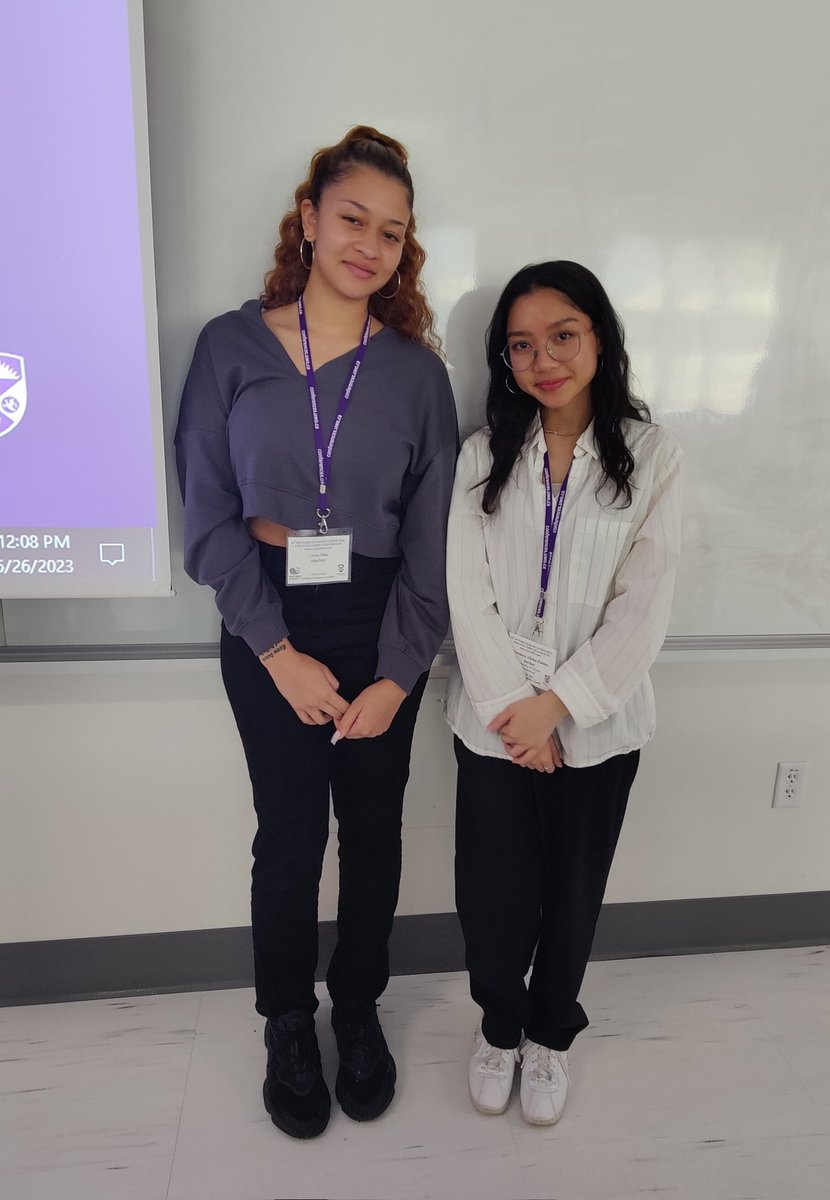
Well done Cruz Das and Veronica Palma! On-point talk showing how sexual dimorphism in body mass and running speed precedes other morphological differentiation in false widow spiders. Undergrad collaboration with Marie Toukam and Erynne Suntano, mentored by @lainiland#OE3C2023