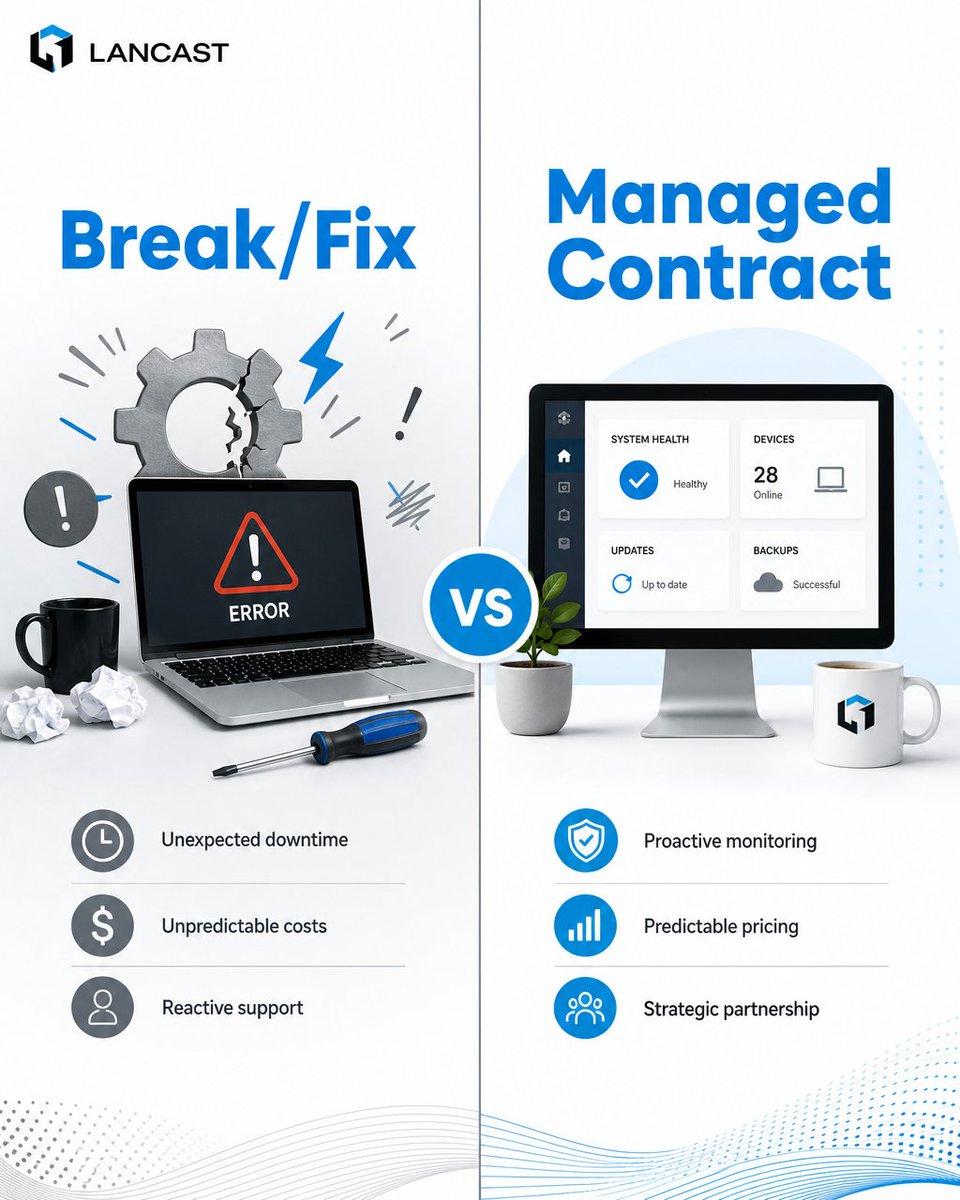
Break/fix support feels cheap until the day it isn't. The hourly rate isn't the price. The downtime is.
Our Silver, Gold, and Platinum plans cover what break/fix leaves out: monitoring, remote support, and maintenance that catch problems before your team does.
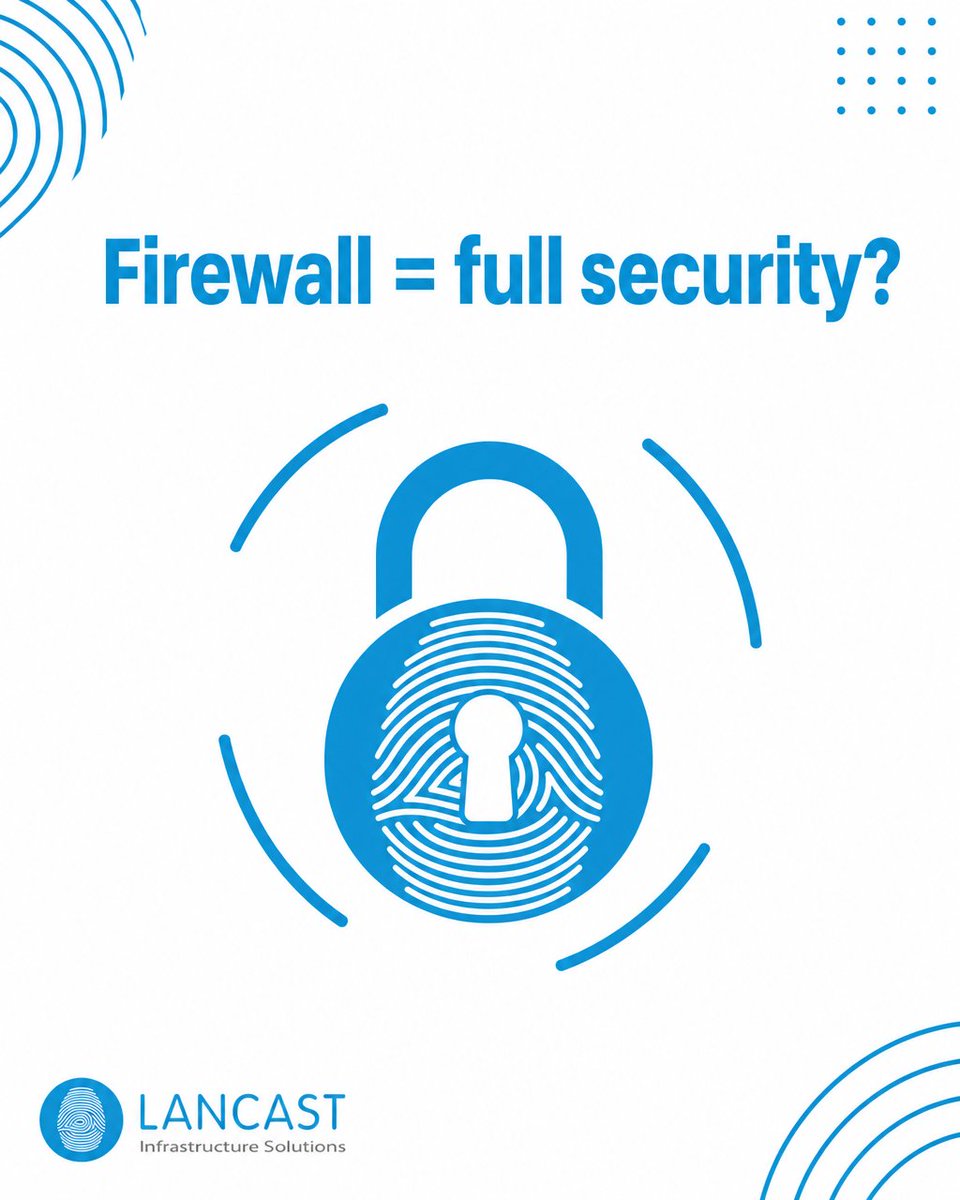
A padlock on the front door means nothing if the windows are open.
Most SMBs we assess have one strong control and five weak ones. Attackers don't test your strongest layer. They find the one you forgot to build.
"We have antivirus" isn't a security strategy. It's one layer out of eight.
Most SMBs run one or two: antivirus on the laptops, a basic firewall at the door. The layers they skip (vulnerability management, exactly where attackers do work.
Break/fix looks cheaper until the day it isn't.
Break/fix is priced against tickets. You pay when things fail. Managed is priced against consequences. You pay to stop things failing.
So which do you run?
Break/fix looks like the sensible choice. Right up until a Tuesday morning when the server dies mid-invoice run.
Break/fix is priced against tickets. Managed services are priced against consequences.
"We have backups" and "we can actually recover" are two different sentences. There are eight backup methods, and most businesses rely on just one. The right answer is rarely a single tier. It's a stack matched to what downtime costs you per hour.
Most network faults sit three layers below where the symptoms show up. When infrastructure gets added to for decades instead of planned once, the copper in the walls quietly undermines everything clever you build on top.
You upgrade routers, switches, and broadband. The Cat5 patch cable from 2009 stays.
Most businesses have never tested their cabling. A cable that looks fine can fail under load. The foundation of your IT is physical. Treat it that way.
A badly terminated cable run degrades your network for years with no alarm, no error, just meetings that lag and file transfers that stall. Structured cabling isn't general electrical work. Get it specified and tested by the people who have to live with the network after.
Downtime isn't the moment your server goes dark. It's the invoice that didn't go out and the customer who couldn't check in while someone raised a ticket.
Break/fix is priced against tickets. Managed services are priced against consequences.
Break/fix looks cheaper on paper. Until the server dies on a Tuesday morning and your team sits idle at full salary while you wait for a callback.
The real cost of IT isn't the invoice. It's the hour you can't quote, the shift you can't ship.
New laptops arrived Monday. By week three, the same slow logins and dropped connections were back.
The kit was never the problem. New hardware inherits every issue in the environment around it. Fix the network and policies first, then deploy.
Structured cabling gets treated like plumbing: install it, close the wall, forget it exists. Until the day your business grinds to a halt and nobody suspects the cable in the wall. A one-hour certification test is cheaper than a day of downtime no one can explain.
Break/fix support bills by the hour. Downtime bills by the day.
The hourly rate looks cheap until you count the four hours your team can't access email and the orders that don't ship. Managed services pay for the problems that never happen.
Most office networks fail at the wall, not the server room.
The backbone was installed once, never revisited, and now it's the quiet reason your uptime keeps slipping.