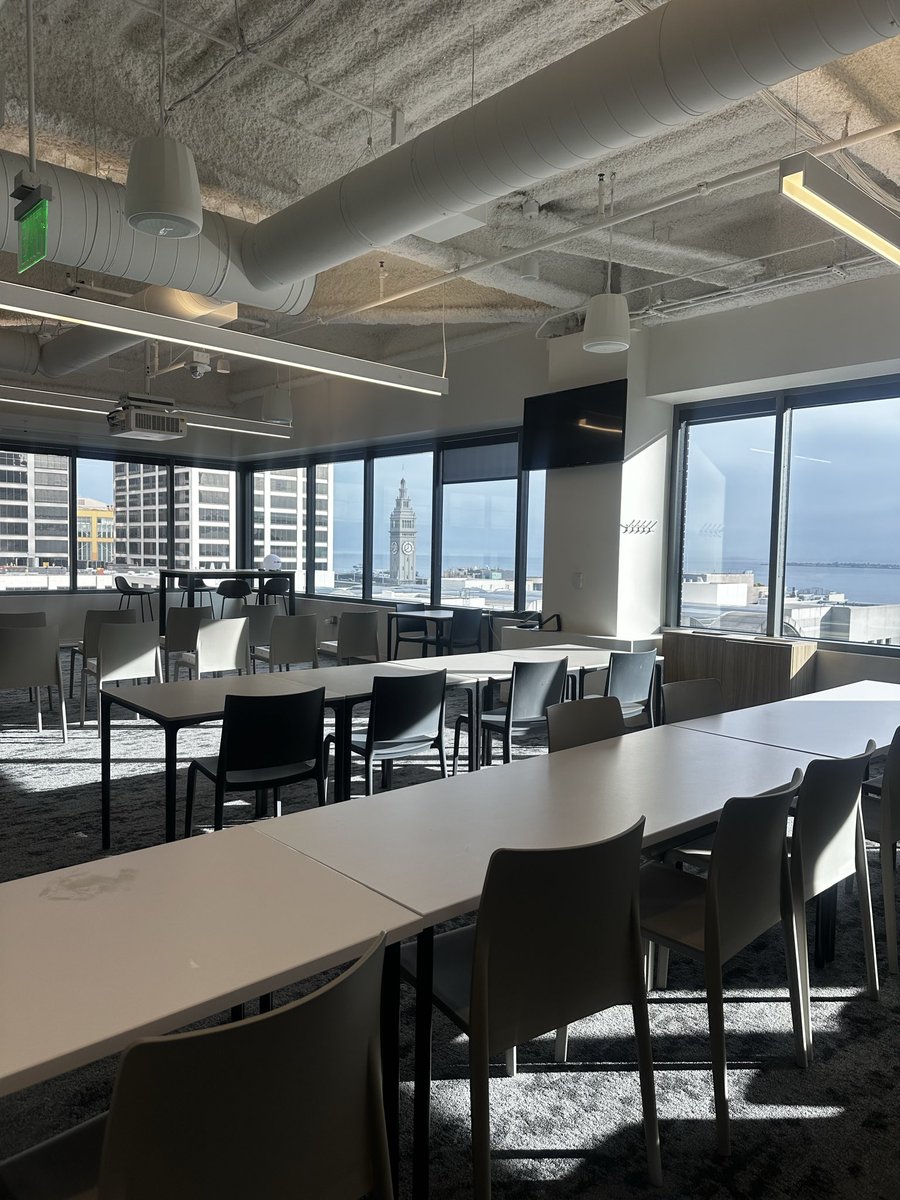
OpenPay joined @airwallex , and I couldn’t be more excited. We started the company 2.5 years ago with the belief that founders building subscription businesses should only need to use one product to handle all things payments.
We began under unique circumstances. Unlike many startups, we couldn’t just “move fast and break things” while developing financial technology. Case in point, we didn’t go live for 10 entire months after we began building.
Our first version was a narrow subscription management and orchestration platform. It was better than competition in the few ways that we believed were critical, but it was so barebones that it was hard to sell. OpenPay’s first set of customers were dear friends and deplatformed merchants.
The next beachhead was analytics. We knew there wasn’t much love for existing players. We even thought about starting here as a wedge, but the truth was clear: to deliver a truly elite experience, we had to be the ones processing every transaction AND the context they carry. Every feature we developed toward this thread had a tangible effect on our ability to close sales.
Once we saw this feedback loop work the first time, we aggressively repeated it. We added customized dunning campaigns, smart retry schedules, intelligent payment routing, and soon, we had a complete subscription optimization suite. It was developed enough that, on a sales call, we could 1) listen to the customer's unique configuration of pain points, and 2) respond with a tailored pitch and demo of how we specifically addressed them.
This was when we really felt market pull. Conversions jumped and we started closing more deals than we lost. Volume would increase by a meaningful multiple week over week. The feeling on the team was night and day vs what it was just a few shorts months prior.
We wanted to pile in, so we started throwing around ideas around raising money for the first time. We knew we had a direct use for venture capital dollars that would be ROI+. What started out as capitalization conversations with Cap49 (Airwallex’s CVC) evolved into conversations about acquisition.
Our business was still early and we still had a lot of cards to turn, e.g. we had just started marketing for the first time. But meeting @awxjack made this an easy decision. It was obvious that he was a no BS execution machine who cared deeply about his people and his mission. That, coupled with the clear defensibility of Airwallex’s business and its truly global reach, locked it in for us.
If not already, I think it is inevitable that @airwallex becomes a generational company. We are looking forward to playing as large of a part as we possibly can to making it happen.
If your AI business needs FDEs to close and implement customers, should that labor count toward fully loaded CAC? I almost never see this
Feels like a lot of AI companies’ metrics still assume traditional software scaling assumptions that may no longer hold
A corollary to this is that more people should be talking about fully autonomous AI onboarding for products
@reidhoffman Well written article, could not agree more. Audit trail, explainability and human in the loop is the correct model for regulated industries
Hearing rumors that Gemini Flash is >90% of SOTA coding performance at ~15x lower cost. Fits well with today’s dev cadence (large model plans and SLM can execute most subtasks). Dramatic cost savings if true.
Might finally be time to invest in a good model router for dev workflows… that doesn’t have a supply chain vulnerability!
Seismic Testnet is live.
We built it alongside 30 financial services companies, from fintech startups, to regulated institutions, to local governments.
I'm excited to finally release the fruit of the research we've been doing at Perceptron for the last 16 months: Perceptron Mk1. We've been developing multi-modal recipes from the ground up to build models that perform best in the physical world, from video understanding to embodied reasoning to robotics. Mk1 is our scaled up recipe.
Today we're announcing the @Airwallex Global Economic Advisory Council. This group of distinguished leaders from government and finance will help us shape the future of global commerce and AI productivity — especially for the small and mid-size businesses where most jobs are created.
The council is part of our commitment to giving entrepreneurs everywhere access to global finance, responsibly and to the highest standards of trust, transparency, and integrity 🧵
The next generation of U.S. B2B founders will choose A2A because startups have to go global on day one, and bank-to-bank payments are already the default in the world's fastest-growing markets.
Businesses that build on A2A rails from the start won't just reduce costs, they'll have the payment infrastructure to scale across borders without rebuilding from scratch.
The @airwallex brand team under Steven Watson and Matt Jennings is on fire. Impeccable taste, real mad hatter creative energy, and so fun to work with.
Building the Future means going global on day one before your competition does. We’re here to help 🙌
Most fintech companies started in the world's biggest markets and expanded outward.
Most were built in Silicon Valley, with Silicon Valley assumptions.
We started on the other side of the world, in a Melbourne coffee shop.
Outsiders, by every measure.
So we went deeper than anyone wanted to. Reimagining correspondent banking from first principles, not abstracting away the old system but replacing it.
Years of obtaining licenses, building infrastructure, and shipping every financial product a growing business needs including intelligent finance.
Bank accounts in 70+ countries. Treasury across 25+ currencies. Cards, spend management, bill pay, multi-entity, all on one platform.
Built so the whole world feels like your home market.
Now AI means the builders are everywhere.
Global financial infrastructure has always been the hard part.
Ours took eleven years to build, and it's ready for you on day one.
Build the Future ↓
Introducing Claude Managed Agents: everything you need to build and deploy agents at scale.
It pairs an agent harness tuned for performance with production infrastructure, so you can go from prototype to launch in days.
Now in public beta on the Claude Platform.
The inference inflection point is real..running AI in prod now rivals training in both compute and economic weight. That changes how you construct your eng team, model costs, instrument observability, and close the feedback loop back into training
https://t.co/DUdc2R6TVt