A tutorial movie for NewtonBioMorphX, our open-source framework for the mechanics of morphogenesis: from generating a mesh to watching a tissue fold into crocodile-like head scales, entirely from the interface.
https://t.co/8QGC4rQxPo
Passive collagen-like fibres, active actin-like filaments, real-time rendering of the mechanical state, twelve ready-to-run presets. All from a GUI, no code written or recompiled.
Manual, Windows and Linux executables, source code:
https://t.co/8QGC4rPZZQ
NewtonBioMorphX is out in Computer Physics Communications: a GPU-accelerated, open-source framework for simulating tissue-scale mechanics of morphogenesis.
It unifies growth, multilayer mechanics, plasticity, viscoelasticity and contact.
https://t.co/K3dn30WnB6
Last week, we were 20 biologists, physicists and biochemists at the Fondation des Treilles. We had fantastic discussions on the evolution and development of camouflage and body transparency in vertebrates.
What is Gonzo? I told Popular Science the clue may be in his tuft: real hair would make him a mammal; feathers would point toward the dinosaur–bird lineage. I love that a Muppet can invite such a curious look at life.
https://t.co/stwsDHSdzF
🐘➡️🤖 From elephant biomechanics to soft robotics.
With Lucia Beccai’s Soft BioRobotics Perception Lab at IIT, our new paper presents ELEANOR: a large soft robotic arm inspired by elephant-trunk biomechanics.
🔗 https://t.co/yItQ5rn27G
#SoftRobotics#BioinspiredRobotics
🚨 New LANE paper in Nature Communications! 🦎🐍
Pierre-Yves & Athanasia show that reptile pigment cells can reach similar mature states through different developmental routes—and identify new chromatophore types in bearded dragons.
https://t.co/yIjM7nDpMZ
@Biologie_UNIGE
A pleasure attending the workshop “Collective Movement and Pattern Formation: Biology, Modelling and Analysis” at @ICMS_Edinburgh. An inspiring exchange on collective cell migration, pattern formation, mathematical modelling and analytical methods across biology and medicine.
A study by UNIGE @LANEVOL uncovers a fundamental mechanism that determines how hair follicles organize their positions on the skin of mammals. https://t.co/Z6JUbXh2Oj
How mammals get their fur?
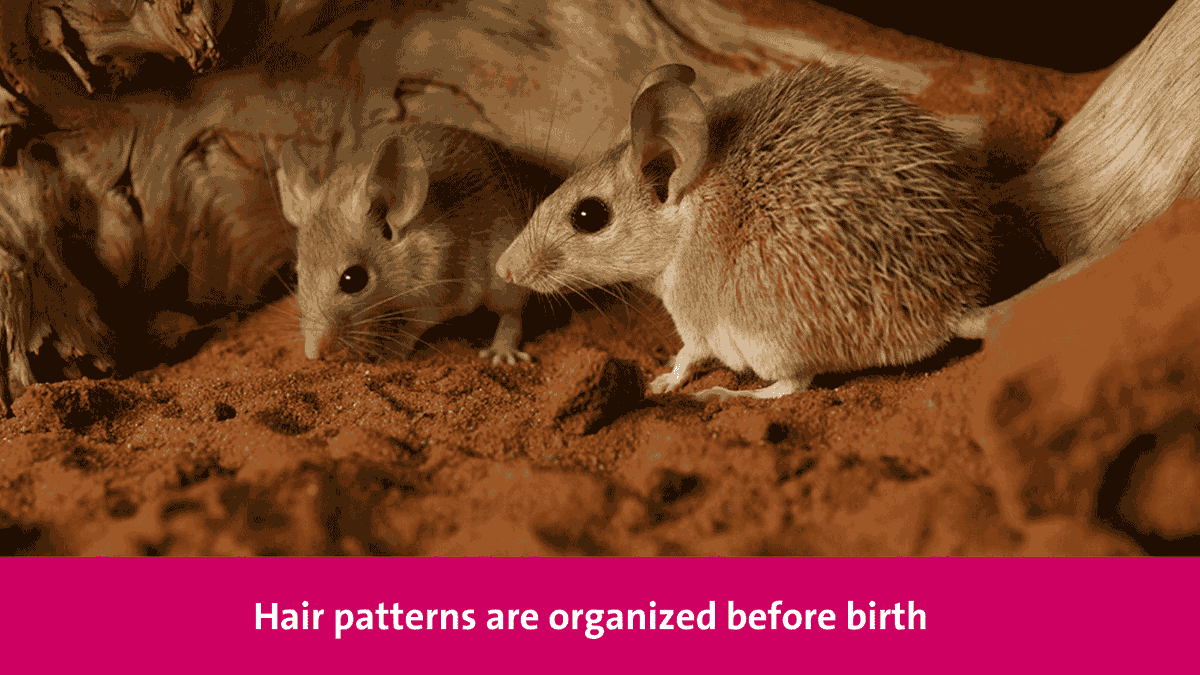
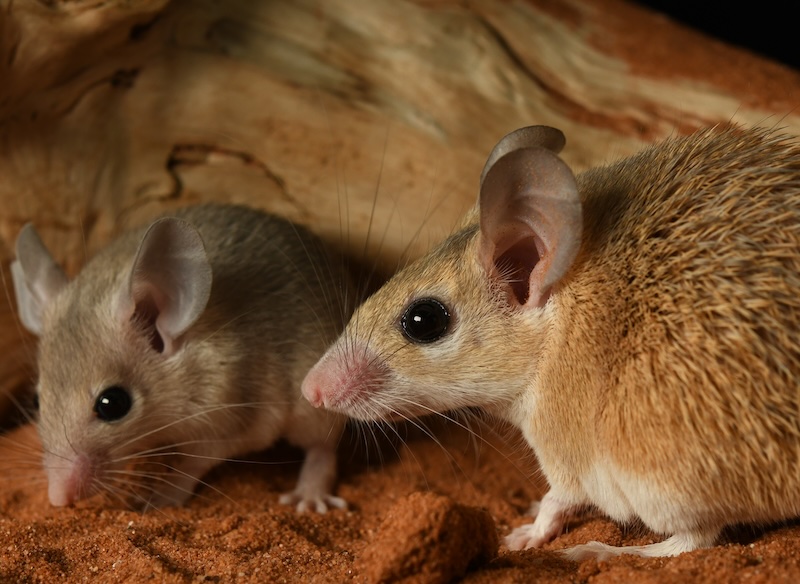
New PNAS research from the Milinkovitch-Tzika lab shows that chemotaxis—cells moving toward chemical cues—drives hair follicle precursor self-organization during embryonic skin development, from lab mouse to spiny mouse.
https://t.co/xJsNqrs1pa
New in @PNASNexus : with Soft BioRobotics Perception Lab (IIT, Genova), we show how Asian elephant trunk skin resolves a grasp–protect paradox: dorsal shield, flexible ventral gripper, and touch-amplifying papillae.
https://t.co/0EuyraauGk
@IIT_SBRP
🎂 Le journaliste scientifique et naturaliste Sir David Attenborough, célébré dans le monde anglo-saxon pour ses émissions de vulgarisation sur la BBC, a 100 ans ce vendredi 8 mai.
Pour marquer cet anniversaire et rendre hommage à «l’homme qui a aidé le monde à tomber amoureux de la nature», le Laboratory of Artificial & Natural Evolution @LANEVOL de l’UNIGE a ressuscité Charles Darwin en personne ��� sans IA! 🤖
Le LANE réunit des biologistes, des bioinformaticiens, des physiciens, des informaticiens, des mathématiciens et des artistes 3D, pour étudier plusieurs espèces modèles non classiques, principalement des reptiles et des mammifères «exotiques». Ces travaux apportent un éclairage sur des processus biologiques et physiques passionnants, mais encore méconnus, à l'origine du monde du vivant complexe et diversifié 🍀.
Voir la vidéo ici 👉https://t.co/ypcIpSVdjp
@genevunige @Biologie_UNIGE @sciences_UNIGE @DavidALifeFilm
Two new features spotlight research from the Milinkovitch lab: @QuantaMagazine on skin mechanical cracking in African elephants, and @HorizonMagEU on how elephant trunk biomechanics can inspire soft robotic grippers. #Biomechanics#SoftRobotics
https://t.co/LfdIdyooR7
Modelling the dexterity of the elephant trunk for Soft Robotics! 🐘
Our 3D dynamic model maps trunk shapes directly to internal forces, predicting biological trajectories with <8% error. New study in @iScience_CP .
Read: https://t.co/EyAAyaKft8
Many thanks to Nancy Steinacker, Barb Matt, and Bruce Bradley for the incredible visit to the Linda Hall Library @LindaHall_org.
A real highlight: seeing first editions of Newton’s Principia and Darwin’s On the Origin of Species.
Grateful that my lecture at the #StowersSeminarSeries had such a positive impact!
Huge thanks to Tatjana and the @LabPiotrowski team, and to all the PIs, staff, and students who shared their inspiring research.
@ScienceStowers is truly an outstanding place for science.
Fascinating discussions yesterday at the 2026 Spring Meeting of the German Physical Society (DPG) in Dresden.
Thanks to @Franze_Lab for the invitation to speak about tissue mechanics.
Our 3D prints of crocodile embryos sparked a lot of curiosity among researchers and students.