@arunp2810 1/18
A former CNS’s public assignment of blame to the first two Chiefs of Defence Staff for failing to “educate” the IAF on Theatre Commands raises a simple but fundamental question: on what superior operational insight does that judgment rest?
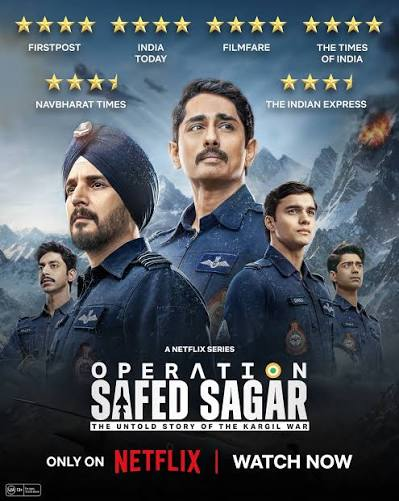
Since the Safed Sagar series, a few people have asked about the actual sequence of events leading up to Sqn Ldr Ajay Ahuja’s ejection on 27 May 1999. This post is an attempt to set out that chronology, based on research by @zone5aviation and me.
On 27 May 1999, MiG-23s and MiG-27s were assigned to strike in the Batalik sector. The first strike was aimed at Jubar, Point 4927: three MiG-27s from No. 9 Squadron and three MiG-23s from No. 221 Squadron, each armed with 2×16×57 mm rockets. The strike launched 192 rockets before the formation returned to base.
The second wave was directed at Muntho Dhalo, the nerve centre for Pakistan’s incursions in Batalik. Four MiG-27s from No. 9 Squadron were tasked with disrupting the enemy supply chain. MiG-23s from No. 221 Squadron, also originally scheduled to participate, were delayed while being reconfigured from rockets to 4×250 kg bombs.
“Boxer” formation, led by Flt Lts Anupam Banerjee and Bhupendra Khatana, and armed with 4×100 kg bombs each, struck first.
The “Hyena” formation followed close behind. It was led by Sqn Ldr Mandokhot, with Flt Lt Nachiketa on his wing. Mandohkot’s MiG-27 carried two UB-32 pods loaded with 32×57 mm rockets each; Nachiketa’s aircraft was armed with two pods of 40×80 mm rockets.
Over Muntho Dhalo, Mandokhot struggled to acquire the target. Smoke and debris from the earlier strike had cloaked the valley. He circled twice. Then Nachiketa spotted them. He dived sharply and fired his rockets in a rapid salvo. He came around again, descended low, and fired his 30 mm cannon.
As he pulled up, the engine shuddered. The RPM wound down, and the engine flamed out. Nachiketa attempted a relight, but his speed was already below 500 km/h, the minimum required for a restart. He jettisoned his rocket pods and swept the wings to gain altitude, but the aircraft was losing height too quickly.
With the valley walls closing around him, he called out to his leader: “Mando! Nachi ejecting!”
He pulled the handle and was thrown into the cold, thin air. His parachute opened. Below him, the MiG-27 went into the mountainside. Nachiketa landed in knee-deep snow. Pakistani soldiers took him first to a small outpost in Batalik, then flew him to Skardu and from there to Rawalpindi.
Mandokhot, having completed his own attack, received Nachiketa’s call and spotted the parachute drifting down against the mountainside. He circled overhead and transmitted the location to Srinagar. Fuel ran low, but he remained in the area, holding position for as long as he could. Only when necessity pressed did he turn back.
Back at Srinagar, Sqn Ldr Ajay Ahuja (C-1539) and Fg Offr P. Gautham Reddy of No. 17 Squadron were lined up in their MiG-21s for a BDA mission. With news of Nachiketa’s ejection, their mission shifted. Ahuja and Reddy took off to search for their downed colleague. With fuel dwindling, Reddy was ordered back to base.
Ahuja stayed.
Descending in tight circles, Ahuja entered the kill zone of enemy shoulder-fired surface-to-air missiles. An Anza or Stinger locked on and hit his aircraft. He reported calmly: “Suspecting missile hit, engine parameters normal.” He headed towards base, but the engine flamed out: “Flameout, entering the valley.” He transmitted his position. His aircraft then went silent.
Ahuja ejected safely, but was captured alive and killed by Pakistani forces. When his body was returned to India, it bore clear signs of execution: two rounds fired at his chest and head from close range.
A Cheetah helicopter from 114 HU, piloted by Sqn Ldr HK Sachdeva and Flt Lt Nitin Welde, was launched from Leh in a search-and-rescue attempt. Working with scant information, the crew searched for twenty minutes before landing to ask villagers for help. They were directed to Yador Nala, unaware that it was occupied by enemy intruders armed with SAMs. Dwindling fuel forced them back.
Two more Cheetahs joined the mission, but returned without finding Nachiketa or Ahuja.
The IAF strikes continued. Muntho Dhalo would be attacked by MiG-23s, MiG-27s and later Mirage 2000s almost every day of the campaign, until it was destroyed.
Just finished @netflix SafedSagar. The first attempt to put the IAF’s Kargil story on a mainstream screen, and it is superb. It deserves cult classic status like Border. Yet it left me uneasy coz it risks repeating one of Border’s most consequential mistakes. Let me explain.
What makes SafedSagar exceptional is the extraordinary attention to historical detail. The names of officers, air bases, briefing rooms, charts, uniforms, vehicles, signboards and operational settings are deeply rooted in the reality of 1999. Much of what you see has clearly been reconstructed from the actual people, places and events of the Kargil War. Even several of the officers retain their real or nicknames. Where names have been changed, I assume there were reasons of consent or dramatic necessity.
A caveat: the aircraft depictions (types, serial numbers) and CGI could have been much, much better, but recreating military aviation convincingly is hard for any filmmaker.
But the real achievement of the series is not merely visual authenticity. It is how simply it explains some very difficult aspects of air operations over Kargil.
High-altitude bombing in 1999 was not a straightforward problem. Aircraft, weapons and procedures designed for very different conditions suddenly had to be adapted to targets at extraordinary elevations, in difficult terrain, with limited time and technology and Govt imposed restrictions. The IAF had to learn, improvise and find solutions while the war was underway.
Explaining all this to a general audience without turning the series into a lecture is extremely difficult. SafedSagar manages it beautifully. Whoever was responsible for translating that operational complexity into cinema deserves enormous credit.
It also gets something else right: the texture of IAF life.
The squadron is not presented as a collection of larger-than-life superheroes. You see professional pride, rivalry, frustration, humour, families, friendships, uncertainty and the support system that surrounds flying operations. There are creative liberties, inevitably, but the people mostly remain recognisably human.
That, to me, is one of the series’ greatest strengths. And it is precisely because SafedSagar is so good that the liberties it takes with history matter.
The biggest is the concentration of a very large part of the air war into No. 17 Squadron. No. 17 Squadron absolutely had an important role in the conflict. It flew fighter reconnaissance missions and, later in June, was involved in effective GPS-assisted night bombing. But it was one part of a much larger IAF effort involving several squadrons, aircraft types, bases, commanders and streams of innovation.
The series, understandably, needs a central unit around which to build its story. The danger is that cinematic compression gradually becomes historical attribution.
The handheld-GPS bombing solution is one example. The series appears to place its development very firmly within the world of No. 17 Squadron. The real history of how these innovations emerged across the IAF was more complex, and I would be very careful about attributing such developments to a single unit or group unless the documentary record supports it.
There are other moments where dramatic licence and historical memory sit uneasily together.
The sequence surrounding Sqn Ldr Ajay Ahuja is one. The essential truth must never be diluted: Ahuja ejected and was killed after coming down, and the evidence surrounding his death has long indicated brutal treatment. But the series adds considerable drama to the episode. It makes for powerful cinema, but invented detail around real officers and events can quickly become accepted as documented fact.
Likewise, the suggestion that GPS problems or delays resulted from a deliberate American act goes much further than the historical basis appears to support.
Normally, one might shrug and say: this is cinema. But SafedSagar is not an ordinary Bollywood war drama.
It is extraordinarily well made. It takes its history seriously. It uses real names, real units and real events. It has been received with considerable warmth and support from the IAF community. And because it feels so authentic, audiences will naturally assume that what they are watching is, in substance, what happened.
That gives the series enormous historical power.
Border did something similar for an earlier generation. It ensured that millions of Indians would remember Longewala. That was an extraordinary achievement. But it also fixed a particular cinematic version of the battle so deeply in popular memory that, for many people, separating the film from the actual course of events became almost impossible.
My fear is that SafedSagar could do the same. Not because it is careless with history. Almost the opposite.
None of this diminishes what the series has achieved. I hope and I encourage every Indian watches it. For once, a large audience will see the IAF’s role in Kargil not as a footnote to the ground war, but as a complex campaign fought by aircrew, engineers, controllers, planners, technicians and families confronting problems for which there were no ready-made answers.
That story deserved to be told. SafedSagar tells it brilliantly.
I only wish that a series with this much power to become our collective memory had been just a little more careful about where history ended and cinema began. Perhaps I am asking too much of a television series. But when a work is this good, and this important, it becomes worth asking.
An iconic save for the history books 🧤
#OnThisDay, PR Sreejesh came up with the decisive penalty shootout save against Great Britain as India reached the Paris 2024 semi-finals. 🇮🇳
November 1962
300 Chinese
1 Indian
72 hours
Nuranang at Arunachal
Rest is history now.
BADRI VISHAL LAL ki jai.
#FreedomisnotFree a few pay #CostofWar.
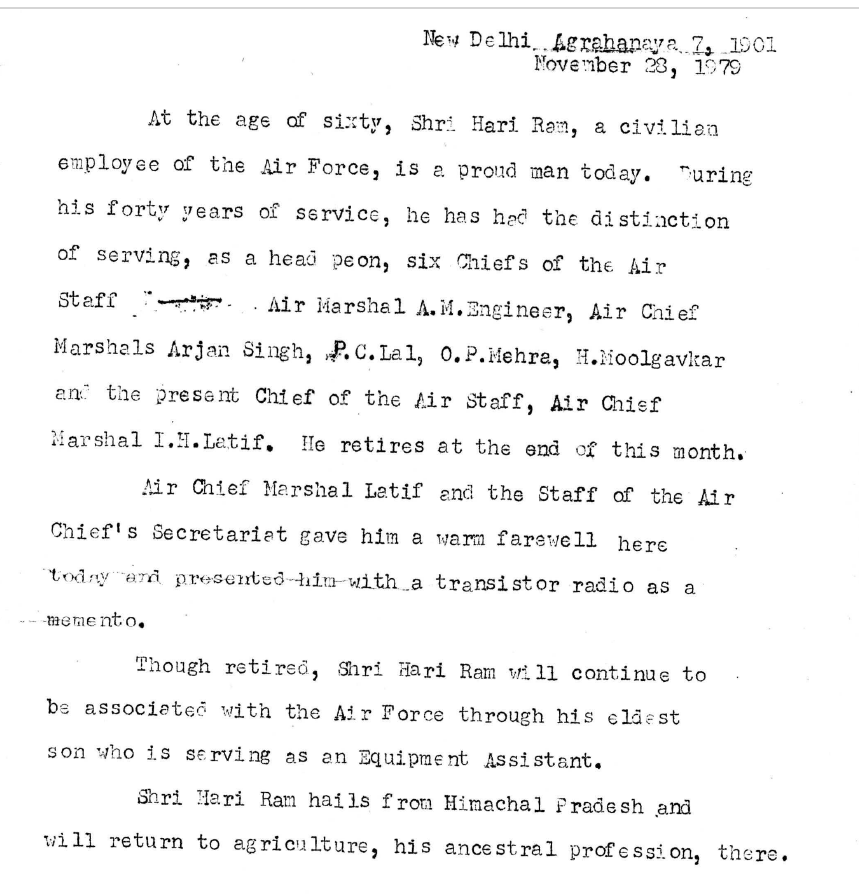
Find of the day. Hari Ram retired in Nov 1979 after 40 years in the Air Chief’s Staff. He had served as head peon to SIX Chiefs, from Air Mshl AM Engineer to ACM IH Latif. His farewell gift from the Chief was a transistor radio. A wonderfully unusual fragment of #IAFHistory.
The person in white dress is someone who opens doors for guests at the Airforce auditorium at Subroto park. I was standing behind him, waiting for the cab. In comes Air Chief Marshal Amar Preet Singh who puts his hand around him and asks his name and about his family, his kids where he stays. Tells him to stay happy always, and give the same learning to his kids. Casual chitchat. When Singh left, i saw the person who has been opening gates for more than a decade, had a moist eyes and was composing himself. I asked him has this happened earlier, he nodded no.
Interstellar background score gets its well deserved fame but how fucking incredible is the Dark Knight trilogy score. That music so brilliantly conveys the Gotham vibe and Batman’s pride in being its citizen and hero/saviour. How does Hans Zimmer do it.
I worked in Punjab as a journalist during the peak of militancy. Later in my career, I headed the Punjab Cell in the CBI, which had, in its past, investigated cases of fake encounters as well as the assassination of Sardar Beant Singh.
Those experiences gave me a rare opportunity to see both sides of that tragic period. They taught me that any honest account of those years must acknowledge both sides of the story.
And that is exactly my concern with Satluj: not what it shows, but what it leaves out. It tells only half the truth; the other half is left unsaid, deliberately, and with a purpose.
The film decontextualizes Jaswant Singh Khalra and the human rights debate from the Pakistan-backed, brutal Khalistani insurgency. This omission is neither an innocent creative choice nor an inadvertent one. And, in my view, the intent behind such a selective portrayal should matter to every Indian.
Am trying to pay property tax online in Haryana, and it once again struck me that if a person is not deceased, any property inherited stays in his or her name.
In which case Dronacharya's son Ashwatthama, who is a 'chiranjeevi' (immortal) technically still owns all of Gurgaon, gifted to his father by Dhritarashtra for teaching his sons and nephews.
And it could get very interesting should he choose to return from his jaunt in the Himalayas and decide to reclaim his property.
Whatever Lee Kuan Yew's biggest ideas mentioned in this clip were, they have been tried in India.
1. Speak English. Yes, English has been pushed down, not just from top-down, but also bottoms-up. There's a certain desirability to knowing and speaking English.
2. India also imported its talent and intellectual capital. Of course, not everyone was imported, but Independent India didn't lack human capital.
3. Corruption isn't just because you don't pay your leaders well. Whatever amount you pay, you can never match the amount they can earn through corruption. And top PMs and Ministers are driven far more through prestige than money. Whatever money they need, is merely driven by the need to contest elections again. Regardless, India's government sector salaries are far, far higher than the general public and yet corruption sustains itself.
LKY's ideas worked for a small city-state of Singapore. That's a great thing.
But you cannot generalize them to the Indian experience.