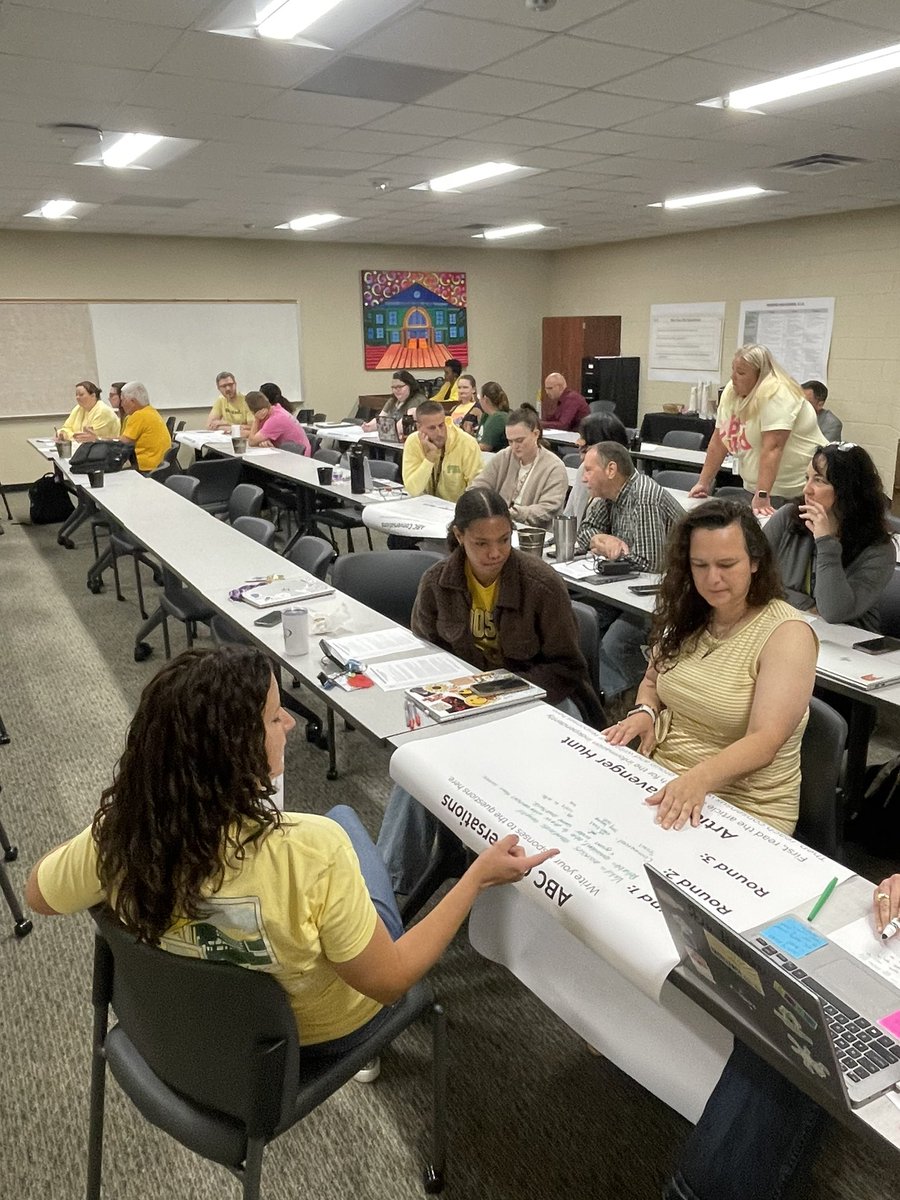
A3: The clarity in our team stems from collaborating (in unpacking TEKS, creating summatives, etc.) to understand where our focus should be. The support comes for us comes in the day-to-day assists. @ProsperHS @UTexas35 @Paige_Trujillo_#PHSTL
A2: Sharing students within a team allows for ALL student needs to be met. E1 mixes & matches our students during Eagle Time to ensure that students who need remediation or extension receive that all within the same week. @ProsperHS @UTexas35 @Paige_Trujillo_#PHSTL
A1: The E1 team has really pushed ourselves to hone in on question three, especially this year by sharing what strategies we found worked best to help us plan intervention. @ProsperHS @UTexas35 @Paige_Trujillo_#PHSTL
A3: English 1 is SO STRONG at sharing students within our team interventions to ensure they’re receiving that extra help. We’re working on determining best practices/strategies to use in intervention. @UTexas35 @Paige_Trujillo_@ProsperHS#PHSTL
A2: Skill based interventions are used to help students struggling with a particular academic skill. Will based interventions are used to replace inappropriate behavior (disengagement, acting out, etc.) with the appropriate behavior. @UTexas35 @Paige_Trujillo_@ProsperHS#PHSTL
A1: Our English 1 team mostly uses data gathered from CFAs to determine if a student needs intervention, but informal data can also be used. @UTexas35 @Paige_Trujillo_@ProsperHS#PHSTL
A3: I’ve found that each team member having a role or responsibility based on their strengths helps to ensure that everyone stays engaged in the process. This gives them a straightforward path to engage. @UTexas35 @Paige_Trujillo_@ProsperHS#PHSTL
Last question for the day!
Q3: What are some proactive ways to help engage staff members who have started to disengage from the work of your collaborative team? @ProsperHS@Paige_Trujillo_#PHSTL
A2: I think the most troubling sign is the rejection of the PLC mindset. With this sign, it’s difficult to get them eventually buy in and can easily damage and disrupt the processes for other team members. @UTexas35 @Paige_Trujillo_@ProsperHS#PHSTL
Q2: From the signs of disengaged team members list in the reading, which sign do you think is the most troubling and why? @ProsperHS@Paige_Trujillo_#PHSTL
A1: Working in collaborative teams allows for teachers to bring their own strengths to the able, to grow in their practice, and to ensure that all students are learning at high levels. @UTexas35 @Paige_Trujillo_@ProsperHS#PHSTL