You've heard of the studies where they give the same dataset/research question to a bunch of researchers and they tend to get different answers, right?
Why is that?
This new working paper shows that it has a lot to do with data cleaning.
This is consistent with Gelman's "garden of forking paths" analogy. Small researcher coding decisions greatly influence results, often without being explicitly acknowledged.
[일찍 잔 사람들 상황요약]
1. 오후 10시 반 쯤 윤석열이 비상계엄령 선포함 "사유 : 종북좌파세력척결"
2. 11시에 계엄 포고령 선포되고 군대 투입됨
3. 국회의원 300명중 150명 이상 모이면 계엄해제결의안 발의할 수 있음
4. 윤석열 군대 풀어서 국회 봉쇄함
Korea keeps saying it wants to be the financial capital of asia, or the tech capital of asia, or…
Yet it still continually fails in the most basic of financial instruments for non Koreans. I’ve straight up been told I couldn’t get a mortgage…
Join the Societal Computing PhD program in @S3DatCMU, @SCSatCMU.
I am recruiting curious PhD students using #networks and #ComputationalSocialScience with burning questions about our social world, embedded in socio-technical systems.
https://t.co/kUZbNe7Zhm
오늘 새벽에 있었던 안산 상가 화재인데, 모텔이 2개가 있어서 투숙객이 수십 명 있었다고.
소방팀장이 화재 현장을 보는 순간 얼마 전 사망자가 나온 '부천 호텔 화재'를 떠올려 그걸 토대로 창문을 깨는 등 제대로 대응해서 전원 구조.
https://t.co/5C6qNezKwx
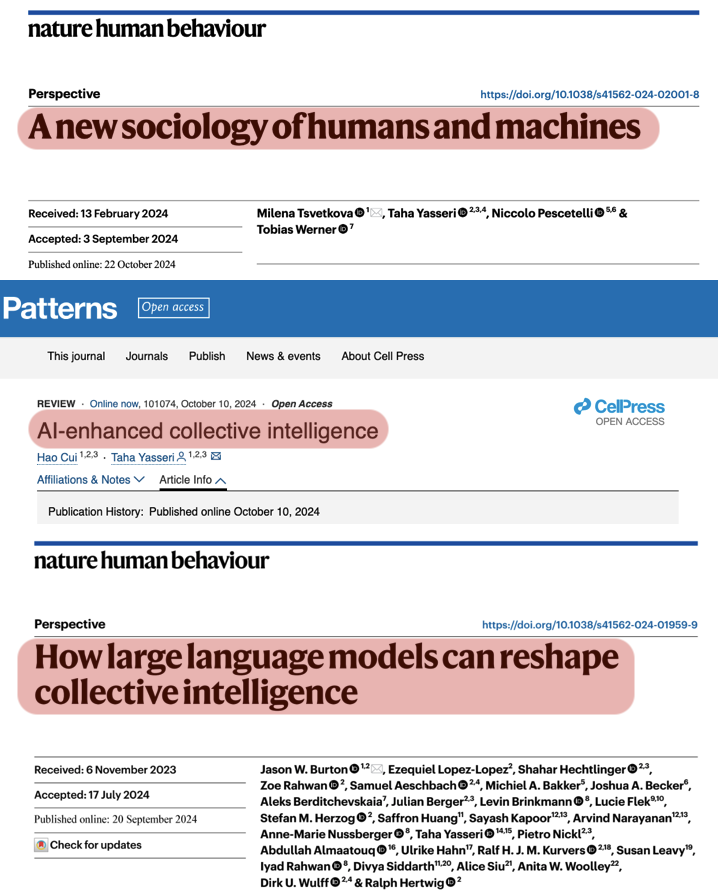
Three papers we have been working on for some time were finally published within a month. In this short interview, I explain how these three papers will shape the research agenda of our "Centre for Sociology of Humans and Machines" in the coming years.
https://t.co/gfl3pDfRZH
[자료 추천] 영어 글쓰기를 가르치시거나 '각잡고' 공부하고자 하시는 분들을 위해 좋은 자료들입니다. 비상업적 용도로 사용할 경우 편하게 쓰실 수 있습니다. (CC BY-NC-ND 4.0)
UNC at Chapel Hill Writing Center: Handouts
https://t.co/grhAPd8z6d
Really enjoyed this book by Alex Csiszar
https://t.co/fFYgyzNcqC
Some thoughts on how it informs the science of science literature
1. Commercial "distortion" of sci lit
2. Knowledge diffusion / overload
3. History of peer review
4. History of metricization of science
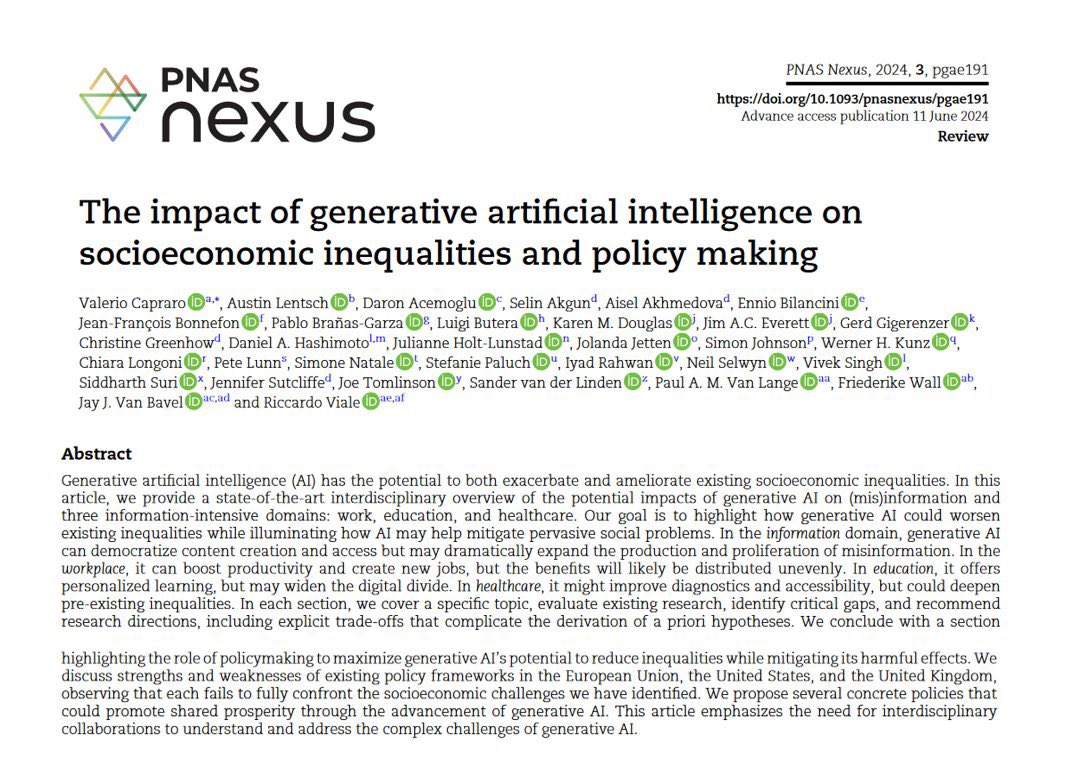
Many people believe that AI advances will dramatically increase inequality.
In a paper with two Nobel laureates, Daron Acemoglu and Simon Johnson, plus 30 multidisciplinary experts, we argue that it’s more complex than a simple “rich-get-richer” story.
For example, we coined the term “inverse skill bias” to describe an emerging pattern: generative AI seems to benefit low-skilled workers more than high-skilled ones.
We also suggest generative AI may reduce racial and gender bias in healthcare and education.
However, some inequalities could indeed worsen.
For example, companies with access to more data may gain an anticompetitive advantage, exerting market power over smaller firms. Additionally, companies may be incentivized to automate work rather than invest in enhancing and complementing human capabilities.
Gender bias in career achievement may also worsen, as preliminary evidence shows that men are using chatbots more than women, leading to an increase in productivity among men but not women.
We argue institutions will play a critical role in sharing AI’s benefits equitably. Unfortunately, current regulations fall short of addressing inequalities and fostering shared prosperity.
Our paper ends with six policy suggestions we believe can help reduce socioeconomic inequality:
1) Create a more balanced tax structure, equating marginal taxes on hiring, training, and AI investments.
2) Engage workers and civil society in AI shifts, and establish data unions for control over data.
3) Boost support for research into human-complementary AI tools to enhance productivity and skillsets.
4) Train professionals, especially in healthcare and education, in AI use, including ethical aspects.
5) Invest in tools to counter AI-generated misinformation and in education on misinformation.
6) Embed AI expertise in government for sector-wide decision support.
Read the full paper here: https://t.co/h9YzpZLoDX
Thank you to an amazing list of coauthors, without whom this work wouldn’t have been possible:
@AustinLentsch@DAcemogluMIT@SelinAkgun9 Aisel Akhmedova @EBilancini @JFBonnefon @BehSnaps @lu_butera@Karen_Douglas@JimACEverett Gerd Gigerenzer @chrisgreenhow@Laparoscopes@PCASOLab@jholtlunstad@jetten_j@baselinescene@werkunz@longoni_chiara Pete Lunn @simone_natale Stefanie Paluch @iyadrahwan Neil Selwyn @viveksinghmed@ssuri Jennifer Sutcliffe @JoePTomlinson @Sander_vdLinden@PaulvanLange@FriederikeWall@jayvanbavel Riccardo Viale
🔔 New paper out in @PNASNews 🔔
“Large Language Models based on historical text could offer informative tools for behavioral science”
W/ Michael Varnum, Nicolas Baumard, & @kurtjgray
Thanks Bas for heralding our work! We also argued that now seeking gendered patterns in irregular compensation should now be our focus. Check the full paper here: https://t.co/VkucYU6WqB
New paper out!
Check out this new paper great scholars @lanukim (leading the study) and Sebastian Mujoz-Najar Galvez. We innovatively link observed US faculty salaries to gender and many indicators of performance, rank, etc. & interdisciplinarity. https://t.co/SG5HzHewiW
We have 2 open TT positions @uw_sociology! I’m on the search committee and happy to talk values, culture, etc. We begin our application review on October 14.
PLEASE SHARE!
Sex/Gender/Sexuality
https://t.co/pL10YgIP73
Health/Inequality/Medical Sociology
https://t.co/v16CfndoZv
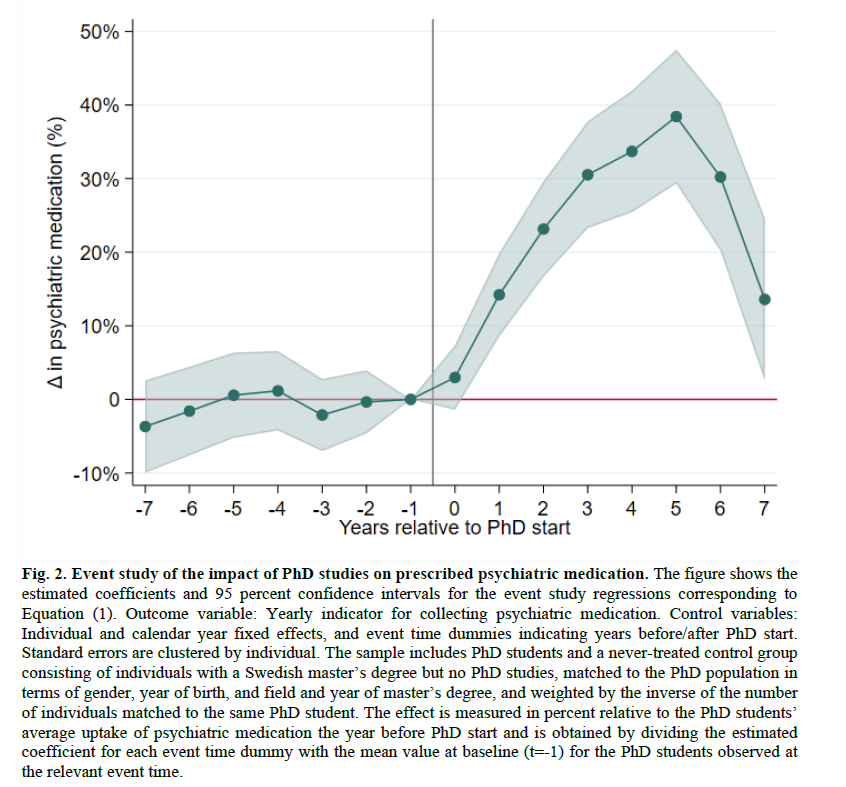
Pretty strong evidence of negative mental health effects of doing a PhD.
Recent working paper by
@EvaRanehill, @annahsandberg, Sanna Bergvall, and Clara Fernström.
Paper link: https://t.co/7X4uEjzPCC





![sungwookim's tweet photo. [자료 추천] 영어 글쓰기를 가르치시거나 '각잡고' 공부하고자 하시는 분들을 위해 좋은 자료들입니다. 비상업적 용도로 사용할 경우 편하게 쓰실 수 있습니다. (CC BY-NC-ND 4.0)
UNC at Chapel Hill Writing Center: Handouts
https://t.co/grhAPd8z6d https://t.co/rccyXE2jAY](https://pbs.twimg.com/media/GbbjfNsawAAInkS.jpg)