If you run a company or lead marketing, you NEED to be creating "{competitor} alternatives" articles.
A single one of these pages generated $1M+ in revenue for one of my SaaS clients over 3 years.
Here's exactly how I create them:
1. Find your competitors and keywords
List 5-10 competitors and research searches like "{X} alternatives" and "best alternatives to {X}". Prioritise relevance, search volume and how realistic it is to rank.
2. Optimise the basics
Use a simple URL (/example-alternatives) and title like "7 Best {X} Alternatives in 2026". Include the keyword naturally in the H1 and meta description.
3. Write a problem-focused intro
Explain why someone wants to switch. Too expensive? Missing features? Wrong fit for their team? Keep it to 2-3 sentences and get to the alternatives.
4. Add a TL;DR comparison table at the top
Show each product's best use case, starting price, key differences and links to the full reviews. Make it easy to shortlist options in seconds.
5. Feature YOUR product first
Explain who it's best for, why it's a good alternative and where it beats the competitor. Include features, pricing, screenshots/demos and a clear CTA.
6. Back up your claims
Use original testing, real screenshots, testimonials and measurable results. If you say you're cheaper or faster, give the numbers.
7. Compare directly against the competitor
Show the differences in pricing, integrations, features and migration. Be clear about what buyers gain AND what they give up by switching or choosing you.
8. Review the other alternatives fairly
Cover who each product is best for, strengths, weaknesses and pricing. Explain how you evaluated them and say when another option might be better.
9. Answer real buying questions
Add concise FAQs on pricing, free plans, integrations and migration. Find questions through customer research, Google and AI prompts.
10. Finish with recommendations and a CTA
Summarise which products suit different buyers, explain who should choose YOUR product and give them an obvious next step.
A few extra SEO basics:
Internally link to the page, keep pricing and features updated, make sure search crawlers can access it, and track trials, demos and revenue, not just traffic.
These pages work because you're not convincing someone they have a problem.
They're already looking for a solution and you're helping them decide which product to buy.
Sometimes ONE high-intent page can generate more revenue than 100s of generic blog posts.
the psychology of the linkedin user and the platform's behaviour will never not amaze me
platform doesn't want "slop" or "irrelevant content" - yet it is what gets rewarded the most regardless.
i personally dont think it's much to do with linkedin itself but more so about what the majority of the user base actually is, and what they’re actually doing when they open the app
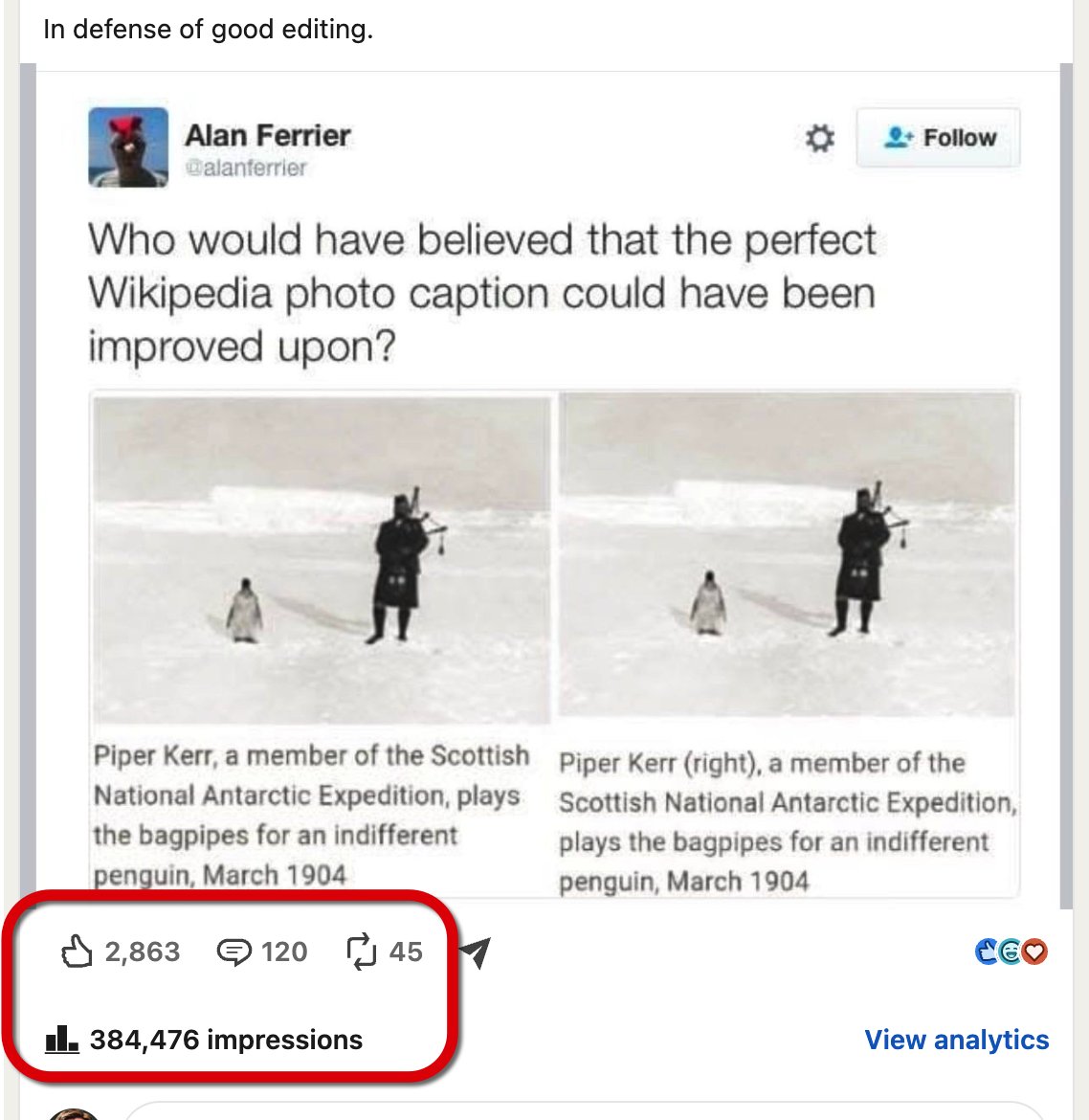
this is one of my community members' most viral posts ever.
I CAN'T DO THIS ANYMORE
EVERY SINGLE DAY FOR THE LAST 2 WEEKS LINKEDIN LOOKS LIKE THIS. GLITCHES. NO LOADING FEED.
I LOVE LINKEDIN SO MUCH IT'S CHANGED MY LIFE BUT WHY DO THEY HAVE TO ALWAYS DO THINGS TO IT
saas or app founders: best ways to drive new users using IG?
what i've tried (kinda)
viral video >> lead magnet to landing page with comment x for y automation
doesn't convert as well as it's straight to a $99/mo subscription and traffic is cold(ish) i.e haven't seen much of kleo before those 1 or 2 videos.
we're reluctant to do free trials or $1 trials but we've only tested that with warm traffic on linkedin and email.
pleaaaaseee tag whatever saas/app marketing goats you know i'd love to learn!!
kleo x ig takeover soon