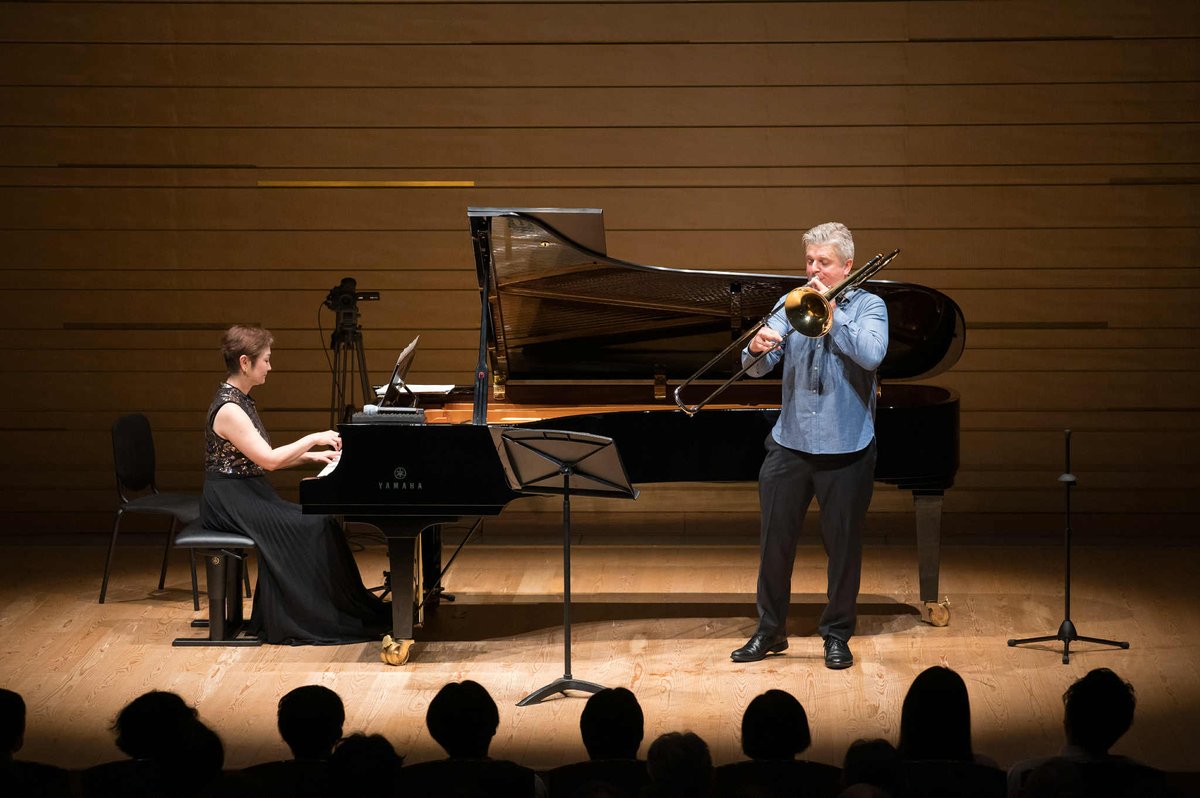
What a journey in Japan (1–16 Aug):
🎵 Recital at Yamaha Hall
💿 CD recording in Chichibu
🎶 Teaching in Tokyo & Hamamatsu Festival
Deep gratitude to Yamaha, Opus One & all supporters!
#Trombone#HamamatsuFestival#YamahaMusic#Japan2025
...Part Two
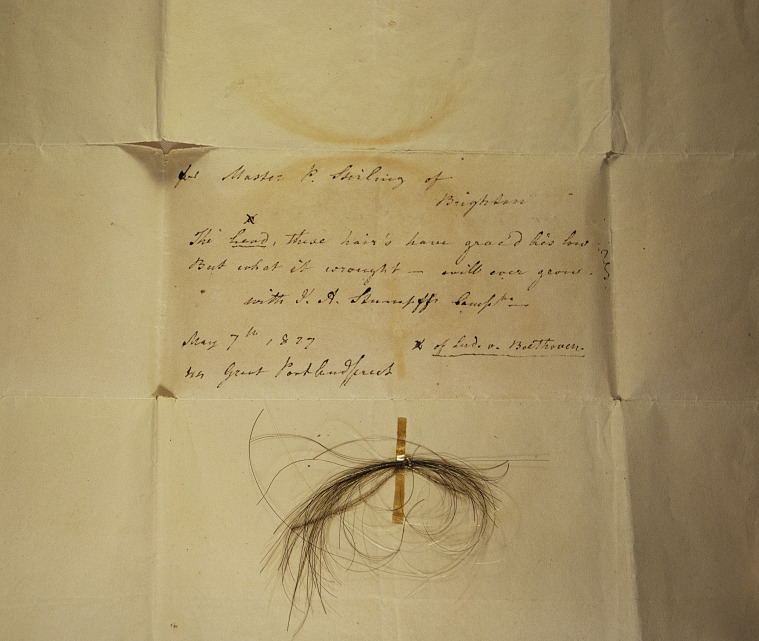
The eight locks were called as the Müller, Bermann, Halm-Thayer, Moscheles, Stumpff, Cramolini-Brown, Hiller, and Kessler Lock Collections. They found that four of the samples had an intact chain of custody from the time the hair was cut.
DNA sequencing on these four and an additional one of the eight locks came from the same individual, a male of European heritage – meaning, the others were not authentic.
And surprisingly, the three locks with less documentation came from three other unrelated individuals. Interestingly, analysis of one of those hair samples – the so-called Hiller Lock – had shown high levels of Lead which was the reason for wrong diagnosis of Lead poisoning in the first place.
DNA analysis of that lock of hair revealed that it came from a woman likely of North African, Middle Eastern, or Jewish ancestry.
So, what did Beethoven die of? He had died of liver disease. His autopsy showed liver damage. What was killing his liver?
Genome analysis found two genes that are now notoriously known to cause liver cirrhosis – the PNPLA-3 gene and HFE-gene mutation both of which are now known to be associated with cirrhosis and death.
PNPLA-3 - https://t.co/0bZmKAPVjX
HFE – gene - https://t.co/dACI2ajSM0& https://t.co/FVKhD9mFns& https://t.co/ICKA5K0mC9
But they did not act alone. There had to be a driving factor which caused the chronic damage. And the researchers found it.
One man’s most ancient friend, but greatest foes
– alcohol.
While several of Beethoven’s contemporaries insisted that Beethoven usually consumed alcohol in moderation one close friend is alleged to have stated that in ca. 1825–1826, Beethoven had been consuming at least a litre of wine with lunch every day – but now we know that even modest consumption of alcohol along with genetic mutations can lead to cirrhosis. https://t.co/Vb7QxvEvQi
But Tristan Begg and his colleagues were not ready for what was coming next. Along with the genetic mutation and the alcohol was another tiny little ancient monster which they found in his hair strand on DNA analysis. And they knew the little bugger drove Beethoven to his death with everything else at the back seat – Hepatitis B virus.
And two centuries after his death, and medical science fascination with research and diagnosis, and with our fascination with Beethoven that has led us to probe every corner of his life – his letters, his writings, his medical records, and now his very DNA – the cause of the musical giant’s death was finally unravelled
– Cirrhosis brought on by alcohol and a polygenic inherited liver risk driven to failure by the presence of Hepatitis B virus infection.
This is why medical science exist. And as our scientific tools become sharper, we look forward to unravelling the mysteries of human health to defeat suffering.
But did I tell you the biggest scandal of all in this great research finding?
The Y-chromosome that Beethoven inherited was not Aert van Beethoven’s – his presumed Father. Questions of Beethoven’s paternity have been raised before, but this evidence strongly suggests an extramarital paternity event, at least in the generations preceding his birth.
That is right – Beethoven may not have been a Beethoven.
Sources:
Genomic analyses of hair from Ludwig van Beethoven - https://t.co/u42xhrpMRG
Celebrity death finally solved – with locks of hair - https://t.co/ykTfScmGrg
Part One:
Ludvig van Beethoven knew he was unwell. He was dying. His hearing was progressively declining. So he asked his favorite physician, Dr Johann Adam Schmidt that upon his death, he describe his illness and make his diagnosis public.
But tragedy struck. Dr Johann died early. Beethoven outlived him by 18 years. And his request was denied. And then people found Beethoven’s letters, of which Emily Anderson writes in 1952.
And through that, they found what came to be known as the Heilingenstadt Testament of 1802 where Beethoven writes to his brothers about his illness.
And thus started one of the greatest medical investigations that featured some of the most intensive clinical and basic science research to find the maestro’s cause of death.
Stay with me, this is a rollercoaster ride which features one of the most thrilling and extreme form of clinical medicine and research – Hepatology.
The quest to find the cause of Beethoven’s death mostly relied on documentary sources, including Beethoven’s letters, diaries, and conversation books, and accounts from Beethoven’s contemporaries including physicians’ notes, an autopsy report, and descriptions of skeletal material following exhumations in 1863 and 1888.
In addition, analyses of tissue sources claimed to originate from Beethoven have been performed, including toxicological analyses of hairs of unknown authenticity and palaeopathological and toxicological examinations of skull fragments, at least two of which are inauthentic.
Beethoven suffered from three major issues – progressive hearing loss, recurrent abdominal pain and diarrhea and two attacks of jaundice, the one, culminating in his death. He had fluid in his abdomen that had to be removed using a large bore needle. The composer received abdominal punctures four times on his deathbed, draining between 7.7 and 14 liters of fluid from his body each time. and he ultimately went into a coma.
Finally, a group of researchers led by Christian Reiter of The Medical University of Vienna claimed that the cause of Beethoven’s death was Lead Poisoning. They claimed that his doctor killed him because he used Lead salts used to clean the wound which eventually poisoned him leading to his death. And this story stuck. https://t.co/3IIm6usxGq
But the truth remained buried until now in 2023 when the indomitable Tristan Begg, from the Department of Archaeology, University of Cambridge used modern DNA extraction techniques along with a masterful method called genome-wide association studies on a seemingly worthless item recovered from Beethoven decades ago – eight locks of his hair found by private collectors.
Continued...
Holiday in Berlin. Grabbed my new small bore Yamaha trombone on the way to the hotel and made a Nils Landgren tribute in the Tiergarten. What a beautiful melody. My wife made the movie! (Beautiful wife too ;)
Come watch us tonight to witness some of the best and upcoming trombonists of the future under@the guidance of Jonas Bylund at the @musikkhogskolen. Arrangement copyrights to @larskarlin
A sneak preview to tonight’s trombone ensemble concert at 8.00 PM at the Norwegian Music Academy! Show yourselves up to watch some of the future’s best Trombonists!
Looking forward to hearing the Trombone Class of the Norwegian Academy of Music perform my arrangement of Pictures at an Exhibition by Mussorgsky tomorrow at 8 PM in Lindemansalen at the NMH.
All will be conducted by my former Prof. Jonas Bylund.
It will be a blast!!
Newest episode of the Trombone Retreat Podcast is out! Nick and Sebastian interview Lars Karlin, Principal Trombonist of the @DKNationalSymph. Subscribe wherever you listen to podcasts!