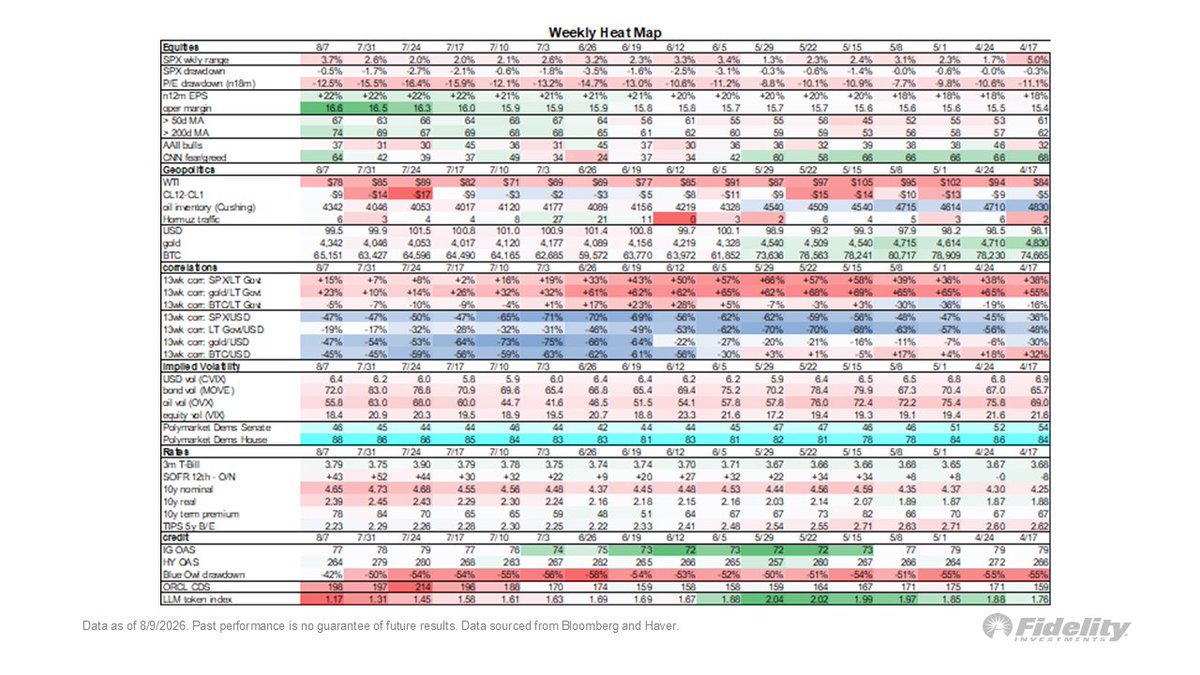
There are many cross currents of course. The bullish drivers are still driving, with valuations reasonable at 20x for the cap-weighted index and 18x for the equal-weighted index, breadth broadening with 74% of stocks above their 200-day moving average, and earnings momentum still gaining. Outside of recoveries from recessions, I don’t know that I have ever seen earnings cycle like this, where the 12m forward estimate has skyrocketed by $100/share in a year while the 2nd derivative continues to accelerate at a 35% clip. When the level and rate of change are growing at the same time, that’s a lot of momentum.
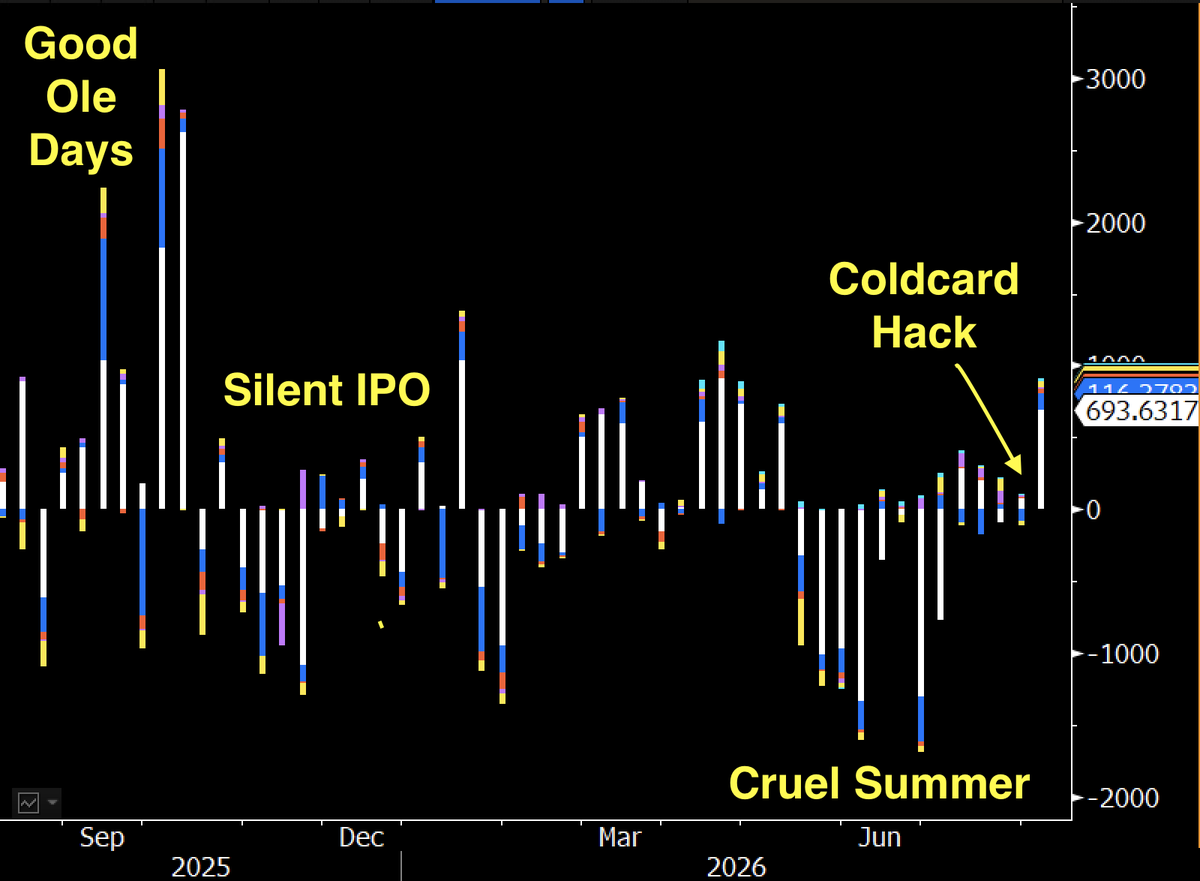
The bitcoin ETFs just clocked their best week in flows (about $1b) since April and the 3rd best week since the good ole days were ruined by the Silent IPO last Oct. IBIT, FBTC and few others saw inflows every single day since Coldcard hack, making it hard not to see causation in the correlation. Would be ironic, but somehow on brand, if the hack of btc in cold storage (seemingly worst poss situation) marked the beginning of next run.
How do you play the AI infrastructure cycle after a selloff? Morgan Stanley just split it into five buckets to own, and calls the ~7% pullback a buying opportunity.
1. AI Infrastructure bottlenecks. Labor and time to power: fuel cells, bitcoin miners turned powered shell providers, turbines, energy storage, power developers, and data center REITs with real growth. $BE $RIOT $HUT $CIFR $WULF $APLD $BX
2. Compute manufacturing. Semis, hardware and equipment, where compute is still short of demand. $NVDA $TSM $AVGO $MU $ASML $STM $VNET
3. Chinese AI solution providers. Capable, cost competitive, and with little of that upside priced into the stock. $BABA $TCEHY
4. Energy security assets. They flag energy storage as the standout class in the whole theme. $VST $TLN $CWEN $SQM $PBR $VALE $YPF
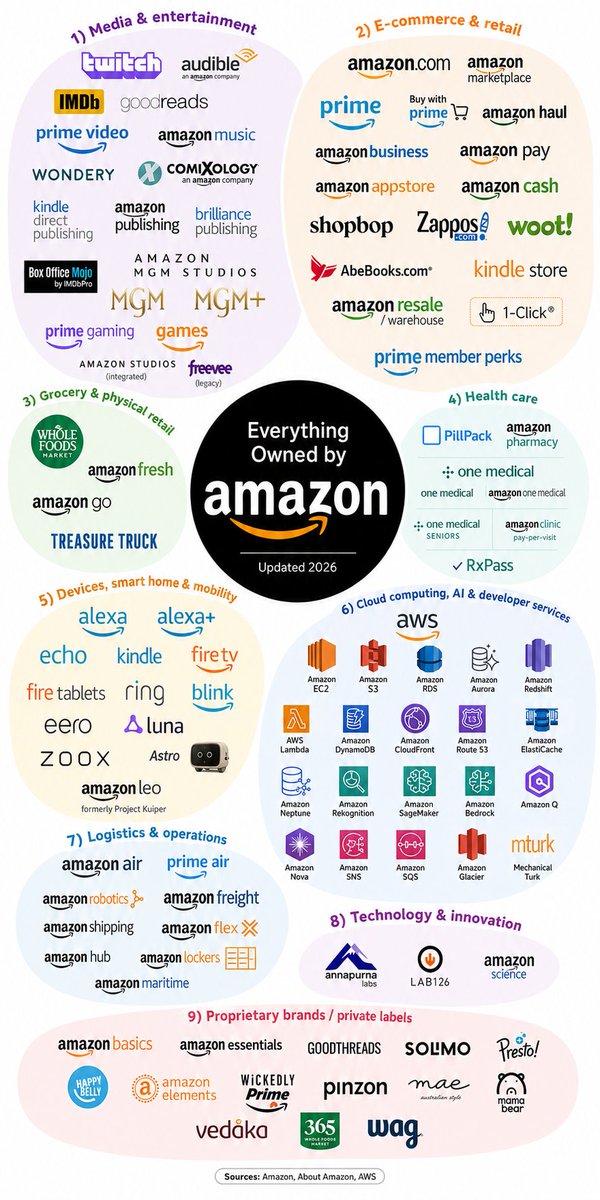
5. Hyperscalers turning capex into ROI. $META $GOOGL $MSFT $AMZN.
A reasonable person would have assumed that the recent shakeout in the AI momentum and semiconductor space would have sent speculators running for the hills, but that has not been the case. In fact, per the chart below it appears that the fast money in South Korea and the US is doubling down.
Do whatever it takes to maximize your energy levels and manage your attitude.
People like being around other people with high energy, a positive attitude and passionate about life.
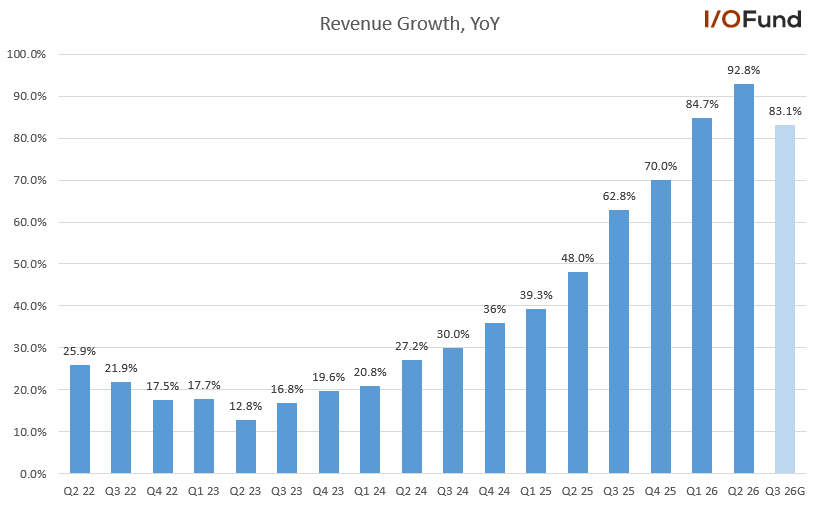
Palantir $PLTR reported $1.94 billion in revenue in Q2, marking an acceleration to 92.8% YoY growth, 80 points faster than its growth from three years ago.
Q3 revenue was guided to be $2.16-$2.164 billion, up 83.1% YoY.
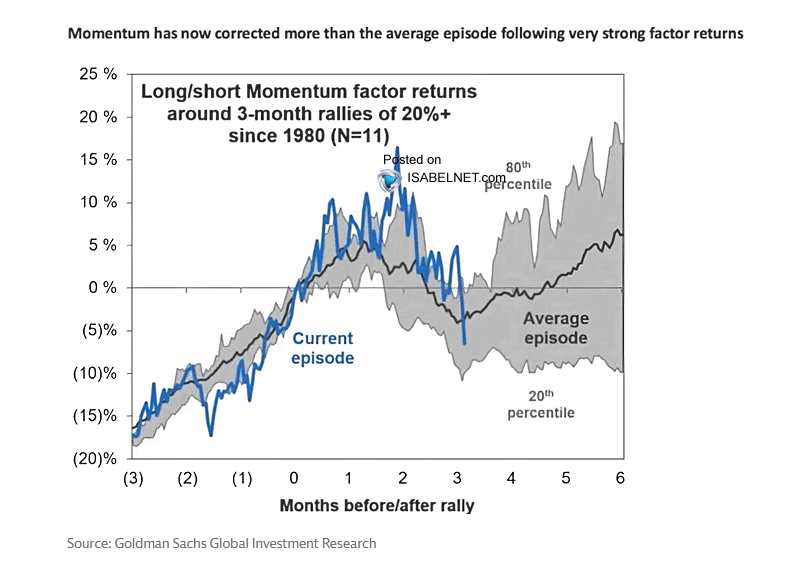
Momentum has given back more than it typically does after a big run. There may still be room for another leg lower, heading into the Mid-term elections, but with the pullback now larger than average, most of the damage is likely in the rearview mirror.
h/t @ISABELNET_SA
I will be watching the memory names closely, $MU $SNDK $WDC $STX $SKHY, if $EWY can get back into the $182-188 level.
- Parabolic rally
- Broken structure
- Bounce much further than most think is possible.
- Reignite the P/E and bottleneck bros spirits.
- Then wash them all out again as leverage builds and everyone starts calling for new highs.
Scenario #2
- Chop between roughly $154-$205 on $EWY for another 3-4 months.
- Eventually reclaim the 50-day moving average.
- Volatility contracts.
- Price action starts behaving normally again.
- Buy the low cheat setup much later, similar to $NVDA in early 2024.
Avoid the chop in the interim on that group.
JUNE '26 TOP OPPS
June was a solid month with the standout being the $SPCX ipo for a series of incredible opportunities both long and short. Some of the hot themes have since seemed to slow down and a lot of the prior euphoria is starting to abate. As always these monthly opps are dissected in detail as part of my course.
6/1 $USO
6/5 $QNT $META
6/8 $INTC
6/9 $USO / market
6/11 $SNDK
*** $SPCX ***
$XBI
6/25 $CBRS $STRC
"Most short stock books lose money. But the best investors use them anyway because they improve portfolio returns. The reason shorts can lose money but improve returns is simple: shorts reduce volatility drag, allowing portfolios to compound closer to their expected returns."
https://t.co/alqyNWpnIc
I think robotics is the next 10x asymmetric trade.
I spent the last week writing a deep-dive research report on my thesis and breaking down exactly how I'm building exposure to this sector.
This is the most important financial research I've published all year:
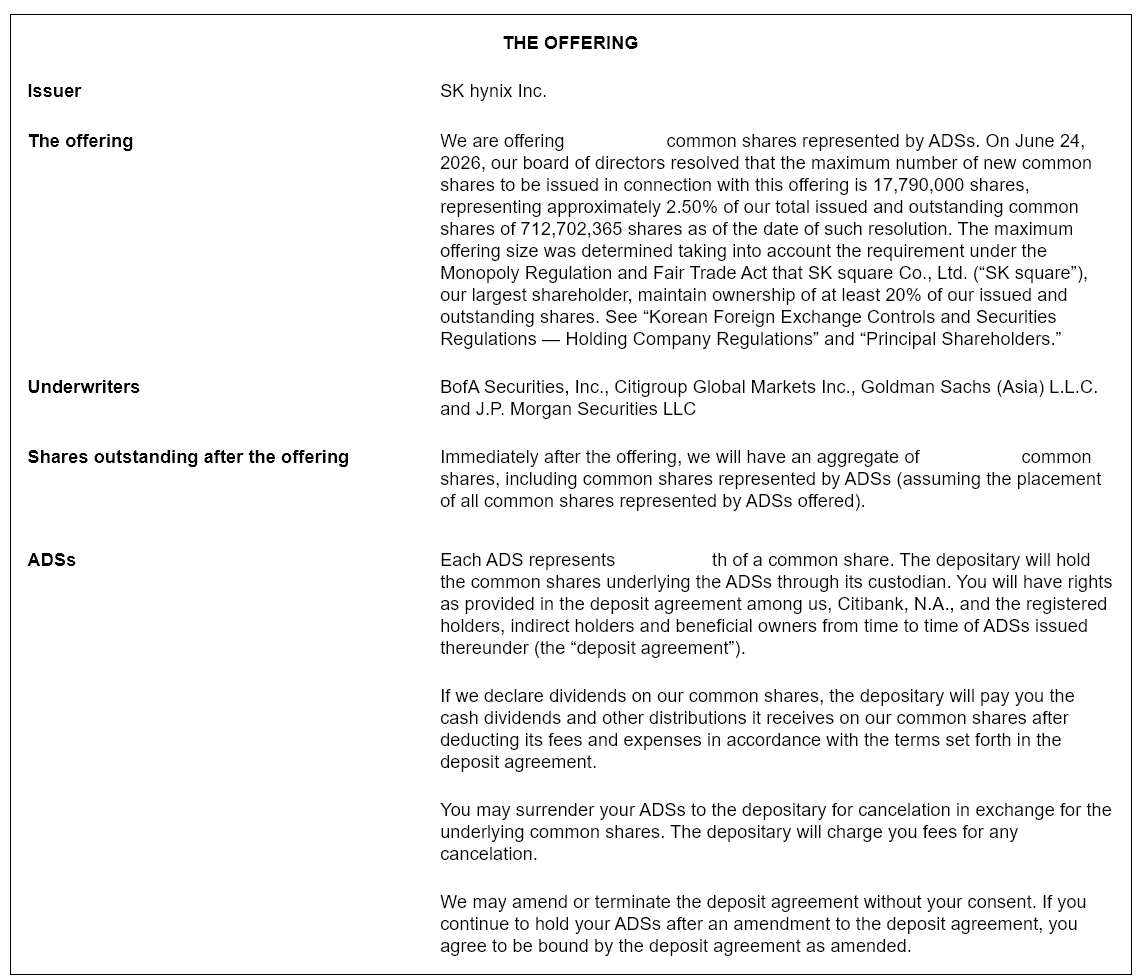
SK Hynix’s $SKHY U.S. listing is reportedly “multiple times oversubscribed” (Bloomberg)
It has drawn strong early demand from notable investors & firms like Situational Awareness LP, run by Leopold Aschenbrenner
When @Qullamaggie famously says: “Nobody is smarter than the moving averages.”
What he is really saying is:
“Nobody is smarter than the prevailing trend.”
And that principle has remained true now for decades, likely centuries, if we had the data.
Most people see a stock at all-time highs and think the same thing.
Too late. Missed it. Wait for the pullback.
The opposite is true. A new all-time high is the most bullish signal in markets, and the reason is psychology, not mathematics.
Here is why:
– Thesis confirmed. The market has voted. Price clearing every prior high is the tape agreeing with you, not a forecast waiting to be proven
– Everyone owns it at a profit. No exceptions. There is not a single holder underwater, which means not a single holder is praying to get back to break-even so they can sell
– No overhead supply. The trapped sellers are gone. There is no wall of «just let me get my money back» orders waiting above the price
– The line of least resistance points up. With no one left above to sell into the move, the path of least friction is higher. So it goes higher
That creates a loop. Happy holders, no selling pressure, an easier path up, new highs, happier holders. It feeds itself.
Think about your own portfolio. When a position makes a new high, you are calm. You are not refreshing the quote every hour. You are not second-guessing. Uncertainty is low, and uncertainty is the one thing investors hate most.
A new high is not the end of a move. It is the absence of everyone who would stop it.
New highs are not too late. They're permission.