@gutzii_godoy Sério? Pela literatura Tupinistica clássica parece o contrário: o 'Guarani' foi generalizado a partir de um grupo da foz do Prata, e vem claramente de warin~i "guerra, guerreiro", mas Tupi...permanece sem etimologia clara, não?
@pv_faria Já vi casos em que a universidade tentou lidar com essa questão reduzindo o intervalo entre as etapas, mas o MP embargou o edital alegando que não havia tempo mínimo regulamentar para recurso em cada uma das etapas.
@mccormick_ted Awestruck by the finding that one of the foremost public faces of my field is unable to distinguish between Saussurean arbitrariness and the truism that linguistic utterances can trigger emotional and affective reactions in people.
Am heutigen Internationalen Tag der Muttersprache(n) zur „Förderung sprachlicher und kultureller Vielfalt und Mehrsprachigkeit“, gilt es auch zu betonen, dass - neben der Biodiversität - die Sprachdiversität auf der Welt sehr stark bedroht ist.
https://t.co/aC3qzGGjLy
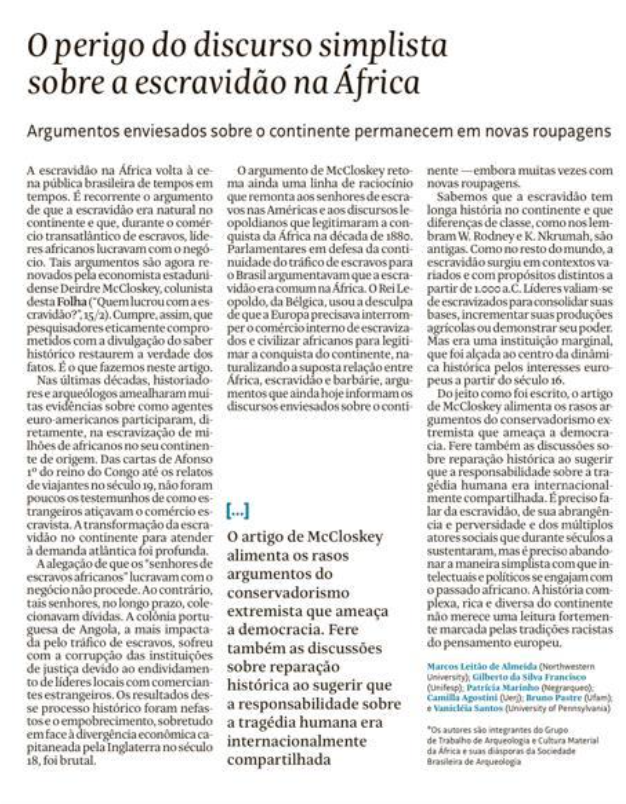
Aqui está a versão impressa do meu artigo com colegas na Folha de SP de Hoje. Agradeço ao editor por ter cedido o espaço. A história complexa da África não merece uma leitura simplista marcada pelo que há de pior no pensamento europeu. Compartilhem!
The edited volume also includes a very cool chapter with an overview of the current state of Brazilian sociolinguistics by our own Uli Reich and Ronald Beline Mendes! 🤩
The "Indigenous" identity can be empowering. But, as I argue in next week's @NewYorker, the push to apply it to peoples everywhere has weakened the concept, conflating it with stereotypes of "primitive" peoples & harming those it is supposed to liberate: https://t.co/S29J4eEBX5
@mccormick_ted > which is a curiously "regressive" opinion in comparison to, say, much of the 17th century Jesuitic commentary on the indigenous languages of the Americas.
@mccormick_ted His remarks on the languages of the Yaghan and the Selk'nam are notorious too: "According to our thinking the language of these people barely merits classification as an articulated language" - Diary entry, December 17, 1822 >
@dietweeterei I meant "all of the above at the same time", not for single individuals, but for us all as a collectivity , hence the inevitable dissatisfaction, unending polemics and so on.
A fully annotated and transcribed language corpus, with all the relevant metadata, rightfully belongs, as 'intellectual property' (1) to the linguist who did the work, (2) to the speakers, (3) to the ppl paying for the job, (4) there's no such thing as intellectual property :
It feels so good to find a cognate that you have hypothesized would exist, to confirm your reconstruction.
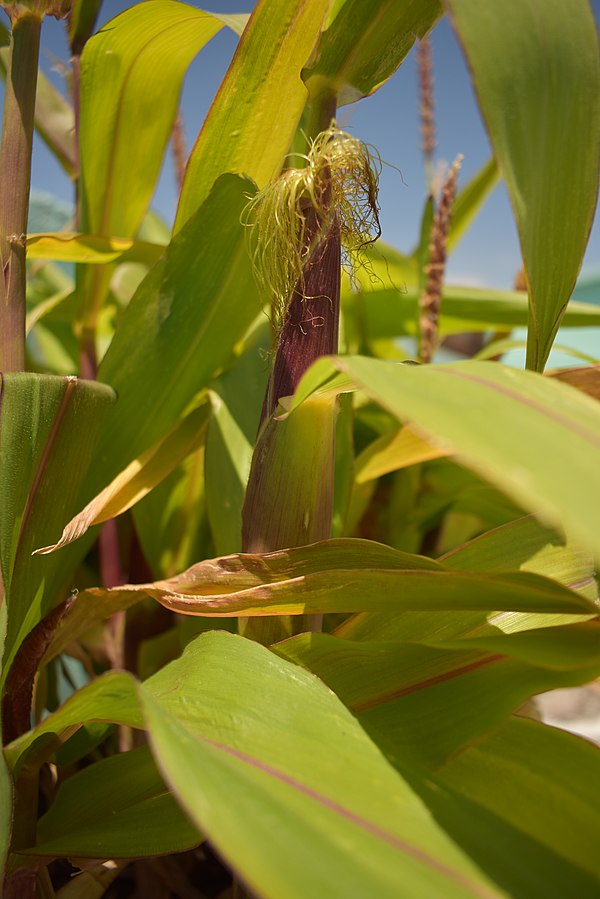
I have been wondering about the origin of the Nahuatl word e:lo:tl/ye:lo:tl (the source of the Mexican Spanish word 'elote' "fresh corn cob").
@MagnusPharao Fascinating, @MagnusPharao! It has the hallmark of the best etymological work: consequences beyond the analysis of a single word history.
@ait_kisou@kolatubosun@arabic_bad I recall reading something similar about the Efik considering themselves one of "Israel Lost Tribes" and coming up with "Semitic etymologies" for local toponimy.
@hiramring That's a good point, and it goes without saying that matters have been oversimplified here, though this all-encompassing view still allows for plenty of conflict, e.g., when deciding how much control should depositors have about who gets access to archived collections.