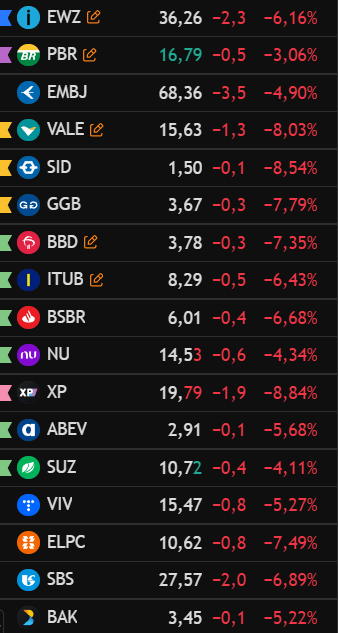
@cristiannmillo no fueron ni son los balances el motivo de la baja.
Brasil (referencia regional) muestra caídas generalizadas en bancos, energía y ETF país.
Esto es compresión de riesgo en EM dentro de un contexto global más frágil.
Cuando el flujo sale, no discrimina.
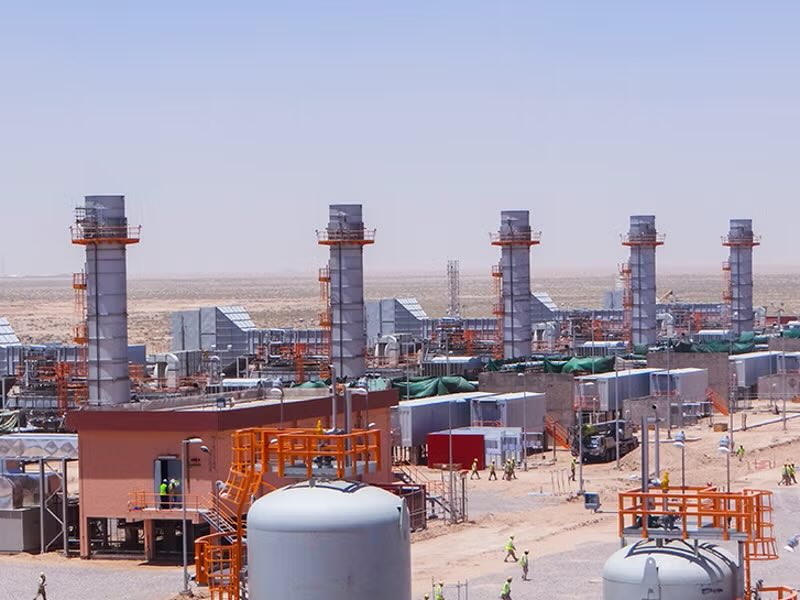
JUST IN: Shafaq News is reporting that Iraq has fully suspended production at the Rumaila oil field. A circulating Iraqi document cites the reason: storage tanks at southern Basra ports have reached capacity because the Strait of Hormuz is closed and tankers cannot load.
No operator confirmation from BP or PetroChina yet. No Iraqi Ministry statement. This remains unconfirmed at Tier 1. But the mechanism described in that document is not speculation. It is arithmetic.
Rumaila produces 1.4 to 1.5 million barrels per day. That oil flows south to Basra terminals for export through Hormuz. Hormuz transits have collapsed 80%. Tankers are not loading. Storage fills. When storage is full, you shut the well or you have a safety incident. There is no third option.
This is not a military shutdown. No drone hit Rumaila. No missile struck Basra. This is the Hormuz actuarial blockade propagating upstream through the simplest physical constraint imaginable: you cannot produce oil you have nowhere to put.
The confirmed Kurdish shutdowns, Shaikan, Atrush, Sarsang, totalling 200,000 barrels per day, were precautionary. Operators could not verify the security environment, so they suspended. Verification cost inversion at the field level.
Rumaila, if confirmed, is different. It is not a security decision. It is a storage decision. The downstream blockade has physically backed up into the upstream. The system is choking on its own output because the exit valve, Hormuz, is shut.
Iraq loses roughly $127 million per day at current prices for every day Rumaila is offline. That is $3.8 billion per month. From a field that was never attacked.
The Hormuz actuarial blockade is no longer a shipping story. It is now a production story. The supply loss is compounding. https://t.co/ULBgEzZ3A8
The first real signal of a war is not the missile.
It is the price of exit.
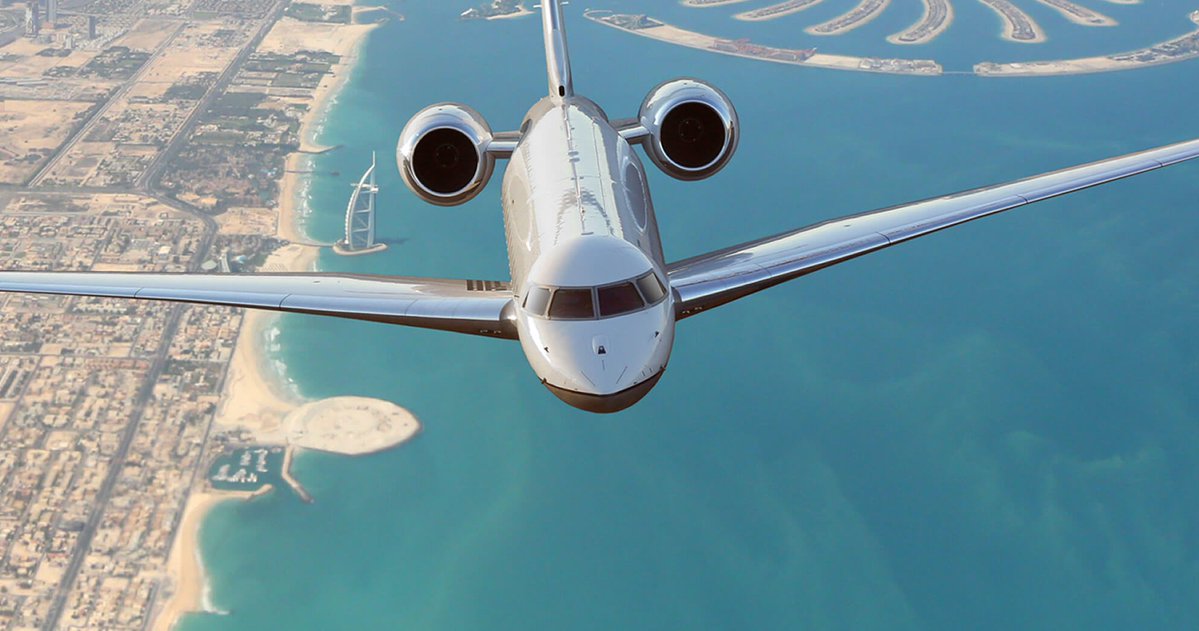
Tonight the ultra rich are paying up to £260,000 ($350,000) for a single private jet charter just to get out of the Gulf, because the normal map is gone.
Dubai, Doha, Abu Dhabi, the transit machine that moves the planet’s people and capital, is effectively paused. Airspace restrictions, security alerts, mass cancellations, crews stranded.
So the evacuation route is medieval in a futuristic wrapper.
Step 1: disappear from the skyline.
Step 2: get picked up by a private security team.
Step 3: sit in an SUV convoy for a brutal 10 hour drive across desert highways to Riyadh, one of the few hubs still functioning.
Step 4: buy a seat on a jet that has no refunds, no guarantees, and a contract built around force majeure.
That is not travel.
That is a market discovering what “permission to leave” costs when the state cannot provide normality.
Here is the part everyone misses: this is how regimes change.
Not through speeches. Through pricing.
When commercial aviation freezes, the world splits into two economies overnight.
One economy waits in terminals, refreshes apps, sleeps on floors, runs out of cash, runs out of options.
The other economy converts money into motion and motion into safety.
And the premium they are paying is not for leather seats.
It is for probability.
The same logic will hit everything next.
Insurance reprices first.
Freight and shipping lanes follow.
Energy and commodities move from “supply” to “security.”
Then credit tightens because every lender realizes the collateral has a missile shaped tail risk.
You are watching a new global tax being born.
Call it the volatility tax.
Call it the verification tax.
Either way, the bill is rising and it is not being paid equally.
Question: when the price of exit goes parabolic, what do you think happens to the price of everything else?
https://t.co/0psQfENUyo
Hubo 2 incorporaciones:
$SEZL: Posible upside m200 ruedas 35%. Pero ese GAP puede ser cerrado si llegamos hasta allí. Los bots odian dejar huecos.
$ODD: A estos valores guardamos. Va para largo.
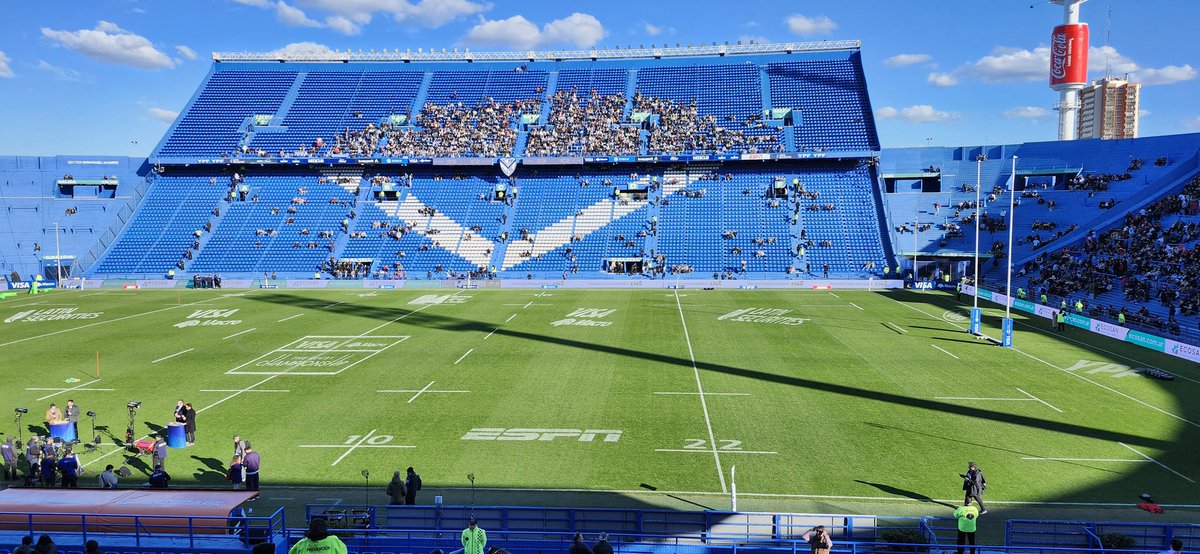
"Cuando dicen que Rosario se trasladó a Buenos Aires es así, realmente así lo sentí".
💬 Palabras de @NachoScocco32ok para describir la histórica movilización Rojinegra.
#40MilDeVisitante ❤️🖤