In 2027, Peter Thiel will get access to the money in his Roth IRA which is allegedly worth $5B
Five BILLION dollars
The crazy part? He will not have to pay a dollar of taxes on it
Here's how he set it up (& how you can emulate this strategy):
The past few days have been overwhelming. I continue to support @ghaywan’s excellent work, now with Made in Heaven and earlier with Geeli Pucchi on Netflix. But this needs to be said.
A river corrects course: The Story of the Yamuna River and the Red Fort - #DelhiFlood
When Shah Jahan moved his capital from Agra to Delhi, and first came to the newly built Red Fort, he came through the Yamuna and entered the fort from a water gate.
To bring this circle of history to a perfect end, Bahadur Shah Zafar escaped the Red Fort in 1857 from the same gate.
The Lahori Gate and the Dilli Gate of the Red Fort are pretty famous, but there's another gate that isn't talked much about - the Yamuna Gate (Khizri Darwaza). The road is on what we know as the back side of the red fort, towards the Ring Road.
This Khizri Gate is named after Khwaja Khizr, a Sindhi saint of the waters. He is also popularly known as Jhulelal, and is revered by both, Hindus and Muslims of Sindh. The former sees him as a God, while the latter believe him to be a saint also known as Darya Shah 'Zinda Pir'.
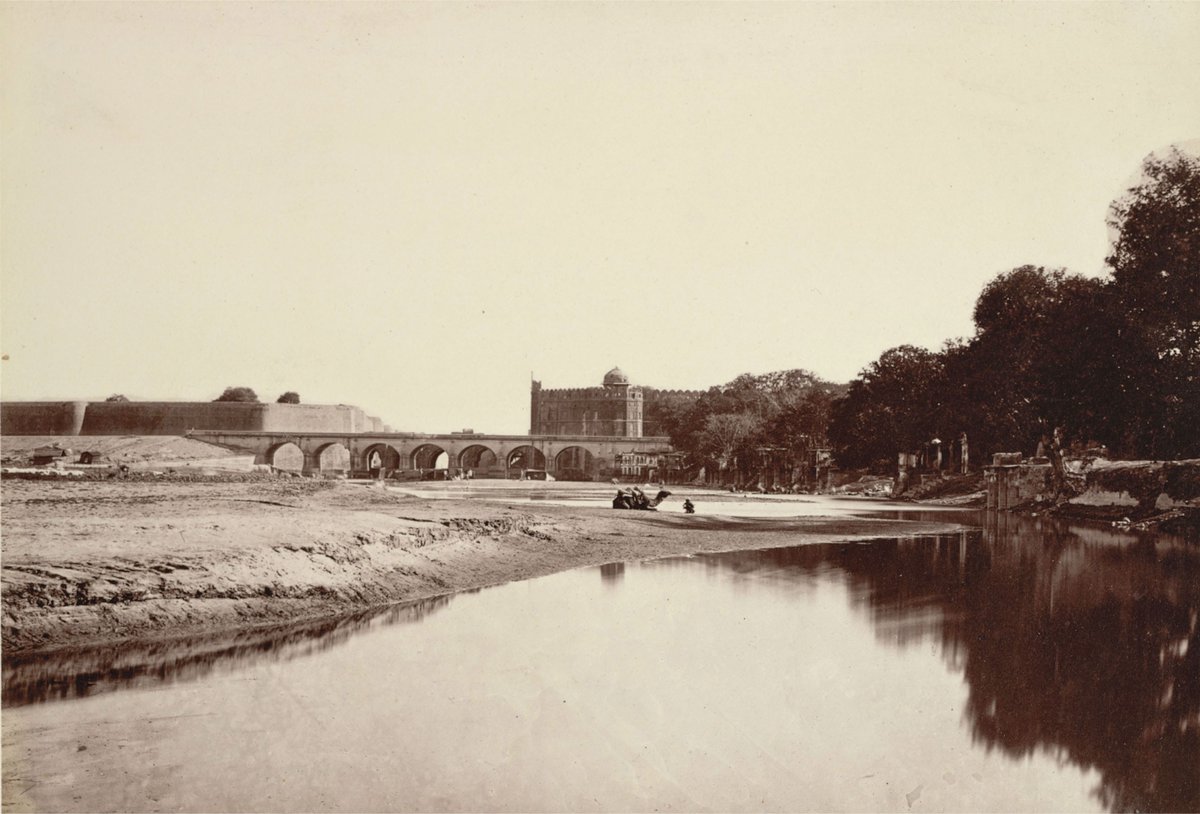
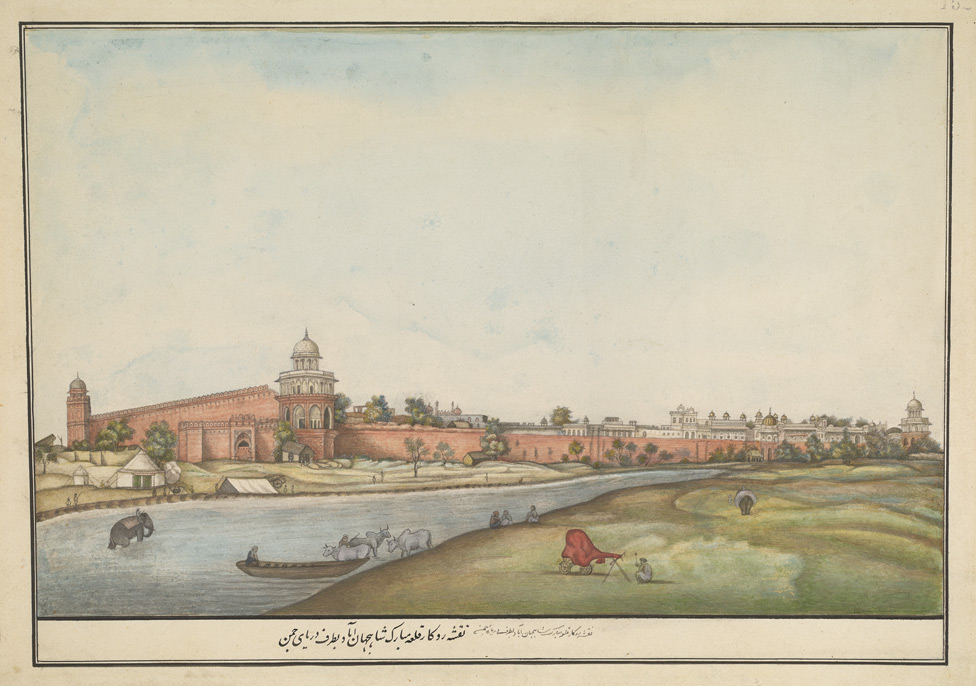
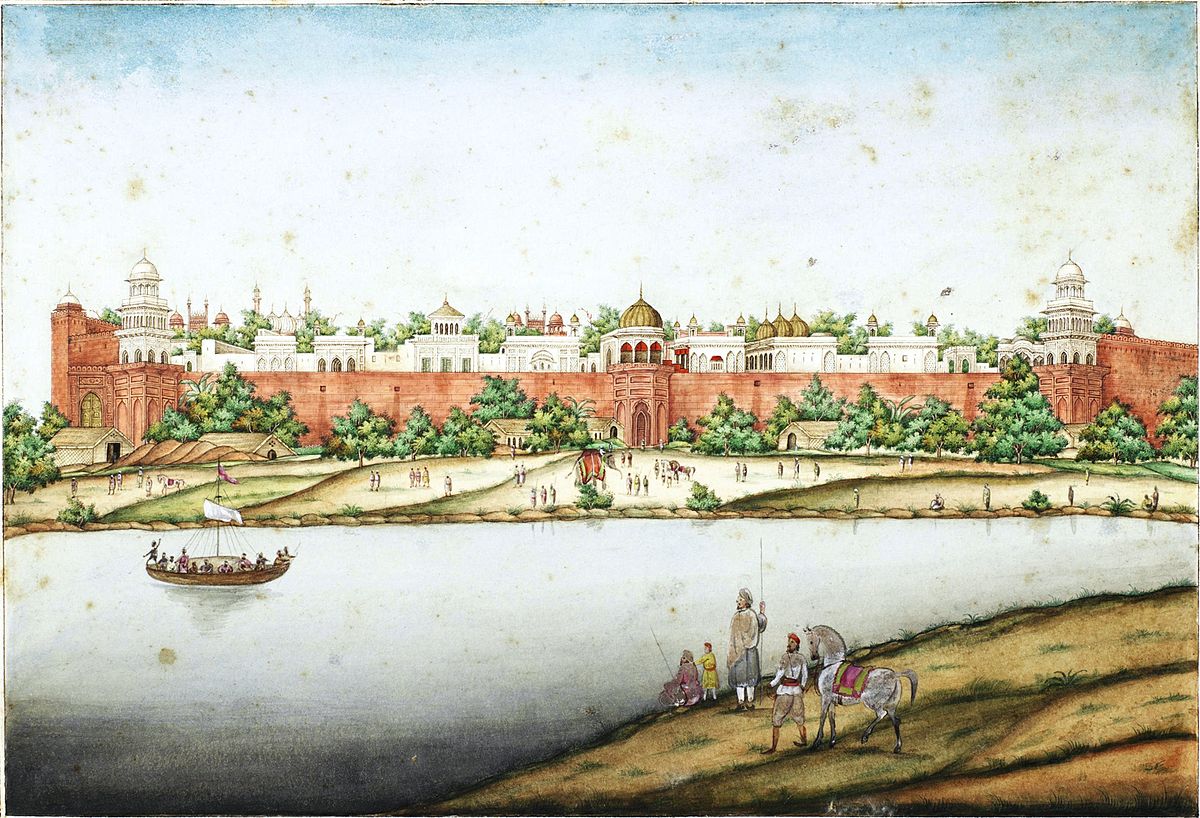
Back in the day, the Yamuna used to flow right behind the red fort. The river has since changed course and meandered much to the East since 1857, mostly due to a natural flow aided by infrastructural changes.
The river was important for the Mughals for multiple reasons. Be it just idling around in the waters, or hosting fairs and Ram Lila events, watching elephants wrestle, or giving a 'Jharokha' darshan to their subjects, it all used to happen towards the Yamuna-facing side of the Red Fort. The Khizri Gate was a special gate meant only for the senior members of the Mughal royal family.
Interestingly, the Mughals didn't prefer to drink Yamuna waters, as water was specially brought from the Ganga river for their drinking purposes. However, the Yamuna water was put to use in beautifying the city. The canal that ran across Chandni Chowk, giving the area it's name, ran on Yamuna water. The water in the Red Fort Baoli also came from the river. However, as it changed course, the Baoli dried up, and was later used by the British as a makeshift prison for Azad Hind Fauj officers.
As the city floods after #DelhiRains once again, it isn't something that the Mughals would be surprised by, as floods were way more common in the time. During Aurangzeb's reign, the city saw a major flood where the water flowed beyond the Red Fort up to Daryaganj.
At that time, Sheikh Kalimullah Jahanabadi's prayers were believed to have controlled the flood. The Sufi saint's grave is near the Jama Masjid today.
Images:
1. View of the Red Fort, 1823 (British Library, unknown artist)
2. An 1860 photograph by Eugene Clutterbuck Impey with Salimgarh on the Left and Red Fort on the right, Yamuna flowing between the two.
3. Ghulam Ali Khan's painting featuring the Yamuna-facing side of the red fort and the sandy bank below the fort.
PS: While the flooding of the Yamuna river is one extreme end of the situation, another problem that Mughal monuments today face is the drying up of the Yamuna river in the summer months. The Taj Mahal, also built at the banks of the Yamuna, has a foundation made of Ebony wood which requires constant moisture to neither contract nor expand.
With the Yamuna near the Taj often drying up - and with water levels reducing, it poses a serious threat to the foundation of the Taj Mahal!
#DelhiHistory #DelhiHeritage #DelhiRain
If you're trying to lose weight, the most important thing you should do is stop ordering food from outside. As a former chef and restaurant owner, and also someone trying to lose weight, let me tell you why.
A short 🧵