22
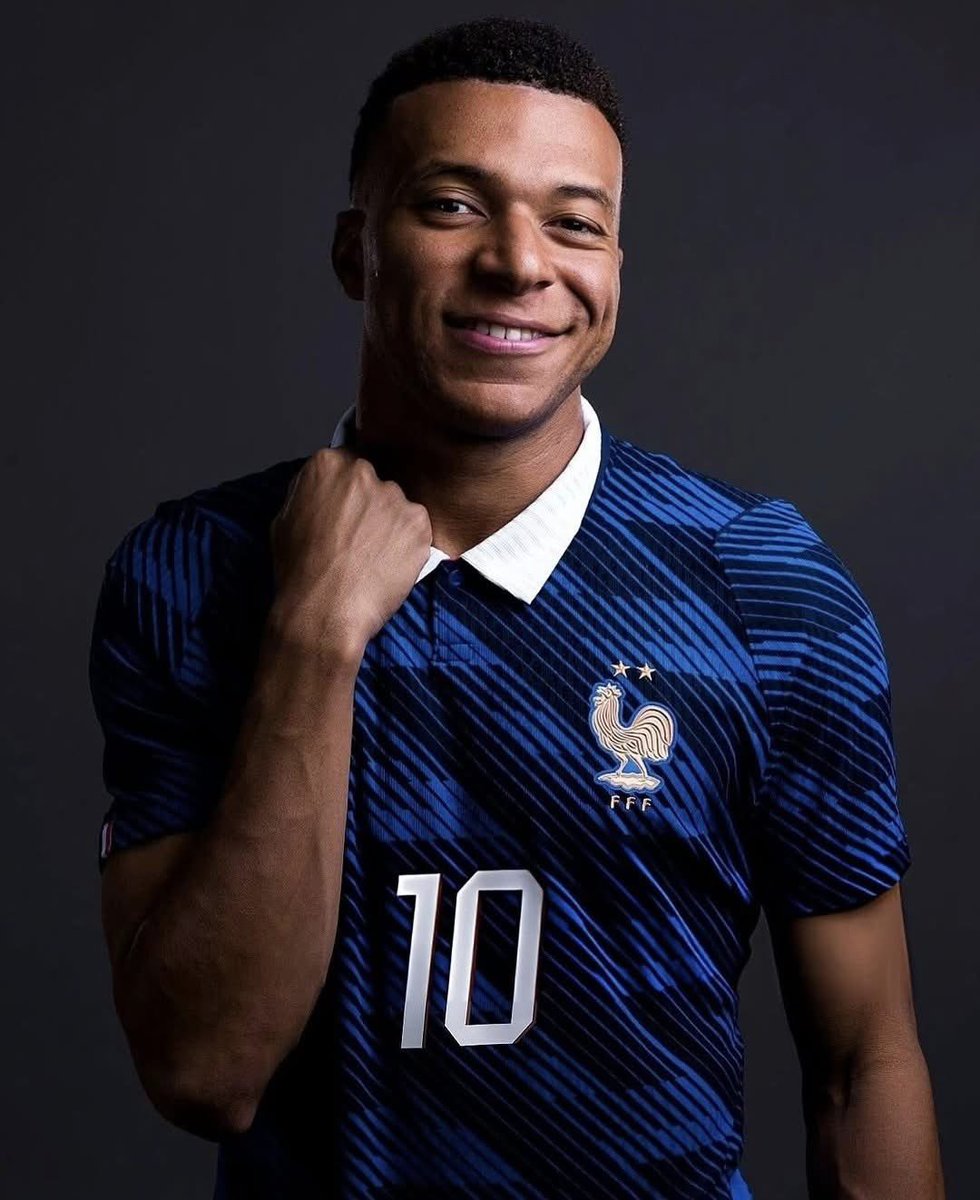
Kylian Mbappé's career World Cup goals — the most in history.
He broke the record in a third-place match in Miami, in a tournament his country did not win.
The greatest individual scoring record in football history was set on the wrong night, in the wrong match,
FIFA distributed $776 million across 48 nations at the 2026 World Cup.
Eight African nations qualified.
They received a combined 17% of the total prize pot.
The continent whose players dominate Europe's top five leagues.
Whose academies European clubs scout freely and cheaply.
18 @FIFAWorldCup goals. The record is 19.
@KMbappe has a minimum of 4 games.
@OliseM17 was sensational, #Barcola clinical. And Mbappé ran straight to Deschamps after his first goal, whose mother died during this tournament.
This #French team is playing for more than a trophy.
🚨 ROUND OF 32 LOCKED IN! 🚨
The road to World Cup glory is getting narrower. 🌎🏆
🔥 16 matches
🔥 32 nations
🔥 One trophy
🔥 Endless drama
Which matchup are you most excited to watch? 👀
Drop your predictions below ⬇️
#WorldCup2026#FIFAWorldCup#WorldCupDailies#Canada26
95th minute. Edge of the box. Stephen Eustáquio.
Chest. Bounce. Strike. Net.
Canada is in the World Cup Round of 16 FOR THE FIRST TIME EVER.
They waited 40 years for this moment. A co-host nation just wrote its greatest football chapter.
🚨 THE WAIT IS OVER.
Tomorrow, the FIFA World Cup 2026 officially begins.
48 teams.
104 matches.
3 host nations.
1 trophy.
Who will be lifting the World Cup on July 19?
Make your prediction below 👇⚽🌍
#WorldCup2026#predictions#USA#Canada#Mexico
Aboru aboye to you all
Let us learn one or two from this but ensure you retweet.
Interviewer: What exactly is Ifá? Many people still confuse it.
Ajisefa:
Ifá is a comprehensive Yoruba system of knowledge. It is a spiritual, philosophical, ethical, and scientific framework used to understand life, destiny (ayanmọ), character (ìwà), nature, health, and human relationships. It is not just divination; divination is only one tool within Ifá.
Interviewer: Is Ifá a religion?
Ajisefa:
Ifá is better described as a knowledge system or spiritual science. While it has religious expressions, rituals, and sacred practices, its core is wisdom, ethics, and interpretation of existence. One can study Ifá without abandoning their spirituality, because Ifá primarily teaches how life works.
Interviewer: Who is Ọ̀rúnmìlà in Ifá?
Ajisefa:
Ọ̀rúnmìlà is the witness of destiny and the custodian of wisdom. He represents intelligence, memory, foresight, and balance. In Ifá, Ọ̀rúnmìlà does not force outcomes; he reveals possibilities and guides humans to make informed choices. In short, he is the one that brought Ifa to the world.
Interviewer: What is divination in Ifá actually for?
Ajisefa:
Divination in Ifá is not fortune-telling. It is a diagnostic process. It helps identify spiritual, psychological, social, or physical imbalances and prescribes solutions through wisdom, sacrifice (ẹbọ), behavioral change, or patience. It empowers decision-making, not dependency.
Interviewer: What are Odù Ifá?
Respondent:
Odù Ifá are the 256 foundational knowledge containers of Ifá. Each Odù holds histories, laws, moral lessons, medicinal insights, and cosmic principles. They function like a vast library, not random verses, but structured information accumulated over generations.
Interviewer: Does Ifá promote morality?
Respondent:
Yes, strongly. The heart of Ifá is Ìwà Pẹ̀lẹ́ good character which are embedded in Ejiogbe the first odu to the last 256th Odu.
Ifá teaches that no ritual, sacrifice, or prayer can replace good behavior. Truthfulness, humility, patience, respect, and responsibility are considered spiritual powers in Ifá.
Interviewer: What role does sacrifice (ẹbọ) play in Ifá?
Respondent:
Ẹbọ is about realignment, not bribery. It can be physical, symbolic, behavioral, or communal. Sometimes ẹbọ means changing one’s attitude, making restitution, feeding others, or avoiding certain actions. The goal is balance between humans, nature, and destiny.
Interviewer: Is Ifá anti-science or anti-modern knowledge?
Respondent:
No. Ifá is deeply observational and empirical. Many principles in herbal medicine, psychology, ethics, ecology, and systems thinking already exist within Ifá. Modern science often validates what Ifá has long known, though expressed in different language.
For instance, in Odù Irosun Ogunda, Ifá says every human has to control the influence their stomach has on their brain (àpárí inú mọ́n ba ti òde jẹ́). This shows that we have Orí in our stomach and another in our head. Science later proved that most of our attitude or behaviour are shaped by gut microbiota that lives in our intestines though the gut brain axis. You see this has been said thousands of years ago.
Interviewer: Can women participate fully in Ifá?
Respondent:
Yes. Women are central to Ifá knowledge and practice. Historically, women have been diviners, healers, and custodians of sacred wisdom. Ifá itself does not exclude women; cultural interpretations sometimes do and those should not be confused with Ifá.
Interviewer: What is the ultimate purpose of Ifá?
Respondent:
The ultimate purpose of Ifá is alignment that's aligning a person with their destiny, character, community, and the natural order. Ifá teaches that a fulfilled life comes from understanding oneself, making wise choices, and living in harmony with others and the universe.
Ajisefa.