The thing is that legal services and lawyering were always about expert judgment. Legal is a judgment-heavy domain. Judgment was the foundational value that lawyers have always provided and clients came for. The documents that were prepared were the embodiment of that judgment as applied to issue at hand. The degrees, layers, and depth of judgment always varied based on how much time we had and the level of experience and expertise. With AI being able to help with more of the drafting and review layers resulting in the document/work product embodying the expert legal judgment, lawyers will have more time to apply, develop, evolve, sharpen, and innovate that legal judgment that will make us better lawyers for ourselves, our teams, and for our clients.
The billable hour isn’t going anywhere. If anything, AI will make it even more prevalent.
Firms have experimented with alternative fee arrangements for decades: flat fees, contingency fees, you name it.
Most lawyers would love to switch. Give me a 1.5% contingency fee and I’ll handle basically any M&A deal you want. (Well, if I think it’s a good deal that is. See why the alternative fee arrangement gets tricky?)
The reason law firms usually don’t switch is because alternative arrangements don’t actually align incentives. Especially for transactional work.
But wait… wouldn’t contingency or flat fee give the lawyer the same skin in the game as the client? Yes. And that’s precisely the problem.
You’re not hiring your lawyer to make sure the deal closes. You’re hiring them as an insurance policy. That means detail and diligence. Leave no stone unturned. Don’t cut corners.
The moment you pay your lawyer on anything other than time, you’ve automatically incentivized them to do as little work as possible to maximize profit. That directly conflicts with the job you hired them for.
AI is making legal work better. It may make some of it faster, which could reduce fees (though I don’t think the time savings are there yet in most cases). But it’s not going to kill the billable hour.
I have ADHD. I’ve never actually said this out loud. For years, I was made to believe that it’s a handicap. Today, with AI tools being able to help me with my work, I find myself being able to context switch quickly and do several things at the same time whilst staying deep and focused. What once was perceived as a handicap, today feels like a super power that enables me to have significant agency and impact. I hear this from several lawyers/product/builders.
I hope all the tech bros are listening even the ones in the back.
The thing with lawyers was that drafting a document was never the job. Doing research was never the job.
Each was a task.
A task isn’t a job. The purpose of the lawyer’s job is to solve legal problems for the client and provide the comfort and accountability around and as part of these solutions. That’s what people need from lawyers.
The fact that lawyers can now do the drafting, analysis, or researching faster or better with AI just made lawyers more needed and more valuable. If legal AI is used in the right way, imagine the scale that will be given to lawyers to solve more and more complex legal problems for clients. Their purpose and the need for their services will compound.
Society needs more lawyers to help people and businesses with their legal problems. The solution isn’t for clients to solve them on their own with AI slop because they will suffer harm, loss, and make the wrong decisions based on inaccurate, inexperienced, and wrong information, documents, analysis, and advice.
I’ve said this before. Tech bros love to predict the end of jobs that they don’t understand because it fits their agenda not the reality based on real, deep understanding of the job or clients’ needs. That’s just stupid and irresponsible. But that’s life.
With legal AI being used correctly, effectively, and responsibly by lawyers, we will see more lawyers being able to solve more and more complex legal problems for people and businesses at scale.
Lawyer are just being given new superhuman powers. Lawyers and legal services are just getting started.
The AI “secret sauce” is hard-earned—through mastering your craft, painstakingly refining your inputs, and building robust reusable skill files.
Or you can pay @zackbshapiro millions for his 2,000-word prompts and battle-tested skill files.
I see the value in both.
AI won't replace lawyers. But it did expose that a lot of what gets billed at $/hr was never really 'thinking.' It was formatting, copy-pasting, and researching things a machine now does in seconds. The real skill is in knowing which questions to ask.
A recent decision complicates the picture on AI privilege waiver. In Warner v. Gilbarco (E.D. Mich., Feb. 10, 2026), defendants tried to force a pro se plaintiff to hand over everything related to her use of AI tools in the litigation. Judge Patti shut it down entirely.
The court's reasoning has two layers.
First, relevance. The court held the AI materials were "not relevant, or, even if marginally relevant, not proportional" under Rule 26(b)(1), noting that this is a civil case, and not a criminal one (like Heppner), so different rules apply. Defendants had zero evidence plaintiff uploaded anything confidential to an AI platform. The court told defendants, bluntly, that their "preoccupation with Plaintiff's use of AI needs to abate."
Second, on work product, Defendants argued that sharing prompts and outputs with ChatGPT waived work product protection. Judge Patti said no. The reasoning: work product waiver requires disclosure to an adversary, not just any third party. And ChatGPT "and other generative AI programs are tools, not persons, even if they may have administrators somewhere in the background." The court agreed with plaintiff that accepting defendants' theory "would nullify work-product protection in nearly every modern drafting environment, a result no court has endorsed."
So does this contradict Judge Rakoff's Heppner ruling? Not necessarily. Attorney-client privilege and work product doctrine have fundamentally different waiver standards. Privilege can be destroyed by voluntary disclosure to any third party. Work product requires disclosure to an adversary or in a way likely to reach one. AI platforms aren't adversaries.
This means it's entirely possible to lose privilege on your AI conversations while retaining work product protection over the same materials. Different doctrines, different triggers, different facts, different outcomes.
I don't think it's realistic for everyone to understand exactly which protection applies, how each can be waived, and how the specific AI platform's terms and privacy policies affect the analysis. People should migrate to defensible positions, no matter the circumstance, and the enterprise agreement point I made after Heppner still stands.
We're watching this area of law develop in real time, and the courts aren't going to agree with each other for a while. Buckle up.
https://t.co/DlrkOfcKg6
Your AI conversations aren't privileged. Yesterday, Judge Jed Rakoff ruled that 31 documents a defendant generated using an AI tool and later shared with his defense attorneys are not protected by attorney-client privilege or work product doctrine.
The logic is simple: an AI tool is not an attorney. It has no law license, owes no duty of loyalty, and its terms of service explicitly disclaim any attorney-client relationship. Sharing case details with an AI platform is legally no different from talking through your legal situation with a friend (which is not privileged).
You can't fix it after the fact, either. Sending unprivileged documents to your lawyer doesn't retroactively make them privileged. That's been settled law for years. It just hadn't been tested with AI until now.
And here's what really hurt the defendant: the AI provider's privacy policy (Claude), in effect when he used the tool, expressly permits disclosure of user prompts and outputs to governmental authorities. There was no reasonable expectation of confidentiality.
The core problem is the gap between how people experience AI and what's actually happening. The conversational interface feels private. It feels like talking to an advisor. But unless you negotiate for an enterprise agreement that says otherwise, you're inputting information into a third-party commercial platform that retains your data and reserves broad rights to disclose it.
Judge Rakoff also flagged an interesting wrinkle: the defendant reportedly fed information from his attorneys into the AI tool. If prosecutors try to use these documents at trial, defense counsel could become a fact witness, potentially forcing a mistrial. Winning on privilege doesn't make the evidentiary picture simple.
For anyone advising clients or managing legal risk, this is a wake-up call. AI tools are not a safe space for clients to process their counsel's advice and to regurgitate their legal strategy. Every prompt is a potential disclosure. Every output is a potentially discoverable document.
So what do we do about it?
First, attorneys need to be proactive. Advise clients explicitly that anything they put into an AI tool may be discoverable and is almost certainly not privileged. Put it in your engagement letters. Make it part of onboarding. Don't assume clients understand this, because most don't.
Second, if clients want to use AI to help process legal issues (and they clearly will, increasingly), then let's give them a way to do it inside the privilege. Collaborative AI workspaces shared between attorney and client, where the AI interaction happens under counsel's direction and within the attorney-client relationship, can change the analysis entirely. I'm excited to be planning this kind of approach, and I think it's where the industry needs to head.
https://t.co/NFqsznVdXh
The crazy thing about money is that you get to choose how much of it makes you happy beyond covering your basic needs.
I know people that are happy living on $5,000/mo and I know people that are miserable living on $25,000/mo.
We filed comments today on @USTreasury’s proposed rule on crypto mixing. @coinbase supports effective regulations, but not bulk data collection and reporting requirements for all transactions involving any crypto mixing–even with no indication of suspicious activity. 1/6
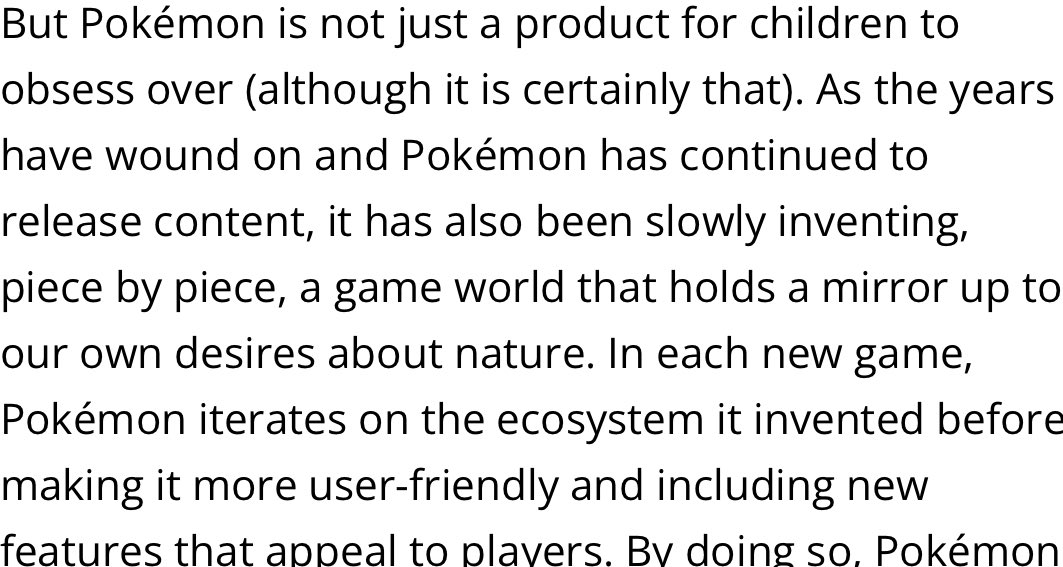
To say Pokémon cards do not provide access to an ecosystem is to say you never played Pokémon. This argument to avoid sweeping them in as securities but still tag tokens is, well, absurd. Do I need to retain this author as an expert witness under Fed. R. Evid. 701?
“Instead, the complaint makes a technical argument: that Kraken’s business requires special securities licenses to operate because the digital assets we support are really “investment contracts.” This is incorrect as a matter of law, false as a matter of fact, and disastrous as a matter of policy.” 💜
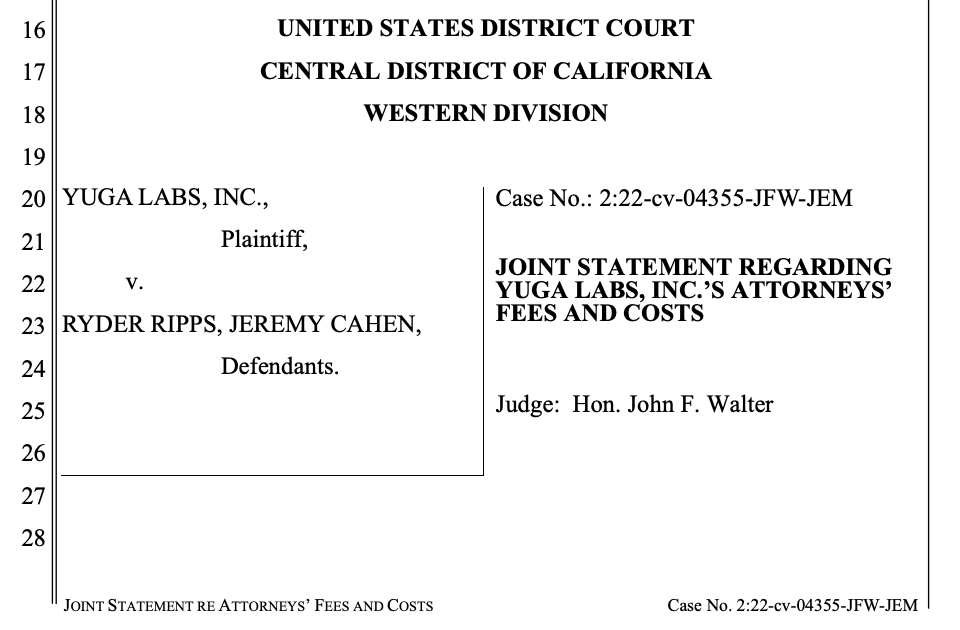
Yuga Labs v. Ryder Ripps et al - Joint Statement re Yuga Labs' Attorneys' Fees and Costs
The parties were unable to reach a compromise.
Yuga Labs requests $7,795,639.00, which includes attorney fees, costs/expenses, and expert fees
Defendants counter $455,172.24 is reasonable
SBF's attorney apparently showed the jurors a slide titled “Incentive to Cooperate Now,” showing how Ellison, Wang and Singh could face decades in prison. Just one of the creative tactics used by the defense to fend off a conviction. Of course also attacking the mens rea.