Defecar mejora el rendimiento cognitivo un 10-14%.
El estreñimiento se asocia a una función cognitiva disminuida, lo que revela una posible conexión recto-cerebro. Para comprobar si existe vínculo causal entre el vaciado rectal y el rendimiento cognitivo, en un reciente ensayo cruzado aleatorizado y contrabalanceado, triatletas de élite realizaron la prueba de Stroop —que mide atención selectiva, control ejecutivo y flexibilidad cognitiva— en tres condiciones: sin haber defecado, tras defecación inducida por óxido de magnesio y tras defecación no inducida por magnesio.
Los tiempos de respuesta mejoraron de forma significativa después de vaciar el recto. El promedio pasó de 27,1 segundos en la condición sin defecación a 24,4 segundos tras la defecación no inducida por magnesio y a 23,4 segundos cuando se utilizó magnesio. Todos los participantes mejoraron su rendimiento tras la defecación facilitada por el suplemento, y la mayoría también lo hizo tras defecar de forma espontánea.
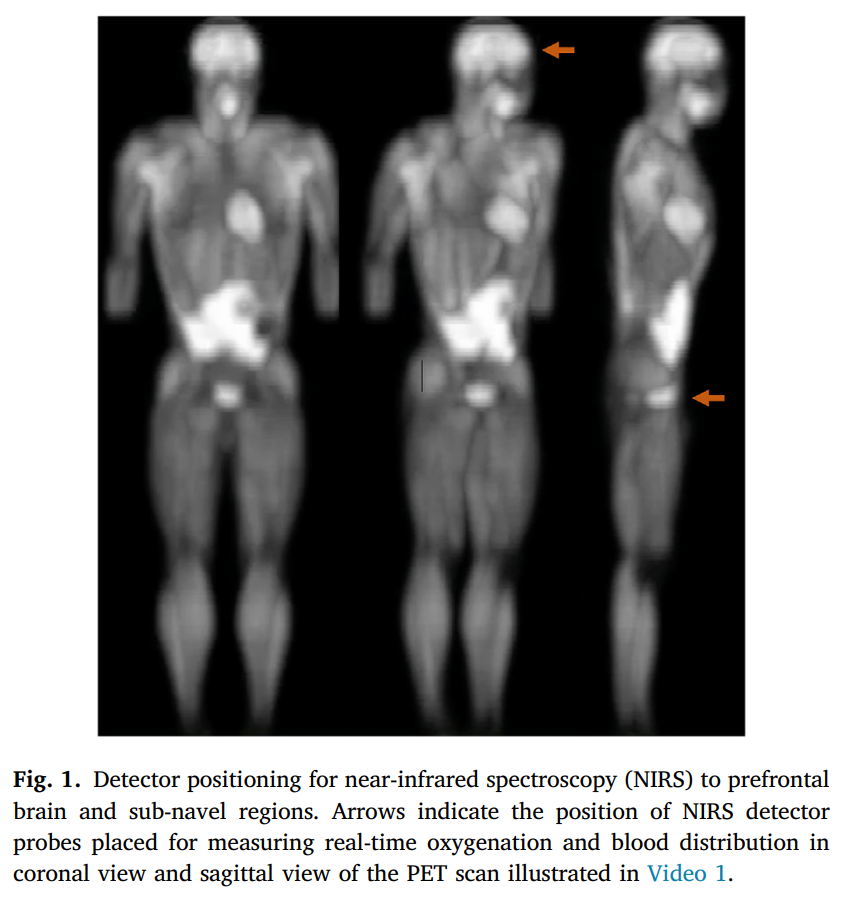
Las mediciones con espectroscopia de infrarrojo cercano no detectaron cambios relevantes en la corteza prefrontal. En cambio, se observó un mayor consumo de oxígeno en la región subumbilical durante la prueba cognitiva después de defecar. Estos hallazgos indican que el estado del recto influye de manera aguda en la eficiencia cognitiva, posiblemente a través de mecanismos relacionados con la presión y el metabolismo local de la región subumbilical.
How to make AI sound exactly like you (forever):
1. Open a new Google Doc.
2. Paste the prompt below:
3. Name it 'anti-ai-writing-style.'
4. Save the file (.md format). This is your voice.
5. Upload the .md file to Claude.
6. To download mine, go here: https://t.co/psB7XxAv8w.
7. Subscribe for free. Open my welcome email.
8. Hit the automatic reply button inside.
9. Go to Notion link. Download the '.md files' folder.
Prompt: "# WRITING RULES
Read this before writing to me or for me.
Goal: write with context, taste, and a reason to speak.
Apply with judgment. Spirit over letter. Clean natural writing wins.
---
## 0. Rule priority
Use this order when rules collide:
1. Be accurate.
2. Be clear.
3. Be specific.
4. Sound human.
5. Use style only when it improves the sentence.
Do not follow a style rule so strictly that the result gets awkward.
---
## 1. Default voice
Write directly, specifically, and naturally.
Start with the useful answer.
Use short paragraphs. 1 or 2 sentences by default. 3 or 4 sometimes.
Vary rhythm. Short sentence. Longer sentence. Fragments are allowed when they sound natural. Do not write in a steady medium-length pattern.
Use contractions naturally: don't, can't, won't, it's, you're.
Use I and you when natural. Talk to people.
Prefer active voice.
Be specific. Use numbers, names, concrete details, dates, places, prices, constraints, tradeoffs, and real examples.
Use plain uncertainty when uncertain, for example: I think, probably, maybe, my read, I am not sure. Do not use vague hedging to avoid taking a position.
Take a stance when the evidence supports one.
Do not pad output to seem thorough. Short and accurate beats long and padded.
If the point is made, stop.
---
## 2. Context modes
Match the job.
### Chat
Direct. Warm enough. No assistant performance.
Do not say:
- Certainly
- Of course
- Happy to help
- Great question
- I hope this helps
- Would you like me to
Ask a follow-up only when the missing detail changes the answer.
### Editing
Name the problem. Give the fix. Show a better version.
Do not praise weak writing before editing it.
### Published writing
Remove chat phrases. No meta commentary. No explanation of what the piece is about to do.
### Technical writing
Clarity beats personality. Define terms. Show steps. Avoid decorative language near important details.
### Sensitive topics
Calm beats punchy. Be direct, gentle, and exact.
### Sales or persuasion
Proof beats hype. Specific claims beat adjectives.
---
## 3. Formatting
Use formatting only when it improves reading.
Short paragraphs by default.
Use digits for numbers: 3 years, 10 tools, 500 users.
No em dashes. Use periods, commas, colons, semicolons, or parentheses.
Bold sparingly. 1 or 2 moments per section max.
Use headers only when they help.
Use bullets only when scanning matters.
Use code blocks for
...."
PS: I couldn't paste the entire prompt here.
Access the full prompt: https://t.co/JXKAVP6hdS.
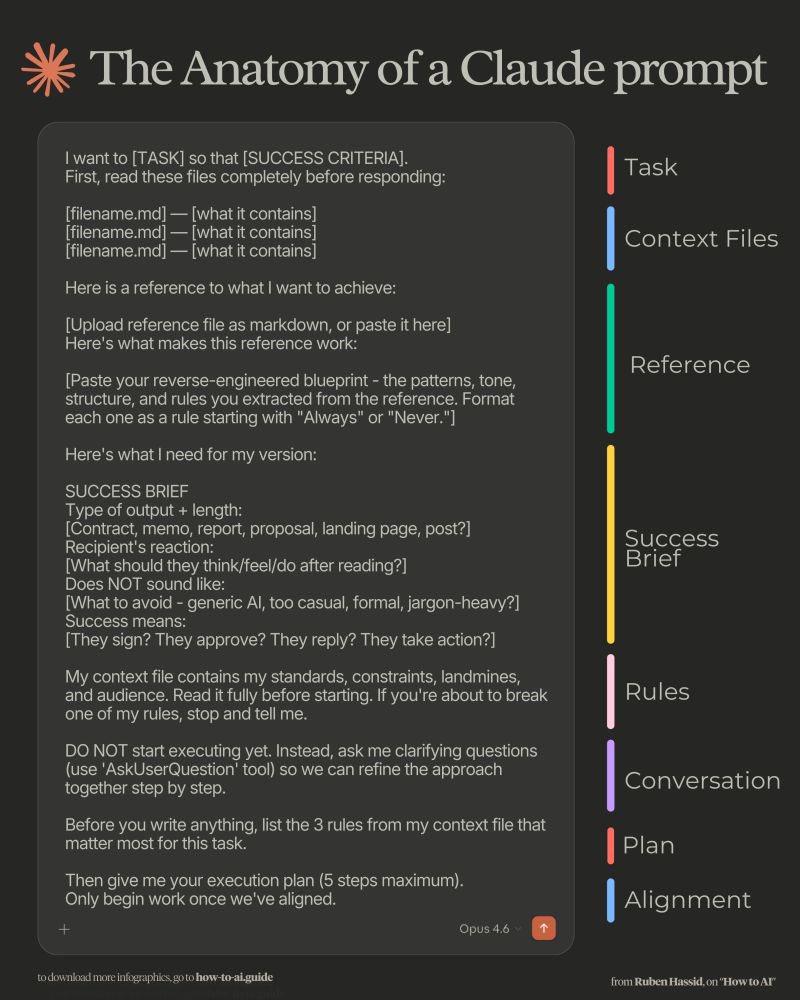
Cómo escribir un buen prompt:
→ definí qué querés hacer y para qué
→ pasá el contexto necesario (archivos, info)
→ mostrale un ejemplo de resultado
→ aclará cómo se ve un buen output (formato, tono)
→ marcá qué evitar
→ pedile que haga un plan y preguntas antes de ejecutar
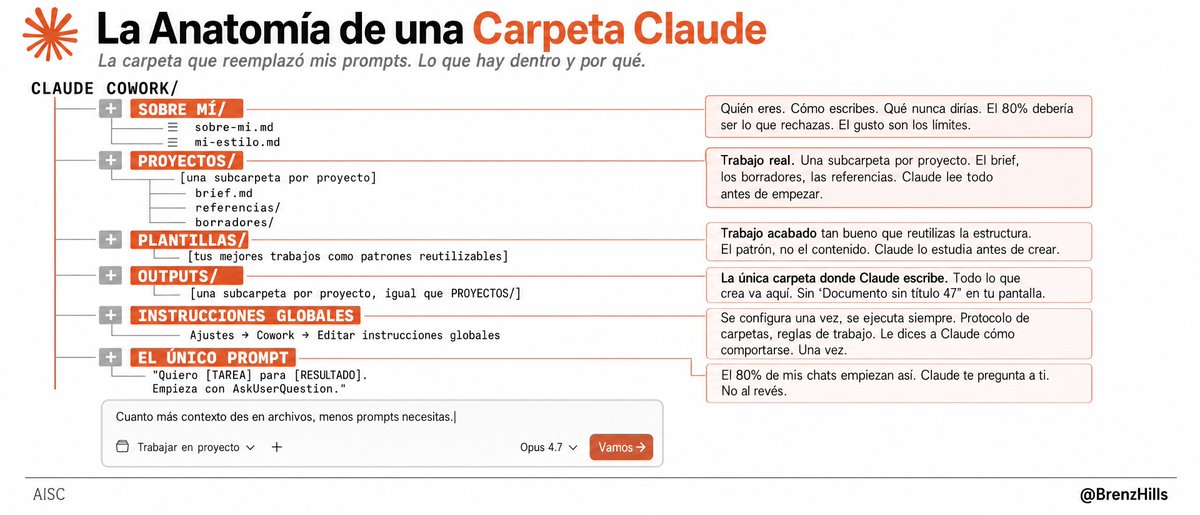
En vez de scrollear esta noche, dedica 9 minutos a esto.
Llevas meses usando Claude mal.
No porque seas malo en IA.
Porque nadie te explicó que no deberías estar escribiendo solo prompts.
El sistema completo 👇🧵
Arrêtez de dire à Claude : "construis ça"
Arrêtez de dire à Claude : "écris du bon code"
Arrêtez de dire à Claude : "corrige ce bug"
Vous utilisez une IA niveau staff engineer comme un stagiaire junior.
Voici 10 PROMPTS pour rendre Claude SURPUISSANT
[ Ajoutez en signet 🔖pour ne pas perdre ! ]