Premier’s Address to the Province: Lies & Gaslighting
“The question of whether Alberta should remain a province within Canada was put on the ballot because of Alberta's citizen-initiated referendum process. Two petitions were put forward by the people and received hundreds of thousands of signatures from Albertans. Out of respect for that democratic process, that question was added to the referendum.”:
A Lie.
Option 1, “that question”, do you want to remain in Canada, Thomas Lukaszuk’s policy petition, came via the Citizen Initiative Act process.
The second of the “two petitions”, Mitch Sylvestre’s petition for a referendum on independence got stopped in the court and is still tied up in the court.
Option 2, a referendum on a referendum, is totally of Danielle Smith’s making.
“Albertans have turned the tide of this nation and reset the relationship with our federal government in a positive direction…I acknowledge the legitimate frustrations you felt, most especially during the Justin Trudeau Liberal/NDP Coalition years…I believe it's working better than ever every day… We are reversing course away from a lost decade and towards a bright future with Alberta's prosperity at its center. Canada has changed significantly over the past 18 months.”:
Gaslighting
We are constantly being told not to believe our lying eyes. Under Mark Carney (the Puppet Master), we are told, “things are a world of difference better”, the federal government is now “working with us to address those grievances”, etc.
Failing to acknowledge that during the final 5 years of the so-called ‘terrible’ decade under the Trudeau regime it was actually the Carney/Trudeau regime as Mark Carmney served as an official adviser (Puppet Master) to Justin Trudeau.
“We will continue pursuing the mandate Albertans previously gave our government to seek fundamental reform of the federal equalization program.”
A Lie.
A lie in setting up false expectations. Although 62% of Albertans called for the removal of the equalization program in a referendum 5 years ago in 2021, nothing has happened as a result. Thereby, it is essentially a testimony to the futility of constitutional changes, including Smith’s constitutional questions 6 to 9, especially, #7, abolishment of the Senate, which is a special case requiring unanimous consent of all 10 provinces, plus approval of the House of commons. In fact, the Premier laughed off the possibility of ever achieving such a constitutional change while participating in a Preston Manning event.
“Pipelines that were once declared impossible are now being built as national priorities.”
A Lie.
The “Pacific Link” pipeline, announced through the MOU is still very much a pipe-dream of performative announcements, requiring public financing despite the Premier having said that such financing would be a “mistake”, and burdened by all kinds of sacrifices to the climate change gods, such as carbon capture and storage, industrial carbon taxes and carbon credits, not to mention the province of B.C. demanding royalties.
“The destructive federal net zero electricity regulations are gone.”
A Lie.
As per the Government of Canada web site, “Canada’s Clean Electricity Regulations were finalized in December 2024…to set the country (which includes the Province of Alberta) on a path to net-zero by 2050”. Noteworthy that Rachel Notley set Alberta on a pathway to get rid of the economical coal-fired power plants in Alberta by 2030, and the Smith government, once in power, boasted about having achieved that far earlier in 2024.
“And there is so much more that unites us than divides us…our sacred national anthem, our beloved national sport, our shared heritage and history…That is the Canada I believe in…A Canada that develops its resources for the benefit of our people…A Canada that respects its constitution. A Canada that develops its resources for the benefit of our people.”:
A Lie.
That Canada no longer exists!
https://t.co/PGCEGzetr7
🚨 EU PARLIAMENT ERUPTS 🚨
🇩🇪 A German MEP warns Canada could become a “living hell.”
📄 We obtained the draft statement circulated by Canada.
🇨🇦 Europe held a dedicated debate. Where’s ours?
What is Carney negotiating on Canadians’ behalf?
Watch below 👇
I asked MGen. Rutland whether anyone responsible for range safety that day has been temporarily moved from those duties during the investigation.
His answer: "I really can't comment on that at this time."
Stay tuned for more on-the-ground updates @MediaBezirgan
“Choose your side!”
🔴BREAKING: Attorney Peter W.H. Stassen receives a hero’s welcome outside the District Court of the Northern Netherlands following the substantive hearing on the merits which took place today.
“They know we have crucial evidence that the whole Covid-19 narrative is fake”
Expert witnesses Sasha Latypova and Dr Joseph Sansone, as well as claimant Reggie Dijkstra offer their reflections of the day’s events.
@sasha_latypova@PhdSansone
1/ NEW VIDEO: What happened to C Company at #CFBWainwright, in five minutes.
https://t.co/CS8WId2GUM
The wind shift was forecast at 4:30 a.m. A warning came at 2:14 p.m. On our model, troops had minutes to escape and little way to see the fire coming.
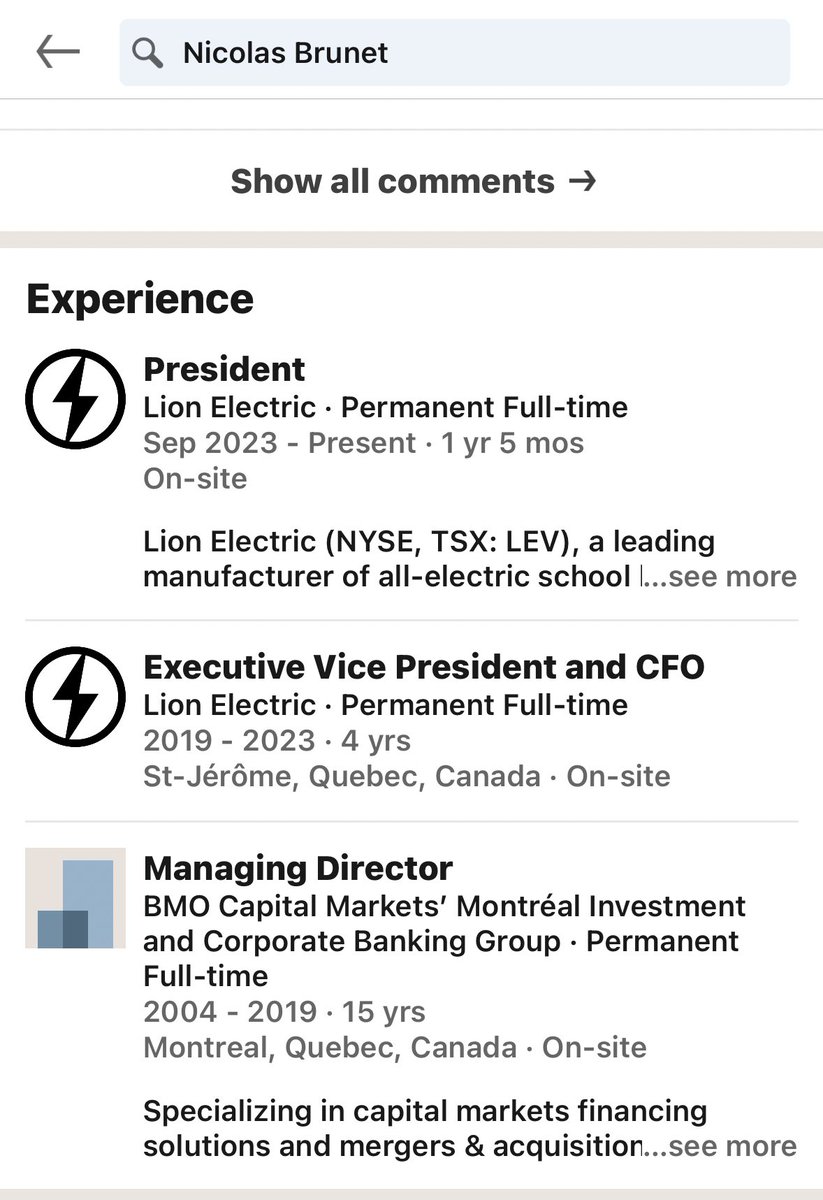
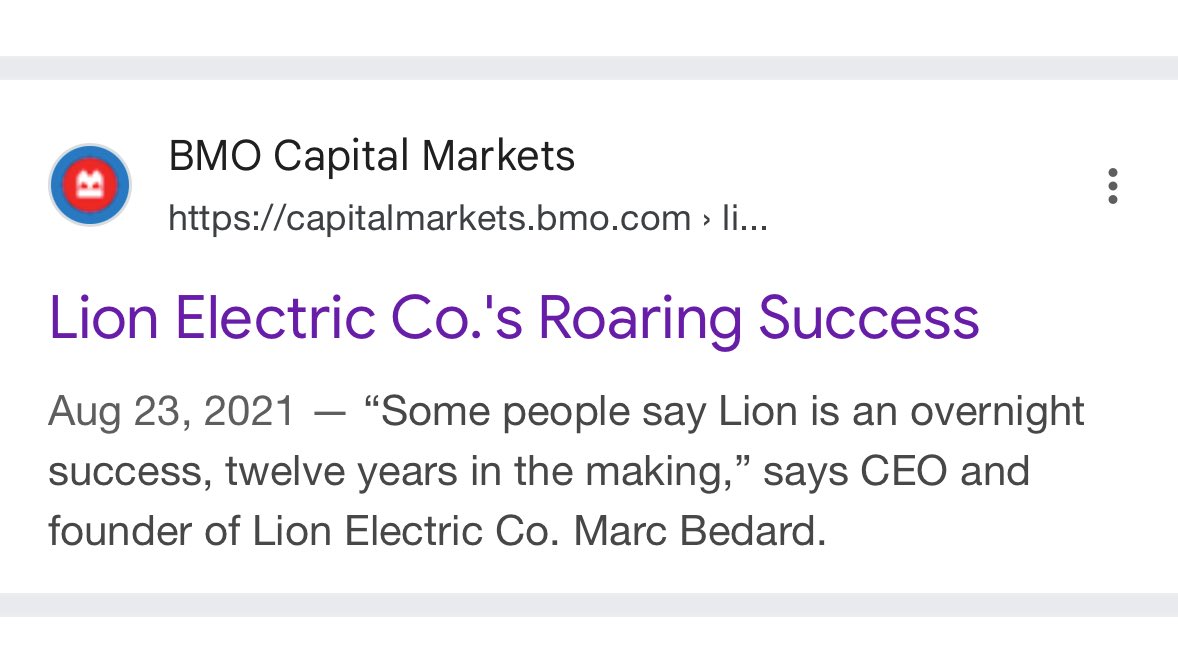
How do we feel about the President of bankrupt Lion Electric also being the Managing Director of BMO Capital Markets - which just happened to gush to investors about Lion Electric’s “roaring success” - while taxpayers foot the bill for its failure along with misled shareholders?
running the numbers and there is a zero probability that the election was legitimate
https://t.co/SQUoIOZNrj
but the guys who rigged it say nah trust them
Fiscal restraint isn't saying no to everything. It's saying yes to the right things.
✅ $630.8M for water infrastructure: YES
✅ $51M for the Nose Creek sanitary trunk: YES
✅ New fire engine, trainers and mechanics: YES
❌ $40M downtown office conversions: voted YES to end it. Lost 6–9
❌ 0% tax freeze: voted YES for it. Defeated 5–10
❌ 2.4% admin cut: voted YES for it. Defeated 5–10
Some needs got unanimous support. The cuts to wants did not.
Pipes and safety come first. The 2027 budget is the chance to put core services first.
#yyccc #yyc
Some field command officer decided that his career track was more important than keeping his men safe during an exercise.
The culture of buck-passing scumbags goes right to the top. The Minister is hoping to memory hole the gross negligence which wiped out an entire platoon.
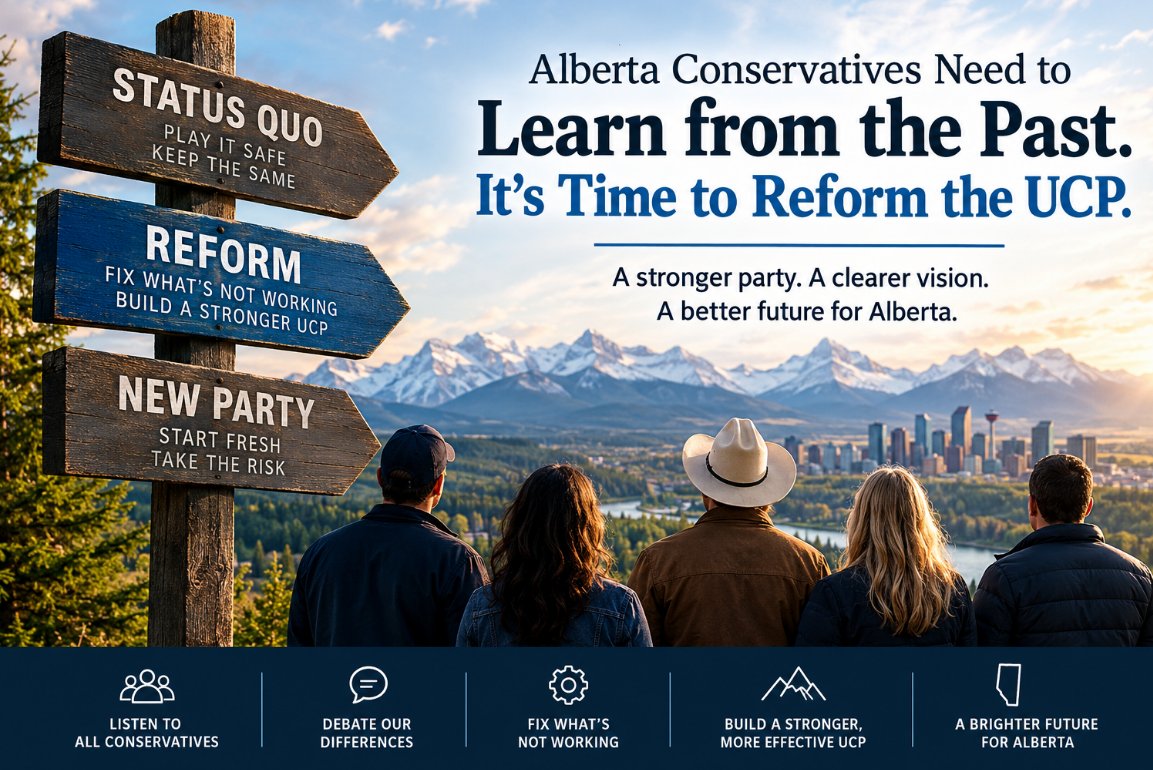
Alberta Conservatives Need to Learn from the Past, which is why I think it's time to further reform the UCP.
Alberta conservatives have never been an easy group to unite. We are a coalition of fiscal conservatives, social conservatives, environmental conservatives, libertarians, pragmatists and people who simply want governments to spend responsibly, respect individual freedom and stand up for Alberta.
We agree on many of the problems facing our province, but we don't always agree on the solutions, or the path forward.
Today, one of the biggest divisions is over Confederation itself. Some Albertans believe Canada can still be reformed and that Alberta's interests can be protected within it. Others, like me, have concluded that the experiment has failed and that we need to consider a fundamentally different future.
Both groups have legitimate concerns. But there is one thing we should all be able to agree on: our political organizations must serve the interests of Albertans, not the other way around.
It's time to have an honest conversation about reforming the United Conservative Party.
The fear of splitting the conservative vote.
The most common argument against reform is straightforward. We can't risk splitting the conservative vote and hand the next election to Nenshi and the NDP lunatics. That's a real risk with our first past the post system.
In 2015, the Progressive Conservatives and Wildrose ran separate campaigns. The NDP formed government, despite the two conservative parties collectively receiving more than half of the popular vote. Then, in 2019, following their merger, the United Conservative Party retook office.
We should learn from that history.
But we need to learn the right lesson.
The lesson is that conservatives need an effective political organization capable of bringing people together around a common purpose. It is not that one particular party must remain unchanged forever.
The merger that created the UCP was an organizational solution to a divison problem. It brought two parties together, but it did not eliminate the differences in political philosophy, priorities and expectations among their supporters. It was a first step.
It also did not guarantee that the resulting party would always represent the interests of every group within that coalition.
Unity is valuable, but unity without a shared purpose is fragile.
If the only argument for keeping the UCP exactly as it is today is the fear of splitting the vote, we have reduced our political strategy to a defensive exercise. We are no longer asking whether our party is delivering results. We are asking only whether changing it might be dangerous.
The status quo is not risk-free.
There is often a tendency to treat the status quo as the safe option and reform as the risky one. Humans don't liek change...it's just a fact.
But maintaining the status quo is also a decision, and decisions have consequences.
If a party fails to address the concerns of its supporters, it risks losing their confidence, participation and commitment. Some may disengage. Others may refuse to volunteer, contribute financially or support its candidates. Still others may look for alternatives. That's already happening. UCP membership is down from the historic high of 110,000 members to only 40,000.
We should not assume that every dissatisfied conservative will automatically return to the UCP when an election approaches. Nor should we assume that every voter who leaves the UCP will vote for the NDP. Voter behaviour is more complicated than that.
My question is whether the party can maintain a broad and durable coalition while continuing to deliver meaningful results for its supporters. If it can, there is a strong case for keeping it. If it can't, then reform deserves serious consideration.
Here in Alberta, conservatives don't treat political parties as permanent institution that voters are obligated to support regardless of their performance.
The engineer in me thinks of it as a vehicle for achieving political objectives. When the vehicle needs repairs, we repair it. When its direction needs correcting, we correct it.
Reform before replacement.
There is a practical reason to consider reforming the UCP before creating an entirely new party.
The UCP already has an established organization, constituency associations, experienced volunteers, fundraising capacity, candidates and a recognizable political identity. These are valuable assets built through years of effort.
Why discard an existing political structure before making a serious attempt to change it?
Reform offers a way to preserve what works while addressing what does not.
That means creating a party that is more responsive to its membership, more transparent in its decision-making and more accountable for delivering on its commitments. It means allowing competing conservative philosophies to be debated honestly rather than expecting everyone to accept a single approach simply because it is the established one.
It also means recognizing that conservatives who disagree about Confederation are not necessarily enemies. They may disagree about the ultimate destination while sharing many immediate objectives.
This is not an argument for watering down every position until nobody disagrees. It is an argument for building a political organization in which differences can be addressed openly and decisions can be made with a clear understanding of what members actually want. We're close to that ideal, but we need a little more work.
We need to stop confusing loyalty with results.
One of the greatest obstacles to political reform is the understandable reluctance to abandon something we have invested so much time and energy in building. This happens all the time, not just in politics.
Many conservatives worked hard to unite the Progressive Conservatives and Wildrose. They volunteered, donated money, knocked on doors and campaigned for the UCP. They did so because they believed a united conservative party could deliver better government.
That effort was not wasted. The merger addressed a genuine organizational problem.
But the fact that a decision was right at the time does not mean it must remain right forever.
Our loyalty should be to the principles and objectives that brought us together, not to the permanent preservation of a particular political structure.
The purpose of a political party is to serve its supporters. The purpose of its supporters is not to serve the party. If we cannot question our own organization, we have abandoned the very principles of accountability that we expect from government.
What should reform look like?
Reform should not simply mean replacing one leader with another and carrying on as before. Nor should it be a vehicle for one faction to impose its priorities on everyone else.
It should begin with an honest assessment of what Alberta conservatives want to achieve. Our goal is not just to keep the NDP out of power.
That requires asking some difficult questions:
- What does fiscal responsibility mean in practice, and how should government be held accountable for it?
- How should Alberta defend its constitutional jurisdiction and economic interests?
- Which problems can realistically be addressed through negotiations and reforms within Confederation?
- What should happen if those efforts fail to deliver meaningful results?
- How can the party better represent its members and hold its leadership accountable?
- What common objectives can unite conservatives who disagree on social policy, environmental issues and Alberta's constitutional future?
- and more...
A serious reform process would establish clear priorities, measurable objectives and a transparent mechanism for assessing progress. It would give members a meaningful role in shaping policy and determining the party's direction.
It would also establish a process for reconsidering the strategy if the desired results do not materialize, and pivoting.
What about those who believe Confederation cannot be saved?
This is perhaps the most difficult issue facing Alberta conservatives right now.
Some believe that the answer lies in electing better provincial governments, negotiating more effectively with Ottawa and pursuing greater provincial autonomy within Canada. Others believe that decades of conflict demonstrate fundamental structural problems that cannot be resolved through another round of negotiations.
These positions cannot simply be dismissed.
A reformed UCP would need to acknowledge the disagreement rather than pretend it does not exist. It should distinguish between achievable near-term objectives, longer-term constitutional reforms and the different views members hold about Alberta's ultimate future.
That does not mean every position must become official party policy. It means members deserve an honest debate about the alternatives, the evidence supporting them and the consequences of pursuing each course.
If the party's membership concludes that Confederation can be repaired, that position should rest on a credible strategy (not just "I think I can succeed where everyone else failed") and demonstrable progress.
If members conclude that it cannot, they should be able to discuss the implications without being dismissed merely for questioning the established approach.
The important thing is to replace assumptions with evidence and indefinite promises with measurable objectives. Again, that's the engineer in me speaking.
Reform does not mean ignoring electoral reality.
Nobody should pretend that changing a party's direction is without risk. Internal reform can fail. It can create divisions. A new party can split votes and produce unintended consequences.
Reforming the UCP offers an opportunity to address dissatisfaction without immediately creating a competing organization. It allows conservatives to test whether the existing party can become more responsive before concluding that a separate party is necessary.
There is no need to treat every disagreement as a reason to split. Equally, there is no reason to treat the possibility of a split as grounds for refusing to examine alternatives.
The choice we face.
Alberta conservatives have already demonstrated that they can overcome their differences to build a unified party. We should take pride in that accomplishment.
The circumstances have changed. The debate over Confederation has intensified. Expectations have evolved, and many of us are questioning whether the political arrangements we once supported can still deliver the outcomes we want.
We can treat the existing structure as something that must be preserved at almost any cost, hoping that the current approach will eventually produce the results we seek.....
Or we can recognize that a political organization must continually earn the confidence of its supporters, and undertake a serious effort to reform it.
Reform does not guarantee success. But neither does the status quo.
The difference is that reform creates an opportunity to identify what is not working, correct it and establish a better path forward without immediately abandoning the organization we have already built.
We should learn from 2015 that divisions can have serious electoral consequences. We should also learn from the creation of the UCP that political structures can change when circumstances demand it.
The goal should not be to keep the UCP alive at all costs. The goal should be to build the most effective political organization possible to serve Alberta and its people.
It requires conservatives to recognize that disagreement is not betrayal, that reform is not necessarily division, and that loyalty does not mean accepting the status quo indefinitely.
Before we abandon the UCP and start over, we should make a genuine effort to reform it.
And before we reject reform out of fear, we should ask ourselves one final question:
If we are unwilling to change our approach when we believe it is no longer delivering the results we need, what exactly are we trying to preserve?
Cheers my friends.
Regarding the October 19 referendum:
There has been a great deal of discussion about the way it was organized.
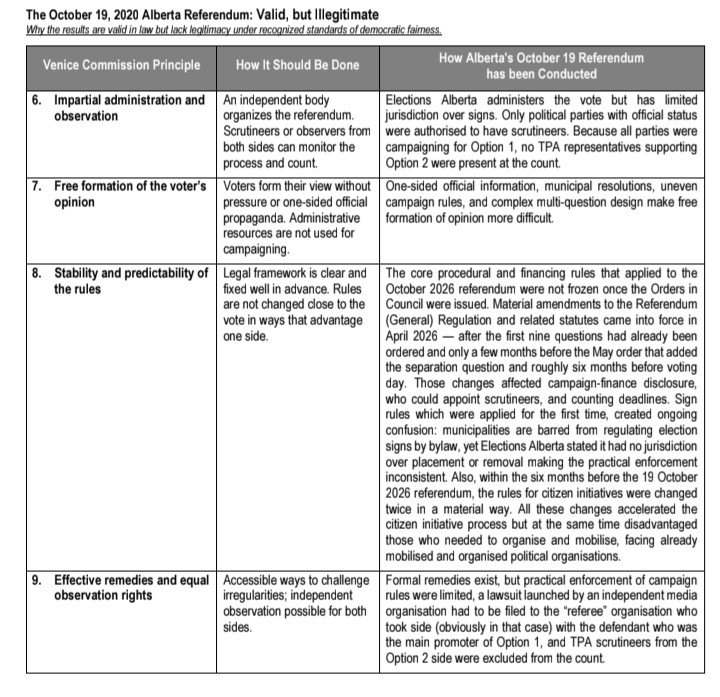
Benoit Trudeau has been talking about how it violated the best standards guidelines of the 2022 Venice Commission's Code of Good Practice on Referendums.
Here is a portion from his new written summary:
----------
The October 19, 2020 Alberta Referendum: Valid, but Illegitimate
Why the results are valid in law but lack legitimacy under recog,nized standards of democratic fairness.
By Benoit Trudeau, October 20, 2026
The results of Alberta’s 19 October 2026 referendum are legally valid as the official count produced by Elections Alberta under the Referendum Act, the governing Orders in Council, and the Election Act and Referendum (General) Regulation as they stood on voting day, but yet lack legitimacy under the standards of clarity, equality of opportunity, and public-authority neutrality.
These principles of the standards of clarity, equality of opportunity, and public-authority neutrality underpinned the 1980 and
1995 Quebec referendums and the 1992 Charlottetown Accord referendum.
In Quebec, both the 1980 sovereignty-association vote and the 1995 sovereignty referendum used a single, clear binary question, official Yes and No umbrella committees with spending parity and equal public funding, and a structured information process that, despite later controversies over federal
expenditures examined in the Grenier inquiry, produced outcomes widely accepted as fair expressions of the electorate’s will.
The 1992 Charlottetown referendum likewise posed one coherent constitutional package to voters across Canada under pre-set national rules and produced a decisive, uncontested result that settled the matter.
By contrast, Alberta’s process combined ten complex questions (one of them multi-option), late and repeated changes to
citizen-initiative and referendum rules in the months surrounding the Orders in Council, a government-funded booklet that
stated official opinions on each question, asymmetric campaign rules that limited third-party advertisers while leaving registered parties less constrained, municipal resolutions and facility-access barriers, signage confusion and removals, and
administrative strain on an election authority unused to that volume of ballots.
Those features depart from the Quebec and Charlottetown models — and from the clearer binary structure and more stable rules of the 1975 EEC and 2016 Brexit referendums — and leave the Alberta results as a valid administrative product of the process that was actually run, but not a legitimate exercise of direct democracy under the Venice Commission’s Code of Good
Practice on Referendums, or the precedents that have preserved the integrity of the referendum instrument in Canada.
As for the Venice Commission, it claims its authority in being constituted of the leading European expert body on constitutional
and electoral standards. Its Codes of Good Practice on referendums and elections are the most widely recognised soft-law benchmarks in Europe for assessing whether a referendum process meets standards of clarity, equality of opportunity, and
neutrality.
They have no force of law in Canada or Alberta, but they are the international reference point against which processes such as the 2026 Alberta referendum are commonly measured when legitimacy (as distinct from bare legal validity)
is at issue.
In my opinion, based on past Canadian referendums as well as European/western standards of good practice, the referendum
instrument in Alberta has been abused and misused, and major work will have to be done to requalify it as a precious tool of democratic expression before being utilised ever again.
🚨BILL GATES/BOURLA TRIAL: “These injections are a BIOLOGICAL WEAPON.”
“COVID-19 injections are LETHAL.”
“The global deployment of this biological weapon can only take place through the UNLAWFUL deception of the public on a global scale.”
“The defendants [including Bill Gates and Albert Bourla] are implementers of the ‘COVID-19: The Great Reset’ project and are GUILTY of this deception; they are therefore being sued individually in these proceedings.”
Best AI video on the internet today.
If you want to get a preview of the path that the Trudeau & Carney Liberals are taking us down, just look at Europe.
Carney wants to join the EU, and import millions of incompatible immigrants to Canada. It's a deliberate strategy to destabilize our country.
It's already working.
Since Alberta has lost the referendum, @MarkJCarney has indicated that the new pipeline will have “legal difficulties” (its not happening), immigration is going to increase and it’s “sustainable,” and that Alberta can’t have control over it even though we just voted for it (they are going to flood us thanks to the referendum.)
The Canada of the status quo is going to be the ruin of Alberta. @ABDanielleSmith bought this hook line and sinker.