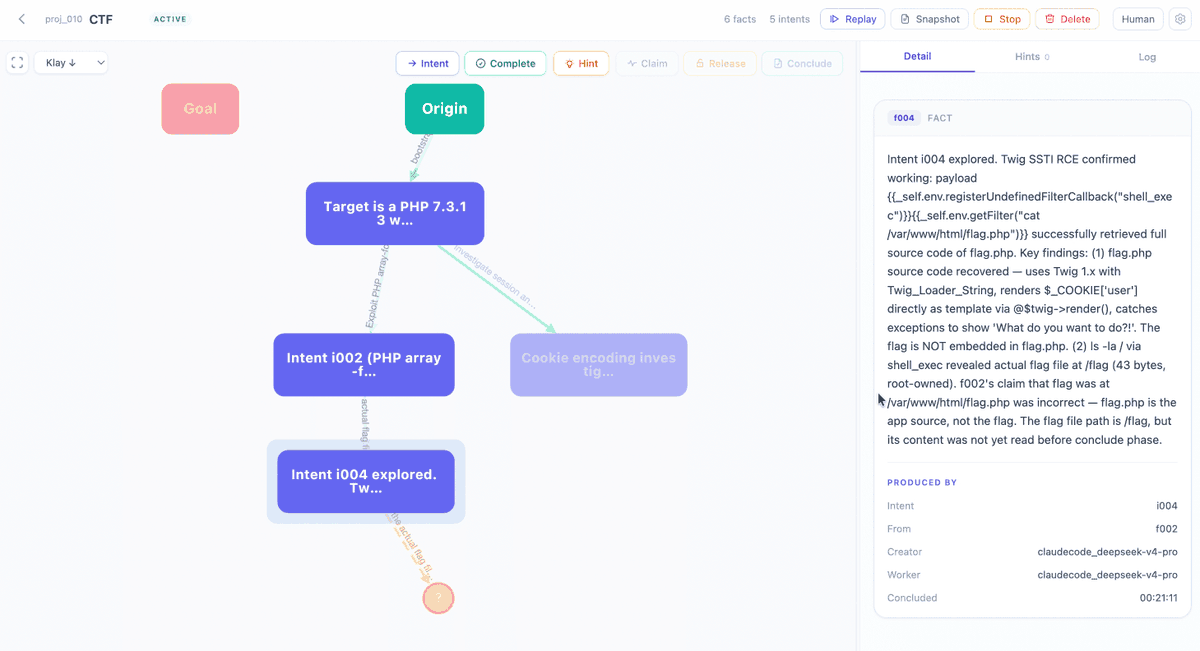
@realfxw I now feel that Cairn's naming really isn't good. I've seen more than half of people misspell this word. It's actually not "carin," but "cairn." https://t.co/uPMoIhsYBE
🤣🤣
I'm the author of Cairn.
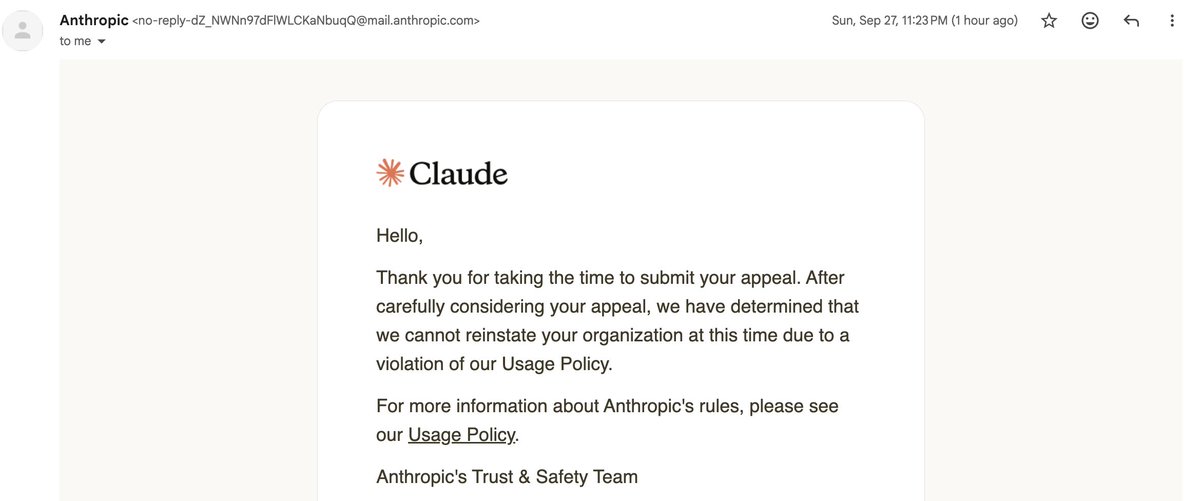
Recent reports say ARTEX was used in attacks on South Korean banks, and some people have started linking us.
ARTEX officially listed Cairn as an Architecture Reference in its README:
https://t.co/uPMoIhsYBE
Cairn was never a “hacking tool.”
#Cairn#ARTEX
It’s a general-purpose state-space search engine.
Penetration testing was just the first domain we used to validate the idea.
ARTEX itself is no longer public.
Cairn, the general engine it referenced, is still open.
@eyalsela As the author of Cairn (https://t.co/uPMoIhsYBE), I must clarify that Cairn is actually an innovative type of multi-agent architecture and was not designed for hacking attacks. If it is used to carry out harmful hacking attacks, that is not my intention.
Just open-sourced Cairn — a general-purpose state-space search engine, first validated on autonomous pentesting.
It uses Blackboard Architecture + Stigmergy: agents coordinate only through a shared board, with no fixed roles.
https://t.co/uPMoIhsYBE
@Dinosn@The_Cyber_News
(1/4)
Proven in Tencent Cloud Hackathon AI Penetration Testing Challenge (610 teams, 1,345 participants):
→ Only team to AK all 54 challenges
→ 3rd place overall
System first ran completely at 4 AM on race day.
(3/4)
@mdancho84 I’ve released a new agent framework: https://t.co/bEq64qmN37.
Formalizes human intent and executes it directly in Python.
Replaces discrete function calling with a more expressive DSL.
Separates data from instructions to address LLM context limits.