If psychotherapy refuses to talk about politics, economics, and society, it is committing a crime.
Teaching people crushed by a pathological system to simply adjust their mindset only helps that system erase the evidence of its own crimes.
https://t.co/PNexHU9gW2
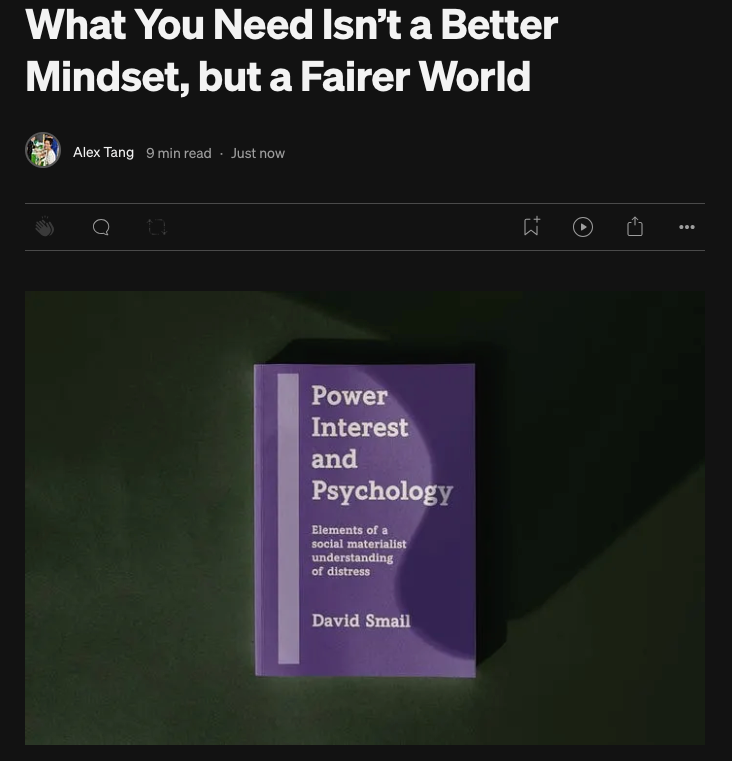
Modern psychotherapy often turns social problems into personal failures. Poverty becomes low self-esteem. Exploitation becomes negative thinking.
What if the problem isn't that you need to fix yourself, but that the world around you is making you suffer?
https://t.co/RrjT9lQBNc
We are told we are free to choose our own lives. But when society withdraws its safety nets, freedom becomes an obligation to bear every risk alone—and blame ourselves when we fail.
https://t.co/VlMQouPbjG
We warn young people to stay away from street drugs because withdrawal can be hell.
Shouldn’t someone starting an antidepressant be given the same kind of warning about how brutal discontinuation can be?
https://t.co/KTmQUZhJcT
Perhaps what we have lost is not the ability to change society, but the political imagination that has always been part of humanity: the ability to envision alternatives, challenge what seems inevitable, and create new ways of living together. https://t.co/5wTGvBXOKq
"You can't just complain — what's your solution?"
Hillman and Ventura have an answer: you don't need one. Some anger is valid simply because something is wrong.
On the right to reject the world before you know how to fix it: https://t.co/7GCXNmmVIV
We mock people for seeking dignity through consumption, but what if consumerism is one of the few places where they can still find it?
Bauman reminds us that the real privilege may be having other ways to feel valued and respected.
https://t.co/Jh4eJMpvX5
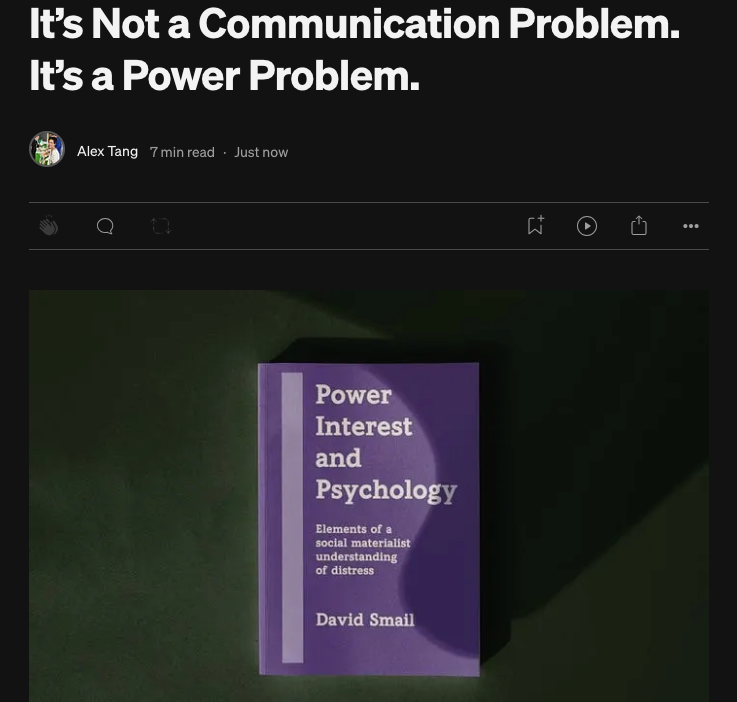
Many unsolvable problems get quietly rebranded as "communication problems."
But most conflicts aren't rooted in a lack of information. They're rooted in an unequal distribution of power.
https://t.co/vzFYCdOu5R
What if the problem isn't your childhood trauma, but your workplace? Not your attachment style, but the world you're living in? A therapy that only looks inward can end up training you to adapt to what shouldn't be adapted to.
https://t.co/8LY0Icfy8c
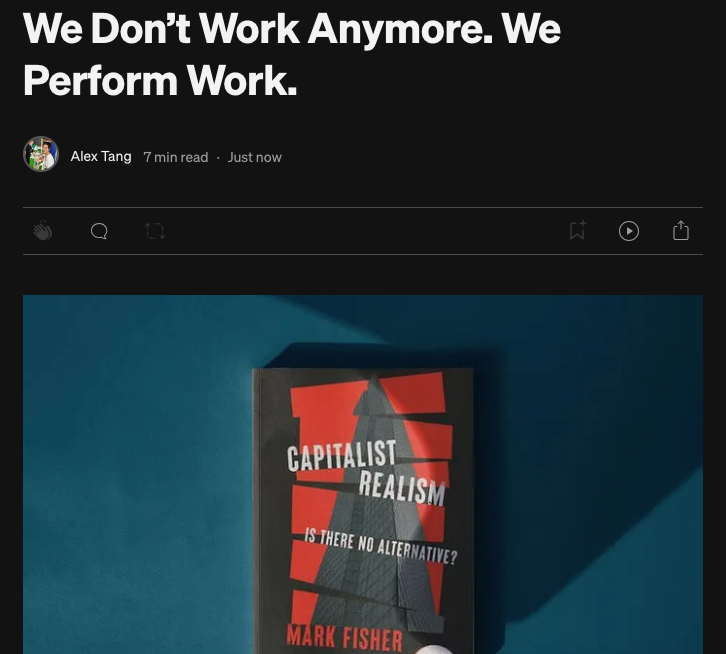
All that is solid melts into PR.
My new piece on Mark Fisher's Capitalist Realism — on Market Stalinism, audit culture, and why proving you worked has quietly replaced actually working.
https://t.co/dl4GsNEJhF
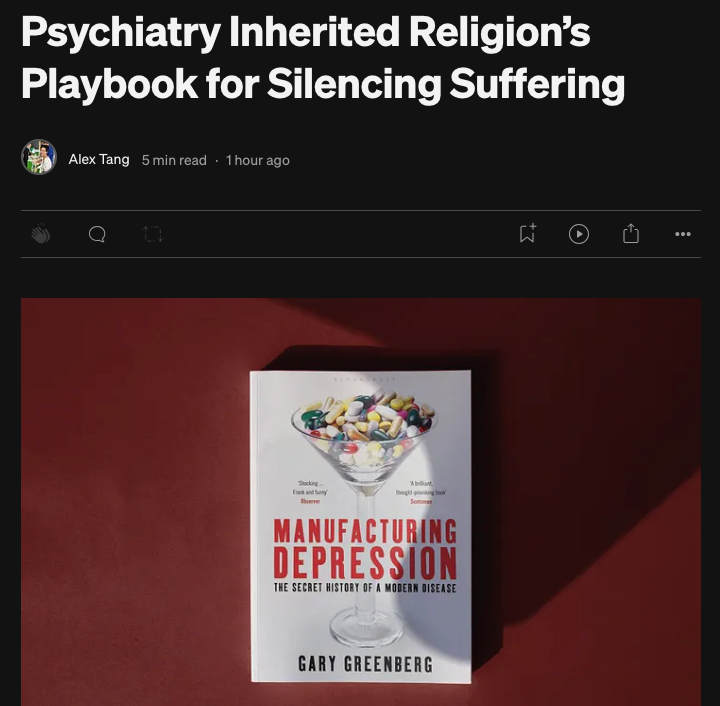
Job lost everything. His friends didn't ask why the world was so unjust — they asked what was wrong with him.
Gary Greenberg argues psychiatry inherited this same move: turning a protest against reality into a symptom to be treated.
https://t.co/9Y6w9HsaTo
If unemployment, poverty, and job insecurity are rooted in how society is structured — why do they always show up as "you need to change yourself"?
Why do we keep solving, as individuals, problems that are fundamentally political?
New essay on Bauman: https://t.co/2K6FcH0vqK
James Hillman argues that in a world gone mad, your anger, pain, and inability to fit in may not be problems to fix — but signs of a soul that refuses to surrender.
https://t.co/jtKY3ZYfMD
We live in a world that constantly tells us: change your mindset, heal your trauma, take responsibility, and you can create your own reality.
But what if some of our suffering does not come from within us — but from the world around us?
https://t.co/WWaDxEdNO3
We're taught to treat education, healthcare, and retirement as personal purchases — yet still expected to sacrifice for family, tradition, and nation.
Mark Fisher called this "capitalist realism": a world where contradictions stop feeling contradictory.
https://t.co/GlBC11LP5h
We've become fluent in trauma, boundaries, emotional regulation — but have we forgotten power, justice, collective action?
Modern society teaches us to ask "what's wrong with me?" instead of "what's wrong with the world?"
Hillman: from citizen to patient.
https://t.co/XOBFrM99ZT
Susan David tells the story of South Africa's TRC to teach us that acceptance heals. But whose acceptance? Whose healing?
A white apologizes. A Black family gets $30 and a lifetime of "let it go."
New essay: https://t.co/PVOyZnP2de
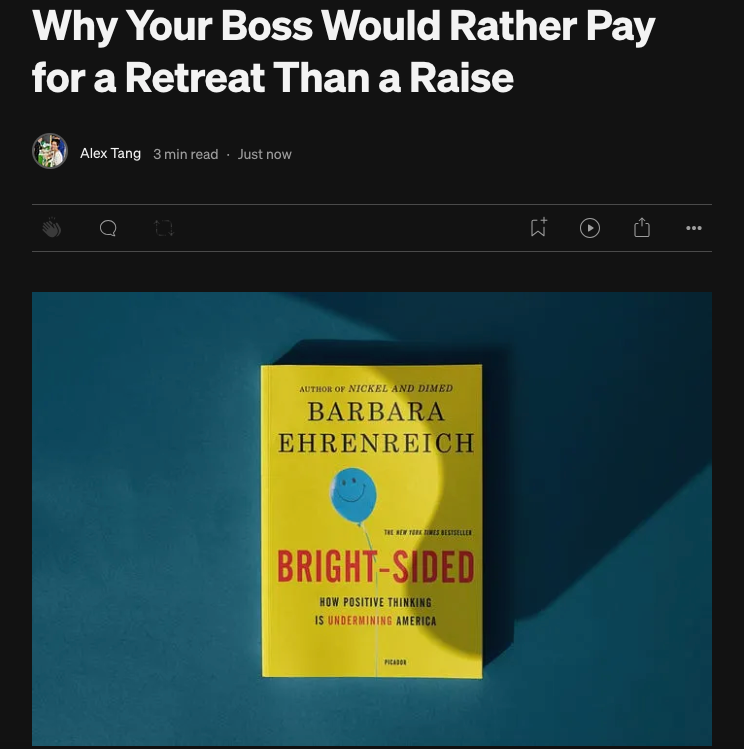
Your company can’t promise you job security. But it can send you on a team-building retreat.
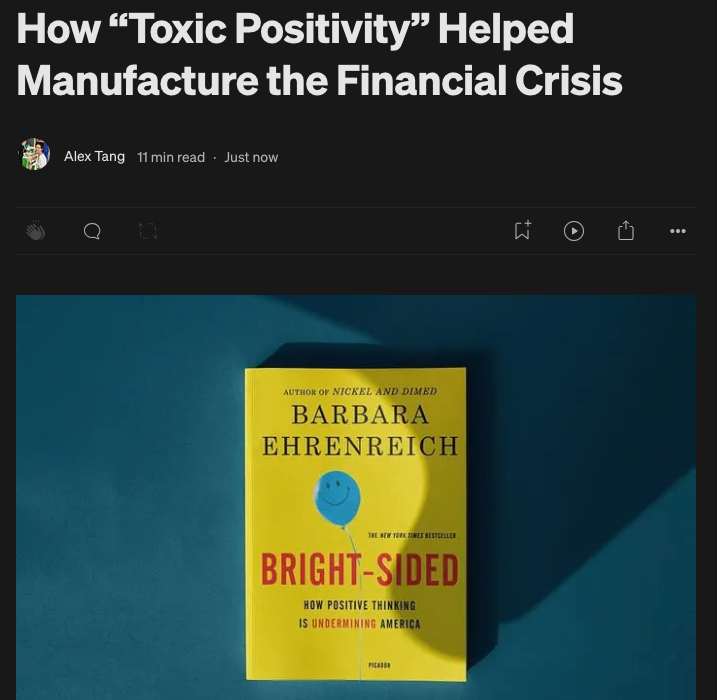
In my latest essay, I explore Barbara Ehrenreich’s Bright-Sided and how corporate culture turns the human need for belonging into a tool of control.
https://t.co/XXSNYESUBz
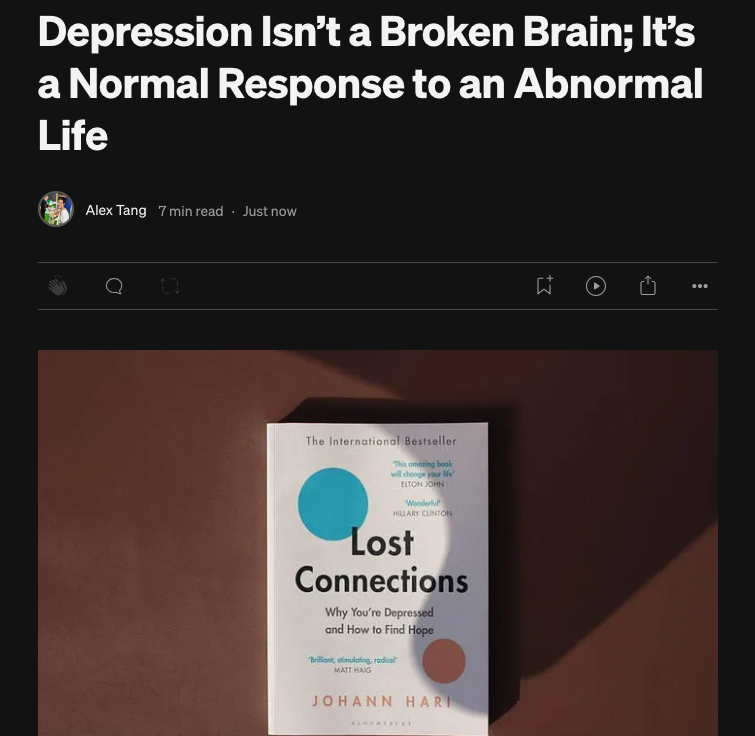
We were told that depression is a chemical imbalance, that your brain is broken and medication can fix it.
But what if we have the story backward? What if your brain isn’t broken, but responding to a life that has become unbearable?
https://t.co/MsDMs9ZYok