On February 4th this year, China ushers in the festival of Lichun, which marks the beginning of spring and is the first of the twenty-four solar terms in the Chinese lunar calendar. Lichun symbolizes the end of wintry days and the arrival of a season marked by gentle breezes, warm sunshine, and the reawakening of nature. On this day, many places in China adhere to the tradition of eating spring pancakes, a practice referred to as "biting spring." These pancakes, typically comprise a doughy envelope filled with ingredients such as leeks, carrots, and eggs.
In ancient China, where agriculture played a foundational role, the advent of Lichun was commemorated with spring sacrificial customs. The emperor actively engaged in symbolic agricultural rites, including plowing fields and fashioning mud sculptures depicting "spring oxen." These rituals were intended to underscore the importance of agriculture, reminding farmers that it was time to sow grains with the arrival of spring. Moreover, the ceremonies served as prayers for a bountiful harvest and the well-being of the nation and the people.
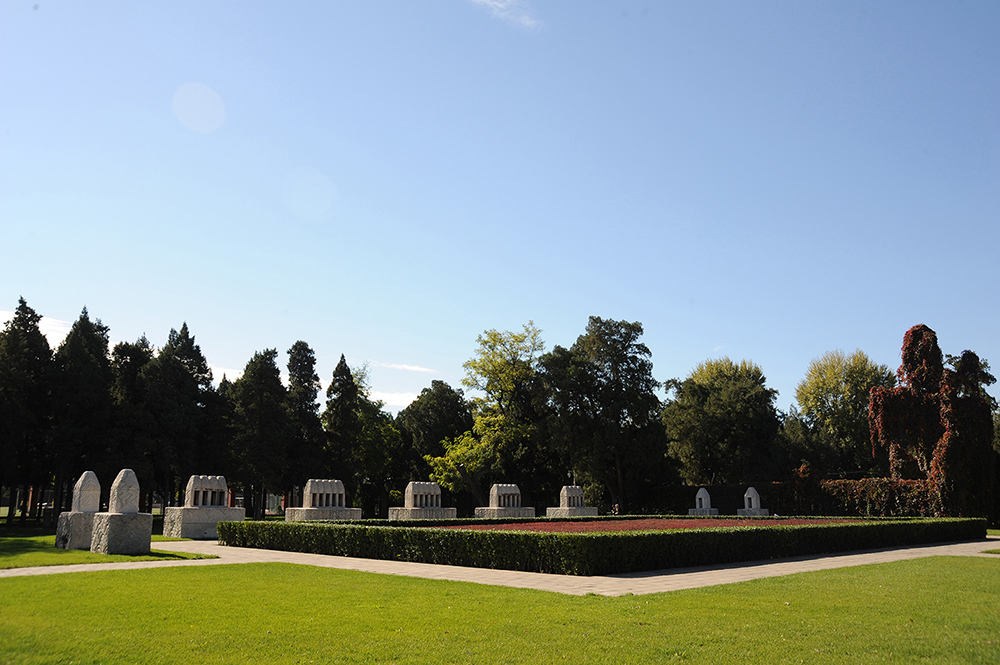
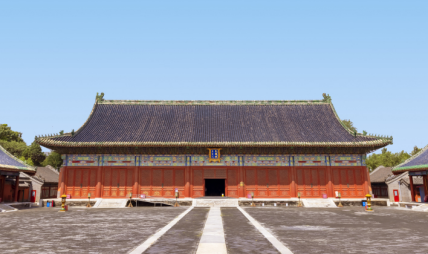
The Altar of Agriculture was originally built in the 18th year of the Ming Dynasty's Yongle era (1420). It is situated in the southwest corner of old Beijing's outer city, forming an east-west symmetrical layout with the Temple of Heaven along the Beijing Central Axis. This location makes it the largest existing site for the royal worship of the God of Agriculture in ancient China, reflecting the deep respect for agrarian culture in traditional Chinese society. The altar carries the ceremonial traditions of worshiping the God of Agriculture during the Ming and Qing dynasties.
Throughout the Ming and Qing periods, the central focus of worship at the Altar of Agriculture was the God of Agriculture and the Tai Sui (God of the Year). The God of Agriculture was a legendary figure believed to be the one who first taught Chinese ancestors to cultivate the land. During the spring plowing season, the emperor not only paid homage to the God of Agriculture but also personally plowed the land—an act intended to foster an ethos of valuing agriculture and supporting farmers. The sacrificial rituals at the Altar of Agriculture persisted until 1911. Today, the site stands open to the public as a museum, exhibiting ancient Chinese architectural marvels and the ceremonial traditions associated with the Altar of Agriculture.
The Temple of Heaven, an exquisite masterpiece of Chinese architectural art, once stood as the imperial ground for sacred ceremonies dedicated to the heavens. Today, it has turned into a public park.
Each day, the park echoes with the footsteps of energetic youngsters engaging in morning and evening jogs, while couples create cherished memories as they watch their children joyfully play. The remarkable elderly, with their mesmerizing displays of agility, backflips, and martial arts prowess, fittingly earned the moniker "capable persons" of the Temple of Heaven Park. Over time, this lively park has evolved into a captivating social hub, celebrated for its fabled "blind date corner." Numerous dating profiles are posted here, as people hope to find a life companion in this vibrant setting.
The Temple of Heaven was first built in 1420. It is China's largest and best-preserved Ming and Qing era building complex for heaven-worshiping ceremonies, making it a masterpiece of imperial architecture for ceremonial worship in ancient China. The location of the Temple of Heaven reflects the ancient Chinese cultural tradition of setting "sacrificial facilities in the southern suburb." It was recognized as a "World Cultural Heritage" item by UNESCO in 1998 and is one of the seven world cultural heritages in Beijing.
The Temple of Heaven is located on the Beijing Central Axis. Its location, planning pattern, and symmetrical east-west layout with the Altar of the God of Agriculture highlight the respect for and emphasis on rituals and order in the city planning of a Chinese capital. They also give prominence to the dominant role of the Beijing Central Axis in urban planning.
At the beginning of the 20th century, the Temple of Heaven was opened to the public as a park and is still in use today. Travel along the central axis of the Temple of Heaven from south to north, first the Altar of Circular Mound Complex, then the Imperial Vault of Heaven Complex, then cross the Red Stairway Bridge, arrive at the Altar of Prayer for Grain Complex, and finally the Hall of Imperial Zenith Complex. Going further north, the higher the terrain, the more you feel like you’re "reaching the sky step by step."
Today, tourists from all over the world are wandering through the ancient buildings of the Temple of Heaven, experiencing the ancients' cosmology and architectural aesthetics, and gaining a deeper understanding of traditional Chinese culture.
“Dahan”, the last of the twenty-four solar terms, marks the coldest period of the year in China. Meanwhile, people are preparing for the upcoming Chinese New Year, bidding farewell to the old and welcoming the new.
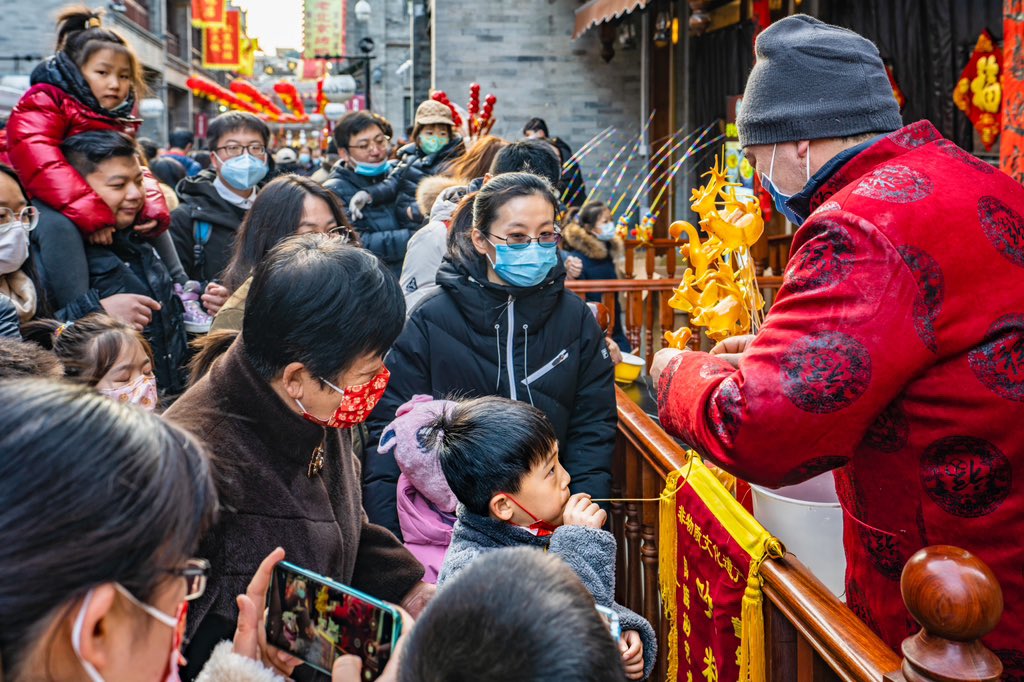
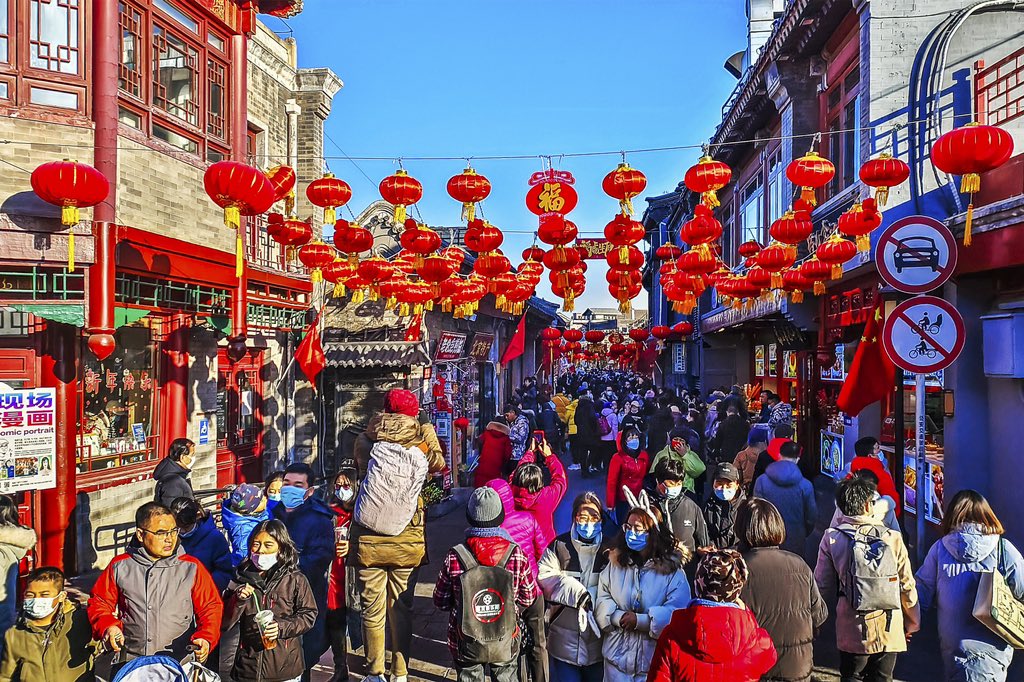
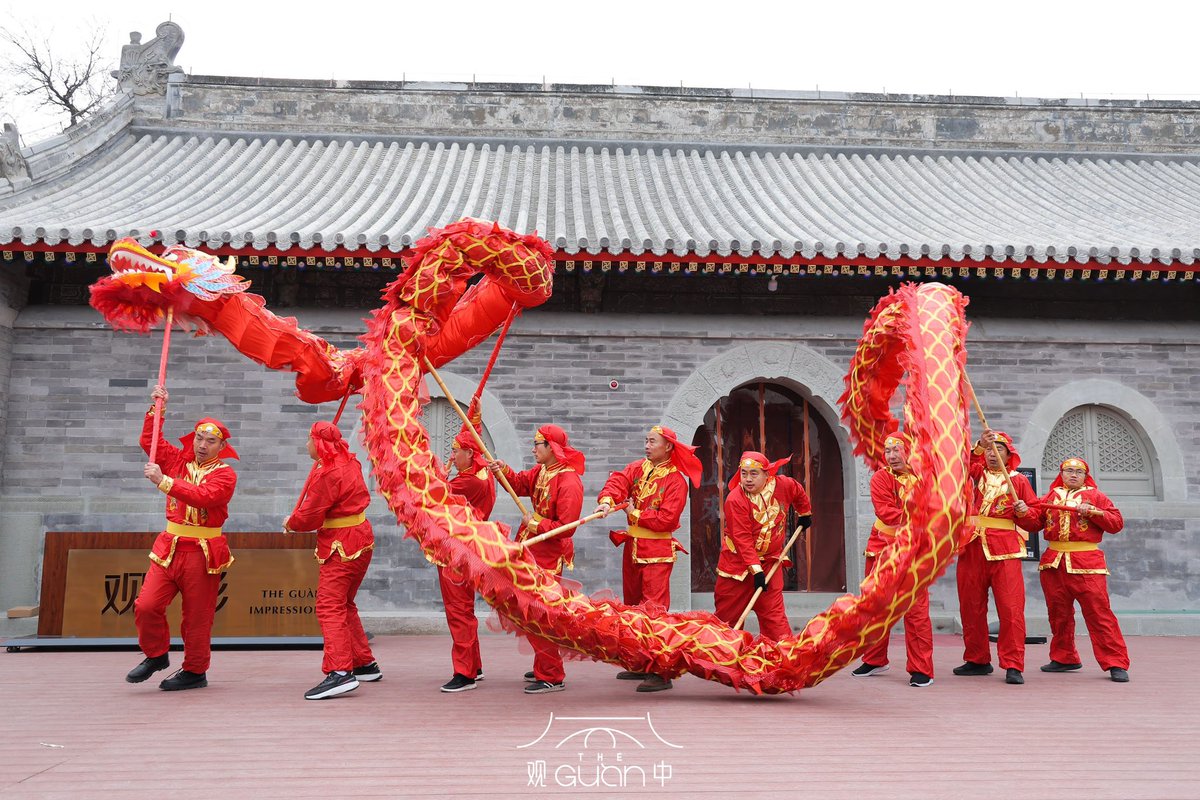
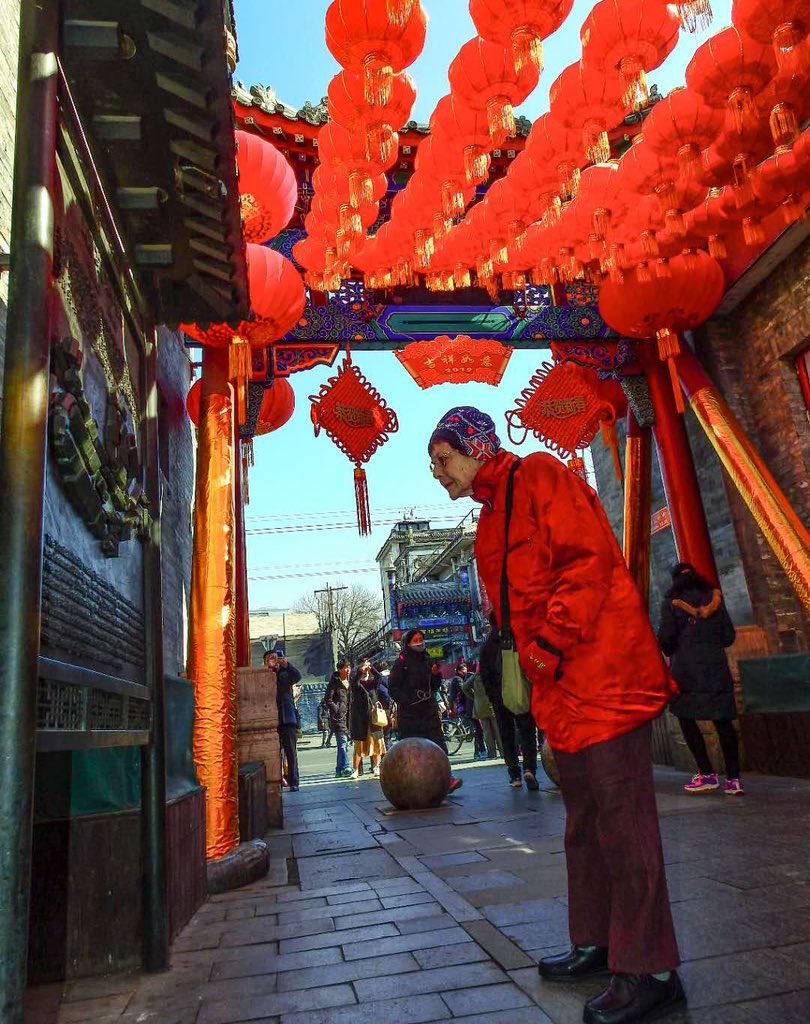
At the end of the year, Beijing Central Axis is bustling with activities: vendors selling paper-cut New Year paintings and fireworks; artists crafting sugar paintings and blowing sugar figurines; and individuals setting up tables along the road to write couplets on the spot. Additionally, a variety of colorful lantern handicrafts such as “Hundred Birds Paying Homage to the Phoenix”, “Hundred Butterflies Welcoming Spring”,and “Pine Branches with Cranes and Deer”are on display. Despite the freezing weather of Dahan, the Beijing Central Axis is adorned with festive red decorations.
On the morning of January 18th, the "First Beijing Axis Theme Post Office Opening Ceremony for the Chinese New Year and the First Launching Ceremony of Beijing City Tower Memory Postcards" was held at the northern end of the Beijing Central Axis, the former Hong'en Guan, which has a history of more than 700 years.
The Beijing Axis Theme Post Office is China's first theme post office for cultural and tourism services with the theme of the Axis, providing comprehensive postal services, cultural and creative consumption, cultural exchanges, exhibitions and displays as one of the integrated postal, cultural and creative services of the theme of "walking along the central axis". For the first time, the post office launched the Beijing City Tower Memory Postcard products, which use paintings by famous artists to boost the protection and innovation of the Beijing Central Axis through the products.
The theme of the "Postal Office - Auspicious Dragon Dedicates Rui" New Year series of exhibitions was launched at the post office on the same day, where visitors could see a wide range of postal products for the Year of the Dragon, as well as Beijing culture-themed artistic soft pottery, panda gifts, national animation and Chinese style elegant collection, which has innovation on the basis of inheriting Beijing characteristics.
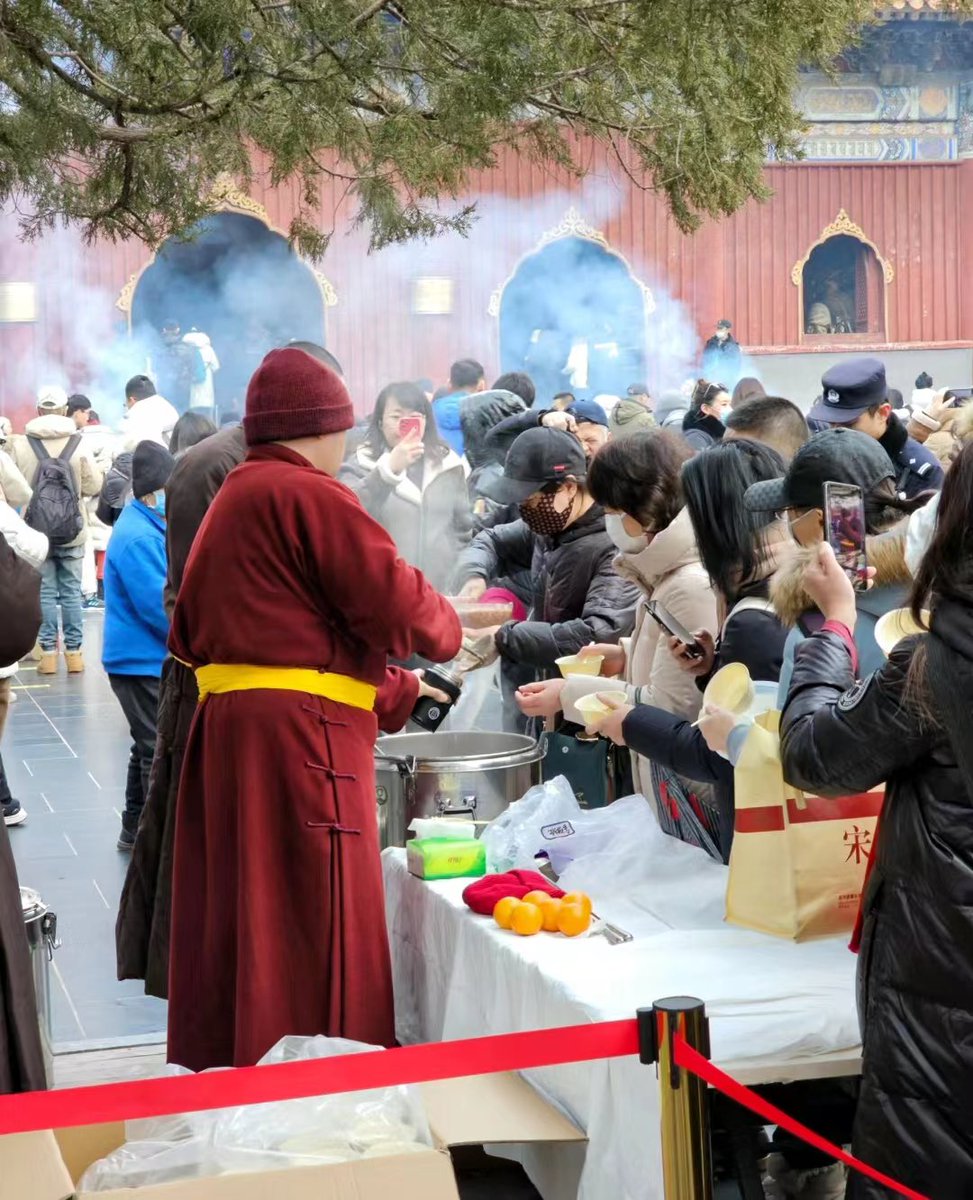
Today marks the Chinese traditional Laba Festival, which falls on the eighth day of the 12th month on the Chinese lunar calendar. In China, the coming of the Laba Festival signals that the Spring Festival, or the Chinese Lunar New Year, is just around the corner. The custom on this day is to savor Laba porridge. In ancient Beijing, Laba porridge featured a blend of 27 meticulously selected raw materials, encompassing a range of ingredients such as rice, glutinous rice, black rice, sticky rice, cowpea, red bean, lily, lotus seeds, peanuts, and dates, among others. The preparation of this delectable porridge commenced on the eve of the Laba Festival, with the ingredients simmered overnight until morning.
The Laba Festival holds a special tradition at the 300-year-old Lama Temple in Beijing, known as "giving porridge." During this festive time, the temple generously distributes Laba porridge to individuals who visit, seeking blessings of good fortune. People rise early to form lines, eagerly awaiting their share of the steaming Laba porridge. This act of receiving the porridge serves as both an expression of gratitude and a symbol of one's aspirations for peace, health, and prosperity.
The remains of the southern section of the Beijing Central Axis, as an essential route for traditional ceremonial activities during the Ming and Qing Dynasties, have been in use since the Jiajing era of the Ming Dynasty. It has undergone maintenance and reconstruction at different stages throughout history. Today, it has become a destination for city walks, where the majestic ancient cypress trees and grand buildings create a natural, serene, and mysterious landscape.
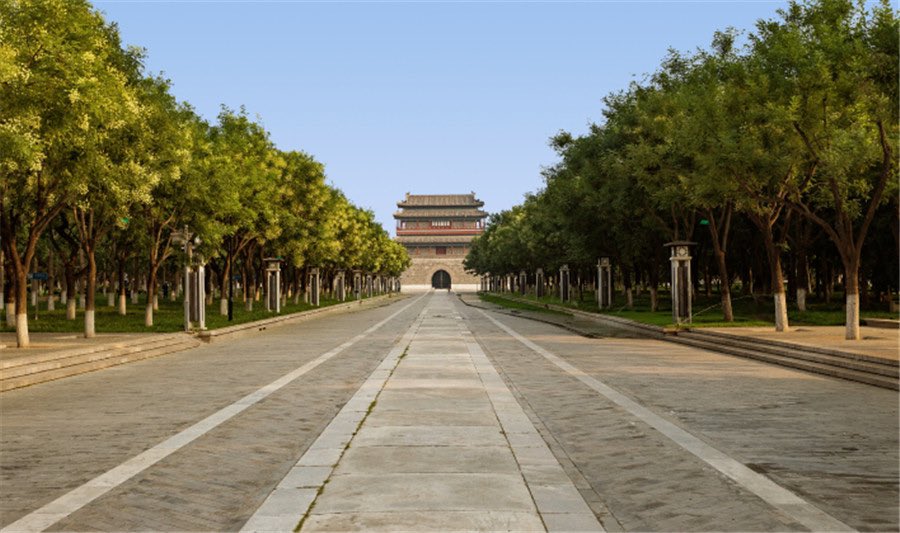
A portion of these remains is located within Yongdingmen Park. Along the road, towering ginkgo trees stand tall, accompanied by the sounds of birds and insects. As modern-day individuals stroll along this path once trodden by emperors, it feels like a journey through time, a dialogue with history. People come here to fly kites, take leisurely walks, and capture photographs, seamlessly blending historical relics into ordinary life.
The southern section of the Beijing Central Axis Road Relics consists of three sites. From south to north, they are the remains of the slate road on the north side of Yongdingmen, the historical road on the inner central axis of Yongdingmen, and the ruins of the drainage ditch of the south central axis road at Zhushikou. Among them, the bottom of the drainage ditch is paved with green bricks, covered with slates, and the bottom of the ditch is full of nails, showing the engineering structure of the drainage facilities on one side of the central road in the Qing Dynasty.
The road relics of the southern section of the Beijing Central Axis connect the meticulously arranged urban architectural complex and public space, which was the only way for national etiquette activities of the Ming and Qing Dynasties. It truly shows the position, direction, engineering structure and continuous inheritance of the central road of the southern section since the Ming Dynasty, and witnesses the national etiquette culture that Beijing's central axis continues to this day.
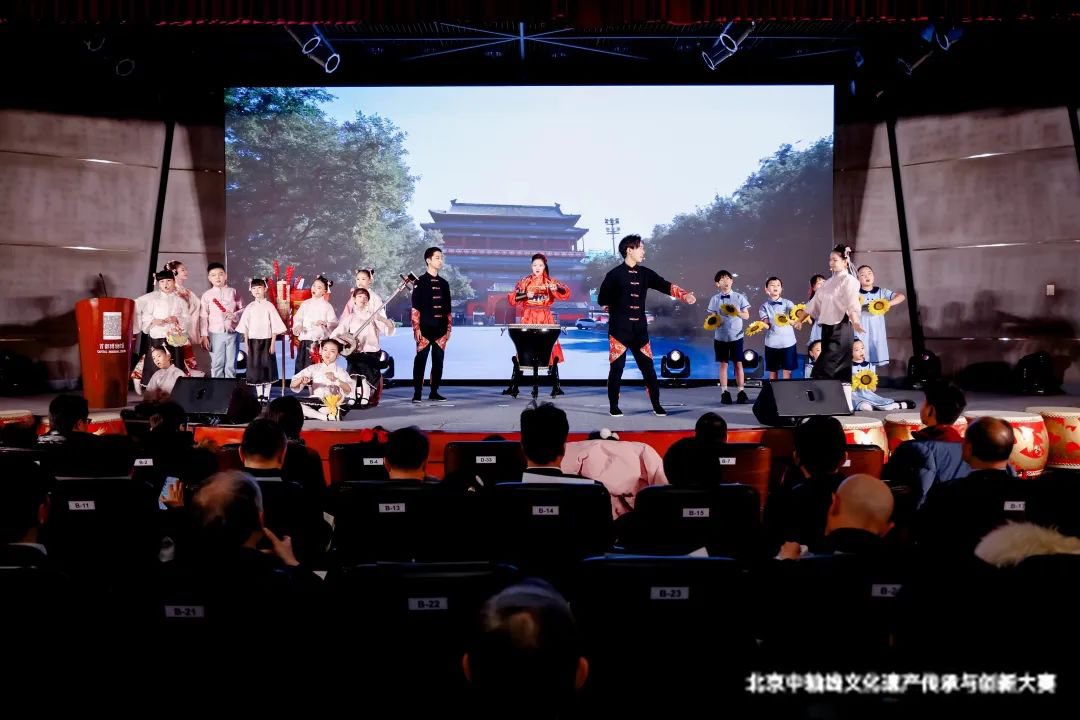
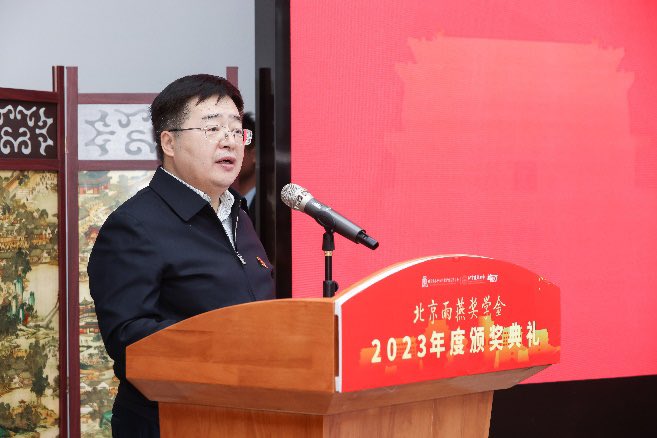
The award ceremony of the 2023 Beijing Central Axis Cultural Heritage Inheritance and Innovation Competition was recently held in Beijing. The competition has set up five tracks, namely, the charming central axis, the artistic central axis, the talent axis, the creative axis and the digital axis. After more than seven months, nearly 300,000 people have been involved in the competition, around three times that of 2022. People of all ages from all over China and another 13 countries actively participated, with the total number of collected works reaching 80,357 pieces. The final number of awards is 302.
The competition strengthened the deep integration between cultural relics and education, and truly made teenagers the strongest force for the protection of cultural heritage. Data shows the proportion of post-00s and post-10s groups in this competition is as high as 80.69%. Young people's understanding of the traditional culture of the Beijing's central axis has increased significantly, which also highlights the new generation's high recognition of China's excellent traditional culture.
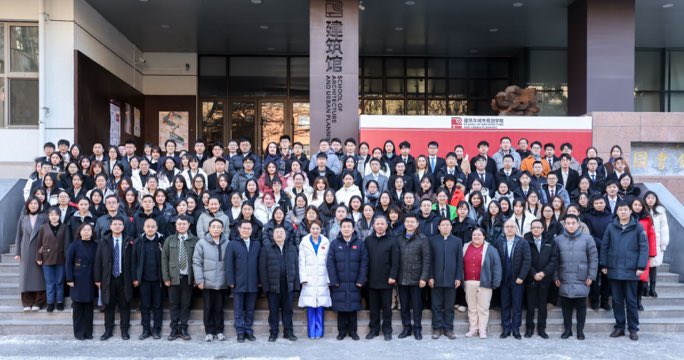
On January 6th, the "Beijing Swift Scholarship" award ceremony was held, with a total scholarship amount of 1 million yuan. A total of 319 students from 15 universities received the "Beijing Swift Scholarship" for the year of 2023.
The Yongdingmen Gate was first built in 1553. In order to build up Beijing's defense during the Ming dynasty, seven city gates were built for the outer city, with the Yongdingmen Gate being the largest and the highest ranked. The wengcheng barbican was added on the south side of the Yongdingmen Gate Tower in 1564. The archery tower was built on the wengcheng barbican in 1750. In the 1950s, Beijing was developing rapidly and the problem of traffic congestion in the Yongdingmen area became increasingly acute. In 1951, the Yongdingmen Gate's wengcheng barbican was demolished to open up traffic inside and outside the old city of Beijing. The Yongdingmen Gate Tower and Archery Tower were demolished in 1957 to relieve traffic pressure. The southern moat was dredged and straightened, and the roads and streets in the Yongdingmen area were widened simultaneously. The Beijing Municipal Institute for Cultural Heritage carried out archeological excavation work on the site of the Yongdingmen Gate in 2003. Seven exploratory trenches of different lengths were excavated to determine the gate tower's boundary. The Yongdingmen Gate's reconstruction project started in 2004 and was completed in the following year. The reconstruction work was strictly based on the archeological findings and research results from the historical records. The reconstructed Yongdingmen Gate identifies the southern end of Beijing Central Axis.
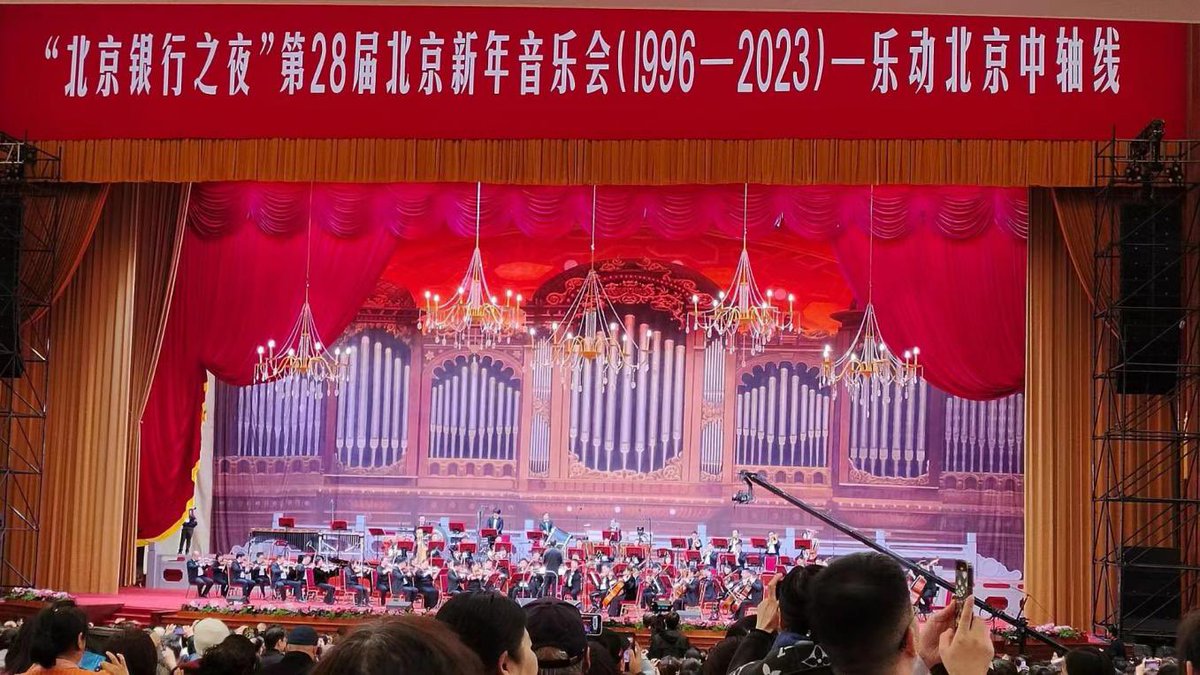
On December 31, 2023, "Beijing Bank Night" the 28th Beijing New Year Concert (1996-2023) - Live Beijing Central Axis took place at the Great Hall of the People. After a four-year hiatus, the Beijing New Year's Concert returned once again to the "old time and old venue."
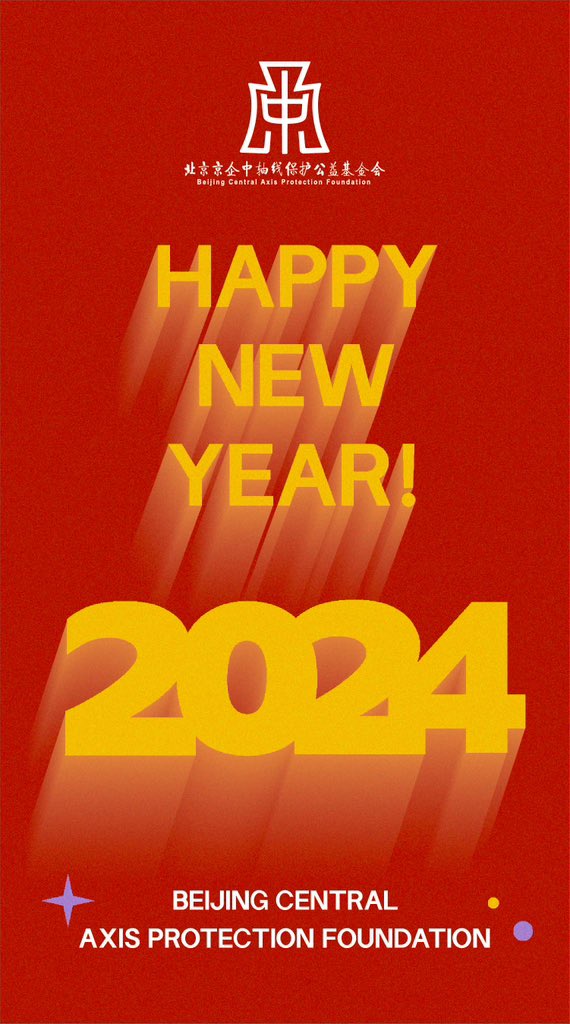
Happy New Year! Wishing everyone a prosperous 2024 from Beijing Central Axis Protection Foundation! May this new year bring joy and success to each one of you. Cheers to a great year ahead!
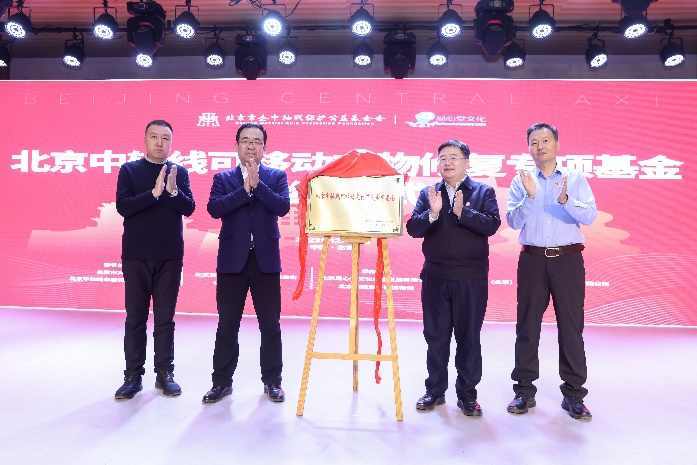
On December 28th, the Beijing Central Axis Protection Foundation, in collaboration with Beijing Yixin Tang Cultural Group, initiated the establishment of the Beijing Central Axis Movable Cultural Relics Restoration Special Fund. The fund aims to provide targeted support for the restoration and exhibition of movable cultural relics along the central axis of Beijing. Focusing on the restoration and exhibition of movable cultural relics along the central axis, the fund seeks to promote the outreach of cultural heritage along Beijing's central axis to a wider audience and drive the sustainable development of cultural heritage preservation along the central axis.
The #Yongdingmen Gate was the southern portal of the outer city of Beijing during the Ming and Qing dynasties. It is the highest ranked of the seven gates in Beijing's outer city, exhibiting the superior status of the buildings on Beijing Central Axis and providing a unique testimony to the methods of traditional urban management during the Ming and Qing dynasties.
The existing Yongdingmen Gate is a historical landmark for marking the site of the original Gate which was demolished in 1950s and rebuilt in 2005 strictly following the Principles for the Conservation of Cultural Heritage Sites in China. The location of the gate tower marks the position of Beijing Central Axis' southern end, exhibiting the traditional forms and architectural techniques applied in constructing city gate towers in ancient China. It is an essential scenic spot for viewing the landscape of the south section of Beijing Central Axis.
Winter Solstice is an important solar term among the twenty-four traditional Chinese solar terms, and there is a saying, "Winter Solstice is as significant as the New Year."
On December 18th, the Beijing Enterprise Central Axis Protection Public Welfare Foundation, in collaboration with the New Oriental Education Technology Group, established the "Fund for Beijing Central Axis Cultural Education" and simultaneously launched the "Beijing Central Axis Study Tour Program." This special fund is dedicated to training new talent for the preservation and inheritance of Beijing's cultural heritage, and advancing the sustainable development of cultural heritage protection along the Beijing Central Axis.
During the event, the Beijing Central Axis Study Tour Program was officially unveiled. It aims to develop study tour courses on the preservation and inheritance of cultural heritage along the Beijing Central Axis for elementary and middle school students throughout the city. Special emphasis will be given to financially supporting students from disadvantaged families to visit and study along the Beijing Central Axis, allowing them to experience firsthand the rich historical and cultural heritage of Beijing.
Take a moment to admire the breathtaking snow-covered scenery along Beijing's central axis. Immerse yourself in the beauty of this winter wonderland! #BeijingCentralAxis#SnowyScenes
On December 12th, the launch ceremony for the "Jingmai Mountain and Beijing Central Axis Collaboration," a series of charity auctions for tea, was held in Jingmai Mountain, Yunnan, China.
At the launch ceremony, Mei Song, Deputy Director and Secretary General of the Beijing Central Axis Foundation, emphasized the significance of protecting and carrying on the cultural heritage of the Central Axis. To better protect and promote the Axis, Mei Song prioritized measures such as increasing awareness of the Beijing Central Axis’s cultural significance, allowing more people to experience its unique charm, and attracting widespread attention and participation from all sectors of society.
With the commencement of the "Jingmai Mountain and Beijing Central Axis Collaboration," the cultural heritage of these two locations will join forces in promoting mutual prosperity!