Uns ist gerade aufgefallen, dass #Psychologeek von #funk mit einem neuen Team wieder da ist. Im ersten neuen Video "So gefährlich kann #Esoterik sein" geht es u. a. um psychologische Erklärungen dafür, warum Menschen an Esoterik glauben.
https://t.co/Dqm3IglwLL
Ein Uniprofessor soll Doktorandinnen bedrängt und erniedrigt haben, eine in den Stripclub mitgenommen haben. Die Frauen beschweren sich, doch der Mann arbeitet weiter an der Hochschule. https://t.co/C1HQytXpxF
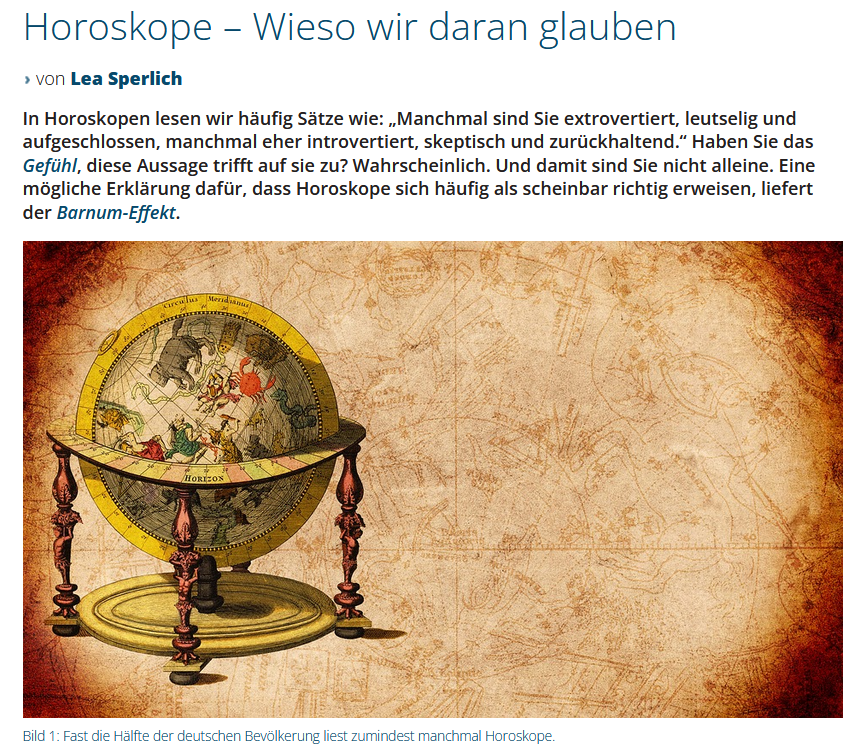
In ihrem @InMindMagazin Artikel „Horoskope – Wieso wir daran glauben“ beleuchtet @leaMsperlich den Barnum-Effekt: Wieso stimmen wir Barnum-Statements zu? Und warum denken wir, dass diese (allgemein gültigen) Statement uns so gut beschreiben? https://t.co/UkAFlRMlp0 (5/5)
“Du interessierst dich für die Wissenschaft, siehst manche Dinge aber auch kritisch?” – Wir finden uns leicht in solch vagen Aussage wieder: Der Barnum-Effekt. Was sich dahinter verbirgt und was das mit Horoskopen zu tun hat, erklärt @leaMsperlich https://t.co/UkAFlRLNzs
🚨New Paper Alert🚨 (now out in AMPPS @PsychScience 😊).
We investigated a common concern: Can nonscientists differentiate preprints from the peer-reviewed literature? If not, could a short explanation help? (with @JanaBerkessel & Simone Dohle): https://t.co/TP1nZji07r 1/4
Wer in seinem Umfeld gegen negative Stereotype ankämpft, leidet häufiger am Impostor-Syndrom.
Für @leaMsperlich und Tabea Zorn (@UniCologne) spricht das dafür, die Ursachen für das belastende "Hochstapler"-Syndrom nicht bei den Betroffenen selbst zu suchen
https://t.co/OlYF952tLT
If you're interested in webscraping and how it can provide you with large online datasets, please give my new open access article at ZfP a read! I also give some suggestions how to supplement traditional psychological research for new angles on old topics.
https://t.co/XUx4zDFutC
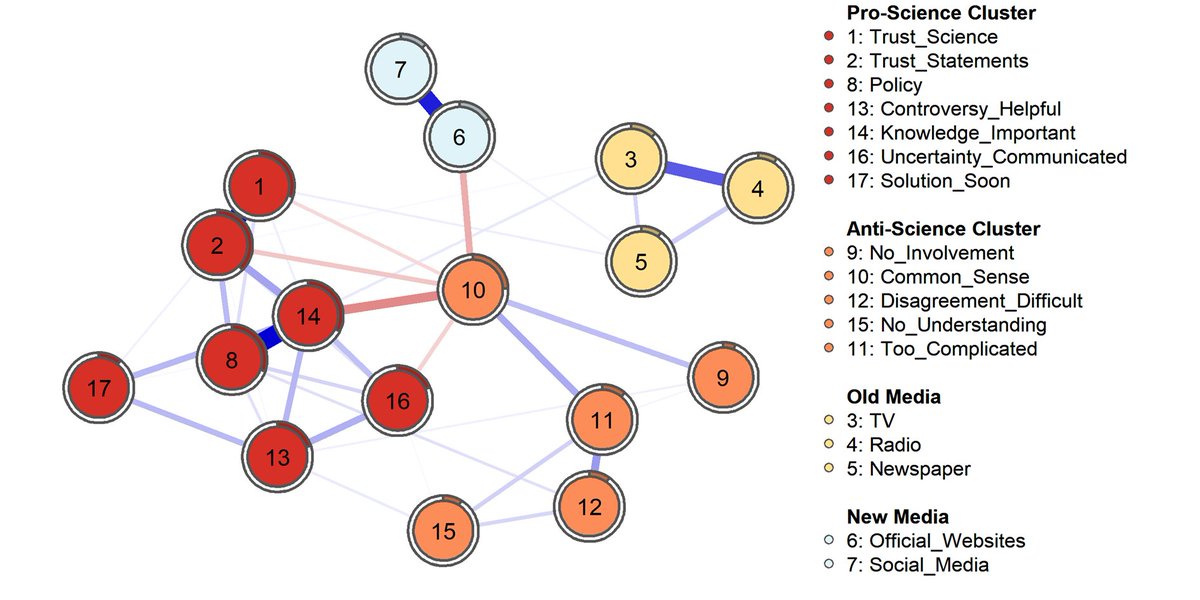
Very happy to share our new preprint! We analyzed the public attitude towards science during the COVID-19 pandemic as a psychological network (with @lecuona_oscar and Simone Dohle). https://t.co/PtYwEq9iZw 1/4
Alkohol als Antwort auf 2020? Nicht verwunderlich, aber keine gute Idee. Wie kommt man davon weg? Unsere Autorinnen @leaMsperlich & Tabea Zorn (@UniCologne) sind etwas skeptisch, ob es hilft, nach dem "Blobfisch" zu googlen und geben weitere Hinweise : https://t.co/UENINV0eol
Out now: +++A preprint about preprints+++
We investigate a common concern: Can non-scientists differentiate preprints from the peer-reviewed literature? If not, could a short explanation help? (with @JanaBerkessel & Simone Dohle): https://t.co/DKN273ZuD4
1/4 ⬇️
@Talkmaster Remember ladies, the best way to avoid unwanted pregnancies is by using the “pull out” method where you pull out of heterosexuality and date me.
#Corona-Umfrage! Wir (ForscherInnen von der @UniCologne) interessieren uns für eure Meinung zum #Coronoavirus und den bisher beschlossenen Maßnahmen. Gerne retweeten, damit wir möglichst viele Menschen erreichen 😊. Hier geht’s zur Umfrage: https://t.co/74QPknOuZn
Während der #Coronakrise auf Prüfungen vorbereiten? Wenn das bei euch nicht klappt, hier ein Tipp:
Versucht unbedingt als erste Person geprüft zu werden! Warum ihr dann trotz schlechter Leistung eine gute Note kriegt, erklären @leaMsperlich & Tabea Zorn https://t.co/JO0D7NSulc
My first, first-authored article is now out in #SPPS. We found that low replicability of research findings damages trust in psychology 💔 and tested how this damage can be repaired (with @JanaBerkessel & Birte Englich). 1/4 https://t.co/wpQ0IVKds8
@AcademicChatter#phdchat
Wondering, whether people with alektorophobie are also scared of theropods as this paper would suggest: 'Walking Like Dinosaurs: Chickens with Artificial Tails Provide Clues about Non-Avian Theropod Locomotion' (Grossi et al., 2014; see: https://t.co/PycLgGz9fl) #phobiafriday
Full program of #FGSP2019 (17th Conference of the German Social Psychology Section; Fachgruppentagung Sozialpsychologie) @UniCologne is now online. https://t.co/rkL1Q5B5md
#SoCCCo@matkau @wilhelm_hofmann @PatrickHonecker