Practical Lessons for Real-World Leadership
Most leadership advice sounds good on paper, but completely falls apart in the real world.
I started Leading Between The Lines because I wanted to change that.
After years of leading teams, I realized that the real lessons (the ones that shape how people trust, follow, and grow) rarely show up in playbooks or strategy decks.
They live in the everyday moments:
• The hard conversations
• The mistakes and errors
• The quiet wins that no one sees
This newsletter is my way of sharing those moments.
Every week, I send a short, practical email to help you lead with more clarity, intention, and consistency… especially in the moments that matter most.
If you’re someone who values substance and wants to grow as a leader in the real world, I’d love for you to join me.
👉 Subscribe to Leading Between The Lines below:
https://t.co/BJD6R1UzgS
Two hours a week turned things around for this IT company in Texas.
I was speaking with the owner of an MSP (Managed Service Provider).
He said,
“I’ve got a great team. Our customers love us. We get referrals. The team runs the day-to-day like they’re supposed to.”
I said,
“Sounds like a dream. Why do you need me?”
He replied:
“Despite my best efforts, I can’t get the team to do any of the extra stuff. We maintain everything perfectly. But I want more, and I don’t know how to get them to do it.”
Over the next month, we met weekly to unpack it.
The problem?
All their KPIs were lagging indicators.
They focused on outcomes like ticket volume, customer satisfaction, and uptime.
But they weren’t tracking effort.
The fix?
Two simple things:
- Weekly 1:1s
- A short personal scorecard for each team member
And for the first month, the scorecard had just one item:
“Spend two focused hours this week working on the business.”
Red or green. No excuses. One clear expectation, followed up every week.
Guess what happened?
By week three, the team realized the owner was serious.
The conversation kept happening.
And the effort started showing up.
Now we’re building out a full set of leading indicators for all team members.
But that one change sparked momentum.
Maintenance mode isn’t failure. But it’s not growth either.
Sometimes all it takes is two hours and one line on a scorecard.
The Habit That Makes High Performers Annoying (And How to Fix It)
High performers do this all the time.
They don’t even realize it’s a problem.
They jump in.
They fix it.
They save the day.
Again.
And again.
And again.
And then they wonder why:
- Their team isn’t stepping up
- Delegation never quite works
- Everything still runs through them
Here’s the truth:
👉 It’s not leadership.
👉 It’s addiction to control.
👉 It’s the rescue reflex.
They’re not trying to micromanage. They’re trying to help.
But when you always jump in, you steal the struggle that builds competence.
The fix?
Pause. Ask. Coach.
Resist the urge to fix everything just because you can.
If you’re always the answer, your team stops asking questions.
Listen Founders: You’re doing too many recurring tasks.
I’m not saying you shouldn’t do the work.
Most successful founders I know aren’t just “managing.”
They’re deep in the trenches.
But here’s the problem:
Too many of them are the owner of tasks that repeat. Every week, every month, every cycle.
That recurring status meeting.
That weekly report.
Invoicing clients.
The newsletter send.
These aren’t bad tasks.
But they shouldn’t live with the founder.
Why?
Because every recurring task you own puts a ceiling on your time, attention, and growth.
It quietly anchors you to execution.
When your real job is direction, clarity, and momentum.
When the team owns recurring execution, the founder is free to own the exceptions:
The unexpected risks.
The unscalable opportunities.
The strategic moments no one else sees.
This matters because long-term founder impact is directional, not repetitive.
And you can’t steer the ship if you’re rowing the same oar every week.
Want to know how strong your leadership really is?
Watch yourself on your busiest day.
That’s when your habits either hold or collapse.
Great leaders don’t abandon 1:1s, clarity, or focus when things get chaotic.
They protect them even more.
The Difference Between Being Stuck and Being Stale
Stuck needs strategy. Stale needs energy.
Stuck teams still ask questions.
They push. They try.
They want progress but don’t know how to get it.
Stale teams go quiet.
They stop caring.
They’ve settled into survival mode.
It’s a subtle difference but a critical one.
If you treat stale like it’s stuck, you’ll misdiagnose the problem.
You’ll add process when what they need is purpose.
You’ll clarify tasks when what they need is belief.
You’ll try to manage performance when what’s really missing is spark.
Stuck needs direction.
Stale needs disruption.
One is waiting for a plan.
The other is waiting to feel alive again.
What to do:
- Ask: Are people leaning in—or just showing up?
- For stuck teams: Reset priorities. Simplify the plan. Unblock progress.
- For stale teams: Inject energy. Reignite purpose. Change the rhythm.
- In both cases: Don’t confuse motion with momentum.
If your team feels flat, ask yourself:
Do they need a better plan or something worth showing up for?
Discipline Isn’t Glamorous
The hardest leadership decisions aren't flashy.
They're the quiet ones:
- Saying no to a shiny opportunity that doesn’t align.
- Addressing performance before it escalates.
- Making the hard call today to protect your team tomorrow.
Why I Asked a CEO to Stop Setting Goals This Quarter
The team wasn’t lazy. They were exhausted.
Their execution wasn’t slipping from a lack of goals. It was slipping because they were drowning in them.
When I started coaching the CEO, they had 14 competing priorities across 3 departments. Nobody could articulate what success for the quarter actually looked like.
So I made a recommendation that surprised them:
Let’s stop setting new goals. For one quarter.
Instead, we:
- Recommitted to 4 in-progress priorities
- Cleared out stale KPIs
- Focused the team on communication, trust, and rhythm
Here’s what happened:
- Productivity dipped slightly in Month 1
- Morale, clarity, and speed lifted in Month 2
- By Month 3, they were outperforming their previous quarter
Now they've redesigned their entire planning rhythm:
- Three focused 13-week sprints per year (instead of four back-to-back)
- Built-in 3 to 4 week reset periods between each sprint
- Time to reflect, recalibrate, and realign before the next push
Sometimes the most strategic move isn't doing more. It's stopping long enough to refocus.
Most praise fades. The right praise sticks.
This is part 1 of a 3-part series on praise that actually drives performance.
Let’s start with the most overlooked kind:
Effort-based praise.
A lot of leaders wait until something’s finished to say anything.
But the most powerful praise often shows up midway through the mess.
Try this:
- “I know you’ve been heads-down on this for days—it’s not going unnoticed.”
- “You could’ve dropped it when it got messy. You didn’t. That matters.”
- “You’ve been carrying a lot lately. Just wanted to say I see the effort.”
No over-the-top hype. No confetti.
Just real words that say, I see you pushing.
And that’s often enough to keep someone going.
👉 Catch the effort.
👉 Name it.
👉 Let them know it matters.
You can’t be people-first if your systems are people-last.
Your values show up in how you work.
Not just in what you say.
Build systems that support and not drain your team.
Otherwise, even the best intentions fall flat.
Stop obsessing over resumes. Start paying attention to trajectory.
The best hires often don’t have the longest track records.
They have the steepest growth curves.
Here’s the difference:
- Some candidates walk in with a full tank of experience.
- Others walk in with curiosity, pace, and the belief they can outlearn anyone in the room.
I’ll take the second group every time.
Why?
Because you’re not hiring for yesterday.
You’re hiring for what happens next.
Give me someone with:
- High throughput
- Real humility
- Fast pattern recognition
- Enough internal fuel to power a team
That’s the kind of person who outgrows every job you give them.
And lifts the people around them as they go.
Don’t always hire for the peak. Hire for the climb.
You Might Be a Bad Leader If…
- Your team finds out about changes through the company newsletter
- Your 1:1s start with: “So… what do you got for me?”
- You only show up when there’s a fire
- You schedule meetings to plan other meetings
- You “delegate” by dumping and disappearing
- You say “I’ll get back to you” and you never do
- You haven’t received real feedback from anyone since 2021
Bad leadership doesn’t start loud.
It starts with small habits no one calls out (until the team checks out).
So if any of this hits home:
- Fix your follow-through
- Make your 1:1s matter
- Ask your team what’s not working and actually listen
-
Because being the boss doesn’t make you the leader.
How you show up every day…does.
You sold the company. Everyone’s congratulating you.
So why do you feel... off?
The wire hits.
The champagne pops.
You brace for the high.
But instead, it’s quiet.
You feel more empty than excited.
This is post-success founder fog.
The strange stillness after years of chasing, building, and pushing.
The urgency is gone.
The inbox is finally quiet.
And you’re left wondering:
Who am I without the company I built?
You don’t just lose the grind.
You lose the gravity.
And without it, direction feels harder than expected.
This doesn’t mean you made a mistake.
It means your identity is catching up to your reality.
What helps:
- Give yourself space before jumping into something new
- Reconnect with passions and people outside of business
- Reflect on what energized you—and what drained you
- Talk to others who’ve exited. Most of them have felt this too
Selling your company changes your life.
But it also shifts your purpose.
And that shift takes time.
Want better meetings? Start with better prep.
A messy meeting is often a planning problem.
Clarify the purpose. Share the agenda early.
Name who owns what. End with action steps.
Respect your team's time by treating meetings like the main event and not an afterthought.
The best praise answers the question…
Did what I do actually matter?
This is Part 3 of 3 in the praise series.
Today: Impact praise.
People want to know their work made a difference.
Not just that it got done but that it meant something.
Try this:
- “That update saved the whole team time this week. Seriously.”
- “You made it easier for the client to move forward. That’s a big deal with them.”
- “What you wrote helped me explain this to the exec team. Made my job easier.”
When people understand the ripple effect of their work, they show up differently.
👉 Show them the impact.
👉 Be specific.
👉 Let them feel the value.
⸻
Quick recap of the series:
1. Praise the Effort – Catch them in the hard part.
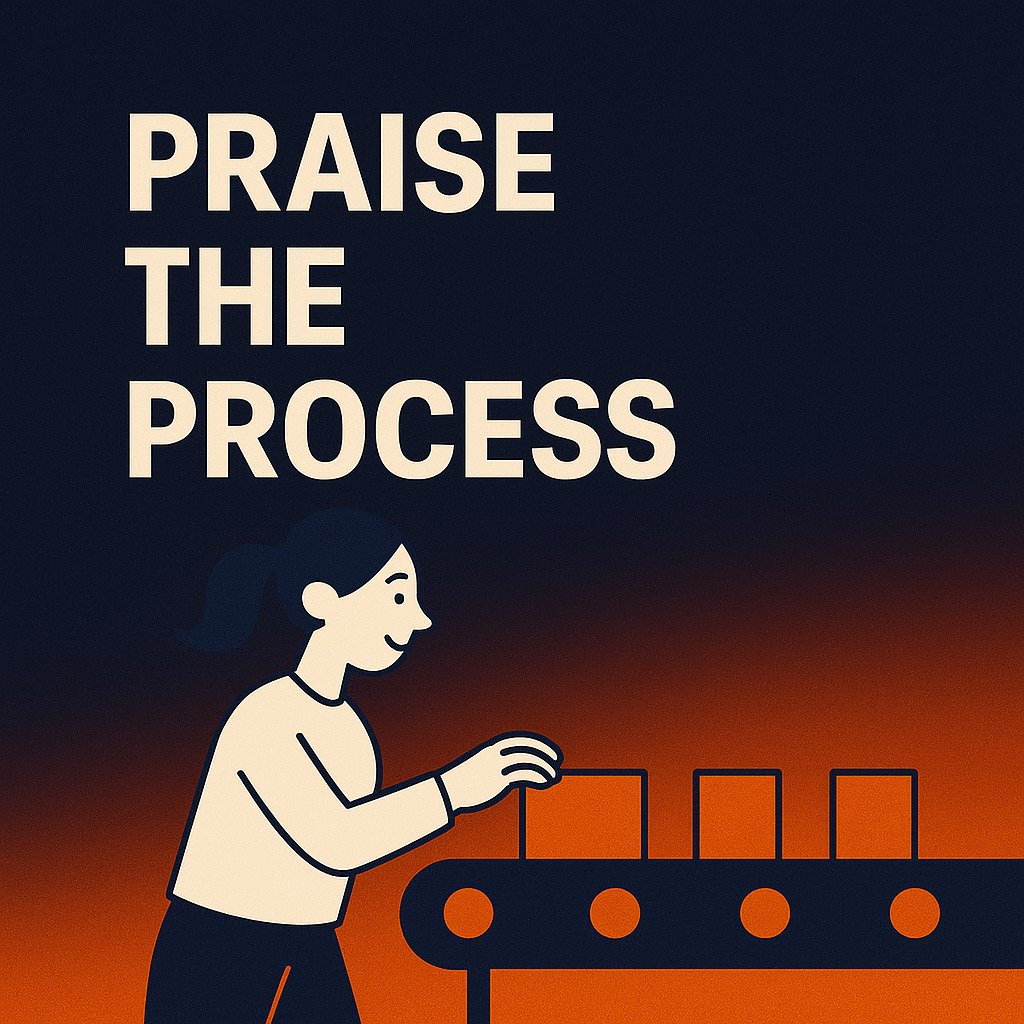
2. Praise the Process – Reinforce what they did right along the way.
3. Praise the Impact – Show them the ripple effect.
Most leaders default to results-only praise.
The great ones use all three.
Save this. Share it. Start using it this week.
Praise isn’t just about results. It’s about reinforcing the right habits.
This is part 2 of 3 in the series on praise that actually drives performance.
Today: Process praise.
Most people don’t get feedback on how they work.
Just whether the outcome hit the mark.
But if you want someone to grow,
show them what they did well while getting there.
Try this:
“The way you broke that down step by step made it easy to follow.”
“I liked how you kept looping the team in as things moved. It really helped keep us all on the same page.”
“You stayed calm and methodical even when it started to derail. That made a big difference.”
This kind of praise teaches people what to repeat.
Not just what to celebrate.
👉 Notice their approach.
👉 Say it out loud.
👉 Reinforce what works.
I’ve seen it too many times.
Smart hires burn out because they never got the structure they needed to succeed.
If someone doesn’t know how to win, they won’t stick around to keep playing.
Here’s a simple lens I share with execs:
Context. Capability. Confidence.
If someone’s struggling, ask:
- Do they know how their role fits into the bigger picture? (Context)
- Have they been shown (more than once) how to do the job well? (Capability)
- Do they believe they’re doing it right? (Confidence)
Most leaders focus on motivation.
But often, the issue is a skill or confidence gap.
Progress stalls when people get good enough to disappear.
They’re not the loudest. They’re not the worst.
But they’re not getting better either.
I’ve worked with plenty of leaders who missed this.
The person wasn’t failing but they hadn’t improved in months.
Just coasting. Safe. Quiet.
Want to spot it? Watch for:
- Someone who stops asking questions
- Work that looks exactly the same month after month
- “Fine” performance in a role with growth potential
- No new skills or stretch wins in the last 90 days
This is where high performance dies.
Not in chaos, but in comfort.
If you want a high-performing team, don’t just coach the squeaky wheels.
Go find the plateaus.
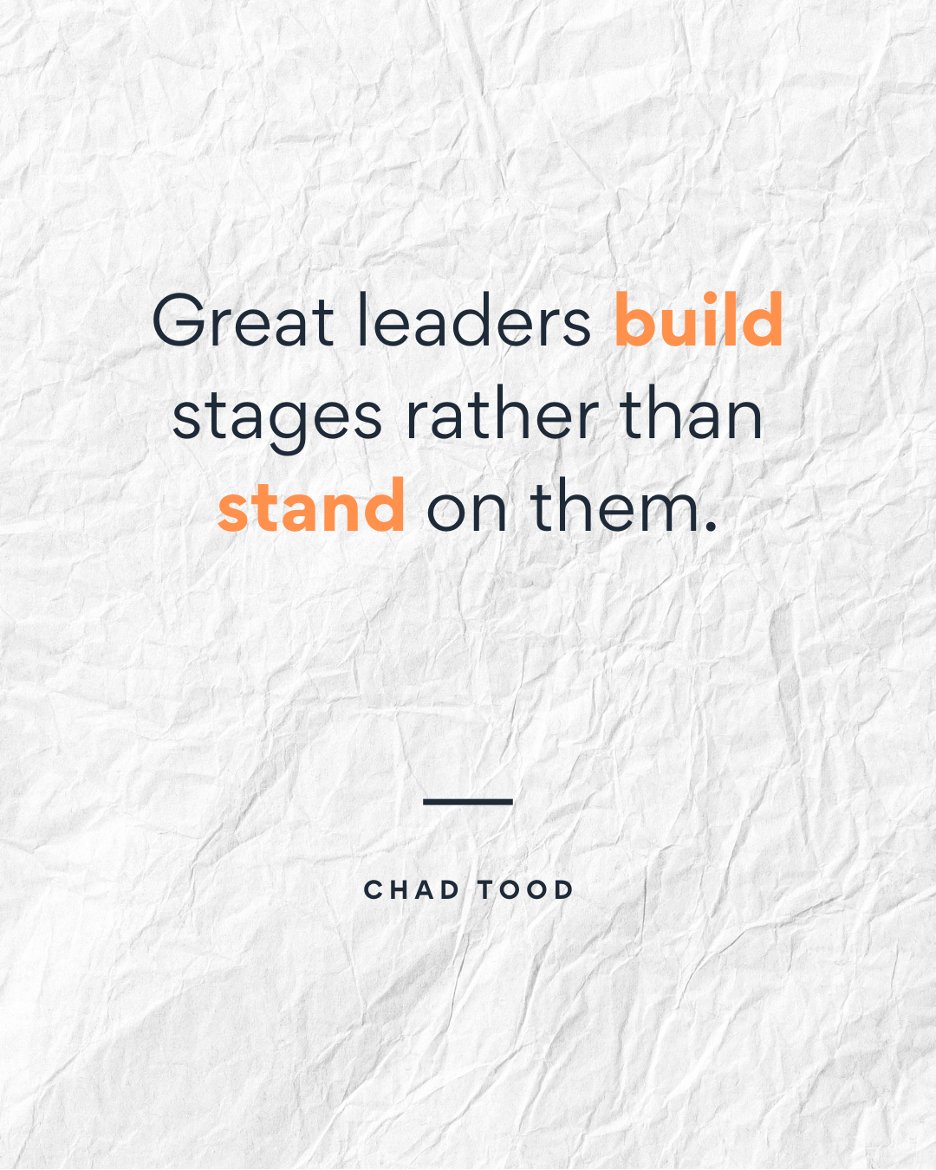
Great Leaders Build the Spotlight for Others
Early in my leadership journey, I thought the goal was to be the most visible person in the room.
The one with all the answers. The hero of every win.
But the best leaders I’ve worked with do something very different:
- Success? Measured by who they lift up.
- Praise? Shared like a team sport.
Even if they crave the mic, they pass it.
That’s how you build loyalty and trust that lasts.
If your team’s playing this game, you’ve already lost.
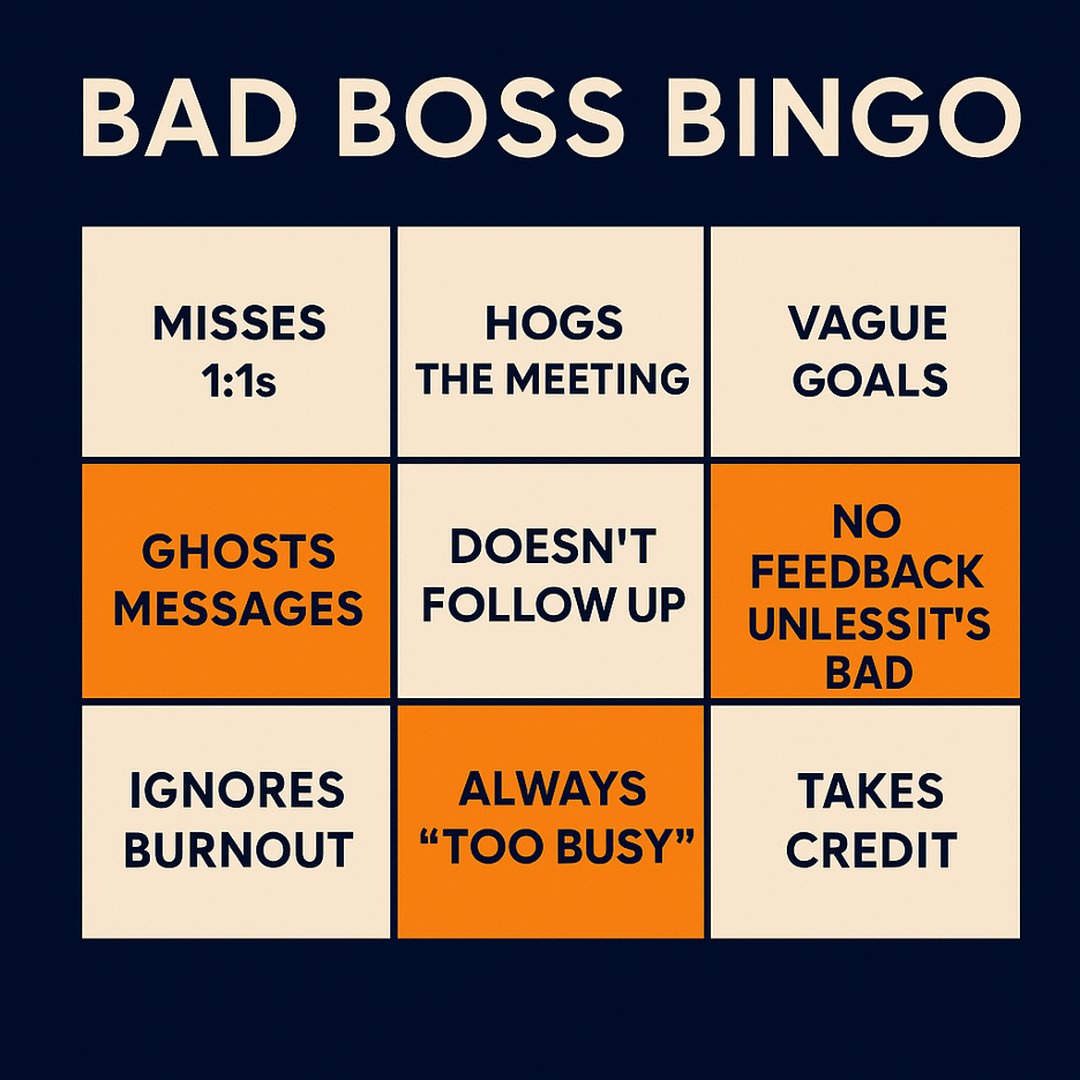
Bad Boss Bingo
We’ve all seen it. Some of us have lived it.
A few of us… might be doing it without realizing.
👇 How many of these squares would your team quietly check off about you?
🟥 Misses 1:1s
🟥 Hogs the meeting
🟥 Vague goals
🟥 Ghosts messages
🟥 Doesn’t follow up
🟥 Only gives feedback when it’s bad
🟥 Ignores burnout
🟥 Always “too busy”
🟥 Takes credit
✅ Bonus points if they’ve adapted around you to survive it.
Want to stop playing?
1.Protect your 1:1s like they’re revenue-generating.
Canceling them tells your team the relationship doesn’t matter.
2. Own what’s yours (especially the misses).
Blame kills trust. Accountability builds it.
3. Give more clarity than you think they need.
Assumptions are expensive. Spell it out.
4. Do what you say, every time.
Follow-up is leadership currency. When it runs out, so does trust.
5. Watch what you reward and what you let slide.
Your silence teaches just as loudly as your praise.
Bad leadership doesn’t always show up in complaints.
It shows up in disengagement, silence, and turnover.