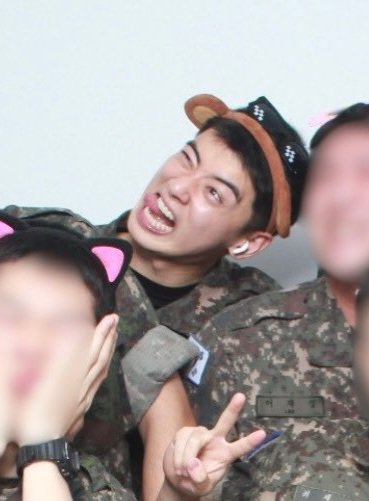
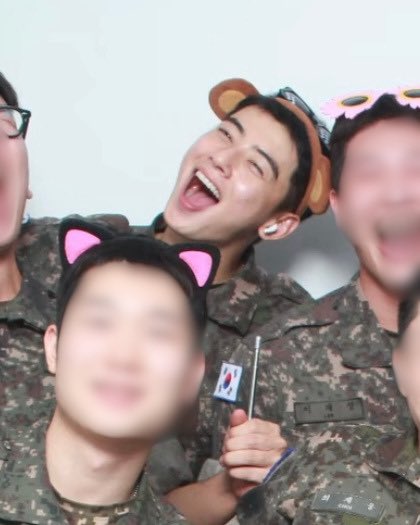
[💬] Yesterday, an Air Force member serving in the Ministry of National Defense Support Command shared on DC Inside's Air Force Gallery that the best part of serving in the unit is being able to see CHA EUNWOO.
Title: If you are top-tier, you should definitely come to the MND Support Group.
Content: “The location, vibe, and facilities are all GOAT.
The best part above all is that you get the honor of seeing Cha Eunwoo in person freaking often.”
Comments:
Comment 1: "Did you see Cha Eunwoo?"
Author: "Yeah, he is insanely handsome"
#CHAEUNWOO #차은우 #이동민
#チャウヌ #车银优 #ชาอึนอู #車銀優
[💬] #CHAEUNWOO was spotted today.
Topic: I saw Cha Eunwoo in the military band today
“Wow... seriously, he's freaking handsome.
His head is insanely small, and he's so tall.
Looking at his features felt like watching a drama.
Now I see why everyone goes crazy over Cha Eunwoo.”
#차은우 #チャウヌ #车银优 #ชาอึนอู #車銀優
📰 Column by Reporter Lim Muhyeok: ‘Cha Eunwoo’s Tax Appeal: Appealing After Full Payment Is a Taxpayer's Right’
Cha Eunwoo fully paid the additional income tax assessment of approximately 13 billion KRW levied by the National Tax Service (NTS). Subsequently, he filed an appeal with the Tax Tribunal within the statutory deadline. His agency stated that he followed the procedures established by law to obtain a legal judgment.
A tax appeal is a system that allows taxpayers to dispute the illegality or unfairness of a tax assessment. It does not start from the premise that the tax authority's judgment is always correct. It is a rights remedy process designed to allow taxpayers to raise objections to the grounds and calculations of a tax assessment and request an independent review.
Contesting a tax assessment after paying it is not an unusual choice. Failing to pay taxes within the deadline incurs interest penalties for late payment. For large amounts, this burden escalates rapidly. As a taxpayer, choosing to pay the tax first prevents additional financial penalties while allowing them to dispute the validity of the assessment through formal legal channels.
The fact that Cha Eunwoo paid the tax in full does not contradict the fact that he filed for a tax appeal. Payment can be a measure to avoid the risk of delinquency and the burden of late fees, whereas appealing is the exercise of a right to examine the legal basis of the tax assessment. The two procedures serve different purposes.
Of course, public perception is not dictated solely by legal procedures. Cha Eunwoo previously stated that there were aspects he failed to thoroughly inspect during the establishment and operation of his corporate entity, taking personal responsibility. This is why voices questioning the sincerity of his apology have emerged following his decision to challenge the tax assessment.
However, an apology and an appeal cannot be viewed as having the same meaning. Accepting managerial responsibility is a separate matter from legally accepting the entire tax amount calculated by the NTS. Even if there were oversights in running the corporation, issues such as the scope of taxation, income attribution, expense deduction, and potential double taxation must be evaluated independently.
The right to appeal should not be restricted simply because someone is a public figure. Conversely, tax verifications should not be lax just because a person is famous. What matters is not who Cha Eunwoo is. The criteria for judgment must be whether the NTS's taxation logic aligns with tax law and whether the taxpayer's counter-arguments are backed by evidence.
This tax appeal goes beyond a high-profile tax dispute; it can serve as an example of how the taxpayer rights remedy system functions. If the Tax Tribunal accepts Cha Eunwoo's arguments, all or part of the already paid taxes will be refunded. If the claim is dismissed, the tax assessment will stand, and Cha Eunwoo can subsequently file an administrative lawsuit.
Trust in tax administration does not stem solely from collecting large sums. It increases when taxes are assessed accurately, opportunities to object are guaranteed, and erroneous assessments are rectified. If faithful reporting and payment are a taxpayer's duty, objecting to unfair taxation is their right.
The situation surrounding Cha Eunwoo should also be judged based on evidence and legal principles rather than moral condemnation. One should exercise caution in criticizing the exercise of a legal right merely because an appeal was filed after full payment. Until the Tax Tribunal reaches its conclusion, what is needed is not a hasty judgment, but respect for the legal process.
#CHAEUNWOO #차은우 #이동민
#チャウヌ #车银优 #ชาอึนอู #車銀優
Funny how the conversation changes when tax professionals start explaining the law instead of social media. This article doesn’t just report Eunwoo’s appeal, it positively explains his rights ⬇️
A tax expert is quoted and says that paying the full assessment first and then appealing within 90 days is the standard legal procedure for someone challenging an assessment they believe is unfair. They also explain that paying first and requesting a legal review are not contradictions and is how the process is designed to work.
And that’s exactly why the Tax Tribunal exists today. To make sure cases like this are reviewed fairly and independently, and not decided by public opinion or morality. Every taxpayer deserves the chance to have their case heard under the law, and artists deserve that same protection.
As more experts speak up, the facts are becoming clear. It’s so encouraging to see more people understanding what this case is actually about. The truth always has a way of finding its way to the surface. 🤍
#CHAEUNWOO #차은우
📰 Cha Eunwoo: Is It Right to Criticize Him Even After Paying 13B Won and Filing a Tax Appeal? Exercising a Basic Constitutional Right No One Can Criticize
“•Paying 13B Won in Advance: Diligent Fulfillment Without Moral Hazard
Under tax law, appealing an assessment does not automatically stay the obligation to pay taxes. If one disputes an assessment without paying on time, late payment penalties accumulate daily at a rate of 8 to 9% per year. For a major tax case worth 13B won, late payment penalties alone would amount to millions of won a day, accumulating to nearly 1B won per year in financial costs.
CHA EUNWOO fully paid the 13B won assessment without default prior to entering the legal dispute. By doing so, he completed his tax obligations without placing a burden on state finances, while directly proving through financial execution that there was no intent to evade or hold out on taxes.
In short, he chose to respect the tax authority's assessment by completing his social and legal obligations first, and only then disputing any unfair aspects. Criticizing this as moral avoidance borders on the error of denying a taxpayer's basic constitutional rights under tax law.
•The Mechanism of Tax Appeals and Administrative Lawsuits
The legal procedures taken when a corporation or high-net-worth individual disputes a tax assessment by the National Tax Service are largely divided into two stages: a tax tribunal appeal and an administrative lawsuit. Within 90 days after receiving the tax assessment notice from the NTS, Stage 1 involves filing an appeal with the Tax Tribunal; if unsatisfied with the result, it moves to Stage 2, which is an administrative lawsuit in court.
Stage 1: Tax Tribunal Procedure
This system involves specialized reviews of whether a tax assessment was illegal or unfair by the Tax Tribunal under the Prime Minister's Office—an independent third-party agency, not the NTS itself. An appeal must be filed within 90 days of receiving the tax bill, offering an opportunity to correct errors quickly within the administration before going to litigation. If the tribunal accepts the taxpayer's claim, the relevant amount out of the prepaid 13B won is refunded immediately, along with statutory refund interest.
Stage 2: Administrative Lawsuit
If the taxpayer still disputes the decision of the Tax Tribunal, this final step involves filing a lawsuit to cancel the tax assessment with the Administrative Court, part of the judiciary branch. It proceeds through a three-tier court system (District Court, High Court, and Supreme Court), where legal experts and the judiciary rigorously debate complex legal interpretations and the application of the principle of substance over form.
•Gray Zones in the Entertainment Industry and Procedural Legitimacy
In particular, one-person agencies and income distribution structures within the entertainment industry represent a typical gray zone under tax law where perspectives between tax authorities and taxpayers diverge most sharply. Matters such as the scope of actual service provision, corporate entity recognition, and potential double taxation lack clear guidelines, requiring high-level legal interpretation.
Disputing whether the tax base calculation was excessive or if any portions were unfairly taxed due to legal interpretation is a natural right guaranteed to taxpayers under tax law and the Constitution.
The fulfillment of duty and legal clarification must be strictly separated. Because state agencies that collect taxes cannot be perfect, the law puts safeguards like tax tribunals and administrative lawsuits in place to prevent unfair taxation. No one has the right to cast stones at a taxpayer who has fulfilled their obligations and seeks to avoid unfairness through legitimate procedures established by law. The actions of #CHAEUNWOO are not tax delinquency or tax avoidance, but the most diligent and legitimate exercise of rights available to a taxpayer in a rule-of-law state”
세금 완납 차은우, 조세심판 청구…유준상·이하늬·유연석도 밟은 정당 절차
법률 및 세무 전문가들은 이를 ‘의무 이행과 법적 소명의 명확한 분리’로 해석해야 한다고 말한다. 고액 자산가 및 법인 조세 사건의 전형적이고 성실한 대응 절차라는 분석이다.
▶️https://t.co/O1MG9s0SND
📢 Please report accounts below repeatedly spread misinformation.
Many verified accounts profit from engagement and view farming. The biggest consequence for them is account enforcement. If you see false information, please report it. Let’s mass report!!
@/syeonblue
#ChaEunwoo #차은우
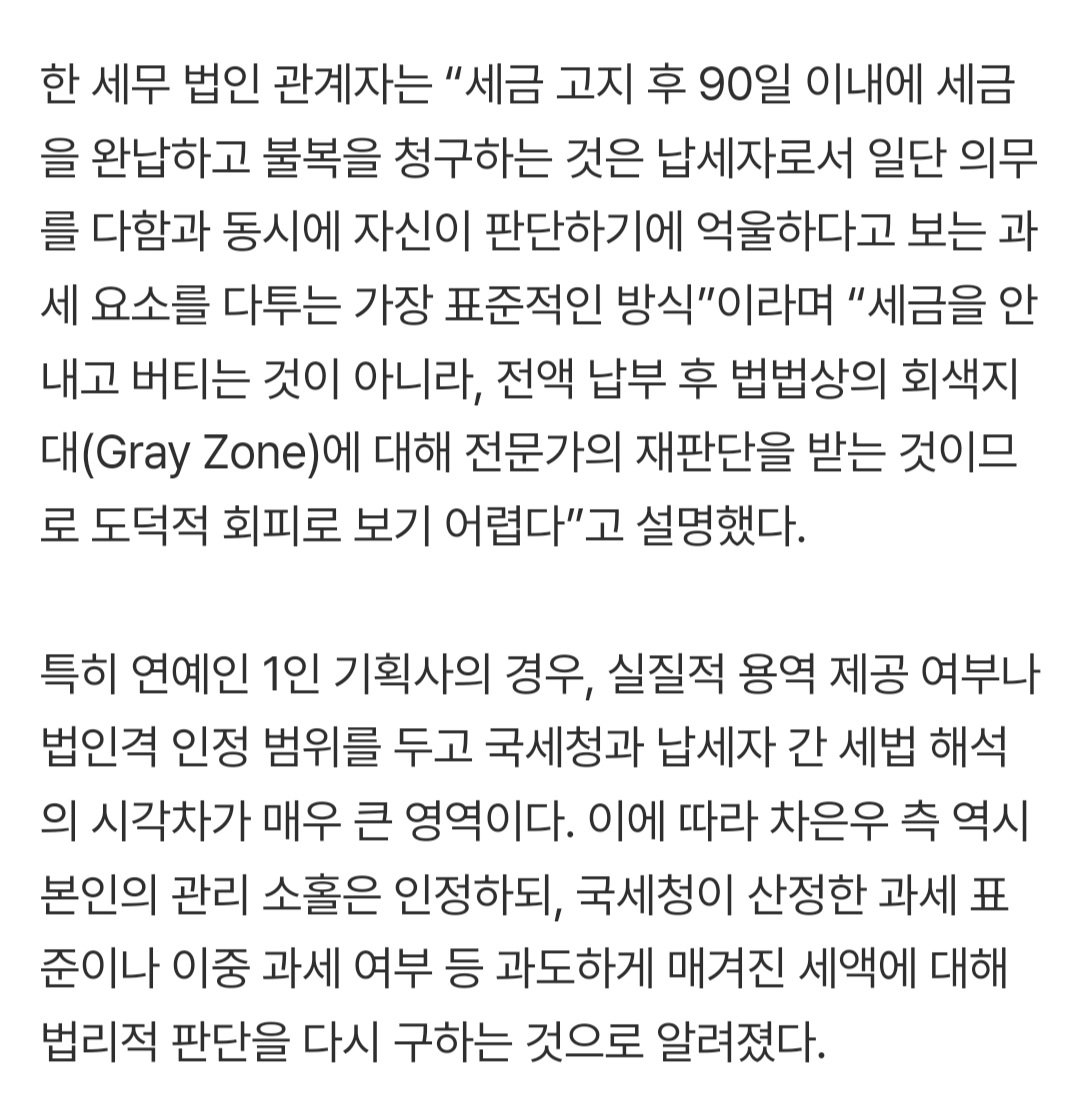
📰 [EXCLUSIVE] It has been confirmed that singer and actor Cha Eunwoo filed an appeal with the Tax Tribunal against the National Tax Service (NTS) after paying approximately 13 billion KRW (~$10 million USD) in unpaid back taxes.
According to a comprehensive investigation by Edaily on the 2nd, Cha Eunwoo submitted a tax appeal to the Tax Tribunal early last month, arguing that the NTS's tax assessment of around 13 billion KRW was unfair. The appeal was filed right before the expiration of the deadline, which is restricted to "within 90 days" from the date of receiving the tax notice.
Cha Eunwoo’s agency, F* stated, “(Cha Eunwoo) filed for a tax appeal in accordance with legal procedures to receive a formal legal judgment,” adding, “As this is an ongoing matter, it is difficult to disclose specific details at this time.”
...An appeal is an administrative tribunal process in which a taxpayer requests the government to cancel a tax assessment on the grounds that the NTS’s imposition of taxes was incorrect. This marks the beginning of 'Round 2' of the tax battle between Cha Eunwoo and the NTS.
Industry insiders analyze that Cha Eunwoo's strategy of paying the full tax amount before filing an appeal was aimed at avoiding the heavy burden of "late payment penalties." If back taxes are not paid within the deadline after receiving a notice, a late penalty of 0.022% per day (approx. 8% annually) is incurred. If 13 billion KRW remains unpaid, the daily late charge alone exceeds 2.8 million KRW (~$2,100 USD). It is interpreted that he paid the taxes first and spent about 90 days deciding whether to file an appeal.
Reactions within the tax industry regarding Cha Eunwoo's appeal are divided. An industry insider noted, "It is a legitimate exercise of rights as a taxpayer," adding, "Even after paying the tax, an appeal can be filed if additional evidence or logic proving the unfairness of the taxation has been reinforced"...
The Tax Tribunal's final decision is highly likely to come after Cha Eunwoo completes his military service in January next year. According to the Tax Tribunal Annual Statistics, internal tax cases involving amounts between 10 billion and 20 billion KRW took an average processing time of 507 days in 2024 and 353 days in 2025, taking roughly around one year.
If the Tax Tribunal rules in Cha Eunwoo's favor, he will receive a refund for the paid taxes. If the appeal is rejected, he can file a formal lawsuit in the Administrative Court.
— NOTE: We have omitted everything sensationalized in the article to focus solely on his right as an ordinary Korean citizen to appeal the decision of the National Tax Service, and we must emphasize that several experts have previously stated that Cha Eunwoo has a high probability of winning, which would be the first step toward clearing his name.
#CHAEUNWOO #차은우 #이동민
#チャウヌ #车银优 #ชาอึนอู #車銀優











![ChaEunwooINTL's tweet photo. [💬] Yesterday, an Air Force member serving in the Ministry of National Defense Support Command shared on DC Inside's Air Force Gallery that the best part of serving in the unit is being able to see CHA EUNWOO.
Title: If you are top-tier, you should definitely come to the MND Support Group.
Content: “The location, vibe, and facilities are all GOAT.
The best part above all is that you get the honor of seeing Cha Eunwoo in person freaking often.”
Comments:
Comment 1: "Did you see Cha Eunwoo?"
Author: "Yeah, he is insanely handsome"
#CHAEUNWOO #차은우 #이동민
#チャウヌ #车银优 #ชาอึนอู #車銀優](https://pbs.twimg.com/media/HPMMvbrXAAAPHUs.jpg)

![ChaeunwooTH's tweet photo. 💬 #CHAEUNWOO
[070826] กระทู้จาก DC Inside แกลเลอรีกองทัพอากาศ โดยสมาชิกกองทัพอากาศ เล่าว่ากุกกึนดันที่ #ชาอึนอู ประจำอยู่เป็นหน่วยชั้นเลิศเกรดเอ+++ (GOAT) ⭐️
หัวข้อ : ถ้าเลือกได้ คนระดับท็อปๆ มาที่กุกกึนดัน (หน่วยสนับสนุนกองทัพ) เถอะ
ทั้งทำเล บรรยากาศ และสิ่งอำนวยความสะดวก ทั้งหมดคือ GOAT
แต่ที่ดีที่สุดคือ ได้เจอชาอึนอูตัวจริงบ่อยๆ ด้วย
คอมเมนต์: เห็นชาอึนอูไหม?
จขกท.: อื้อ หล่อมากกกกกก](https://pbs.twimg.com/media/HPMltzibEAA8Z1-.jpg)


















![ChaEunwooINTL's tweet photo. [💬] Yesterday, an Air Force member serving in the Ministry of National Defense Support Command shared on DC Inside's Air Force Gallery that the best part of serving in the unit is being able to see CHA EUNWOO.
Title: If you are top-tier, you should definitely come to the MND Support Group.
Content: “The location, vibe, and facilities are all GOAT.
The best part above all is that you get the honor of seeing Cha Eunwoo in person freaking often.”
Comments:
Comment 1: "Did you see Cha Eunwoo?"
Author: "Yeah, he is insanely handsome"
#CHAEUNWOO #차은우 #이동민
#チャウヌ #车银优 #ชาอึนอู #車銀優](https://pbs.twimg.com/media/HPMMwKsWEAAcM-c.jpg)
![ChaeunwooTH's tweet photo. 💬 #CHAEUNWOO
[070826] กระทู้จาก DC Inside แกลเลอรีกองทัพอากาศ โดยสมาชิกกองทัพอากาศ เล่าว่ากุกกึนดันที่ #ชาอึนอู ประจำอยู่เป็นหน่วยชั้นเลิศเกรดเอ+++ (GOAT) ⭐️
หัวข้อ : ถ้าเลือกได้ คนระดับท็อปๆ มาที่กุกกึนดัน (หน่วยสนับสนุนกองทัพ) เถอะ
ทั้งทำเล บรรยากาศ และสิ่งอำนวยความสะดวก ทั้งหมดคือ GOAT
แต่ที่ดีที่สุดคือ ได้เจอชาอึนอูตัวจริงบ่อยๆ ด้วย
คอมเมนต์: เห็นชาอึนอูไหม?
จขกท.: อื้อ หล่อมากกกกกก](https://pbs.twimg.com/media/HPMltzoakAAGZSG.jpg)
![ChaEunwooINTL's tweet photo. [💬] #CHAEUNWOO was spotted today.
Topic: I saw Cha Eunwoo in the military band today
“Wow... seriously, he's freaking handsome.
His head is insanely small, and he's so tall.
Looking at his features felt like watching a drama.
Now I see why everyone goes crazy over Cha Eunwoo.”
#차은우 #チャウヌ #车银优 #ชาอึนอู #車銀優](https://pbs.twimg.com/media/HPB6l8SWYAA4vlN.jpg)




![ChaEunwooINTL's tweet photo. 📰 [EXCLUSIVE] It has been confirmed that singer and actor Cha Eunwoo filed an appeal with the Tax Tribunal against the National Tax Service (NTS) after paying approximately 13 billion KRW (~$10 million USD) in unpaid back taxes.
According to a comprehensive investigation by Edaily on the 2nd, Cha Eunwoo submitted a tax appeal to the Tax Tribunal early last month, arguing that the NTS's tax assessment of around 13 billion KRW was unfair. The appeal was filed right before the expiration of the deadline, which is restricted to "within 90 days" from the date of receiving the tax notice.
Cha Eunwoo’s agency, F* stated, “(Cha Eunwoo) filed for a tax appeal in accordance with legal procedures to receive a formal legal judgment,” adding, “As this is an ongoing matter, it is difficult to disclose specific details at this time.”
...An appeal is an administrative tribunal process in which a taxpayer requests the government to cancel a tax assessment on the grounds that the NTS’s imposition of taxes was incorrect. This marks the beginning of 'Round 2' of the tax battle between Cha Eunwoo and the NTS.
Industry insiders analyze that Cha Eunwoo's strategy of paying the full tax amount before filing an appeal was aimed at avoiding the heavy burden of "late payment penalties." If back taxes are not paid within the deadline after receiving a notice, a late penalty of 0.022% per day (approx. 8% annually) is incurred. If 13 billion KRW remains unpaid, the daily late charge alone exceeds 2.8 million KRW (~$2,100 USD). It is interpreted that he paid the taxes first and spent about 90 days deciding whether to file an appeal.
Reactions within the tax industry regarding Cha Eunwoo's appeal are divided. An industry insider noted, "It is a legitimate exercise of rights as a taxpayer," adding, "Even after paying the tax, an appeal can be filed if additional evidence or logic proving the unfairness of the taxation has been reinforced"...
The Tax Tribunal's final decision is highly likely to come after Cha Eunwoo completes his military service in January next year. According to the Tax Tribunal Annual Statistics, internal tax cases involving amounts between 10 billion and 20 billion KRW took an average processing time of 507 days in 2024 and 353 days in 2025, taking roughly around one year.
If the Tax Tribunal rules in Cha Eunwoo's favor, he will receive a refund for the paid taxes. If the appeal is rejected, he can file a formal lawsuit in the Administrative Court.
— NOTE: We have omitted everything sensationalized in the article to focus solely on his right as an ordinary Korean citizen to appeal the decision of the National Tax Service, and we must emphasize that several experts have previously stated that Cha Eunwoo has a high probability of winning, which would be the first step toward clearing his name.
#CHAEUNWOO #차은우 #이동민
#チャウヌ #车银优 #ชาอึนอู #車銀優](https://pbs.twimg.com/media/HOrhq48XwAA4nU4.jpg)