JUST IN | Artists, staff and attendees are evacuating the Circuit Makati Open Parking as the generator overheated and caused a thick smoke covering the venue.
Some people said he's "homophobic". Well, if we base on what he said on Live, maybe it was just poor word choice.
"Homophobic" has a specific meaning I hope we're careful of who we are labelling as a derogatory remark.
This is such an interesting conversation to have. The younger gays tend to focus on tvb a lot before engaging in a relationship. The older gays I know who have long term relationships just focus on who their partners are then figure out positions after.
“PANIBAGONG SIMULA”
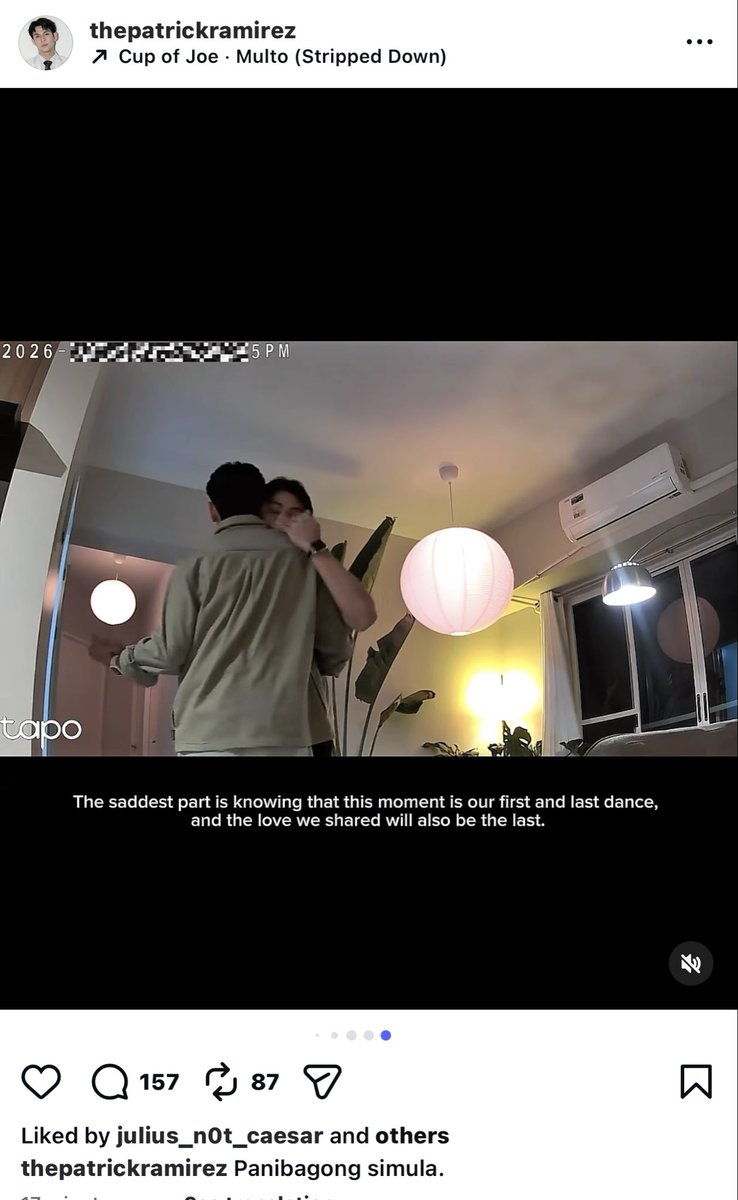
LOOK: "Pinoy Big Brother: Gen 11" alum Patrick Ramirez announced on Instagram that he and Dingdong Bahan have separated.
The pair, known as “DongPat,” entered the PBB house together and were the first openly LGBTQIA+ couple to join the show. | via @annacerezo_
Tapos yung isa magja-jaks sa baso, tapos akala nung kasama nya condensed milk. Tapos biglang dumami yung bading na customers. Pero malaki pa rin ang debt nila kaya kelangan makipag anez yung owner sa lender. #IYKYK
The actual research is wild. Every time you push down a feeling, your brain has to choose between suppressing that emotion and recording what’s happening around you. It picks the suppression. The memory doesn’t get saved.
A 2000 Stanford study confirmed this: people told to hide their emotions while watching a film remembered far fewer details than people who just reacted naturally. Suppressing emotions uses up mental energy, and that leaves less brain power for saving new memories.
Brain scans show why. A 2012 study found that suppression quiets the hippocampus (your brain’s memory-recording center) right when it should be saving information. The two brain regions that normally team up to lock in memories stop talking to each other.
Over time it gets worse. Suppression keeps cortisol (the stress hormone) elevated, and cortisol shrinks the hippocampus. Chronically stressed people can lose 10 to 15% of its volume. Just three weeks of high cortisol can shrink the tiny connection points between brain cells by about 20%. The good news: studies show this shrinkage can partially reverse once stress levels drop. Not necessarily permanent.
A Finnish study of 1,137 older adults tracked over roughly a decade found that habitual emotion suppressors had nearly 5x the risk of developing dementia, even after controlling for genetics, smoking, obesity, and education.
There’s a better way to handle emotions that doesn’t cost you your memory. It’s called cognitive reappraisal: instead of bottling the feeling, you reframe what’s causing it. (“This meeting isn’t a threat, it’s practice.”) A 2003 Stanford/UC Berkeley study found reappraisers had more positive emotion, better relationships, and higher wellbeing. Suppressors got the opposite on every measure. And reappraisal carries zero memory cost.
The difference comes down to timing. Suppression kicks in after the emotion has already fired, so your brain is fighting its own response while simultaneously trying to record the moment. Reappraisal changes how you interpret the situation before the emotion fully activates. Same event, same person, but your hippocampus stays free to do its actual job: recording your life.
There’s a man in my office who hasn’t been promoted in 6 years.
He arrives before everyone. Leaves after everyone. Knows the company’s systems better than the people who built them. When something breaks at 2am, they call him.
His name is on the bottom of reports that directors present to the board. He doesn’t complain. He says he’s just “not political.”
Last week, a 26-year-old joined us. MBA. Firm handshake. Calls the MD by his first name. Within 3 months, he’s already sitting in meetings my colleague has never been invited to.
I watched my colleague train him.
Smiled the whole time. Answered every question. Shared shortcuts it took him years to figure out.
Afterwards I asked him, don’t you feel cheated?
He looked at me for a long moment.
“I used to. But I realized something. I’ve been loyal to a company. Not a purpose. Those are not the same thing.”
He resigned two weeks later. Took everything he knew with him. Started something of his own.
The MD sent a company-wide email. Called it “a great loss to the team.”
Eleven years of emails. And that was the first one that mentioned his name.
The system will celebrate your exit more than it ever celebrated your presence. Stop waiting to be seen. Build something that sees you if you’re not appreciated where you are.