@GeminiApp Umm, my initial post is not related to the number of requests at all. It clearly talks about speed of execution in antigravity vs using Gemini in browser. Why does the same task take much longer in Antigravity?
@mervenoyann@gowthami_s@huggingface@Thom_Wolf Neil's patch was made available on hf. My apologies if there's a disconnect here and if I am missing something. I'lI take a look at the pending issues this week. Please feel free to start a new discussion for a proposal/request, and it will be responded to.
We introduce LEIA, a novel approach for representing 3D articulated objects by learning view-invariant latent embeddings for different articulation states. Visit our poster #299 at @eccvconf#ECCV2024 in Milan on Oct 3rd (Thursday), 10:30am.
Project Page: https://t.co/lZhP6gfexu
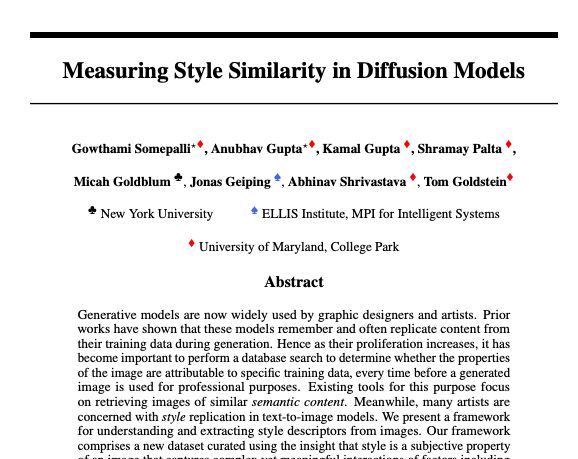
🖼️How to measure whether a style exists in a generated image? If you want to know more about it, drop by our poster tomorrow at #ECCV2024 ! We also released model checkpoints and the training data! ✨
⏰: Oct 1 (Tuesday) 10.30 session
📍- Poster # 111
💻 - https://t.co/wzzlVO2dFp
#diffusion #GenAI
Measuring Style Similarity in Diffusion Models
Generative models are now widely used by graphic designers and artists. Prior works have shown that these models remember and often replicate content from their training data during generation. Hence as their proliferation
📢Introducing ClimateLearn, a new PyTorch library for accessing climate datasets, state-of-the-art ML models, and high quality training and visualization pipelines.
Blog: https://t.co/BarGdNWQiT
Docs: https://t.co/RBiQFbeqaJ
Quickstart Colab: https://t.co/RjgqOo2tX0
🧵 (1/n)
Survey on Large Scale Neural Network Training
A nice summary of strategies and insights on large scale neural network training. Great read for ML engineers interested in training efficient DNNs.
https://t.co/J9gIzACLsi
Annotated (with notes) implementation of Rotary Positional Embeddings (RoPE)
📝 Code/notes https://t.co/OpCFLzMg0j
It introduces a new form of positional encodings for transformers that encodes position in a relative form. Models seem to converge faster with RoPE. (1/4)
🧵👇
Transformer Memory as a Differentiable Search Index
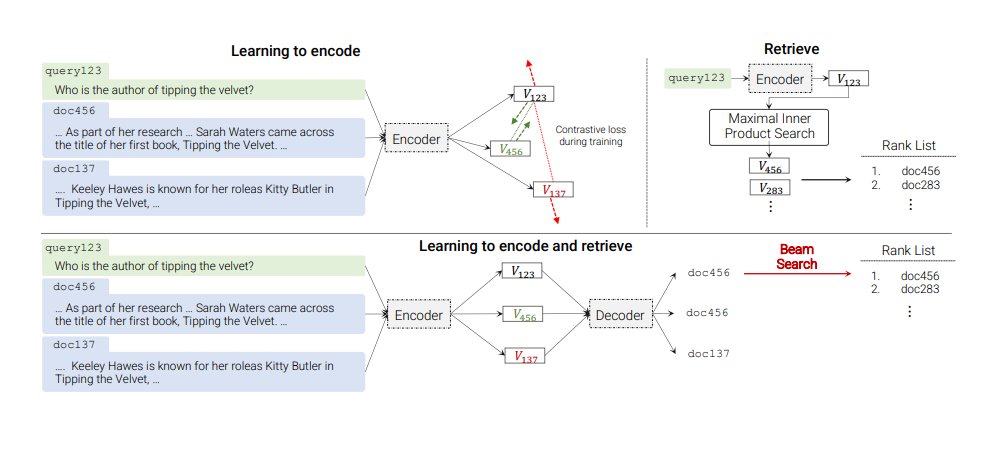
Shows that that information retrieval can be done with a single Transformer, in which all information about the corpus is encoded in the parameters of the model.
https://t.co/lrYH9xsUHA
We are releasing MOTSynth, the largest dataset for Pedestrian Detection and Tracking.
Expect to obtain better real-world performances by training your model on this data only.
It's synthetic, but it's for real! https://t.co/EHAt4RRhZD
🔥The WILDS 2.0 benchmark is an oral at ICLR'22! Existing distribution shift benchmarks do not reflect the breadth of scenarios that arise in real-world applications. Wilds 2.0 extends the Wilds benchmark to include curated unlabeled data for DA research.
https://t.co/1e56fR8CNH
We computer vision researchers rarely look at the individual data points inside our datasets.
Mainly because we are too lazy and/or do not have the right tools.
This needs to change. And now we have a great tool from @TensorFlow datasets team: Know Your Data. A thread.🧵(1/5)
A new study from @UMD_AGNR has found that some sectors, like agriculture, have barely scratched the surface to identify and address potential ethical, legal, social, and economic implications of artificial intelligence.
Read the full story: https://t.co/k14eZ83Znz
I am so proud of @Waabi_ai team and everything we have achieved only 6 months on from our launch. Waabi World is the next generation of simulation technology and will be the key to unlocking self-driving at scale. We’re so excited about what’s to come!
https://t.co/Yh5Ue2rW3K
You should always work on improving your model evaluation skills.
Model evaluation is the worst taught skill in machine learning, and I believe the best way of improving is through practice.
But, this paper from @rasbt is by far my favorite single written resource: