SAT promotes a rational, evidence-based approach to acetaminophen — America’s most misunderstood household drug. Rethinking drug policy through facts, not fear.
Welcome to SAT — Smart Approaches to Tylenol.
We’re a public health initiative challenging blind trust in over-the-counter drugs — and the hypocrisy of US drug policy.
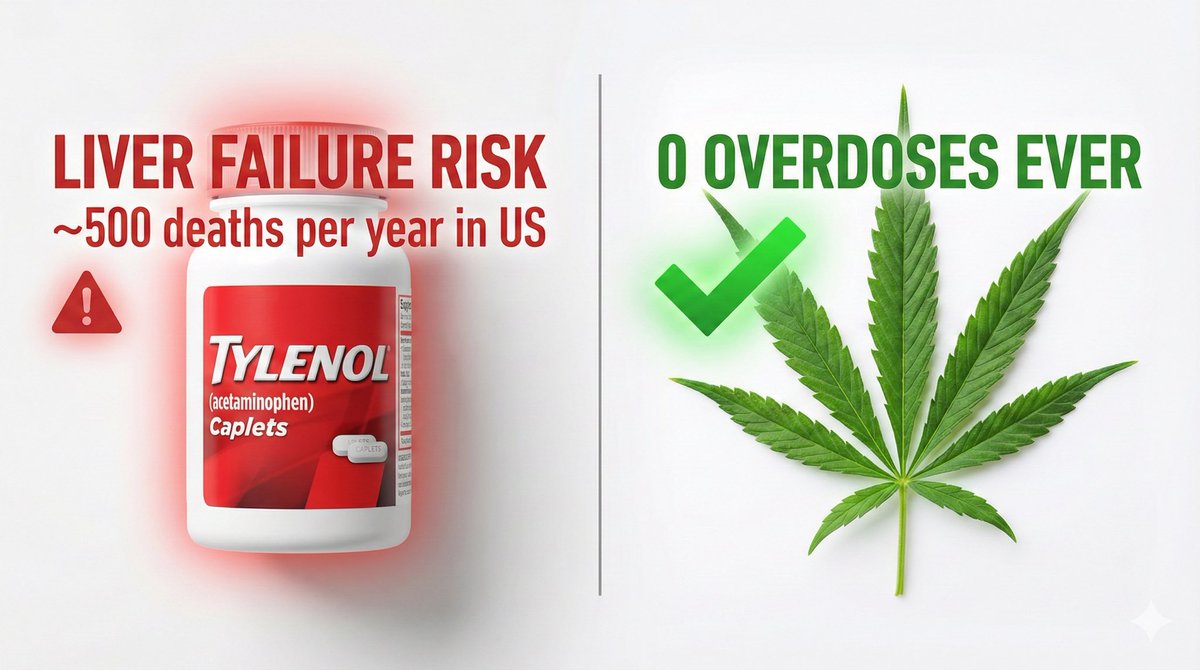
⚠️ Acetaminophen: 40,000+ deaths globally per year
⚠️ NSAIDs (like ibuprofen): Linked to GI bleeding, heart attacks
⚠️ DXM (in cough syrup): Can cause brain damage and death
✅ Cannabis: Not perfect. But remarkably safe — with no documented overdose deaths yet still federally illegal.
Why do we normalize the deadly and criminalize the safe?
SAT exists to challenge this reality with facts and not fear.
@KyleSherman This is absolutely true and factual. Tylenol sends thousands to the ER and kills hundreds annually via liver failure. Cannabis has never caused a fatal overdose. Risk perception in this country is upside down.
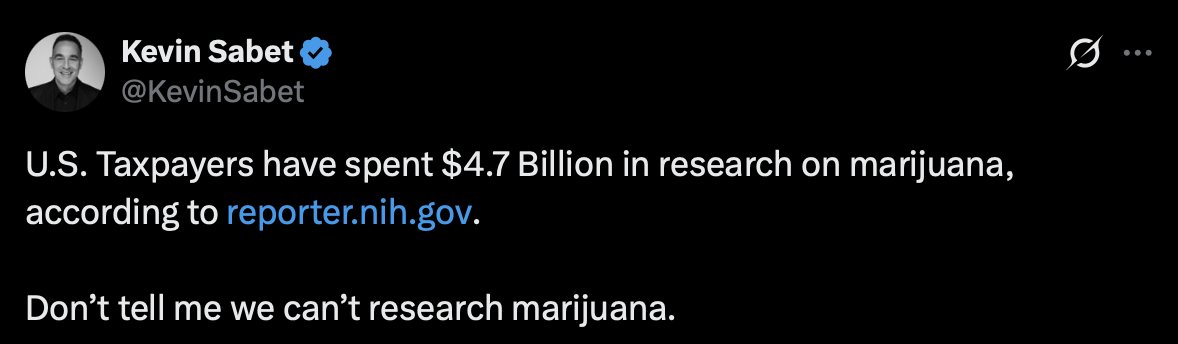
The $4.7B number is real. The context is what’s missing.
For decades, most federally funded cannabis research focused on risks, abuse, and population level harms. Not because scientists didn’t want to study benefits, but because Schedule I made real clinical trials with actual cannabis extremely hard if not impossible to do.
The irony is that this same NIH funded body of evidence is what led HHS and FDA to conclude cannabis has accepted medical use and recommend Schedule III.
So yes, we’ve researched cannabis. And the takeaway from that research is that Schedule I itself is the problem.
Reefer Madness is alive and well at the Wall Street Journal. An op-ed claims cannabis made the Dallas ICE shooter “psychotic.” Let’s dismantle this fear-mongering, step by step.
First, who is Allysia Finley? She’s on the WSJ’s conservative editorial board. For years, she’s pumped out anti-cannabis hit pieces. She opposed legalization in CO and WA, calling rescheduling a “risky experiment.” No science. This is just her opinion rooted in her ideology.
Here’s the problem, correlation ≠ causation. Millions use cannabis without violence. Some people with mental illness also use cannabis. Linking the two because of a tragic outlier isn’t science at all. It’s purely propaganda.
Yes, some studies (e.g. Lancet Psychiatry) show a link between heavy/high-potency cannabis use and psychosis risk. But those are associations. Genetics, trauma, and the simultaneous use of other drugs muddy the picture. Finley ignores that complexity.
Reverse causation matters too. People with emerging psychosis often self-medicate with cannabis because it’s a helpful medicine. Psychological Medicine (2024) shows prior psychotic symptoms often predict later cannabis use. Not the other way around. Finley never mentions this because it doesn’t fit her narrative.
What about violence? Even in people with psychosis, reviews in journals like Frontiers in Psychiatry show cannabis only shows up as a factor when other things are going on in their life like trauma, poor impulse control, and skipping treatment. Cannabis itself does not cause violence.
Meanwhile, alcohol is linked to far more violence and psychosis but it’s completely legal and socially accepted so nobody calls that a crisis. Yes, cannabis has risks (mostly for youth and heavy use), but exaggerated “madness” claims ignore real benefits like pain relief, nausea control, better sleep, and reduced seizures and tremors.
Finley’s opinion piece isn’t science based in any way. It’s Reefer Madness 2.0. Fear dressed up as fact. If we care about public health, let’s debate cannabis honestly, based on evidence, not ideology.
@thewriterme Well said, Tylenol and so may OTC drugs are extraordinarily bad for you. For whatever reason people just blindly trust big Pharma to have their back.